Crispy Air Fryer Sweet Potato Fries
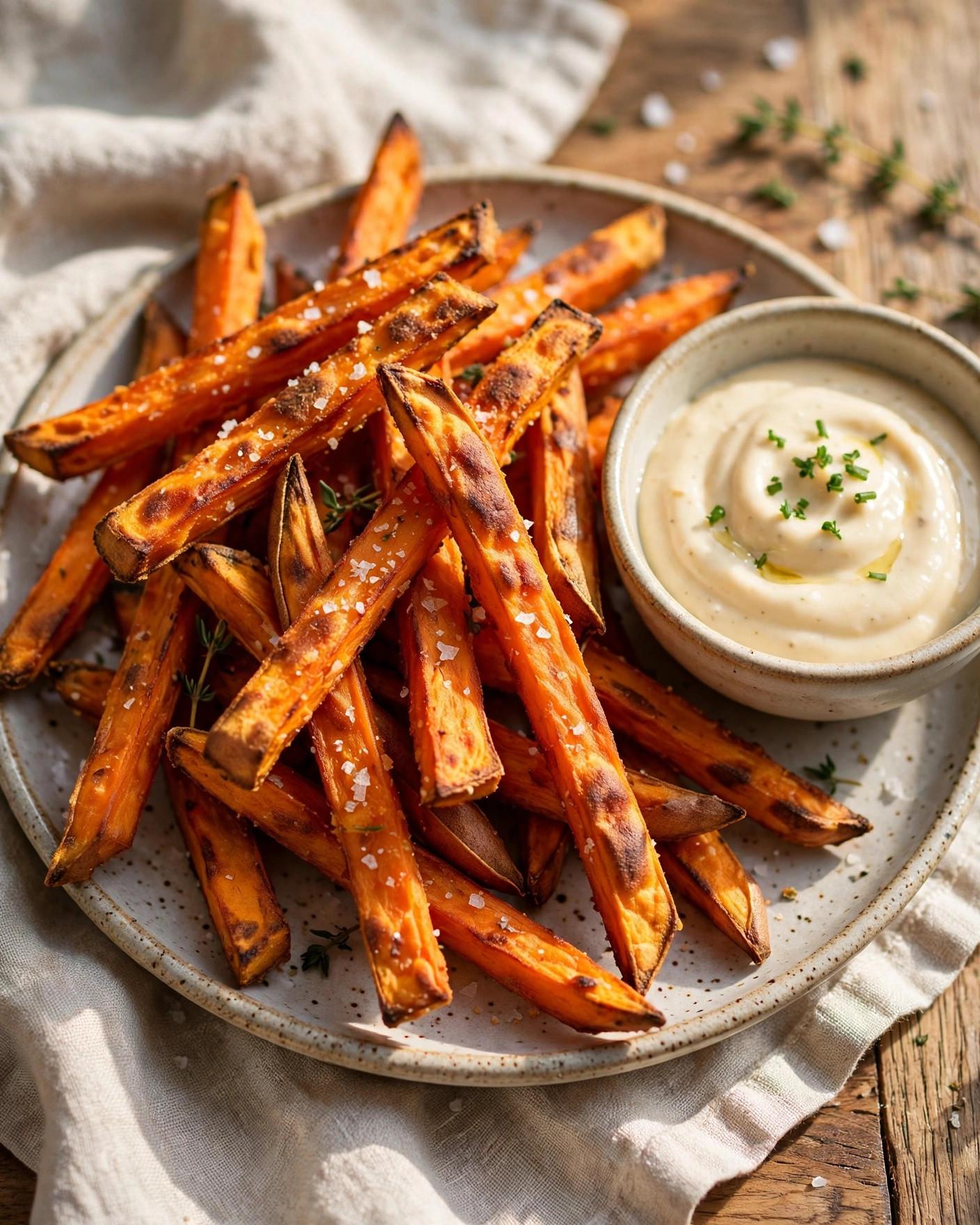
Sweet potato fries have everything going for them on paper: natural sweetness, a beautiful orange color, and edges that want to caramelize. In practice, they have a reputation for coming out soft. Sweet potatoes hold more moisture and more sugar than regular potatoes, so a tray of them in a hot oven often steams before it crisps, and a deep fryer solves the problem only by adding a pot of oil to your evening. These air fryer sweet potato fries take a different route — even-cut fries, a thorough dry, a light dusting of cornstarch, and fast, hot air at 400 degrees F (200 degrees C) — and that combination is what finally gives you crisp edges with tender, fluffy centers.
The cornstarch is the small trick that changes the whole result. Tossed on before the oil and seasoning, it drinks up the surface moisture that would otherwise turn to steam and forms a thin, dry coating. In the air fryer, that coating sets into a delicate crust while the inside of each fry turns soft and sweet. You do not need much — about a tablespoon for two large potatoes — and you will not taste it in the finished fries. What you will taste is the seasoning: smoked paprika for warmth and color, garlic powder for savory depth, and just enough salt and black pepper to keep the sweetness in balance.
These fries are built to be flexible. Serve them plain with flaky salt while they are still crackling from the basket, or make the simple creamy dipping sauce included here — mayonnaise and Greek yogurt with lime, smoked paprika, and a touch of honey — and set the plate in the middle of the table. They sit happily next to burgers, grilled chicken, sandwiches, and black bean burgers, and they disappear just as fast as a snack on their own. From cutting board to table takes about 30 minutes, most of it hands-off while the air fryer does the work.
Why You'll Love This Recipe
- Actually crisp, not just roasted. The cornstarch coating and a proper dry before cooking are the difference between limp sweet potato wedges and fries with golden, crisp edges and tender middles.
- No deep frying and very little oil. One tablespoon of oil for the whole batch is enough when the air fryer is circulating hot air at 400 degrees F (200 degrees C) — no pot to heat, watch, or clean up afterwards.
- Simple pantry seasoning. Smoked paprika, garlic powder, salt, and black pepper — nothing fussy, nothing you need a special trip for, and the blend flatters the natural sweetness instead of covering it up.
- Ready in about 30 minutes. Twelve minutes of prep and about 18 minutes in the air fryer, with the dipping sauce stirred together while the fries cook. Fast enough for a weeknight side.
- A dipping sauce worth making. Creamy, tangy, and lightly smoky, with lime to brighten it. It takes two minutes to stir together and turns a simple side into the plate everyone reaches for first.
- Easy to scale and season your way. Double the batch and cook in rounds for a crowd, or change the spices — the method stays the same, and the Variations section below has plenty of starting points.
Ingredients
For the sweet potato fries
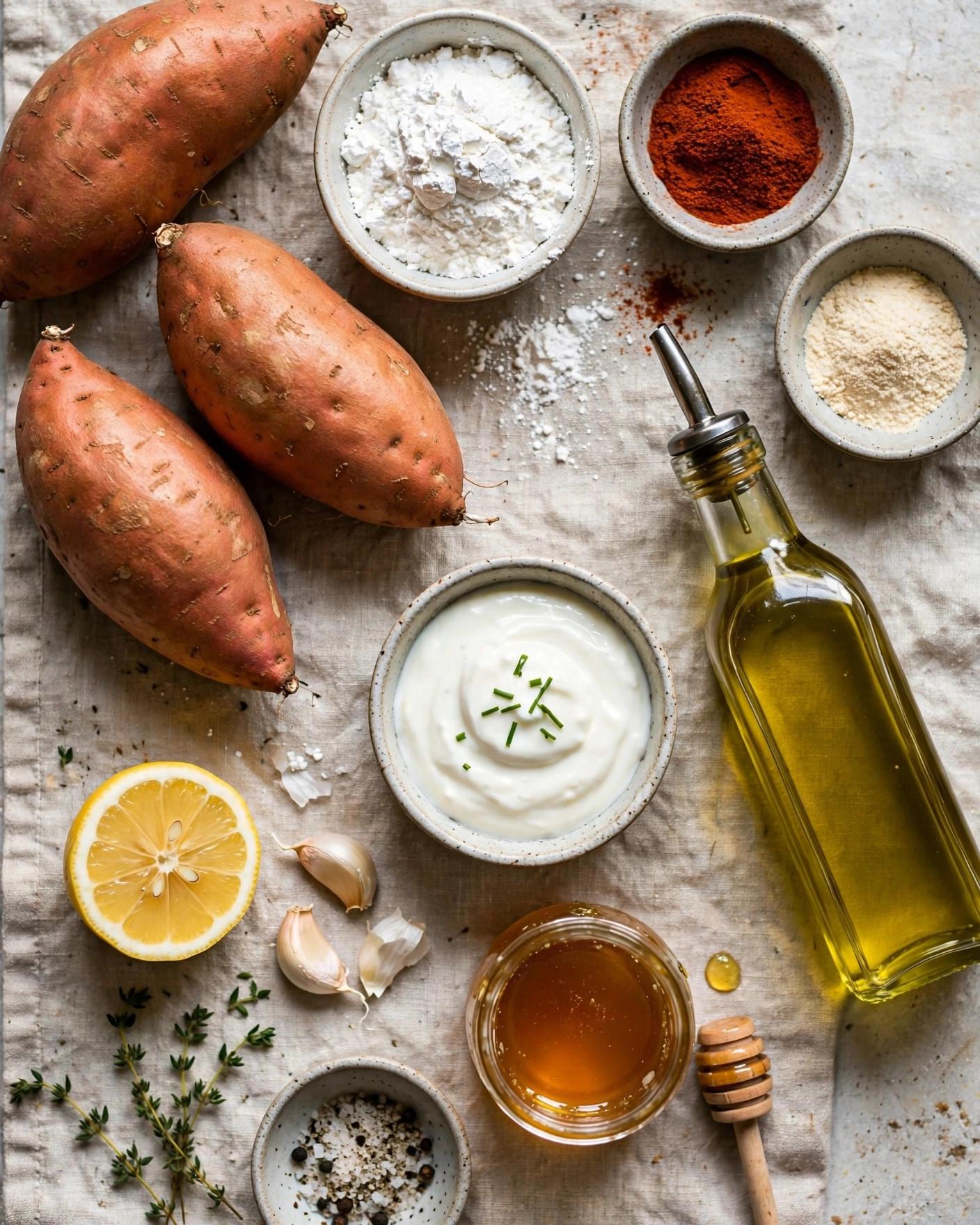
- 2 large sweet potatoes, about 1 1/2 pounds (680 g) total, scrubbed well
- 1 tablespoon (8 g) cornstarch
- 1 tablespoon (15 ml) avocado oil or olive oil
- 1 teaspoon smoked paprika
- 1/2 teaspoon garlic powder
- 1/2 teaspoon fine sea salt, plus more for finishing
- 1/4 teaspoon black pepper
- Pinch of cayenne pepper (optional, for gentle heat)
For the creamy dipping sauce (optional but recommended)
- 1/3 cup (80 ml) mayonnaise
- 2 tablespoons (30 g) plain Greek yogurt or sour cream
- 1 teaspoon fresh lime juice, plus more to taste
- 1/2 teaspoon smoked paprika
- 1/2 teaspoon honey
- 1/4 teaspoon garlic powder
- Pinch of fine sea salt
- A few dashes of hot sauce (optional)
Why these ingredients matter
Sweet potatoes. The vegetable itself is the whole point — sweet, earthy, and vivid orange, with flesh that turns almost creamy inside a crisp shell. Choose firm potatoes that feel heavy for their size, with smooth skin and no soft spots or sprouting eyes. Long, evenly shaped potatoes are easiest to cut into fries of a similar length. Orange-fleshed varieties such as Garnet or Jewel are the classic choice here: moist, sweet, and the ones that caramelize best at the edges. You can peel them or leave the skin on — peeled fries look tidier and crisp a touch more evenly, while skin-on fries are more rustic and hold together well. Either way, scrub them thoroughly under running water first.
Cornstarch. This is the crispness insurance. Sweet potatoes release moisture as they cook, and that moisture is the enemy of a crisp surface. A tablespoon of cornstarch tossed over the cut, dried fries absorbs the surface dampness and forms a thin, starchy layer that sets into a light crust in the hot air. The fries come out noticeably crisper than oil-and-seasoning alone can manage. Toss the cornstarch on while the fries are dry and before the oil goes on, so it coats evenly instead of clumping in wet spots. Potato starch works the same way if that is what you have.
Avocado oil or olive oil. A small amount of oil does three jobs: it helps the cornstarch coating and spices cling, it encourages even browning, and it carries the fat-soluble flavors in the paprika and garlic across every fry. Avocado oil handles the 400 degree F (200 degree C) heat comfortably and tastes neutral; olive oil adds a faint fruity note and works just as well. One tablespoon is genuinely enough — more oil does not mean more crispness here, and excess oil can make the coating soggy and pool in the basket. Add the oil after the cornstarch, then toss until every fry looks lightly glossy with no dry white patches.
Smoked paprika. Smoked paprika brings the warmth of a grill without any grill at all — a gentle, woodsy smokiness that pairs beautifully with the sweetness of the potatoes. It also deepens the color, nudging the fries toward a rich, appetizing amber. Use a tin that smells fragrant when you open it; paprika loses its punch after a year or so in the cupboard. Sweet paprika can stand in if smoked is not available, though you will miss that subtle smoky backbone. Because paprika contains natural sugars, it can darken quickly at high heat — another reason to keep the fries in a single layer and flip them halfway.
Garlic powder. Garlic powder gives the fries a savory foundation that fresh garlic cannot: fresh minced garlic burns at air fryer temperatures and turns bitter, while the powder toasts gently and distributes evenly over every surface. Half a teaspoon is enough to register as warm and savory without making these taste like garlic fries — though if you love garlic, the Variations section has you covered. Make sure you are using garlic powder, not garlic salt, or the seasoning will skew far too salty.
Fine sea salt. Salt is what makes sweet potatoes taste like more than just sweet. It balances the natural sugars, sharpens the paprika and garlic, and draws a little moisture to the surface early in cooking so the edges can dry and crisp. Fine salt disperses evenly over thin fries where coarse crystals would bounce off. Season the fries before cooking so the salt is baked into the coating, then finish with a tiny extra pinch while they are hot if you like — hot fries take up finishing salt beautifully.
Black pepper. A quarter teaspoon of black pepper adds quiet heat and a little complexity behind the paprika. It is a background note, there to round out the blend rather than announce itself. Freshly ground pepper is more fragrant, but pre-ground is perfectly fine in a spice coating like this one.
Cayenne pepper (optional). Just a pinch wakes up the whole batch. Sweet, smoky, and faintly hot is a classic combination, and the heat stays gentle at this amount — a warmth at the end of each bite rather than a burn. Leave it out for younger eaters, or double it if your household likes a kick.
Mayonnaise. Mayonnaise is the rich base of the dipping sauce, giving it body and that satisfying cling when you drag a fry through it. Use a mayonnaise you like the taste of on its own, since its flavor carries the sauce. Full-fat gives the creamiest result.
Greek yogurt or sour cream. Two tablespoons lighten the mayonnaise and add tang, so the sauce tastes fresh rather than heavy. Greek yogurt keeps it a little lighter and adds a clean acidity; sour cream is richer and rounder. Either works — use what is already open in your refrigerator.
Lime juice. A teaspoon of lime juice brightens the sauce and cuts through the richness of the fries. Fresh lime is best here; lemon juice is a fine substitute. Add it gradually and taste — the sauce should be tangy enough to make you want another fry, not sour.
Honey. Half a teaspoon of honey echoes the sweetness of the potatoes and balances the lime and paprika in the sauce. It should sit in the background, not make the dip taste sweet. Maple syrup works in its place.
Hot sauce (optional). A few dashes stir a little vinegar heat into the sauce for anyone who likes contrast. It is entirely optional, and the sauce is complete without it, but a chipotle-style hot sauce doubles down on the smoky theme especially well.
Instructions
- Prep the potatoes. Scrub the sweet potatoes well under running water and pat them dry. Peel them if you like — peeled fries crisp a little more evenly — or leave the skin on for a more rustic fry. Trim off the tapered ends, then cut each potato lengthwise into planks about 1/4 inch (6 mm) thick, and cut each plank into sticks about 1/4 inch (6 mm) wide. Aim for fries that are as even as you can manage, roughly 3 to 4 inches (7.5 to 10 cm) long. Even thickness matters more than perfect looks: fries of the same size finish at the same time, while a mix of thick and thin sticks leaves you with some burnt tips and some undercooked middles.
- Soak the cut fries (recommended). Put the cut fries in a large bowl, cover them with cold water, and let them soak for 20 to 30 minutes while you measure the seasoning and stir the sauce ingredients together — or simply proceed straight to drying if you are short on time. Soaking pulls some surface starch out of the potatoes, which helps the edges crisp and keeps the fries from sticking to each other. If your total time needs to stay at 30 minutes, a quick 10-minute soak still helps; on a relaxed evening, the full soak gives the best texture. Either way, the next step — drying — is the one you should never skip.
- Dry the fries thoroughly. Drain the fries and spread them out on a clean kitchen towel or a double layer of paper towels. Pat them dry, then roll them gently in the towel and pat again. Let them sit for a couple of minutes while you preheat the air fryer, and give them one last pat before seasoning. This step decides whether the cornstarch forms a crisp coating or a gummy paste: cornstarch on wet fries clumps and steams, while cornstarch on dry fries coats thinly and crisps. Take the extra minute — it is the cheapest crispness you will ever buy.
- Coat with cornstarch. Put the dried fries back in the dry bowl and sprinkle the cornstarch over the top. Toss with your hands or tongs, lifting and turning until every fry carries a thin, even, faintly dusty coating with no white pockets hiding in the bowl. If you see clumps, keep tossing and rub them apart with your fingertips. The coating should look like a light dusting, not a thick batter — if it looks heavy anywhere, shake the excess off those fries back into the bowl and redistribute it.
- Add the oil and seasoning. Drizzle the oil over the coated fries and toss again until they look lightly glossy all over. In a small bowl, stir together the smoked paprika, garlic powder, salt, black pepper, and cayenne if using, then sprinkle the blend over the fries and toss one more time until the seasoning is evenly distributed and every fry has that warm, rusty color. Pre-mixing the spices in a small bowl first is worth the tiny effort — sprinkling them one by one straight from the jars leaves the first fries heavily spiced and the last ones nearly bare.
- Preheat the air fryer. Preheat the air fryer to 400 degrees F (200 degrees C) for 3 to 5 minutes. A hot basket matters: fries that land on a cold surface sit in their own escaping moisture for the first minutes, while fries that hit a preheated basket start crisping at the edges right away. While it heats, line your serving plate with a little parchment or have a wire rack ready for the finished batches.
- Load the basket in a single layer. Arrange the fries in the basket in a single layer with a little space between them, so the hot air can reach all sides. Do not mound them up and do not shake the basket full — crowded sweet potatoes steam each other and come out soft no matter how good your coating is. For two large potatoes, plan on cooking in two batches. It feels slower, but two properly crisp batches beat one big soggy one every time, and the first batch stays warm happily on a plate in a low oven while the second cooks.
- Air fry the first side. Air fry at 400 degrees F (200 degrees C) for 9 to 10 minutes, until the undersides are golden and the edges are starting to caramelize and darken in spots. The fries will still look a little pale on top at this point — that is expected, and the flip is coming. Resist the urge to shake the basket repeatedly in this first stretch; letting the coating sit undisturbed against the heat is what sets the crust.
- Flip and finish. Using tongs, flip the fries over — or pull the basket out and give it one firm shake, then use tongs to redistribute any fries that landed in a pile. Air fry for another 8 to 10 minutes, until the fries are golden all over with deeper caramelized edges, crisp to the touch, and tender when you bite into one. Total time is usually 17 to 20 minutes per batch, but sweet potatoes vary in moisture, so judge by look and feel rather than the clock alone: a finished fry has dry, crisp edges, a little bend rather than a snap, and a soft, fluffy middle. Very thin fries may finish a few minutes early, so check the first batch near the end and use it to set your timing for the second.
- Season and hold the first batch. Tip the finished fries onto your prepared plate or rack and sprinkle them with a pinch more salt while they are hot. If you are cooking a second batch, slide the plate into an oven set to 200 degrees F (95 degrees C) to keep warm, or simply tent loosely with foil. Repeat the single-layer loading and cooking with the remaining fries. The second batch often cooks a minute or two faster because the air fryer is thoroughly hot, so start checking it early.
- Stir together the dipping sauce. While the last batch cooks, whisk the mayonnaise, Greek yogurt, lime juice, smoked paprika, honey, garlic powder, and salt in a small bowl until smooth. Add hot sauce if you like, then taste and adjust — a little more lime for brightness, a pinch more salt if it tastes flat. The sauce can be made up to 2 days ahead and kept covered in the refrigerator, where the flavors settle and deepen; give it a stir before serving.
- Serve right away. Pile the hot fries onto a warm plate or a parchment-lined tray, set the bowl of dipping sauce alongside, and scatter a few extra fries artfully on top for height if you like presenting them that way. Serve immediately — sweet potato fries are at their absolute best in the first 10 minutes, when the edges are crisp and the centers are steaming and tender. If they sit while you finish other dishes, a 2-minute return to the hot air fryer brings the crispness back.


Tips for Success
- Cut evenly, above all. Fries of matching thickness — about 1/4 inch (6 mm) — cook at the same rate. If your batch mixes matchsticks with thick wedges, no cooking time will ever be right for all of them. Take your time with the knife work, or use a fry cutter if you make these often.
- Dry, dry, dry. After soaking, the fries should feel dry to the touch before the cornstarch goes on. Surface moisture is the single biggest cause of limp sweet potato fries, and an extra pass with a clean towel fixes it.
- Cornstarch goes on before the oil. Starch first, oil second — that order gives you a thin, even coating that crisps. Oil first makes the cornstarch clump into paste in spots and slide off in others.
- Single layer, always. Leave breathing room between fries so the hot air can circulate. Two batches in a single layer will always beat one crowded batch, and the keep-warm oven trick means everything still reaches the table hot.
- Flip once, halfway. One good flip or shake at the halfway point is enough. Constant fussing knocks the coating off and lets heat escape; a single turn gives you browning on both sides with the crust intact.
- Judge doneness by the fry, not the timer. Sweet potatoes vary in size and moisture, so start checking a couple of minutes early. Look for deep golden color, caramelized edges, and a center that gives softly when you bite — and remember that fries crisp a touch more as they sit for the first minute out of the basket.
Variations
- Cinnamon-sugar fries. Skip the paprika and garlic and toss the hot fries with 1 tablespoon granulated sugar mixed with 1 teaspoon ground cinnamon and a pinch of salt. Serve with the dipping sauce left plain or sweetened with an extra drizzle of honey — a dessert-leaning side that is wonderful with grilled pork or on its own.
- Cajun sweet potato fries. Replace the seasoning blend with 1 1/2 teaspoons Cajun seasoning plus the salt, and keep the cornstarch and method exactly the same. Expect more heat and a deeper savoriness; the creamy sauce balances it perfectly.
- Parmesan-herb fries. Cook the fries with just salt, pepper, and garlic powder, then toss the hot batch with 3 tablespoons finely grated Parmesan and 1 tablespoon finely chopped fresh parsley. The cheese melts onto the hot surfaces in a thin, salty layer.
- Maple-chipotle fries. Add 1/4 teaspoon chipotle chile powder to the seasoning, and drizzle the finished fries very lightly with warm maple syrup — about 2 teaspoons for the batch — before serving. Sweet, smoky, and gently hot, all at once.
- Curry-spiced fries. Swap the smoked paprika for 1 teaspoon mild curry powder and keep the garlic and salt. Serve with the dipping sauce made with lime and a pinch of extra salt; the warm spices sit beautifully against the sweet potato.
- Extra-garlic fries. Double the garlic powder in the coating, and while the fries are still hot, toss them with 1 teaspoon garlic-infused olive oil. All the garlic flavor, none of the burnt fresh garlic bitterness.
Storage
Sweet potato fries are at their peak straight from the basket, but leftovers keep well and reheat better than you might expect. Let any leftover fries cool completely, then store them in an airtight container in the refrigerator for up to 3 days. Line the container with a paper towel if you have one — it absorbs the condensation that would otherwise soften the edges overnight. The leftover dipping sauce keeps separately, covered, in the refrigerator for up to 3 days as well; stir it before serving, since it may loosen slightly as it sits.
To reheat, skip the microwave, which steams the fries soft. Spread the cold fries in a single layer in the air fryer and heat at 375 degrees F (190 degrees C) for 3 to 5 minutes, until hot and crisp at the edges again. They will not be quite as shatter-crisp as the day they were made, but they come remarkably close. In the oven, spread them on a sheet pan and reheat at 425 degrees F (220 degrees C) for 8 to 10 minutes. Freezing cooked fries is not recommended — the centers turn watery on thawing and the coating loses its grip. If you want a head start instead, cut the potatoes, soak them, dry them well, and refrigerate the raw cut fries in a sealed container for up to 24 hours; coat and cook them straight from the refrigerator, adding a minute or two to the cook time.
FAQ
Why are my sweet potato fries not crispy? Almost always, it comes down to moisture or crowding. Sweet potatoes hold a lot of water, so the fixes are: dry the cut fries thoroughly after soaking so the cornstarch forms a thin coating instead of a paste, keep the cornstarch step rather than skipping it, and cook in a single layer with space between the fries so escaping steam can get away instead of softening the batch. A full, mounded basket will steam no matter how hot the air fryer is. Also check your cut — fries thicker than about 1/2 inch (1.3 cm) rarely crisp well before the outside overcooks; 1/4 inch (6 mm) is the sweet spot.
Do I have to soak the fries before air frying? No, soaking is recommended but not required. A 20 to 30 minute soak in cold water removes surface starch, which helps the fries crisp and keeps them from sticking together, and you can taste — well, feel — the difference in the edges. If you are short on time, skip the soak and go straight to drying, coating, and cooking; the fries will still be golden and good, just a shade less crisp. Whichever route you take, do not skip the drying step, because cornstarch on wet fries clumps and steams instead of forming a crust.
Can I make these without cornstarch? Yes, and the method stays the same — season with oil and spices and air fry in a single layer at 400 degrees F (200 degrees C). Expect a softer result: the fries will be roasted and caramelized at the edges rather than truly crisp, because nothing is absorbing the surface moisture and forming that thin crust. If you have potato starch, it substitutes for cornstarch one-for-one and works just as well. Arrowroot can also be used, though it gives a slightly lighter, more delicate coating. Plain flour is not a good substitute here — it can taste raw and gummy at these cook times.
How do I keep the fries from burning at the edges? Sweet potatoes contain natural sugars that caramelize — and then scorch — faster than regular potatoes, so a few very dark edges are normal and even tasty, but widespread burning has three usual causes. First, fries cut too thin cook through and then keep browning, so keep to about 1/4 inch (6 mm) and check the first batch early. Second, skipping the flip leaves one side against the hottest airflow for the whole cook; flip or shake once halfway. Third, check your air fryer — some models run hot, and dropping the temperature to 390 degrees F (200 degrees C) and adding a minute or two gives you the same tenderness with gentler browning.
Recipe Card
Crispy Air Fryer Sweet Potato Fries
- Prep Time: 12 minutes (PT12M)
- Cook Time: 18 minutes (PT18M)
- Total Time: 30 minutes (PT30M)
- Servings: 4 servings
- Calories: 210 kcal per serving (estimated)
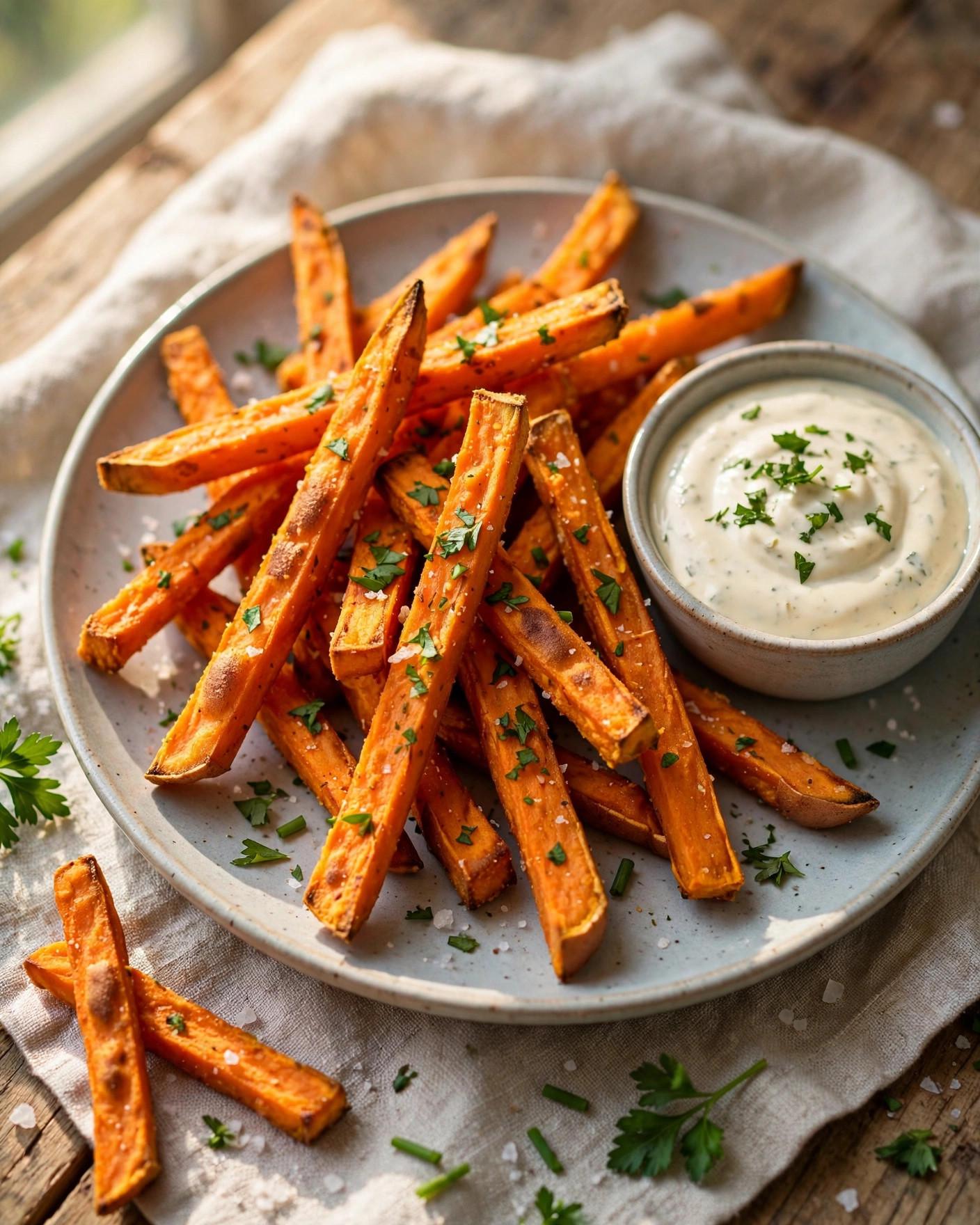
Even-cut sweet potato fries dried well, dusted with cornstarch, seasoned with smoked paprika and garlic, and air fried at 400 degrees F (200 degrees C) until crisp at the edges and tender in the middle, served with a creamy lime and smoked paprika dipping sauce.
Nutrition (estimated): 210 kcal per serving (estimated), 28 g carbohydrates, 2 g protein, 10 g fat, 4 g fiber, 8 g sugar, 320 mg sodium. Nutrition is estimated and will vary with the size of the potatoes, how much sauce is served with each portion, and any variations or substitutions.
Why are my sweet potato fries not crispy?
Almost always, it comes down to moisture or crowding. Sweet potatoes hold a lot of water, so the fixes are: dry the cut fries thoroughly after soaking so the cornstarch forms a thin coating instead of a paste, keep the cornstarch step rather than skipping it, and cook in a single layer with space between the fries so escaping steam can get away instead of softening the batch. A full, mounded basket will steam no matter how hot the air fryer is. Also check your cut — fries thicker than about 1/2 inch (1.3 cm) rarely crisp well before the outside overcooks; 1/4 inch (6 mm) is the sweet spot.
Do I have to soak the fries before air frying?
No, soaking is recommended but not required. A 20 to 30 minute soak in cold water removes surface starch, which helps the fries crisp and keeps them from sticking together, and you can taste — well, feel — the difference in the edges. If you are short on time, skip the soak and go straight to drying, coating, and cooking; the fries will still be golden and good, just a shade less crisp. Whichever route you take, do not skip the drying step, because cornstarch on wet fries clumps and steams instead of forming a crust.
Can I make these without cornstarch?
Yes, and the method stays the same — season with oil and spices and air fry in a single layer at 400 degrees F (200 degrees C). Expect a softer result: the fries will be roasted and caramelized at the edges rather than truly crisp, because nothing is absorbing the surface moisture and forming that thin crust. If you have potato starch, it substitutes for cornstarch one-for-one and works just as well. Arrowroot can also be used, though it gives a slightly lighter, more delicate coating. Plain flour is not a good substitute here — it can taste raw and gummy at these cook times.
How do I keep the fries from burning at the edges?
Sweet potatoes contain natural sugars that caramelize — and then scorch — faster than regular potatoes, so a few very dark edges are normal and even tasty, but widespread burning has three usual causes. First, fries cut too thin cook through and then keep browning, so keep to about 1/4 inch (6 mm) and check the first batch early. Second, skipping the flip leaves one side against the hottest airflow for the whole cook; flip or shake once halfway. Third, check your air fryer — some models run hot, and dropping the temperature to 390 degrees F (200 degrees C) and adding a minute or two gives you the same tenderness with gentler browning.

Hi, I’m Emma! I’m the cook and recipe developer behind Sizzle & Sage. From my sunny home kitchen, I share easy, flavor-packed recipes for real life — quick breakfasts, cozy weeknight dinners, and simple bakes anyone can make. Pull up a chair and stay a while!