Classic Pumpkin Pie (Easy Homemade Holiday Pie)
Few desserts announce the holidays quite like a classic pumpkin pie. The moment the oven warms and the scent of cinnamon, ginger, and nutmeg drifts through the kitchen, the season has officially arrived. This is the pumpkin pie people picture when they think of Thanksgiving: a flaky, golden, buttery crust cradling a silky-smooth pumpkin custard that is deeply spiced but never muddy, sweet but not cloying. It slices cleanly, holds its shape on the plate, and tastes like every good memory of a holiday table — which is exactly why it earns its spot year after year.
What separates a great pumpkin pie from a merely okay one comes down to two things: the crust and the custard. A soggy bottom crust turns the whole slice heavy, while an overbaked filling goes grainy and cracks across the top. This recipe solves both problems with a straightforward method. The crust gets a proper blind bake — a short head start in a hot oven with pie weights — so it comes out crisp and flaky instead of pale and soft. The filling is a simple custard of pumpkin purée, evaporated milk, eggs, brown sugar, and warm spices, baked just until the edges are set and the center still has a gentle wobble. That wobble is the secret: carryover heat finishes the job as the pie cools, giving you a perfectly smooth, crack-free surface.
There is no need for pastry-school skills here. The crust is a classic all-butter pie dough that comes together in minutes with a bowl and a fork (or your fingertips), and if the week before Thanksgiving is already chaos, a good store-bought refrigerated crust works beautifully with the same blind-baking steps. The filling takes one bowl and about five minutes of whisking. Most of the total time is hands-off — chilling the dough, blind baking, and the long cool-down that sets the custard.
This pie is also one of the most make-ahead-friendly desserts in the holiday playbook. The dough can be made days in advance, the whole pie bakes beautifully the day before the feast, and it slices best after a proper chill anyway. Serve it cold or at room temperature with a cloud of softly whipped cream, and let the compliments roll in.
Why You'll Love This Recipe
- Flaky, crisp crust — blind baking gives you a golden, shattering bottom crust instead of a soggy one, every single time
- Silky-smooth custard — the bake-just-until-it-wobbles method delivers a creamy, crack-free pumpkin filling with zero graininess
- Classic warm-spice flavor — cinnamon, ginger, nutmeg, and cloves in balanced proportions, sweetened with brown sugar for caramel depth
- Beginner-friendly technique — one-bowl filling, simple butter crust, and clear doneness cues make this foolproof for first-time pie bakers
- Make-ahead holiday hero — bakes a full day ahead, and the dough chills for up to two days, so Thanksgiving prep stays calm
- Store-bought shortcut welcome — use the homemade crust for maximum flakiness or a refrigerated crust when time is tight; both work with this method
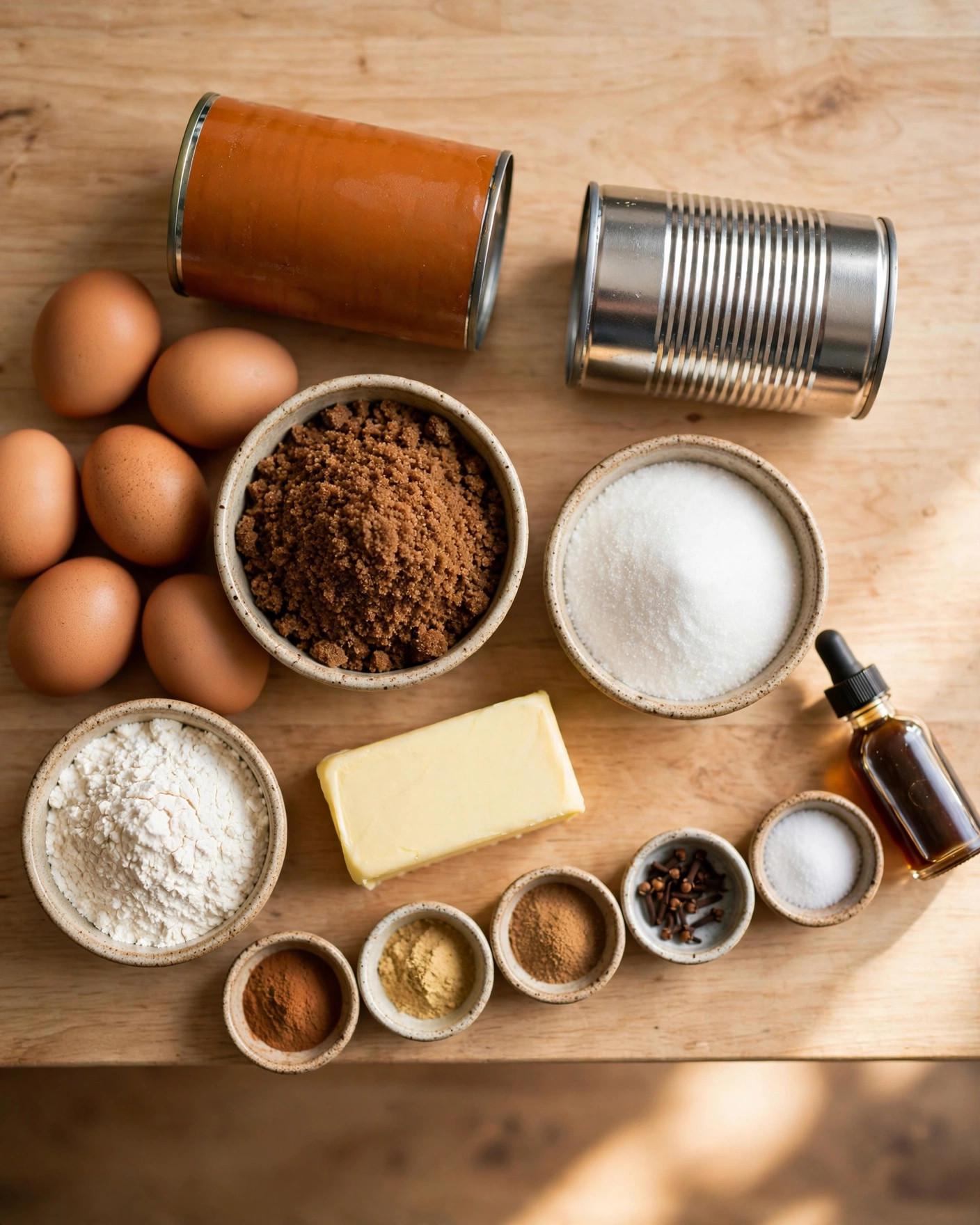
Ingredients
For the all-butter crust (makes one 9-inch crust):
- 1 1/4 cups (160 g) all-purpose flour, plus more for rolling
- 1 tablespoon (12 g) granulated sugar
- 1/2 teaspoon (3 g) fine sea salt
- 1/2 cup (115 g) unsalted butter, very cold and cut into 1/2-inch cubes
- 3–4 tablespoons (45–60 ml) ice water
- OR 1 (9-inch) refrigerated pie crust, for the shortcut version
For the pumpkin filling:
- 1 (15-ounce / 425 g) can pumpkin purée (plain pumpkin, not pumpkin pie filling)
- 3/4 cup (150 g) packed light brown sugar
- 1/4 cup (50 g) granulated sugar
- 2 large eggs, at room temperature, plus 1 extra egg yolk
- 1 (12-ounce / 354 ml) can evaporated milk
- 2 teaspoons ground cinnamon
- 1 teaspoon ground ginger
- 1/2 teaspoon ground nutmeg
- 1/4 teaspoon ground cloves
- 1/2 teaspoon (3 g) fine sea salt
- 1 teaspoon pure vanilla extract
For serving:
- Lightly sweetened whipped cream, for serving (optional but recommended)
Instructions
- Make the pie dough. Whisk the flour, sugar, and salt in a large bowl. Add the cold butter cubes and cut them in with a pastry blender or your fingertips until the mixture looks like coarse crumbs with some pea-sized pieces of butter still visible. Drizzle in 3 tablespoons of ice water and toss with a fork until the dough just holds together when squeezed, adding the last tablespoon only if needed. Flatten into a disk, wrap tightly, and chill for at least 30 minutes.
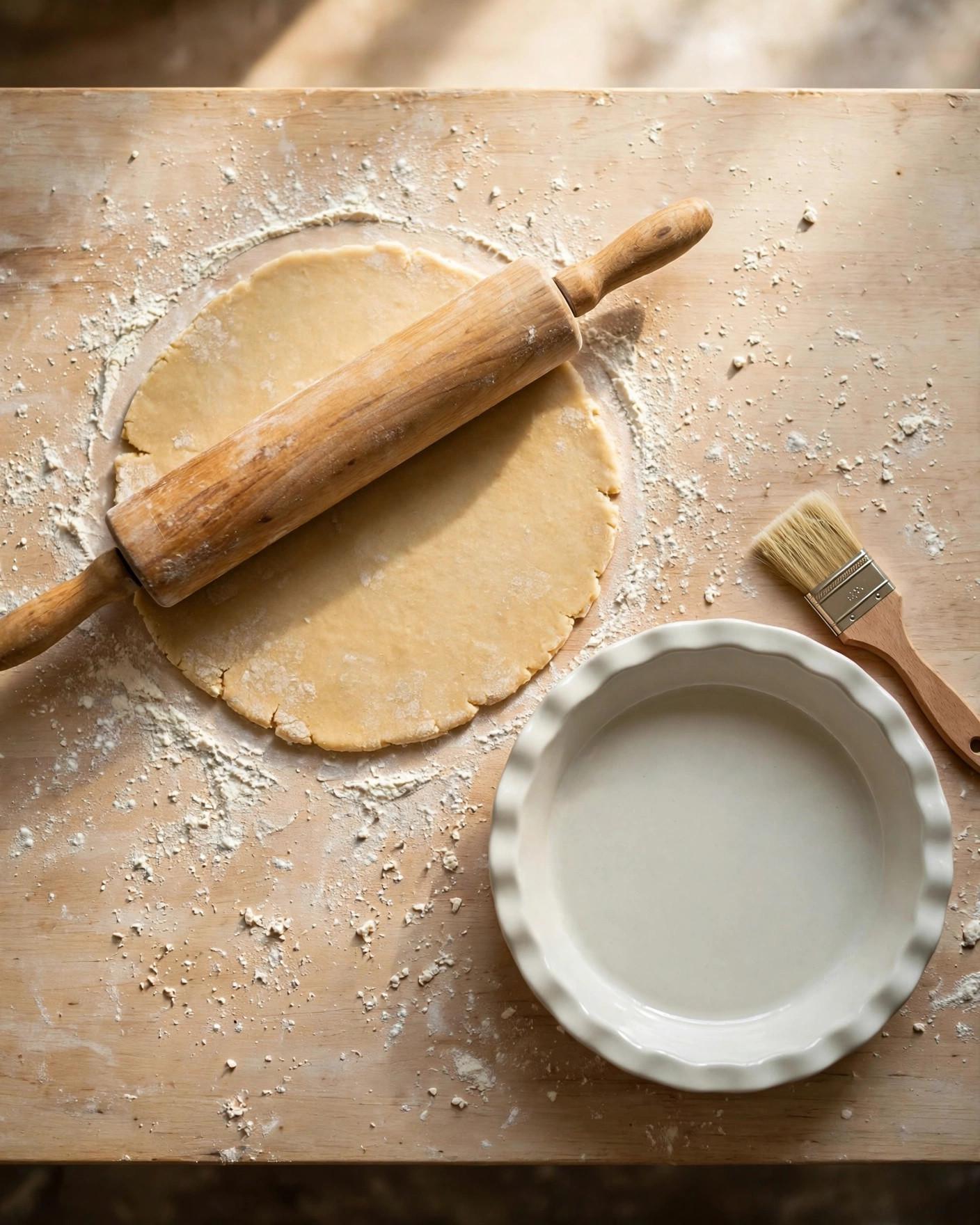
- Roll out and fit the crust. On a lightly floured surface, roll the dough into a 12-inch round, about 1/8 inch thick. Drape it over a 9-inch pie dish, ease it into the corners without stretching, and trim the overhang to about 1 inch. Fold the edge under itself and crimp decoratively with your fingers or a fork. Chill the shaped crust for 20 minutes while the oven heats — this keeps the crust from shrinking in the oven.
- Blind bake the crust. Heat the oven to 400°F (200°C). Line the chilled crust with parchment paper and fill it to the brim with pie weights or dried beans. Bake for 12–15 minutes, until the edges look set and lightly golden. Lift out the parchment and weights, prick the bottom a few times with a fork, and bake 5 minutes more until the bottom looks dry. Set aside to cool slightly while you mix the filling. (If using a store-bought crust, fit it into the dish, crimp, and blind bake the same way.)
- Whisk the filling. In a large bowl, whisk the pumpkin purée, brown sugar, granulated sugar, cinnamon, ginger, nutmeg, cloves, and salt until smooth. Whisk in the eggs and the extra yolk one at a time, then whisk in the evaporated milk and vanilla until fully combined and glossy. Do not overmix — stop as soon as everything is smooth.
- Fill and start hot. Pour the filling into the warm blind-baked crust, filling it nearly to the top of the crimped edge. Bake at 425°F (220°C) for 15 minutes. This initial blast of heat helps the custard start setting from the edges inward.

- Finish at a gentler heat. Reduce the oven temperature to 350°F (175°C) without opening the door if you can avoid it. Bake 40–50 minutes more, until the edges of the filling are set and puffed slightly and the center still jiggles gently when the pie is nudged. Shield the crust edges with strips of foil or a pie shield after 20 minutes if they are browning too fast.
- Cool completely. Transfer the pie to a wire rack and cool for at least 2 hours. The custard finishes setting as it cools, so do not slice early — a warm, just-baked pumpkin pie will be loose in the center. Once cool, refrigerate until serving.
- Serve. Serve the pie chilled or at room temperature, topped with softly whipped cream and an extra dusting of cinnamon if you like.

Tips for Success
- Keep everything cold for the crust. Cold butter and a chilled, shaped crust are what create flaky layers and prevent the dreaded shrink-back in the oven. If the kitchen is warm, pop the rolled crust back in the fridge for 10 minutes before blind baking.
- Use pie weights properly. Fill the parchment-lined crust all the way to the top — weights that only cover the bottom let the sides slump. Dried beans or rice work if you do not own ceramic weights.
- Trust the wobble, not the clock. The pie is done when the outer 2–3 inches are set and the center moves like set gelatin when nudged. It will look underdone — that is correct. Overbaking is what causes cracks and a grainy texture.
- Shield the edges. The crimped crust edge browns much faster than the filling sets. Foil strips or a reusable pie shield after the first 20 minutes keeps it golden, not scorched.
- Cool fully before slicing. The custard needs at least 2 hours at room temperature (then chilling) to firm up. Cutting warm pie gives you soupy slices; patience gives you clean wedges.
- Room-temperature eggs mix better. Cold eggs can make the filling lumpy and cool the mixture unevenly. Set the eggs out while the crust chills.
Variations
- Maple pumpkin pie: replace the granulated sugar with pure maple syrup and add an extra 1/2 teaspoon of cinnamon for a deeper, woodsier sweetness.
- Gingersnap crust: swap the butter crust for a press-in crust of 1 1/2 cups crushed gingersnaps mixed with 5 tablespoons melted butter, blind baked for 8 minutes.
- Bourbon-spiked filling: whisk 1 tablespoon of bourbon into the filling with the vanilla for a warm, grown-up note that pairs beautifully with the spices.
- Chocolate-bottom pumpkin pie: spread 1/2 cup of melted dark chocolate over the blind-baked crust and let it set before adding the filling — a hidden layer of richness in every slice.
- Dairy-free version: use a plant-based butter in the crust and replace the evaporated milk with full-fat canned coconut milk (shaken well); the texture stays creamy.
- Mini pumpkin pies: press the dough into a standard muffin tin, fill each cup two-thirds full, and bake at 375°F (190°C) for 18–22 minutes for individual servings.
Storage
Leftover classic pumpkin pie keeps in the refrigerator for 3–4 days. Because it is an egg-and-dairy custard, it must be refrigerated — do not leave it at room temperature for more than 2 hours. Cover the pie loosely with plastic wrap or foil, or store individual slices in airtight containers. Add fresh whipped cream just before serving rather than storing it on the pie, since it weeps over time.
For longer storage, pumpkin pie freezes well for up to 2 months. Cool the pie completely, wrap it tightly in plastic wrap followed by a layer of foil (or freeze individual slices on a tray, then bag them), and thaw overnight in the refrigerator. Serve chilled or bring to room temperature for 30 minutes before slicing. The texture stays smooth after freezing — just expect the crust to be slightly less crisp than fresh.
FAQ
Can I use fresh pumpkin instead of canned pumpkin purée? Yes, but it takes extra work and the result can vary. Roast a sugar pumpkin until tender, purée the flesh until completely smooth, then strain it through a fine-mesh sieve or cheesecloth to remove excess water — fresh pumpkin is much wetter than canned. Canned pumpkin purée gives a more consistent, concentrated flavor and a smoother custard, which is why most bakers prefer it.
Why did my pumpkin pie crack on top? Cracks almost always mean the pie was overbaked. The custard continues to cook from residual heat after it leaves the oven, so it should come out when the center still jiggles. A pie baked until the center looks fully firm will puff, then sink and crack as it cools. Rapid cooling can also cause cracking — let the pie cool gradually on a wire rack at room temperature.
Do I really need to blind bake the crust? It is strongly recommended. Blind baking pre-sets the crust so the wet pumpkin custard does not soak into raw dough, which is the main cause of a soggy bottom. Skipping it gives a paler, softer crust. The extra 20 minutes is the single biggest upgrade you can make to homemade pumpkin pie.
Can I make pumpkin pie ahead of time? Yes — it is an ideal make-ahead dessert. The pie dough can be made up to 2 days ahead and refrigerated, or frozen for a month. The baked pie can be made a full day before serving; it actually slices more cleanly after an overnight chill. Keep it covered in the refrigerator and add whipped cream just before serving.
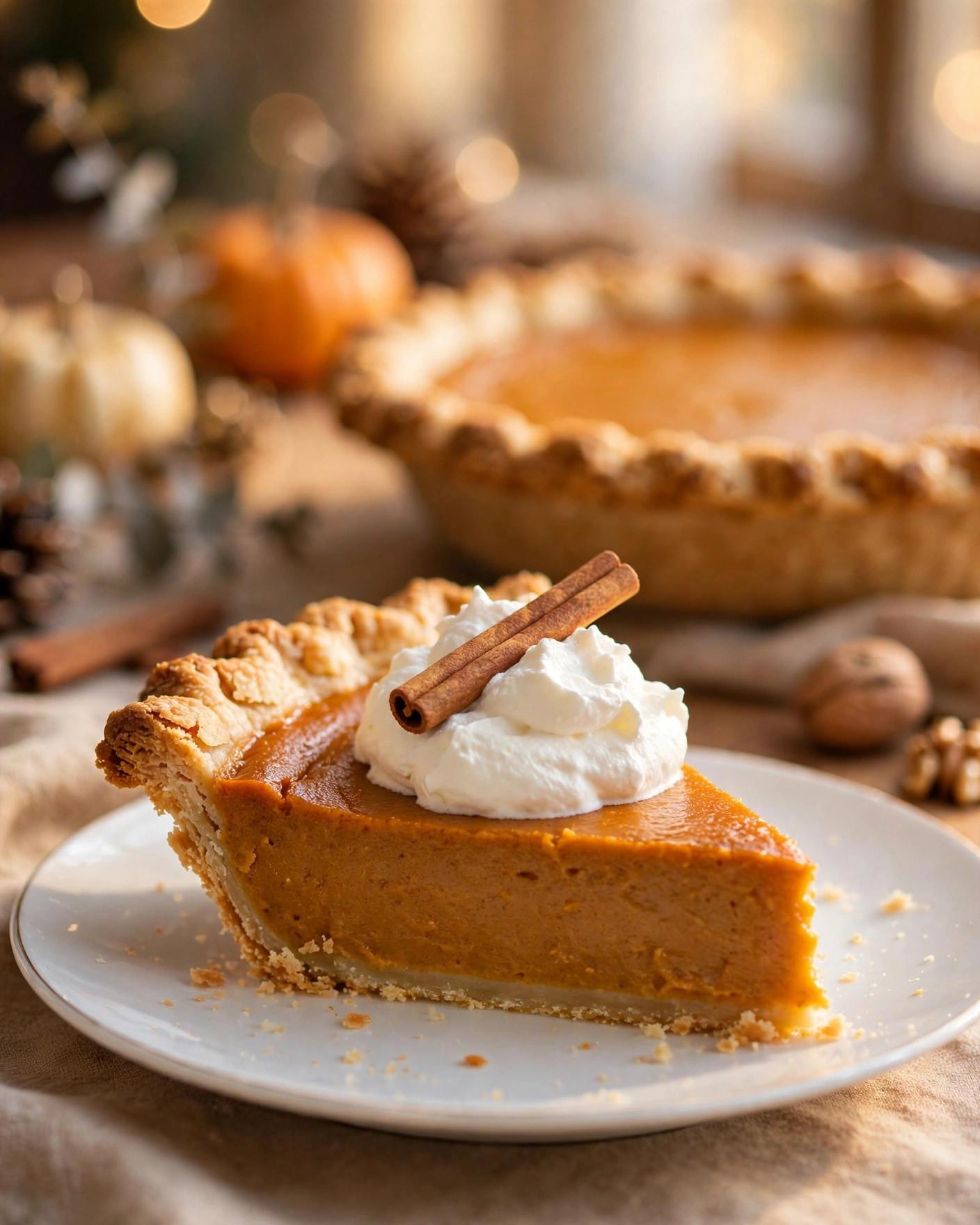
Recipe Card
- Prep time: 35 minutes (plus 50 minutes chilling)
- Cook time: 1 hour 5 minutes
- Total time: about 3 hours (including 2-hour cooling)
- Servings: 8
- Estimated calories per serving: ~390 per serving

Hi, I’m Emma! I’m the cook and recipe developer behind Sizzle & Sage. From my sunny home kitchen, I share easy, flavor-packed recipes for real life — quick breakfasts, cozy weeknight dinners, and simple bakes anyone can make. Pull up a chair and stay a while!