Strawberry Mascarpone Parfaits with Macerated Berries and Cookie Crumb Layers
Some desserts look like they took all afternoon and quietly took almost no time at all, and these Strawberry Mascarpone Parfaits are exactly that kind of dessert. In a clear glass, the layers do all the talking: a buttery golden crumb at the bottom, a cloud of pale vanilla mascarpone cream, a spoonful of ruby strawberries glistening in their own juices, then cream and crumbs and berries again until the glass is full. Every spoonful gives you something different — crisp, creamy, juicy, and sweet, all in one bite. There is no oven, no water bath, and no fussy timing, just a little macerating, a little whipping, and a calm hour in the refrigerator while the layers settle together.
The heart of the recipe is the contrast between three very straightforward elements. The strawberries are macerated, a gentle technique that simply means tossing sliced berries with a little sugar and lemon and letting them rest. In that short rest, the berries soften slightly, deepen in color, and release a bright, syrupy juice that soaks into the crumbs and mingles with the cream. The mascarpone cream is equally uncomplicated — mascarpone folded with lightly whipped heavy cream, powdered sugar, and vanilla — but it tastes rich and luxurious, like the filling of a very good tiramisu without any coffee or cocoa in the way. The crumb layer, made from crushed vanilla wafers or shortbread, brings the crunch and the buttery backbone that keeps the whole glass from feeling too soft.
Because there is no baking involved, this is a wonderful dessert for warm days, busy holidays, and evenings when the oven is already spoken for by dinner. It is especially lovely for Valentine's Day, when a pink-and-white layered dessert in a pretty glass feels romantic without needing elaborate decoration, but it is just as welcome at spring brunches, Mother's Day lunches, showers, summer cookouts, and small dinner parties all year long. The parfaits are served individually, which makes them feel special for guests and also wonderfully practical: no slicing, no serving spatula, and no worrying about whether the first piece comes out neatly. Everyone gets their own glass, their own layers, and their own last spoonful of berry juice and cream at the bottom.
You can make the components ahead, assemble the glasses a few hours before serving, and let the refrigerator do the final work. As the parfaits chill, the cream firms into something spoonable and smooth, the crumbs soften ever so slightly where they touch the cream and berries, and the flavors settle into each other — cool, fresh, and balanced, sweet but not heavy.
Why You'll Love This Recipe
- No oven, no baking, no stress. Everything comes together with a knife, a bowl, and a whisk or mixer. The refrigerator sets the parfaits, so you can make dessert on the hottest day or the busiest holiday without heating up the kitchen.
- Beautiful layers with almost no decorating. Clear glasses show off the cream, berries, and crumbs for you. There is no piping or frosting skill required — neat spoonfuls and a single strawberry half on top make each glass look finished.
- Macerated berries with real strawberry flavor. A short rest with sugar and lemon draws out the berries' juices and concentrates their flavor, so the strawberry layer tastes vivid and fresh, with a syrup that flavors every layer it touches.
- Rich, smooth mascarpone cream. Mascarpone gives the cream a gentle tang and a silky body, while whipped heavy cream keeps it light enough to spoon easily. Vanilla and just enough powdered sugar round it out without making it cloying.
- Made to prepare ahead. Macerate the berries and whip the cream in advance, assemble the glasses up to a day ahead, and keep them chilled until serving. The texture improves with a few hours of rest, which makes entertaining far more relaxed.
- Easy to scale and customize. The recipe makes four generous glasses and doubles cleanly for a crowd. Swap the cookie, change the fruit, or add a layer from the Variations section to make the same base recipe feel new each time.
Ingredients
For the macerated strawberries
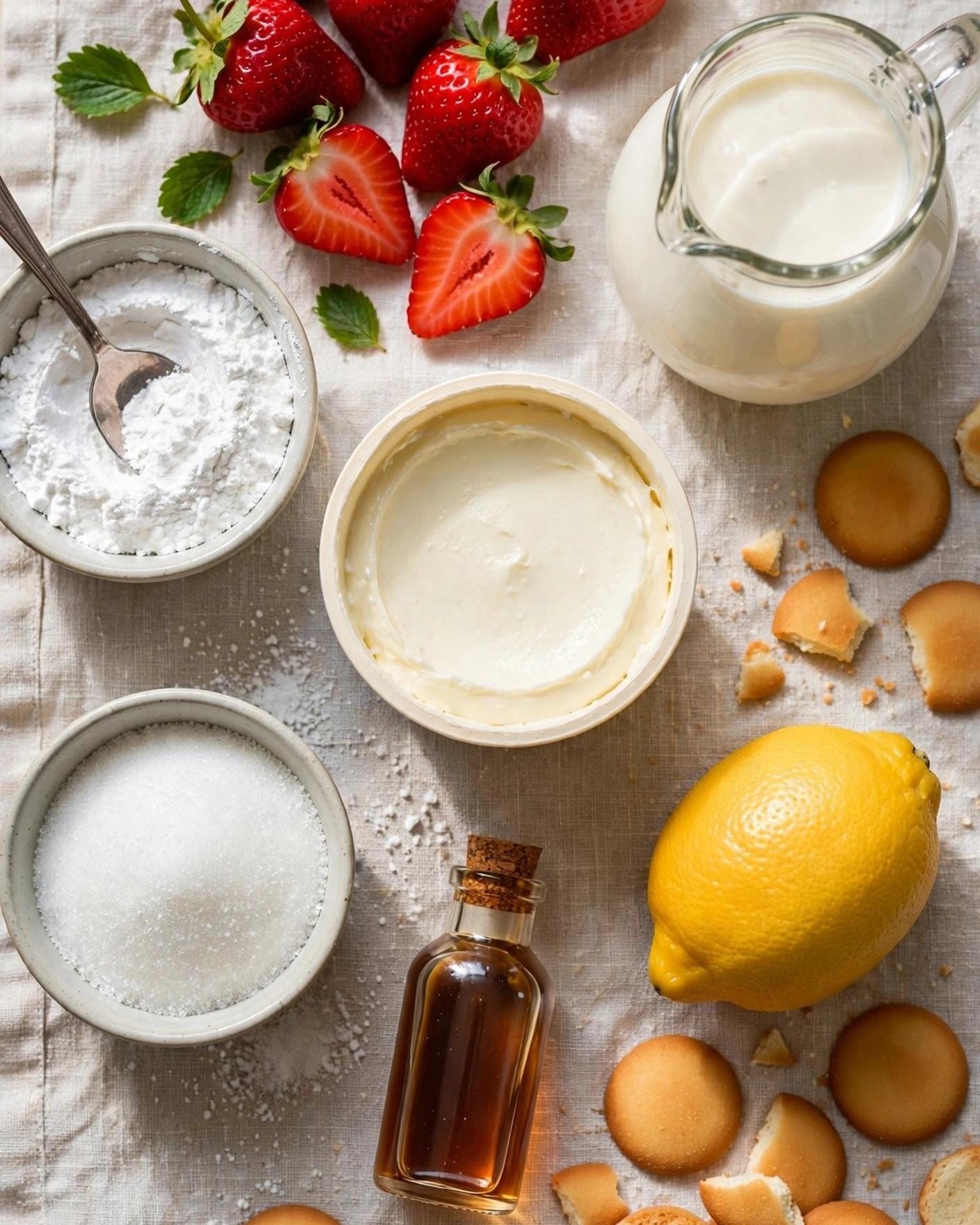
- 1 pound (450 g) fresh strawberries, hulled, plus 4 small whole or halved berries for topping
- 3 tablespoons (38 g) granulated sugar
- 1 teaspoon fresh lemon juice
- Pinch of fine sea salt
For the vanilla mascarpone cream
- 8 ounces (225 g) mascarpone cheese, cold but not rock-hard, about 10 minutes out of the refrigerator
- 1 cup (240 ml / 240 g) cold heavy cream
- 1/3 cup (40 g) powdered sugar, sifted
- 1 1/2 teaspoons vanilla extract
- Pinch of fine sea salt
For the cookie crumb layers
- 1 1/2 cups (150 g) finely crushed vanilla wafer cookies or shortbread cookies, from about 30 vanilla wafers or 10 to 12 shortbread fingers
- 2 tablespoons (28 g) unsalted butter, melted
- 1 teaspoon granulated sugar (optional, for shortbread that is barely sweet)
For serving
- 4 clear glasses, jars, or stemless wine glasses, about 8 to 10 ounces (240 to 300 ml) each
- Fresh mint leaves (optional, for a small green garnish)
- Extra crushed cookies, for sprinkling on top (optional)
Why these ingredients matter
Fresh strawberries. Strawberries are the flavor and the color of this dessert, so they matter more here than in a baked recipe where heat can cover for lackluster fruit. Look for berries that are red all the way to the top, glossy, and fragrant — pale, white-shouldered berries tend to stay tart and watery even after macerating. Slicing them fairly thin, about 1/4 inch (6 mm), helps them soften evenly, release juice at a good pace, and sit in neat layers.
Granulated sugar for macerating. The small amount of sugar tossed with the berries is not mainly there to sweeten them, although it does that too. Sugar draws moisture out of fruit, which is what creates the glossy red syrup that makes macerated berries so special. Without it, sliced strawberries simply sit in the bowl; with it, they transform in about 30 minutes into something juicy and intensely flavored. If your berries are exceptionally ripe, you can reduce the sugar to 2 tablespoons (25 g), but do not skip it entirely or you will lose most of the syrup.
Fresh lemon juice. Just a teaspoon of lemon juice brightens the entire strawberry layer. Its acidity lifts the berries' flavor, keeps the red color vivid, and balances the sugar so the fruit tastes fresh rather than flat. Lemon also quietly balances the richness of the mascarpone cream when the layers are eaten together. Bottled juice works in a pinch, but fresh lemon gives a cleaner, softer acidity that suits raw fruit best.
Mascarpone cheese. Mascarpone is the defining ingredient in the cream — an Italian triple-cream cheese with a mild, slightly sweet tang and an exceptionally smooth, dense texture. Compared with cream cheese, it is softer and less tangy, so the finished cream tastes like fresh cream rather than cheesecake filling. Handle it gently: mascarpone beaten hard or for too long can turn grainy or split. Stir it just until smooth, whip the heavy cream separately, and fold the two together.
Heavy cream. Whipped to soft peaks, heavy cream lightens the dense mascarpone so the layers feel airy rather than heavy, and as the parfaits chill it helps the cream set into a stable, spoonable texture. It must be cold to whip well — cold cream, and ideally a cold bowl, give the most volume and stability. Do not substitute half-and-half or milk, which lack the fat to whip and will leave the cream loose.
Powdered sugar. Powdered sugar sweetens the cream smoothly, dissolving instantly without grittiness, which granulated sugar cannot do in an uncooked cream. It also contains a little cornstarch, which adds a touch of stability. Sift it first to remove lumps. The amount here is deliberately modest, because the berries, their syrup, and the sweet crumbs add plenty of sugar to the finished glass.
Vanilla extract. Vanilla is the main flavoring in the cream, and it makes a simple mixture of mascarpone and cream taste like a finished dessert rather than a topping. A generous 1 1/2 teaspoons perfumes the cream and pairs naturally with both strawberries and buttery crumbs. Because nothing is cooked, the flavor comes through clearly, so use real vanilla extract if you have it; vanilla bean paste is a lovely substitute.
Vanilla wafer or shortbread cookies. The crumb layer provides the only crunch in the glass, and its buttery flavor bridges fruit and cream. Vanilla wafers crush into a fine, sandy crumb that layers neatly and softens where it meets the berry syrup. Shortbread gives a richer, coarser crumb that stays crunchier for longer. Choose wafers for a lighter parfait and shortbread for a more substantial, buttery one.
Melted butter. Two tablespoons of melted butter helps the crumbs clump slightly so they sit in a defined layer instead of scattering, deepens their golden flavor even though nothing is baked, and slows how quickly they absorb moisture from the cream. Let the butter cool for a minute after melting so it coats the crumbs evenly.
Fine sea salt. A pinch of salt in both the berries and the cream sharpens the other flavors and keeps sweetness from tasting flat. In the strawberries it helps draw out juice; in the cream it balances the sugar and the richness of the mascarpone. Neither layer should taste salty, but both taste noticeably duller without it.
Instructions
- Hull and slice the strawberries. Rinse the strawberries gently under cool water and pat them dry, since extra water on the fruit will dilute the syrup you are about to create. Pull or cut away the green hulls, then slice the berries about 1/4 inch (6 mm) thick. Thin, even slices soften at the same rate, look neat in the glass, and are pleasant to eat with a spoon. Set aside four small, pretty whole or halved berries for topping, covered, in the refrigerator. Place the sliced berries in a medium bowl.
- Macerate the strawberries. Sprinkle the sliced berries with the 3 tablespoons (38 g) granulated sugar, the teaspoon of lemon juice, and a pinch of fine sea salt. Toss gently until every slice is lightly coated and the sugar begins to look damp. Set the bowl aside at room temperature for 30 minutes, stirring gently once or twice, until the berries look glossy, have softened slightly, and are sitting in a pool of deep red juice. If you are preparing well ahead, macerate them in the refrigerator for up to 4 hours instead; the process is slower when cold but works just as well.
- Crush the cookies. Place the vanilla wafers or shortbread in a sturdy zip-top bag, press out most of the air, and crush them with a rolling pin until you have an even, sandy crumb with just a few pea-size pieces for texture. Alternatively, pulse the cookies in a food processor in short bursts, stopping before they turn to dust. You should have about 1 1/2 cups (150 g) of crumbs. Even crumbs layer most neatly and absorb syrup evenly.
- Butter the crumbs. Transfer the crumbs to a small bowl, drizzle over the 2 tablespoons (28 g) melted butter and the optional teaspoon of sugar, and stir with a fork until all of the crumbs look evenly moistened, like damp sand, with no dry pale patches remaining. Set the bowl aside. The buttered crumbs will firm up slightly as they stand, which is fine — simply stir them once more before layering if they have clumped.
- Soften the mascarpone. Place the 8 ounces (225 g) mascarpone in a large mixing bowl and stir it with a flexible spatula just until smooth and creamy, about 20 to 30 seconds of gentle stirring. Do not beat it vigorously and do not use a mixer at this stage: overworked mascarpone can become grainy and loose, and it does not recover. Stir in the vanilla extract and the pinch of salt now, so they are distributed through the densest part of the cream.
- Whip the heavy cream. In a separate medium bowl, combine the 1 cup (240 ml) cold heavy cream and the 1/3 cup (40 g) sifted powdered sugar. Beat with a hand mixer on medium speed, or whisk by hand, until the cream holds soft peaks — when you lift the beaters, the cream should rise into a peak that curls gently over at the tip. Soft peaks are important here. Cream whipped to stiff peaks folds poorly, can make the finished parfait heavy, and increases the risk of overmixing when combined with the mascarpone.
- Fold the cream and mascarpone together. Spoon about one-third of the whipped cream into the softened mascarpone and stir it in gently to lighten it. Then add the remaining whipped cream in two additions, folding with a flexible spatula using broad strokes — cut down through the center, sweep along the bottom of the bowl, and fold up and over — rotating the bowl as you go. Stop as soon as the mixture looks uniform, smooth, and billowy, with no streaks remaining. A few extra strokes beyond that point can deflate the cream, so stop early rather than late.
- Add the first layers to the glasses. Spoon about 2 tablespoons of buttered crumbs into the bottom of each glass and press very lightly to level them — do not pack them down firmly, or the layer will be hard to spoon through later. Spoon about 1/4 cup (about 60 ml) of mascarpone cream over the crumbs, then add a generous spoonful of strawberries with a little of their juice. Aim to use roughly one-third of each component across this first round.
- Repeat the layers. Add a second layer of crumbs to each glass, about 1 1/2 to 2 tablespoons each, followed by another layer of cream, and then another spoonful of strawberries and juice. Finish each glass with a final spoonful of cream on top, smoothing it gently or leaving it in soft peaks. Look at the glasses from the side as you work — distinct bands of crumb, cream, and berry are the pleasure of a parfait, so wipe any smears from the inside of the glass with a clean paper towel if needed.
- Top the parfaits. Place one of the reserved whole or halved strawberries on top of each glass, cut side angled up if halved so the red interior shows. Add a small mint leaf beside it if you are using one, and sprinkle a pinch of extra crushed cookies over the cream for a hint of the layers inside. Keep the toppings simple and fresh — because the parfaits are chilled before serving, delicate garnishes like mint are best added at the last moment so they stay green and perky.
- Chill to set. Cover each glass loosely and refrigerate for at least 1 hour and up to 24 hours. During this rest, the cream firms into a smooth, spoonable set and the crumb layers soften just slightly where they touch cream and juice. One hour gives a cool, set parfait with crunchier crumbs; four to eight hours gives the most blended, settled texture. Avoid freezing the assembled parfaits, which damages the texture of both the cream and the berries.
- Serve cold, straight from the refrigerator. Serve well chilled with long spoons that can reach the bottom of the glass, so each bite travels down through all the layers at once. Encourage deep spoonfuls rather than eating layer by layer — the dessert is designed so that crumb, cream, berry, and syrup arrive together. Add fresh mint if you like and serve promptly while the parfaits are at their coolest and creamiest.


Tips for Success
- Keep everything for the cream cold, except the mascarpone's brief rest. Cold heavy cream whips faster and more stably, and a chilled bowl helps on warm days. The mascarpone folds best after about 10 minutes on the counter; much longer and it becomes soft and greasy, which can make the cream loose.
- Treat mascarpone gently at every step. Stir it only until smooth, fold rather than beat the whipped cream into it, and stop the moment the mixture looks uniform. Overworked mascarpone turns grainy and can even separate, with no reliable way to repair it.
- Do not skip the macerating rest. Thirty minutes turns sliced strawberries and sugar into berries plus syrup, and the syrup is a flavoring ingredient in its own right — it moistens the crumbs, streaks the cream pink where they meet, and pools at the bottom of the glass.
- Layer with a light hand and an eye on the glass. Use roughly equal amounts in each glass and resist pressing the layers down. Loose, level spoonfuls keep the bands distinct. A piping bag or a zip-top bag with a corner snipped off makes the cream layers especially neat.
- Balance sweetness after tasting a berry. Strawberries vary enormously. If yours are very tart, add an extra teaspoon of sugar to the berries; if they are jammy-sweet, pull the powdered sugar in the cream back by a tablespoon. Adjust the components before you assemble rather than after.
- Assemble ahead, garnish at the end. The layered glasses keep beautifully for up to a day, but fresh strawberry tops and mint look best added shortly before serving. If you are transporting the parfaits, carry them in a snug box or tray so the glasses cannot tip.
Variations
- Lemon mascarpone parfaits. Add 1 teaspoon finely grated lemon zest and 1 tablespoon fresh lemon juice to the cream, reducing the vanilla to 1 teaspoon. The result is brighter and more citrus-forward, and a thin spoonful of lemon curd between the cream and the berries makes it especially vivid.
- Balsamic strawberry parfaits. Replace the lemon juice in the macerating bowl with 1 teaspoon good balsamic vinegar and a tiny pinch of black pepper. Balsamic deepens strawberry flavor remarkably, making the berries taste richer and more concentrated without tasting like vinegar at all.
- Graham cracker and cheesecake-style parfaits. Swap the vanilla wafers for graham cracker crumbs and replace half the mascarpone (4 ounces / 115 g) with softened cream cheese beaten smooth before folding. The flavor leans toward strawberry cheesecake in a glass, with a firmer set and a gentle tang.
- Mixed berry parfaits. Replace half the strawberries with fresh raspberries, blueberries, or sliced blackberries, macerating all the fruit together with the same sugar and lemon. Keep total fruit at 1 pound (450 g) so the layer proportions stay balanced.
- Chocolate strawberry parfaits. Use crushed chocolate wafer cookies for the crumb layers and finish each glass with finely shaved dark chocolate, or fold 2 tablespoons of sifted cocoa powder into the powdered sugar for the cream. Chocolate and strawberry is a classic Valentine's Day pairing.
- Trifle-style parfaits with cake. Replace the cookie crumbs with small cubes of sponge cake, pound cake, or angel food cake, about 2 cups (about 120 g) in total. Spoon a little extra berry juice over the cake layer as you assemble so it moistens like a trifle.
Storage
Assembled parfaits keep well in the refrigerator, covered, for up to 24 hours, and they are at their very best within the first 4 to 12 hours. During that window the cream stays smooth and set, the berries remain fresh and vivid, and the crumb layers hold a pleasant balance between crisp and softly soaked where they meet the juice. After a full day, the crumbs continue to absorb moisture and soften, the berries give off more juice, and the layers begin to blend into each other. The parfaits are still enjoyable on the second day, but they will look and eat more like a soft strawberry trifle than a distinctly layered dessert.
The components store separately even better than the assembled glasses, which is helpful when you want to prepare over two days. Macerated strawberries keep in an airtight container in the refrigerator for up to 2 days, though they will soften and release more juice the longer they sit — stir them gently and spoon off a little juice if they seem very liquid before layering. The mascarpone cream keeps, covered tightly, for up to 2 days in the refrigerator; give it a few gentle folds with a spatula before using, but do not re-whip it, which can make it grainy. Buttered crumbs keep at room temperature in an airtight container for up to 3 days and stay at their crunchiest stored this way rather than in the refrigerator.
Freezing is not recommended for the assembled parfaits or the macerated strawberries, since fresh berries become soft and watery as they thaw and mascarpone cream can turn grainy after freezing. Enjoy leftovers within the two-day window above, or scale the recipe down — the quantities halve cleanly to make two glasses.
FAQ
Can I use frozen strawberries instead of fresh? Fresh strawberries are strongly preferred because they hold their shape, slice neatly, and give the parfait its fresh flavor and pretty layers. Frozen strawberries release a great deal of water as they thaw and become very soft, so the layers turn soupy and the berries lose their distinct texture. If frozen berries are your only option, thaw them completely, drain them very well, pat them dry, and macerate them for only 15 minutes with 2 tablespoons (25 g) of sugar, using just a spoonful of their juice in each glass. Expect a softer, more jammy result rather than distinct fresh layers.
Why did my mascarpone cream turn grainy or runny? Grainy or loose mascarpone cream almost always comes from overworking. Mascarpone that is beaten hard, mixed for too long, or combined with cream using a mixer on high speed can split and turn thin. Warm ingredients make the problem worse. To avoid it, stir the mascarpone only until smooth, whip the heavy cream separately to soft peaks, and fold the two together gently by hand, stopping as soon as the mixture is uniform. Using cold heavy cream and mascarpone that has rested out of the refrigerator for only about 10 minutes gives you the most forgiving texture.
Can I make these parfaits without mascarpone? Yes, although the flavor and texture will change. The closest substitute is cream cheese beaten until completely smooth with 2 tablespoons of heavy cream, used in place of the mascarpone at the same weight — the result tastes more like cheesecake filling, with more tang. A mixture of half cream cheese and half mascarpone, described in the Variations, is a good middle ground. Thick Greek yogurt can replace up to half the mascarpone for a lighter, more tangy cream, but the set will be softer, so serve those parfaits after a shorter chill.
How far ahead can I assemble the parfaits, and can I make them for a crowd? You can assemble the parfaits up to 24 hours ahead, with the best texture between 4 and 12 hours of chilling — ideal for preparing the morning of a dinner or the night before a celebration. For a crowd, the recipe doubles or triples cleanly: multiply every ingredient by the same factor, macerate the berries in one large bowl, and set up the glasses in a row, adding each layer to every glass in turn. Smaller 4 to 5 ounce (120 to 150 ml) glasses stretch a double batch to about 16 modest servings.

Recipe Card
Strawberry Mascarpone Parfaits
- Prep Time: 25 minutes (PT25M)
- Cook Time: 0 minutes (PT0M)
- Total Time: 1 hour 55 minutes (PT1H55M)
- Servings: 4 servings (4 parfaits, about 8 to 10 ounces / 240 to 300 ml each)
- Calories: 520 kcal per serving (estimated)
No-bake Strawberry Mascarpone Parfaits layered in clear glasses with vanilla mascarpone cream, macerated fresh strawberries and their glossy red juices, and buttery vanilla wafer or shortbread crumb layers. The berries rest with sugar and lemon while the cream is whipped, the glasses are layered in minutes, and a chill of at least 1 hour sets them into a cool, spoonable dessert.
Nutrition (estimated): 520 kcal per serving (estimated), 48 g carbohydrates, 6 g protein, 34 g fat, 2 g fiber, 34 g sugar, 180 mg sodium. Nutrition is estimated and will vary with the exact cookie used for the crumbs, the sweetness and size of the berries, how much berry juice is spooned into each glass, and any variations or substitutions.
Can I use frozen strawberries instead of fresh?
Fresh strawberries are strongly preferred because they hold their shape, slice neatly, and give the parfait its fresh flavor and pretty layers. Frozen strawberries release a great deal of water as they thaw and become very soft, so the layers turn soupy and the berries lose their distinct texture. If frozen berries are your only option, thaw them completely, drain them very well, pat them dry, and macerate them for only 15 minutes with 2 tablespoons (25 g) of sugar, using just a spoonful of their juice in each glass. Expect a softer, more jammy result rather than distinct fresh layers.
Why did my mascarpone cream turn grainy or runny?
Grainy or loose mascarpone cream almost always comes from overworking. Mascarpone that is beaten hard, mixed for too long, or combined with cream using a mixer on high speed can split and turn thin. Warm ingredients make the problem worse. To avoid it, stir the mascarpone only until smooth, whip the heavy cream separately to soft peaks, and fold the two together gently by hand, stopping as soon as the mixture is uniform. Using cold heavy cream and mascarpone that has rested out of the refrigerator for only about 10 minutes gives you the most forgiving texture.
Can I make these parfaits without mascarpone?
Yes, although the flavor and texture will change. The closest substitute is cream cheese beaten until completely smooth with 2 tablespoons of heavy cream, used in place of the mascarpone at the same weight — the result tastes more like cheesecake filling, with more tang. A mixture of half cream cheese and half mascarpone, described in the Variations, is a good middle ground. Thick Greek yogurt can replace up to half the mascarpone for a lighter, more tangy cream, but the set will be softer, so serve those parfaits after a shorter chill.
How far ahead can I assemble the parfaits, and can I make them for a crowd?
You can assemble the parfaits up to 24 hours ahead, with the best texture between 4 and 12 hours of chilling — ideal for preparing the morning of a dinner or the night before a celebration. For a crowd, the recipe doubles or triples cleanly: multiply every ingredient by the same factor, macerate the berries in one large bowl, and set up the glasses in a row, adding each layer to every glass in turn. Smaller 4 to 5 ounce (120 to 150 ml) glasses stretch a double batch to about 16 modest servings.

Hi, I’m Emma! I’m the cook and recipe developer behind Sizzle & Sage. From my sunny home kitchen, I share easy, flavor-packed recipes for real life — quick breakfasts, cozy weeknight dinners, and simple bakes anyone can make. Pull up a chair and stay a while!