Creamy Tuscan Shrimp Pasta with Sun-Dried Tomatoes and Spinach
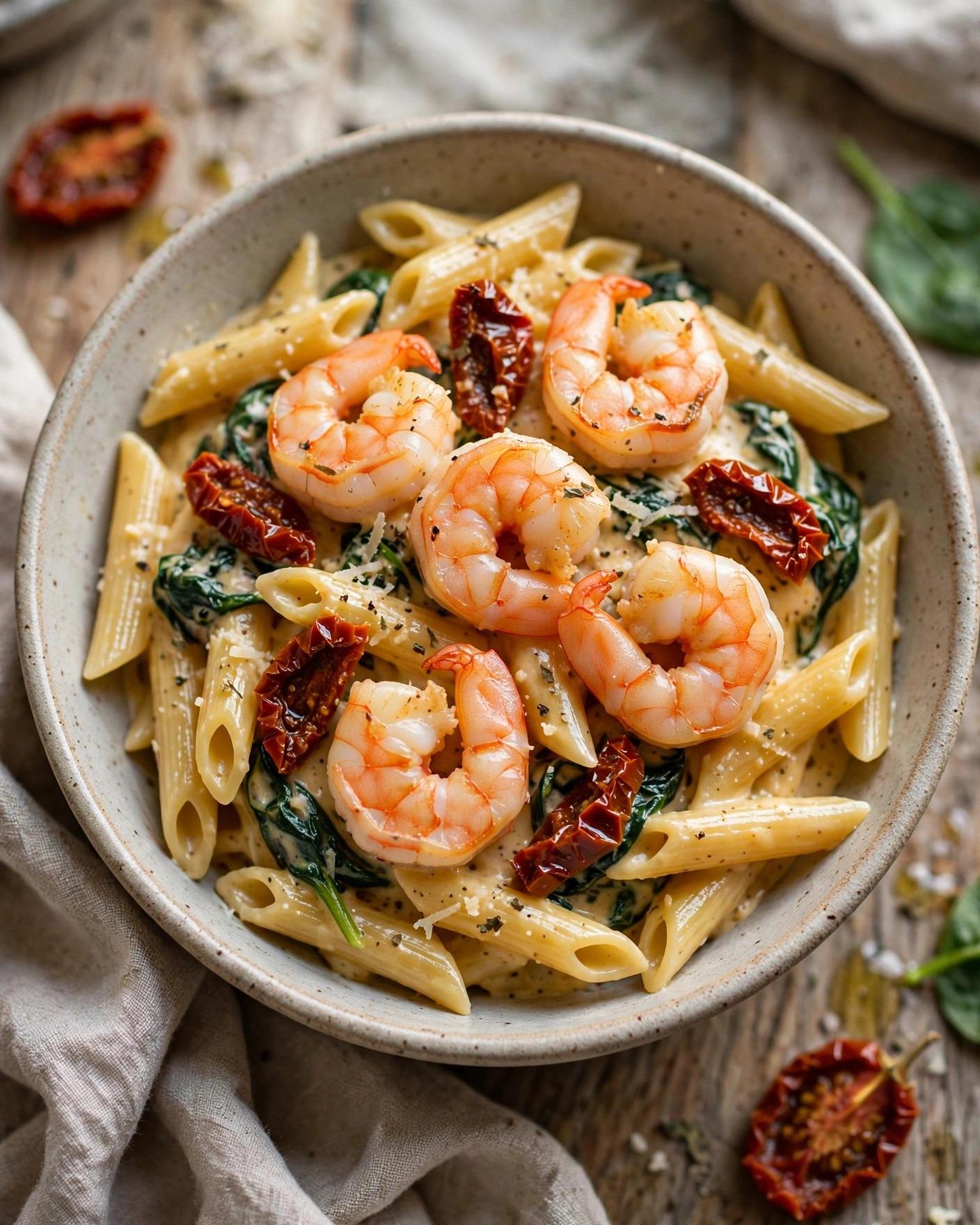
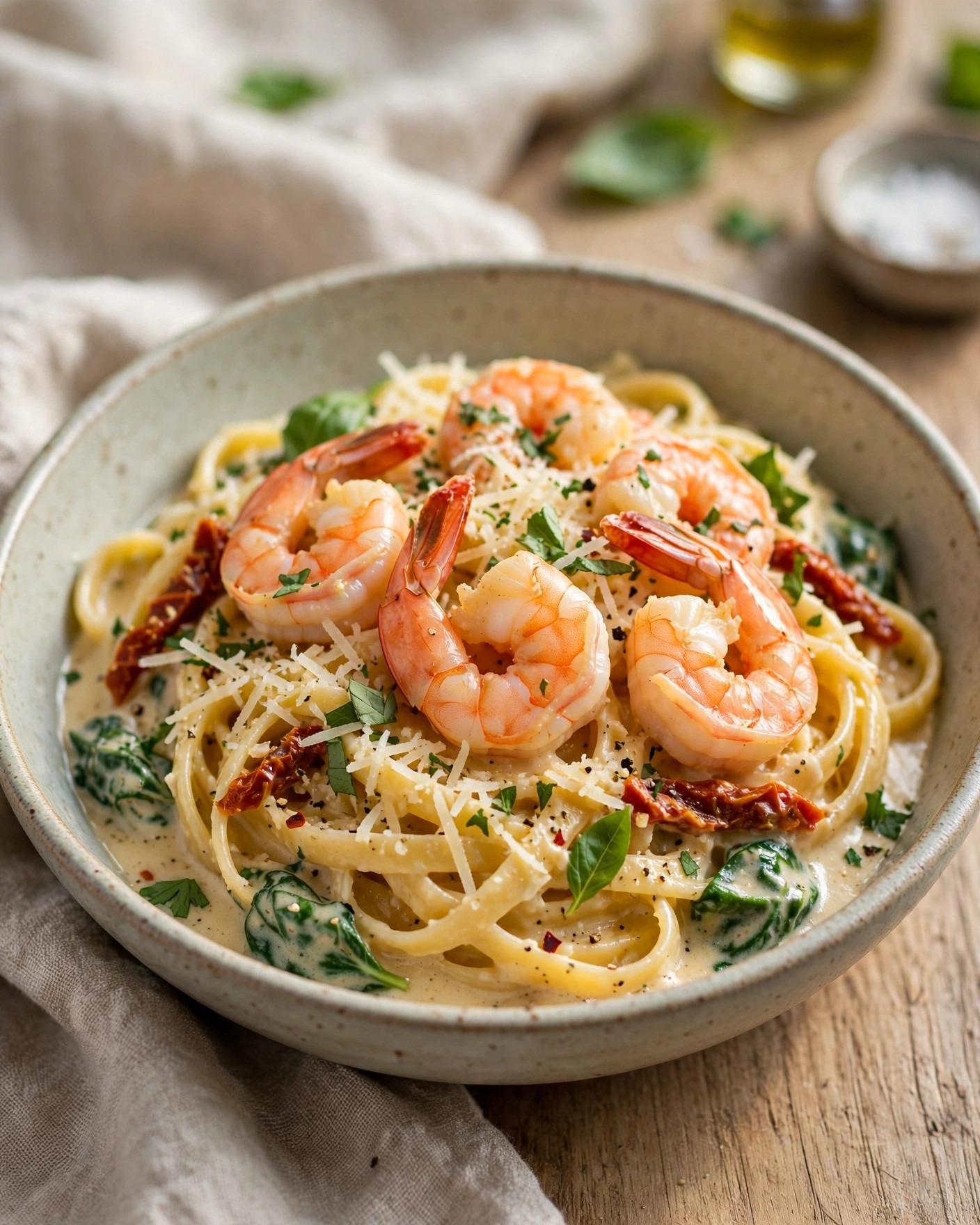
Some dinners look like they took all evening and quietly come together in about half an hour. Creamy Tuscan Shrimp Pasta is exactly that kind of dinner. Tender penne or fettuccine is folded through a warm garlic cream sauce, sweet sun-dried tomatoes bring a deep, concentrated tomato flavor, baby spinach wilts into soft green ribbons, and plump shrimp sit right on top, pink and just cooked through. It is rich without being heavy, colorful without any fuss, and generous enough for a family dinner while still feeling special enough for company.
The heart of the dish is the sauce. It starts simply, with garlic and the flavorful oil from a jar of sun-dried tomatoes, then builds with cream, parmesan, and Italian herbs into something silky that clings to every piece of pasta. A splash of the hot pasta cooking water loosens it at the end and helps it shine, so the sauce coats rather than pools. Nothing in the pan is complicated, and every ingredient earns its place: the tomatoes for sweetness and depth, the spinach for freshness and color, the parmesan for salt and body, and the shrimp for that sweet, delicate seafood flavor that makes the whole bowl feel like a treat.
Shrimp is one of the kindest proteins for a weeknight cook. It thaws quickly, cooks in minutes, and tells you plainly when it is done by turning pink and opaque. This recipe sears the shrimp first, in a single layer, so it picks up golden color before leaving the skillet. The sauce builds in that same pan, and the shrimp returns only at the end, warmed gently so it stays tender. That order — sear, sauce, toss, return — keeps the shrimp juicy instead of rubbery.
Use penne or fettuccine — both work beautifully. Penne catches sauce inside its tubes, while fettuccine twirls into long, creamy strands that feel a touch more elegant. Cook it just to al dente, save some cooking water before draining, and from there everything happens in one large skillet.
Why You'll Love This Recipe
- Ready in about 30 minutes. Shrimp cooks in minutes, the sauce simmers while the pasta boils, and everything meets in one skillet, so a full, satisfying dinner lands on the table fast enough for a weeknight.
- One pan for the sauce and shrimp. The shrimp sears and the sauce builds in the same large skillet, which keeps washing up modest and lets the sauce pick up the savory flavor left behind by the sear.
- A sauce that actually clings. Cream, parmesan, and a splash of starchy pasta water make a silky sauce that coats every tube of penne or strand of fettuccine instead of sliding to the bottom of the bowl.
- Sweet, savory, and fresh in balance. Sun-dried tomatoes bring concentrated sweetness, garlic and herbs bring warmth, spinach brings freshness, and lemon-bright shrimp keep the richness from ever feeling too much.
- Gentle, reliable shrimp cooking. Clear timing and a simple visual cue — pink and opaque, curled into a loose C — help you pull the shrimp at exactly the right moment, tender rather than tough.
- Easy to adapt to your table. Swap the pasta shape, add heat, use half-and-half, stir in mushrooms, or serve it over a smaller portion of pasta with extra spinach — the base recipe welcomes all of it.

Ingredients
For the pasta and shrimp
- 12 ounces (340 g) penne or fettuccine
- 1 tablespoon fine sea salt, for the pasta water, plus more to taste
- 1 pound (450 g) large raw shrimp, peeled and deveined, tails on or off as you prefer
- 1/2 teaspoon fine sea salt
- 1/2 teaspoon freshly ground black pepper
- 1/2 teaspoon smoked paprika or sweet paprika
- 1 tablespoon olive oil, or oil from the sun-dried tomato jar
For the Tuscan cream sauce
- 2 tablespoons unsalted butter
- 4 cloves garlic, minced (about 1 tablespoon)
- 1/2 cup (85 g) sun-dried tomatoes in oil, drained and sliced into thin strips
- 1 teaspoon Italian seasoning
- 1/2 teaspoon dried oregano
- 1/4 teaspoon red pepper flakes (optional, for gentle warmth)
- 1 cup (240 ml) low-sodium chicken broth or vegetable broth
- 1 cup (240 ml) heavy cream
- 3/4 cup (75 g) finely grated parmesan cheese, plus more for serving
- 3 cups (90 g) baby spinach, loosely packed
- 1 teaspoon fresh lemon juice (optional, to brighten at the end)
- Fresh basil or flat-leaf parsley, chopped, for serving (optional)
Why these ingredients matter
Penne or fettuccine. Penne, at 12 ounces (340 g), catches sauce inside its hollow center and holds pieces of sun-dried tomato in its ridges. Fettuccine gives long, silky ribbons that feel a little dressier. Cook either just to al dente — tender with a slight bite — because it will simmer briefly in the sauce and soften a touch more there.
Large shrimp. Large shrimp, about 21 to 25 per pound, stay juicy through a quick sear and eat in one or two bites. One pound (450 g) is generous for four servings. Look for raw, peeled, and deveined shrimp, and pat them very dry before seasoning — dry shrimp color instead of steam.
Garlic. Four cloves, minced fine, perfume the whole sauce. Garlic softens and sweetens in the warm butter and tomato oil in about 30 seconds, flavoring every later layer. It burns quickly, so keep it moving and do not let it darken past pale gold. Fresh garlic matters here; its savory punch is central to a Tuscan-style sauce.
Sun-dried tomatoes. Drying concentrates a tomato's sugars and acidity into something sweet, tangy, and deeply savory, so a modest 1/2 cup (85 g) flavors the entire pan. Oil-packed tomatoes are best: they stay soft and pliable, and their oil can be used for searing the shrimp. Slice them thin so they distribute evenly.
Heavy cream. Cream gives the sauce its body and gentle, luxurious texture. One cup (240 ml) coats the pasta generously without turning the dish into soup, and it softens the sharp edges of garlic and tomato. It simmers without curdling at a gentle heat, which makes it more forgiving than milk.
Parmesan cheese. Finely grated parmesan salts the sauce, deepens its savory flavor, and helps it thicken into a smooth coating. Grate it yourself when you can — pre-shredded cheeses often carry anti-caking coatings that melt unevenly. Add it gradually over low heat, stirring as it melts, so it blends in instead of clumping.
Italian seasoning and oregano. A teaspoon of Italian seasoning plus extra oregano gives the sauce its warm, herbaceous backbone. Dried herbs belong early, bloomed in the warm fat with the garlic and tomatoes, so their flavor softens and spreads through the oil rather than tasting dusty on top.
Baby spinach. Three cups (90 g) sounds like a lot and wilts down to almost nothing in the pan, which is why you need that much. It adds color, gentle freshness, and a soft texture that slips among the pasta. Baby spinach needs no chopping; its tender leaves wilt in the warm sauce in about a minute.
Chicken or vegetable broth. Broth adds savory depth and thins the cream just enough to simmer into a sauce that coats rather than smothers. Low-sodium broth lets you control the salt, which matters because parmesan and sun-dried tomatoes both bring salt of their own.
Butter and olive oil. Olive oil, or the sun-dried tomato oil, has the heat tolerance for searing shrimp, while butter brings richness and helps the garlic cook gently. Together they give the dish both a clean sear and a round, buttery base.
Paprika. Half a teaspoon seasons the shrimp with warmth and helps its color, so the finished shrimp look deeply pink and lightly golden. Smoked paprika adds a whisper of smokiness; sweet paprika keeps it milder. Neither makes the dish spicy — the optional red pepper flakes are where any real heat lives.
Pasta cooking water. The water the pasta boils in is full of starch, and a splash loosens a thick sauce, helps it turn glossy, and encourages it to cling instead of separating. Save a full cup before draining, even though you will likely use only part of it.
Instructions
- Boil the pasta and save the cooking water. Bring a large pot of water to a rolling boil, add 1 tablespoon of fine sea salt, and cook the penne or fettuccine until just al dente — tender with a slight bite in the center. Before draining, scoop out 1 cup (240 ml) of the hot cooking water and set it aside; this starchy water is your insurance for a silky sauce. Drain the pasta, but do not rinse it, because the light starch on its surface helps the sauce cling.
- Season the shrimp. Pat the shrimp very dry on all sides with paper towels. Dry shrimp sear; wet shrimp steam, and the difference shows in color and texture. Toss the shrimp with 1/2 teaspoon fine sea salt, the black pepper, and the paprika until evenly coated. Let them sit for about 10 minutes while you mince the garlic, slice the sun-dried tomatoes, grate the parmesan, and wash the spinach, so everything is ready before the pan gets hot.
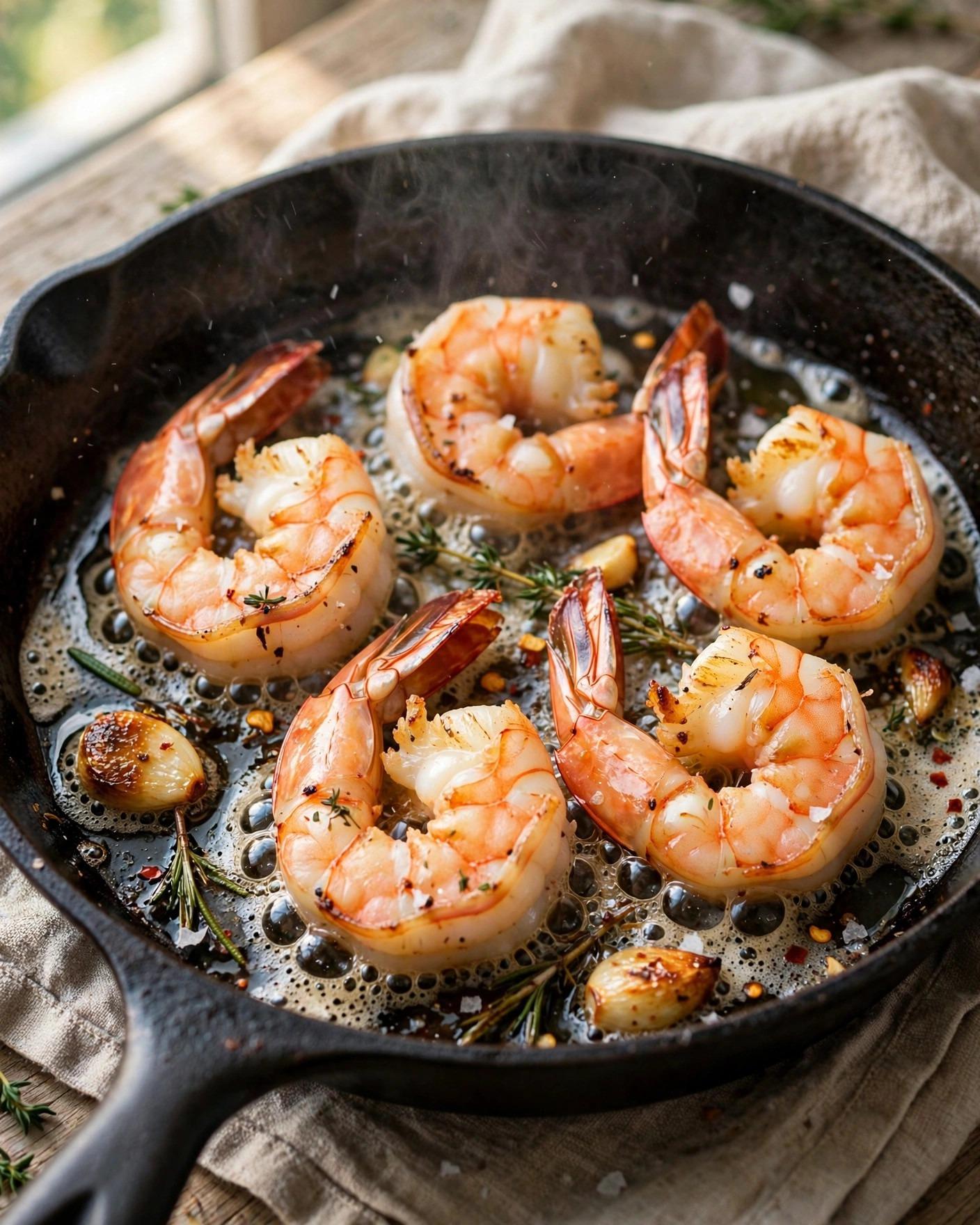
- Sear the shrimp, briefly. Heat the olive oil, or a tablespoon of oil from the sun-dried tomato jar, in a large, deep skillet over medium-high heat until it shimmers. Add the shrimp in a single layer with a little space between each piece, working in two batches if your pan is crowded. Cook undisturbed for 1 to 2 minutes, until the undersides are pink and lightly golden, then flip and cook for 1 minute more, just until the shrimp are pink and opaque through the center and curled into a loose C shape. Transfer the shrimp and any juices to a clean plate right away. They will warm through again in the sauce at the end, so it is far better to pull them a moment early than a moment late.
- Soften the garlic and tomatoes. Reduce the heat to medium and add the butter to the same skillet, letting it melt into the shrimp juices and leftover oil. Add the minced garlic and the sliced sun-dried tomatoes and cook, stirring constantly, for about 1 minute, until the garlic is fragrant and pale gold and the tomato oil takes on a warm orange tint. Keep everything moving and do not let the garlic brown — browned garlic turns bitter and will follow the whole sauce. This short step builds the flavor base that makes the finished dish taste layered rather than simply creamy.
- Bloom the herbs and add the broth. Stir in the Italian seasoning, oregano, and red pepper flakes, if using, and cook for about 20 seconds, until fragrant. Pour in the chicken or vegetable broth and use a wooden spoon to scrape up every browned bit from the bottom of the pan — those bits carry the flavor of the shrimp sear and belong in the sauce. Bring the broth to a gentle simmer and let it bubble for 2 to 3 minutes, until slightly reduced and smelling savory and herbed.
- Add the cream and simmer gently. Pour in the heavy cream, stir to combine, and bring the sauce back to the gentlest simmer over medium-low heat. Let it simmer, stirring now and then, for 3 to 4 minutes, until it thickens just enough to coat the back of a spoon. Keep the heat modest: a hard boil can make a cream sauce feel oily, while a lazy simmer keeps it smooth and unified. The sauce should look pale gold from the tomatoes and slightly glossy. If it seems thin at this stage, do not worry — the parmesan and the pasta itself will finish the thickening.
- Melt in the parmesan. Reduce the heat to low. Sprinkle the grated parmesan into the sauce a handful at a time, stirring or whisking constantly as each addition melts before adding the next. This gradual approach keeps the cheese smooth instead of stringy or clumped. Once all the parmesan has melted in, taste the sauce and adjust the salt and pepper carefully — the cheese and tomatoes have already salted it, so it may need less than you expect. The sauce should now be silky, savory, and thick enough to leave a clear trail when you drag a spoon across the bottom of the pan.
- Wilt the spinach. Add the baby spinach to the sauce by handfuls, tossing gently with tongs as each handful begins to wilt before adding the next. Cook for 1 to 2 minutes total, just until all the spinach is soft, bright green, and folded into the sauce. Spinach releases a little water as it wilts, which is welcome here — it lightens the sauce slightly and helps it coat the pasta. Avoid cooking it longer than needed; spinach left simmering turns dull in color and soft in texture, and it is at its best when it still looks vivid.
- Toss the pasta through the sauce. Add the drained pasta straight into the skillet and toss thoroughly with tongs until every piece is coated in the creamy sauce, the spinach is evenly distributed, and the sun-dried tomatoes are scattered throughout rather than sitting in a layer. Splash in the reserved pasta water a little at a time — start with 1/4 cup (60 ml) — tossing as you go, until the sauce looks glossy and moves easily around the pasta without pooling at the bottom of the pan. Let everything simmer together for about 1 minute so the pasta absorbs a little sauce and finishes cooking in it.
- Return the shrimp and warm through. Nestle the seared shrimp and any juices from their plate back into the pasta, arranging some on top where they can be seen. Toss very gently once or twice, then let the pan sit over low heat for about 1 minute, just until the shrimp are warmed through. Check one shrimp if you are unsure: it should be pink, opaque all the way through, and still tender when pressed. Do not simmer the shrimp in the sauce for several minutes at this stage — they were already cooked in the sear, and extra time in a hot pan is what turns shrimp firm and rubbery.
- Brighten, rest, and check the seasoning. Take the skillet off the heat. Stir in the lemon juice, if using — just a teaspoon lifts the cream and tomato flavors noticeably without making the dish taste lemony. Let the pasta rest in the pan for 1 to 2 minutes; the sauce will settle, thicken slightly, and cling even better as it cools a fraction. Taste a piece of pasta and a little sauce together, and add a final pinch of salt or a grind of black pepper if the flavors feel muted.
- Serve warm with extra parmesan. Divide the pasta among warm bowls, making sure each serving gets several shrimp, plenty of spinach, and a good scattering of sun-dried tomatoes. Spoon any sauce left in the skillet over the top. Finish with extra grated parmesan and chopped fresh basil or parsley, if you like, and serve right away while the sauce is glossy and the shrimp are at their most tender.


Tips for Success
- Pat the shrimp completely dry. Moisture on the surface turns to steam in the pan, preventing browning and diluting the seasoning. A minute with paper towels gives you shrimp that sear to a pink-gold finish in the same time.
- Do not crowd the skillet. Shrimp packed tightly steam in their own juices and cook unevenly. A single layer with space around each piece, in two batches if needed, keeps the sear real. A 12-inch (30 cm) deep skillet holds the shrimp, sauce, and pasta for tossing.
- Cook shrimp just until pink and opaque. Shrimp go from tender to tough quickly, and the window is measured in seconds at the end. Watch for the color change to pink, flesh that is opaque rather than translucent gray, and a loose C curl. A tight, closed O curl usually means the shrimp have gone a little too far. Remember they will warm again in the sauce, so err on the early side.
- Keep the cream at a gentle simmer. A rolling boil can separate the sauce and make it feel greasy, while a gentle simmer thickens it smoothly. If it bubbles hard, slide the pan off the heat and lower the burner before continuing.
- Add parmesan gradually, over low heat. Dumping all the cheese into a very hot sauce at once invites clumps and graininess. Low heat and a handful at a time, stirred in fully, give you a smooth melt every time. Freshly grated parmesan melts the most evenly of all.
- Save more pasta water than you think you need. Sauces thicken as they sit and pasta absorbs liquid as it rests. A full cup of hot, starchy water on hand lets you adjust the sauce to a glossy, flowing finish at the stove and again for leftovers.
Variations
- Chicken Tuscan pasta. Swap the shrimp for 1 pound (450 g) boneless, skinless chicken breast or thighs, sliced into bite-size pieces or thin cutlets. Season and sear the same way, but cook the chicken through fully — until it reaches 165 degrees F (74 degrees C) at the thickest part — before removing it from the pan, then slice and return it at the end as you would the shrimp.
- Spicy Tuscan shrimp pasta. Double the red pepper flakes to 1/2 teaspoon, add a pinch to the shrimp seasoning as well, and finish the bowls with an extra sprinkle on top. The cream keeps the heat warm and rounded rather than sharp, so even a generous hand stays comfortable for most tables.
- Mushroom and Tuscan shrimp pasta. Slice 8 ounces (225 g) cremini mushrooms and cook them in the skillet after the shrimp, letting them brown in the butter before you add the garlic. They bring an earthy depth that suits the sun-dried tomatoes beautifully and make the dish feel even more substantial.
- Lighter cream sauce. Replace the heavy cream with 1 cup (240 ml) half-and-half and whisk 1 teaspoon of cornstarch into the cold broth before adding it to the pan. Keep the sauce at the barest simmer and never let it boil, since lower-fat dairy is more likely to separate. The result is a little lighter and a little thinner, but still pleasantly creamy.
- Salmon Tuscan pasta. Use 1 pound (450 g) salmon fillets instead of shrimp. Sear skin-side down until the skin is crisp and the fish is mostly cooked through, set it aside, and flake or place it over the finished pasta in large pieces rather than tossing it through, so it keeps its shape. The rich fish loves the garlic, tomato, and spinach combination.
- Extra-vegetable Tuscan pasta. Stir a halved cup of cherry tomatoes, a diced zucchini, or a handful of frozen peas into the sauce along with the spinach, or double the spinach to 6 cups (180 g) and serve the pasta in slightly smaller portions. The sauce stretches gracefully, and the extra vegetables make the bowls brighter and more colorful.
Storage
Creamy Tuscan Shrimp Pasta is at its very best fresh from the skillet, when the sauce is glossy and the shrimp are perfectly tender, but leftovers can still be very good with a little care. Let the pasta cool until it is no longer steaming, then transfer it to an airtight container and refrigerate promptly — within 2 hours of cooking, and sooner in a warm kitchen, since cooked seafood should never sit out. Refrigerated, it keeps well for up to 2 days. The pasta will absorb sauce as it sits, so the leftovers will look thicker and drier than the fresh dish; that is expected and easy to fix at reheating time.
Reheat gently, because seafood and cream sauce both dislike fierce heat. For a single portion, warm the pasta in a small skillet over low heat with a splash of milk, cream, or broth — about 1 to 2 tablespoons — stirring often until the sauce loosens, turns glossy again, and steams throughout. In the microwave, use a covered, microwave-safe bowl at medium power in short bursts, stirring between each one, with the same splash of liquid added first. However you reheat it, stop as soon as the pasta is hot all the way through, around 165 degrees F (74 degrees C). Extra minutes of heat will not hurt the penne much, but they will tighten the shrimp, so gentle and brief is the rule — warming the shrimp through, not cooking them a second time.
Freezing is not recommended for this dish. Cream sauces tend to separate and turn grainy as they thaw, spinach loses its bright color, and once-cooked shrimp become rubbery after a freeze and a reheat. For a make-ahead meal, freeze only the sauce base without the cream, spinach, shrimp, or pasta, then finish it fresh with cream and newly cooked pasta, spinach, and shrimp.
FAQ
Can I use frozen shrimp for this pasta? Yes, frozen shrimp work very well and are what many home cooks keep on hand. Thaw them safely before cooking: either overnight in the refrigerator in a covered bowl, or, for a faster method, in a colander under cold running water or in a bowl of cold water changed once, for about 15 to 20 minutes until pliable and no longer icy. Never thaw shrimp in warm water or on the counter, which can push them into an unsafe temperature range and soften their texture. Once thawed, drain them well and pat them thoroughly dry before seasoning — frozen shrimp release extra surface water, and that dry step matters even more here for a proper sear.
How do I know when the shrimp are done without overcooking them? Use color, opacity, and shape together. Raw shrimp are gray and translucent; cooked shrimp are pink on the outside and opaque white all the way through, with no glassy gray center. Shape tells the same story: a loose C means the shrimp is just cooked and tender, while a tight O means it has gone past its best. In this recipe the shrimp sear for 1 to 2 minutes on the first side and about 1 minute on the second, then warm briefly in the finished sauce. When in doubt, cut one shrimp in half and look at the center — opaque and just firm is ready, and it is always better to pull the pan a few seconds early than late.
Can I make this with half-and-half or milk instead of cream? You can, with a small adjustment in expectations and technique. Half-and-half gives a sauce that is lighter and a little thinner than the cream version, and it needs genuinely gentle heat — a bare simmer, never a boil — to keep it from separating. A teaspoon of cornstarch whisked into the cold broth helps it hold together. Whole milk on its own usually makes too thin a sauce for this dish and is the most likely to split, so if milk is what you have, use the cornstarch and expect a lighter coating rather than a rich one. The cream version remains the most reliable and the most forgiving for a first attempt.
What can I use instead of sun-dried tomatoes? The closest substitute is a spoonful of tomato paste — about 1 tablespoon — cooked with the garlic for a minute to deepen its flavor, plus a handful of halved cherry tomatoes added with the spinach for freshness. That combination gives you concentrated tomato savor plus bright tomato pieces, though the flavor will be a little fresher and less sweet-tangy than the original. Roasted red peppers, sliced and added where the tomatoes would go, also work nicely and lean the dish sweeter and smokier. If you use dry-packed sun-dried tomatoes rather than oil-packed, soak them in warm water for about 20 minutes and pat them dry first, so they are tender enough to slice and pleasant to chew.
Recipe Card
Creamy Tuscan Shrimp Pasta
- Prep Time: 10 minutes (PT10M)
- Cook Time: 20 minutes (PT20M)
- Total Time: 30 minutes (PT30M)
- Servings: 4 servings
- Calories: 640 kcal per serving (estimated)
Creamy Tuscan Shrimp Pasta with penne or fettuccine folded through a garlic and sun-dried tomato cream sauce with parmesan, Italian herbs, and wilted baby spinach, topped with quickly seared shrimp cooked just until pink and opaque. A splash of pasta cooking water keeps the sauce silky and clinging, and the whole dinner comes together in one large skillet in about 30 minutes.
Nutrition (estimated): 640 kcal per serving (estimated), 58 g carbohydrates, 38 g protein, 28 g fat, 4 g fiber, 7 g sugar, 890 mg sodium. Nutrition is estimated and will vary with the exact pasta shape, shrimp size, cheese, broth, and any variations or substitutions.
Can I use frozen shrimp for this pasta?
Yes, frozen shrimp work very well and are what many home cooks keep on hand. Thaw them safely before cooking: either overnight in the refrigerator in a covered bowl, or, for a faster method, in a colander under cold running water or in a bowl of cold water changed once, for about 15 to 20 minutes until pliable and no longer icy. Never thaw shrimp in warm water or on the counter, which can push them into an unsafe temperature range and soften their texture. Once thawed, drain them well and pat them thoroughly dry before seasoning — frozen shrimp release extra surface water, and that dry step matters even more here for a proper sear.
How do I know when the shrimp are done without overcooking them?
Use color, opacity, and shape together. Raw shrimp are gray and translucent; cooked shrimp are pink on the outside and opaque white all the way through, with no glassy gray center. Shape tells the same story: a loose C means the shrimp is just cooked and tender, while a tight O means it has gone past its best. In this recipe the shrimp sear for 1 to 2 minutes on the first side and about 1 minute on the second, then warm briefly in the finished sauce. When in doubt, cut one shrimp in half and look at the center — opaque and just firm is ready, and it is always better to pull the pan a few seconds early than late.
Can I make this with half-and-half or milk instead of cream?
You can, with a small adjustment in expectations and technique. Half-and-half gives a sauce that is lighter and a little thinner than the cream version, and it needs genuinely gentle heat — a bare simmer, never a boil — to keep it from separating. A teaspoon of cornstarch whisked into the cold broth helps it hold together. Whole milk on its own usually makes too thin a sauce for this dish and is the most likely to split, so if milk is what you have, use the cornstarch and expect a lighter coating rather than a rich one. The cream version remains the most reliable and the most forgiving for a first attempt.
What can I use instead of sun-dried tomatoes?
The closest substitute is a spoonful of tomato paste — about 1 tablespoon — cooked with the garlic for a minute to deepen its flavor, plus a handful of halved cherry tomatoes added with the spinach for freshness. That combination gives you concentrated tomato savor plus bright tomato pieces, though the flavor will be a little fresher and less sweet-tangy than the original. Roasted red peppers, sliced and added where the tomatoes would go, also work nicely and lean the dish sweeter and smokier. If you use dry-packed sun-dried tomatoes rather than oil-packed, soak them in warm water for about 20 minutes and pat them dry first, so they are tender enough to slice and pleasant to chew.

Hi, I’m Emma! I’m the cook and recipe developer behind Sizzle & Sage. From my sunny home kitchen, I share easy, flavor-packed recipes for real life — quick breakfasts, cozy weeknight dinners, and simple bakes anyone can make. Pull up a chair and stay a while!