Marry Me Chicken in Sun-Dried Tomato Cream Sauce
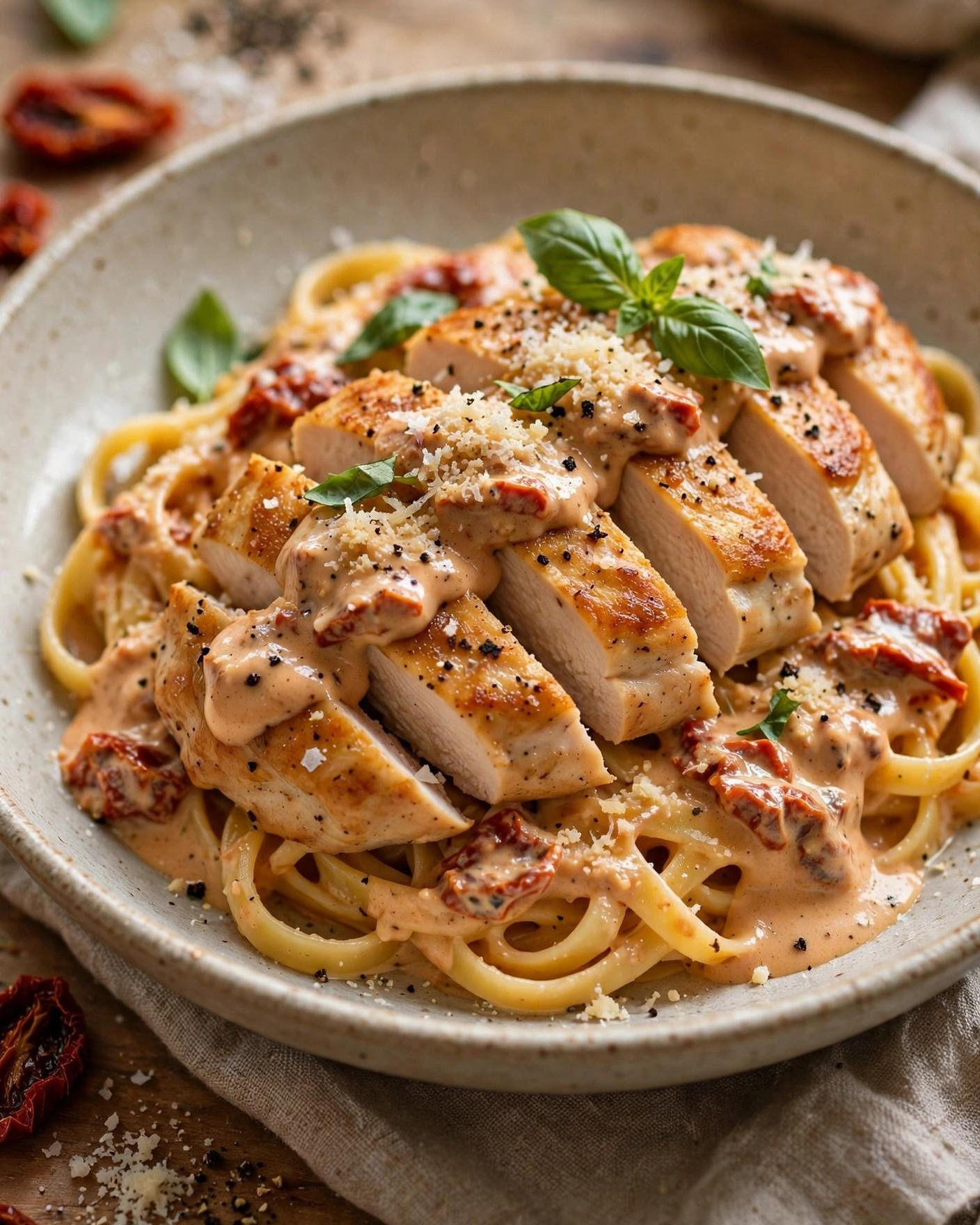
Some dinners earn their reputation the moment the sauce hits the pan. Marry Me Chicken is one of them: golden, well-seasoned chicken breasts simmered in a creamy, garlicky sauce studded with sun-dried tomatoes, finished with parmesan and fresh basil. The sauce is rich without being heavy, a little tangy from the tomatoes, a little warm from a pinch of red pepper flakes, and generous enough that you will want something underneath to catch every spoonful. It looks like a special-occasion plate, yet it comes together in one pan on an ordinary weeknight, which is exactly why it has become such a beloved recipe to keep in rotation.
The playful name is part of the fun. The story that travels with this dish is pure kitchen folklore — the idea that a chicken dinner in a sauce this good could inspire a proposal at the table. Beyond that, it is simply a very good name for a very comforting dinner, the kind people request again the following week. It fits a date night, a family supper, or a quiet evening equally well, without complicated steps or hard-to-find ingredients.
This is the classic marry-me version, and it helps to know what sets it apart. Unlike a spinach-heavy Tuscan-style skillet, this recipe leans firmly on sun-dried tomatoes and their concentrated, sweet-tart flavor, and it is served over pasta or rice so the cream sauce has somewhere delicious to go. The chicken is seared first for color, the sauce is built in the same pan so it picks up all those golden bits, and then the chicken returns to finish gently in the sauce until tender and cooked through.
If you are new to cream sauces, this is a friendly place to start. The method is forgiving and the timing is clear: the broth keeps the sauce pourable, the cream makes it silky, and the parmesan ties it together with a salty, savory finish. Have your ingredients measured and near the stove, and the dish moves calmly from searing to serving in about 40 minutes.
Why You'll Love This Recipe
- One pan, big flavor. Everything happens in a single large skillet, from the golden sear on the chicken to the finished cream sauce, so the flavors build on each other and cleanup stays wonderfully simple.
- A sauce worth spooning over everything. Sun-dried tomatoes, garlic, cream, and parmesan make a sauce that is rich, tangy, and savory all at once — the kind you will drag a piece of pasta through long after the chicken is gone.
- Tender, juicy chicken every time. Searing first and then simmering gently in the sauce keeps the chicken moist, and a clear target temperature of 165°F (74°C) takes the guesswork out of doneness.
- Weeknight-fast, company-worthy. The dish takes about 40 minutes from start to finish, yet it plates up beautifully enough for guests, date nights, and celebrations at home.
- Perfect over pasta or rice. The sauce is made to be served over something — fettuccine, penne, fluffy rice, or even mashed potatoes — so nothing delicious is left behind in the pan.
- Easy to adjust to your table. Keep the red pepper flakes gentle for a mild sauce, add a little more for warmth, swap in thighs if you prefer them, or stir in spinach at the end — the base recipe welcomes small changes.
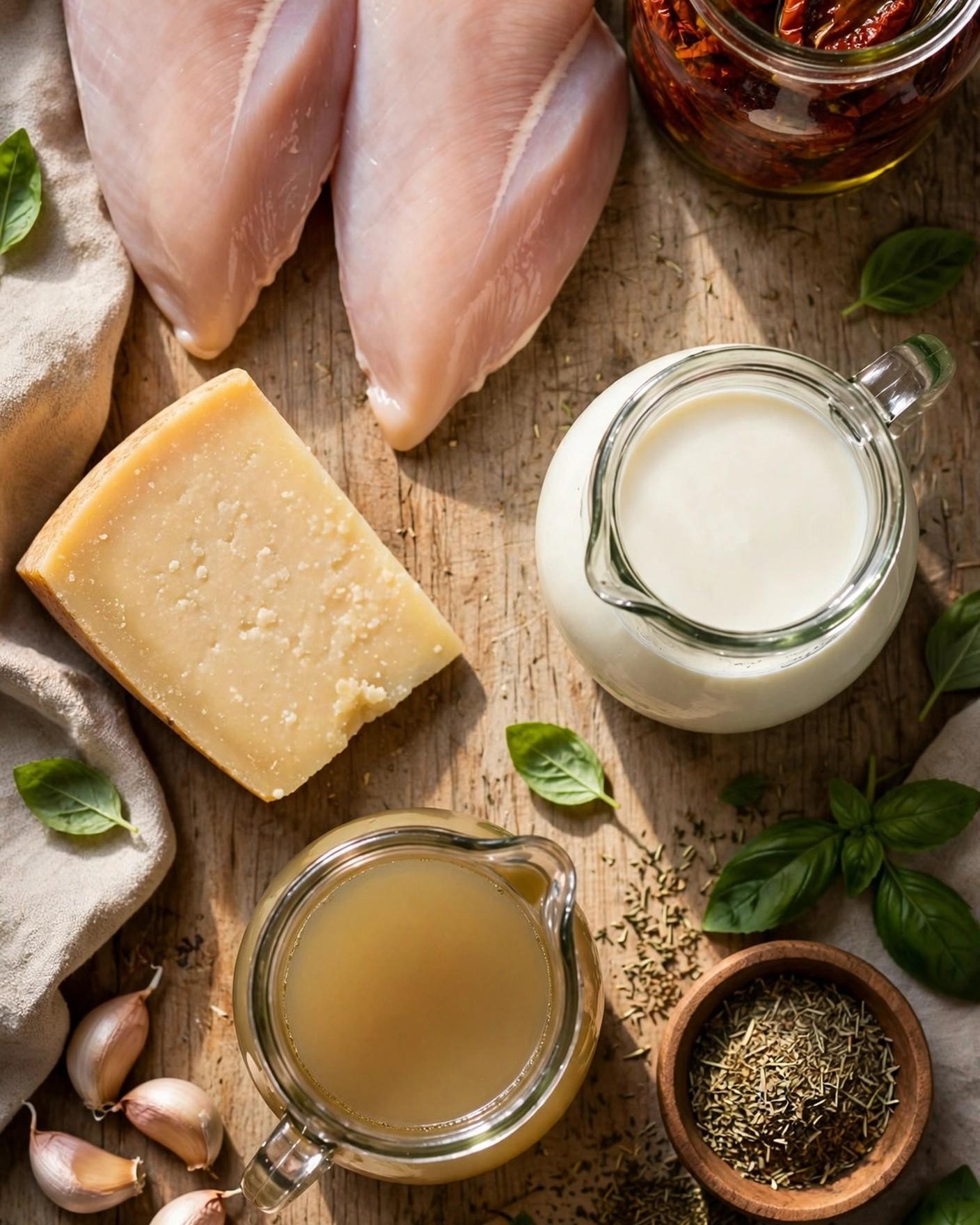
Ingredients
For the chicken
- 4 boneless, skinless chicken breasts (about 2 pounds / 900 g total), patted dry
- 1 teaspoon fine sea salt, plus more to taste
- 1/2 teaspoon black pepper, freshly ground if possible
- 1 teaspoon garlic powder
- 1 teaspoon sweet paprika
- 1 teaspoon Italian seasoning
- 2 tablespoons olive oil, or oil from the sun-dried tomato jar
- 1 tablespoon unsalted butter
For the sun-dried tomato cream sauce
- 4 cloves garlic, minced (about 1 1/2 tablespoons)
- 3/4 cup (110 g) sun-dried tomatoes in oil, drained and sliced into thin strips, plus 1 tablespoon of their oil if not using olive oil above
- 1 teaspoon Italian seasoning, or 1/2 teaspoon dried oregano plus 1/2 teaspoon dried thyme
- 1/2 teaspoon red pepper flakes, plus more to taste
- 3/4 cup (180 ml) low-sodium chicken broth
- 1 cup (240 ml) heavy cream, at room temperature if possible
- 3/4 cup (75 g) freshly grated parmesan cheese, plus more for serving
- 1/2 teaspoon fine sea salt, or to taste
- 1/4 teaspoon black pepper, or to taste
- 1/4 cup (10 g) fresh basil leaves, torn or thinly sliced, plus more for serving
For serving
- 12 ounces (340 g) pasta, such as fettuccine, penne, or pappardelle, cooked according to package directions, or 3 to 4 cups cooked rice
- Extra grated parmesan, for the table
- Extra fresh basil, for garnish
- Warm crusty bread, optional, for extra sauce
Why these ingredients matter
Chicken breasts. Boneless, skinless chicken breasts are the classic choice for this dish because they slice neatly, serve generously, and present beautifully over pasta. Their mild flavor is an ideal canvas for a bold sauce. The key is even thickness: pound them gently between sheets of parchment, or slice very thick breasts in half horizontally, so every piece sears and simmers at the same pace.
Salt, pepper, garlic powder, paprika, and Italian seasoning. This blend does quiet work before the sauce starts. Salt seasons the meat itself, garlic powder clings to the surface and toasts during searing, paprika adds gentle warmth and deep golden color, and Italian seasoning echoes the herbs in the sauce, so chicken and sauce taste like one dish.
Olive oil and butter. Oil plus a tablespoon of butter gives you the best of both: steady heat from the oil, flavor and browning from the butter. A spoonful of oil from the sun-dried tomato jar is a lovely alternative — it carries tomato flavor into the pan from the first minute.
Garlic. Fresh garlic, added after the chicken comes out, perfumes the sauce without burning. Four cloves may sound generous, but garlic mellows quickly in cream and turns sweet and savory rather than sharp. Mince it finely, keep the heat at medium, and stir constantly — garlic in a very hot pan scorches in seconds.
Sun-dried tomatoes in oil. These are the signature ingredient of the classic version. Sun-dried tomatoes have concentrated sweetness, a pleasant chew, and bright acidity that cuts through the richness of cream in exactly the right way. The oil-packed kind is preferred because the tomatoes are tender and flavorful straight from the jar. Slice them thin so every bite of sauce carries a little tomato.
Chicken broth. Broth keeps the sauce balanced, loosening cream and parmesan to a spoonable, pasta-coating consistency and adding a savory backbone. Low-sodium broth helps because parmesan is salty — you can add salt at the end, but you cannot take it away. The broth also lifts the browned bits from the skillet, which is pure flavor.
Heavy cream. Heavy cream makes this sauce silky, stable, and luxurious. Its higher fat content means it can simmer gently without curdling the way milk often does with tomatoes. It softens the garlic and pepper flakes, carries the tomato flavor across the dish, and gives the sauce a glossy finish. Letting it warm up briefly helps it blend smoothly into the hot broth.
Parmesan cheese. Parmesan brings salt, savoriness, and body, thickening the sauce slightly as it melts into the cream. Freshly grated parmesan melts far more smoothly than pre-shredded, which can turn grainy. Add it gradually over low heat and stir until it disappears. Save a little extra for the table.
Oregano, thyme, and Italian herbs. Dried herbs belong in the sauce while it simmers, because warm liquid wakes up their flavor. Oregano gives the sauce its classic Italian character and thyme adds subtle earthiness. Delicate fresh basil waits until the end so its bright flavor stays fresh.
Red pepper flakes. A half teaspoon does not make this sauce assertively spicy — it adds gentle, lingering warmth that keeps a cream sauce from tasting flat, and cream softens the heat to a glow. Reduce it to a pinch for heat-shy tables, or nudge it up if yours loves warmth. Adding the flakes with the garlic lets their flavor bloom in the oil.
Fresh basil. Basil is the finishing note, stirred in at the end and scattered over the top. Its sweet, peppery freshness lifts a rich sauce and adds color against the pale cream and deep red tomatoes. Tear it just before using and keep it off the heat — basil darkens and loses brightness if it simmers for long.
Instructions
- Prepare the chicken and season it well. Pat the chicken breasts dry on all sides with paper towels — dry chicken sears, while damp chicken steams. If any breast is much thicker on one end, place it between two sheets of parchment and pound gently with a rolling pin or meat mallet to an even thickness of about 3/4 inch (2 cm), or slice very thick breasts in half horizontally to make cutlets. In a small bowl, stir together the salt, black pepper, garlic powder, paprika, and Italian seasoning. Sprinkle the blend evenly over both sides of the chicken, pressing it lightly so it adheres. Let the seasoned chicken rest at room temperature for about 10 minutes while you mince the garlic, slice the sun-dried tomatoes, and grate the parmesan.
- Sear the chicken until deeply golden. Heat a large, heavy skillet — cast iron or stainless steel, at least 12 inches (30 cm) across — over medium-high heat. Add the olive oil and butter. When the butter has melted and the fat is shimmering, lay the chicken breasts in the pan in a single layer, leaving a little space between them. Sear undisturbed for 5 to 6 minutes, until the underside is a deep golden brown and the chicken releases easily from the pan. Flip once and sear the second side for 4 to 5 minutes more. The chicken does not need to be fully cooked at this stage, because it will finish in the sauce, but the color you build now is flavor you cannot add later. Transfer the chicken to a plate and set it aside, leaving all the drippings and browned bits in the skillet.
- Soften the garlic and sun-dried tomatoes. Reduce the heat to medium. If the pan looks very dry, add the tablespoon of oil from the sun-dried tomato jar. Add the minced garlic, sliced sun-dried tomatoes, red pepper flakes, and the teaspoon of Italian seasoning (or oregano and thyme). Cook, stirring constantly, for 1 to 2 minutes, until the garlic is fragrant and just turning pale gold at the edges and the tomato strips are glistening in the oil. Keep the garlic moving and do not let it brown darkly, as scorched garlic turns bitter and will carry through the whole dish.
- Pour in the broth and deglaze the pan. Pour the chicken broth into the skillet and bring it to a lively simmer, scraping the bottom of the pan thoroughly with a wooden spoon or heatproof spatula to dissolve every browned bit. Let the broth simmer for 2 to 3 minutes. This brief reduction concentrates the flavor and gives the tomatoes a head start on softening into the sauce.
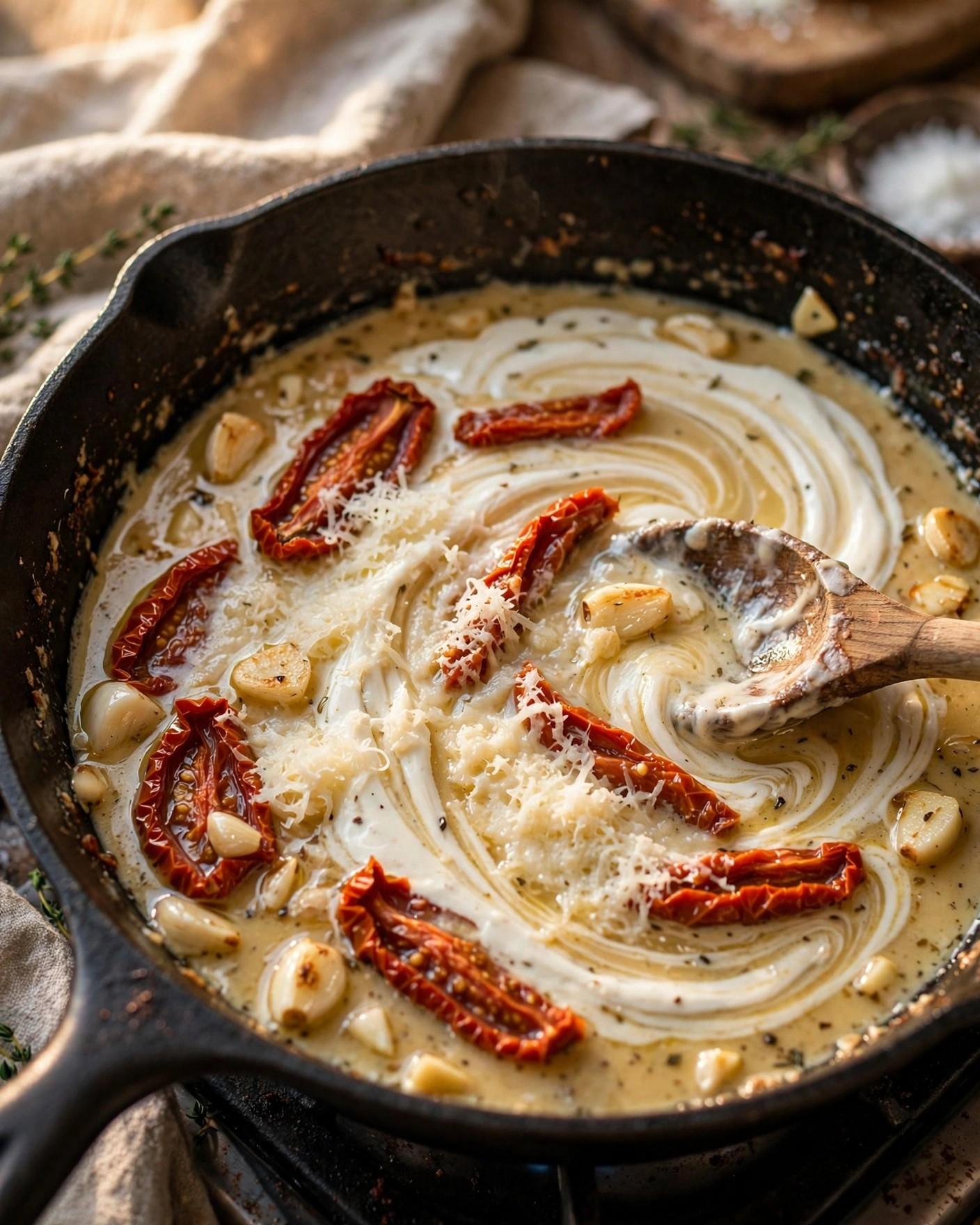
- Add the cream and build the sauce. Reduce the heat to medium-low so the pan is at a gentle simmer rather than a boil. Pour in the heavy cream, stirring as you add it, and let the sauce come back to the barest simmer. Cook for 2 to 3 minutes, stirring often, until the cream and broth have married into a smooth, pale sauce with a soft blush from the tomatoes. Avoid a hard boil from this point onward: cream sauces stay silkiest when they simmer gently, and boiling can make the sauce feel greasy or cause it to separate at the edges.
- Melt in the parmesan. Sprinkle the grated parmesan into the sauce a small handful at a time, stirring well after each addition and letting it melt completely before adding more. This gradual approach keeps the sauce smooth and prevents the cheese from clumping into strings. Once all the parmesan is in, simmer gently for 1 to 2 minutes more. The sauce should coat the back of a spoon and hold a clear line when you run a finger through it, yet still pour and pool around the chicken. If it feels a touch thick, stir in an extra splash of broth, a tablespoon at a time. Taste and adjust with salt and black pepper — remember that the chicken is seasoned too, so season the sauce with a light hand at first.
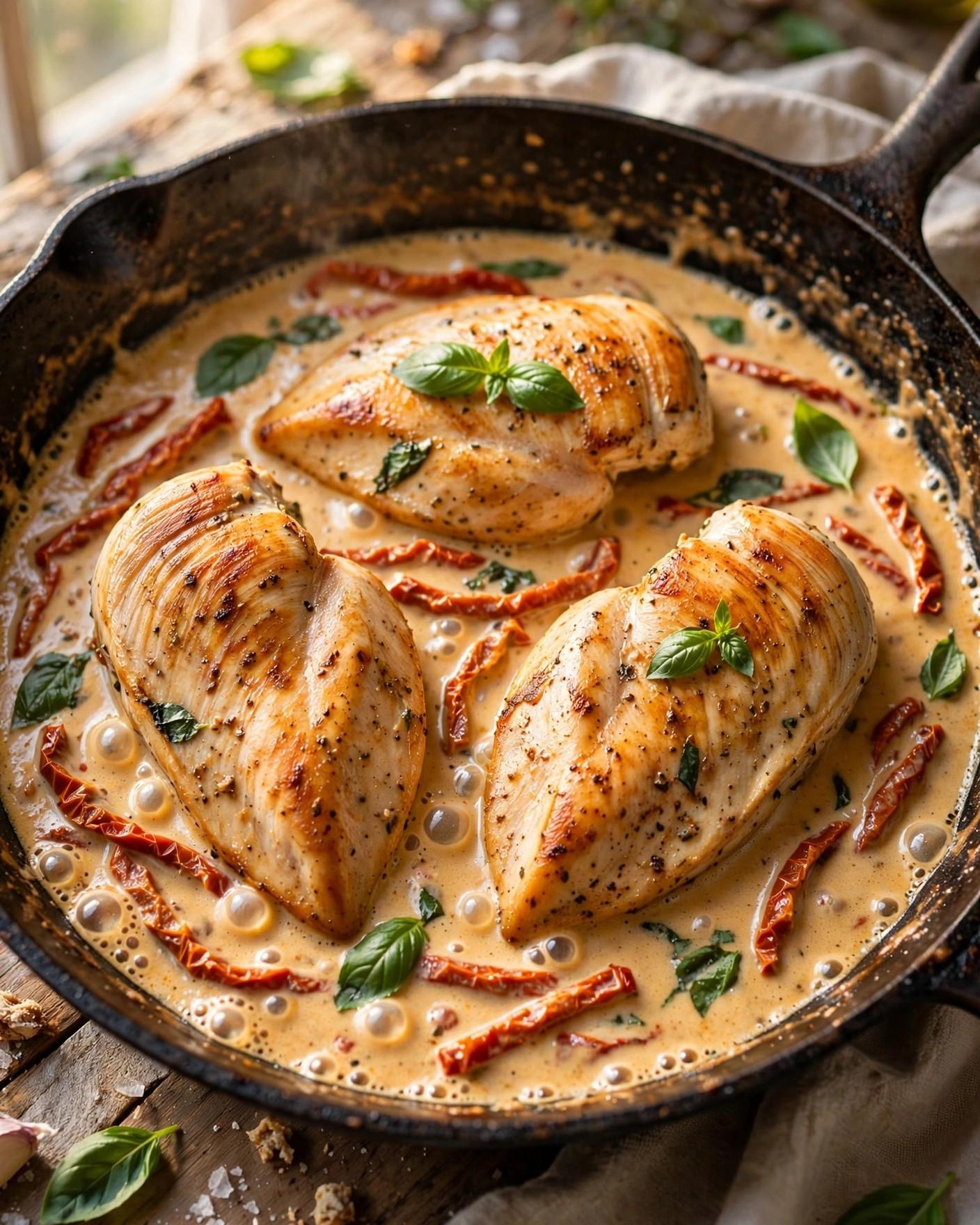
- Return the chicken to the pan. Nestle the seared chicken breasts back into the sauce in a single layer, along with any juices that collected on the plate — those juices belong in the sauce. Spoon a little sauce over the top of each breast so they are bathed on all sides. The sauce should come partway up the sides of the chicken without completely drowning it.
- Simmer gently until cooked through. Cover the skillet with a lid, reduce the heat to low, and simmer for 6 to 9 minutes, turning the chicken once halfway through if you like, until the chicken is cooked through and tender. Check doneness with an instant-read thermometer inserted into the thickest part of the largest breast: the chicken is ready when it reaches 165°F (74°C). If you do not have a thermometer, slice into the thickest part — the meat should be opaque white throughout with clear juices and no pink. Cutlets will finish toward the shorter end of the time; thick breasts need the longer end. If the sauce thickens more than you like during this simmer, stir in a splash of broth or a spoonful of the pasta cooking water to loosen it.
- Rest the chicken briefly and finish with basil. Remove the skillet from the heat and let the chicken rest in the warm sauce for 3 to 5 minutes. Resting lets the juices settle back into the meat, so the slices stay moist when you cut them, and it gives the sauce a final moment to thicken to a glossy finish. Stir most of the torn basil through the sauce, reserving a little for the top of each serving. Taste the sauce one last time and adjust the salt, pepper, or red pepper flakes if needed — a tiny pinch of flakes at the end brightens the whole pan.
- Cook the pasta or rice, if you have not already. While the chicken simmers, cook the pasta in well-salted boiling water according to the package directions until just al dente, or prepare the rice so it is hot and fluffy when the chicken is ready. Before draining the pasta, scoop out about 1 cup (240 ml) of the starchy cooking water and set it aside. Drain the pasta well and keep it warm.
- Slice and plate the chicken. Transfer the chicken breasts to a cutting board and slice them on a slight diagonal into strips about 1/2 inch (1.25 cm) thick, or leave them whole for a more formal presentation. Divide the pasta or rice among warm plates or shallow bowls, spoon a generous layer of the sun-dried tomato cream sauce over the base, and arrange the sliced chicken on top. Spoon more sauce over the chicken so the tomatoes and cream settle into the slices.
- Garnish and serve right away. Finish each plate with the reserved fresh basil, an extra grating of parmesan, and, if you like, a very light pinch of red pepper flakes for color and warmth. Serve immediately while the sauce is glossy and warm, with extra sauce for the table and warm crusty bread alongside if you have it. The sauce is at its silkiest in the first minutes after plating.

Tips for Success
- Even thickness is the whole secret to juicy chicken. Pounding or butterflying the breasts to an even 3/4 inch (2 cm) means no dry thin ends and no undercooked thick centers. It takes two minutes and improves the sear, the simmer, and the texture.
- Do not crowd the pan when searing. If your skillet cannot hold all four breasts with space between them, sear in two batches and keep the first batch warm on a plate. Crowded chicken steams in its own juices and turns pale instead of golden, and no amount of simmering in the sauce can replace that lost color and flavor.
- Use the thermometer, not the clock alone. Ovens and stovetops vary, and breast thickness varies even more. Pulling the chicken at exactly 165°F (74°C) in the thickest part gives you meat that is safe, tender, and juicy; cooking well past that point is how chicken breasts turn dry and stringy, even in a lovely sauce.
- Keep the cream at a gentle simmer. Once the cream goes in, treat the sauce kindly. A rolling boil can break the emulsion and make the sauce look oily, while a bare simmer keeps it smooth and glossy. If the sauce does start to bubble hard, lift the pan off the heat for a moment and lower the burner before continuing.
- Grate your own parmesan for the smoothest melt. Freshly grated cheese melts into cream without graininess. Add it gradually, over low heat, and let each handful disappear before adding the next. If the sauce ever looks a little stringy, a splash of warm broth and steady stirring will bring it back together.
- Hold back a cup of pasta water. Starchy pasta water is the easiest way to adjust the sauce at serving time. Add it a splash at a time to loosen, gloss, and help the sauce coat the pasta.
Variations
- Marry Me Chicken thighs. Swap the breasts for 6 boneless, skinless chicken thighs (about 2 pounds / 900 g). Thighs are forgiving and stay especially juicy in the sauce. Sear them the same way, then simmer a few minutes longer, until they reach 165°F (74°C) and are very tender. The sauce clings beautifully to their richer flavor.
- With spinach stirred in. If you love a little green in the pan, stir 2 to 3 cups (60 to 90 g) of fresh baby spinach into the finished sauce just before serving and let it wilt for 1 to 2 minutes. It adds color and a mild earthiness. Add it at the very end so it stays bright rather than olive-dark — and note that this nudge takes the dish a step toward a Tuscan-style skillet, while the sun-dried tomato base keeps its marry-me character.
- Mushroom and shallot version. Sear 8 ounces (225 g) of sliced cremini mushrooms and 1 finely sliced shallot in the drippings before adding the garlic, cooking until the mushrooms give up their liquid and turn golden. Proceed with the sauce as written. The mushrooms add a deep, savory layer that suits the cream and tomatoes beautifully, especially served over rice.
- Lighter cream sauce. For a lighter (though less rich) sauce, replace half the heavy cream with half-and-half and whisk 1 teaspoon of cornstarch into the cold half-and-half before adding it. Simmer gently and do not boil. The result is a thinner, more delicate sauce that still carries the tomato and parmesan flavor — a good weeknight compromise when you want the dish a little more often.
- Extra-warm and smoky. Double the red pepper flakes to 1 teaspoon, swap the sweet paprika on the chicken for smoked paprika, and finish the sauce with a pinch of chili flakes over each plate. The smokiness plays well against the sweet tomatoes, and the warmth builds gently rather than hitting all at once.
- Orzo in the pan. Instead of serving over separate pasta, stir 1 cup (180 g) of uncooked orzo and an extra 1 cup (240 ml) of chicken broth into the sauce before returning the chicken, then cover and simmer until the orzo is tender and the chicken reaches 165°F (74°C), about 10 to 12 minutes, stirring once or twice so the orzo does not stick. It becomes a true one-pan dinner with the pasta cooked right in the sauce.
Storage
Let any leftovers cool until they are no longer steaming, then transfer the chicken and sauce together to an airtight container — storing the chicken in its sauce is the kindest thing you can do for leftovers, because the cream keeps the meat moist and the flavors continue to mingle. Refrigerate promptly and use within 3 days. Keep leftover pasta or rice in a separate container if you can; pasta stored in sauce absorbs liquid and softens, while rice stored separately reheats fluffier. If the pasta and chicken are already combined, do not worry — it will still reheat well with a splash of liquid and a gentle hand.
To reheat, place the chicken and sauce in a skillet over low heat with 1 to 2 tablespoons of broth, milk, or cream per serving, cover, and warm gently for 8 to 10 minutes, turning once, until steaming hot and back to 165°F (74°C). Low and slow matters: high heat can separate a cream sauce and toughen the chicken. Individual portions also reheat well in the microwave at 50 to 60 percent power in short intervals, stirring between bursts. Add fresh basil at serving time if you have it.
Freezing is possible, with a small caveat: cream sauces can separate slightly after thawing, though a gentle reheat with a splash of fresh cream usually brings them back together. Cool completely, freeze in an airtight container for up to 2 months, and thaw overnight in the refrigerator before reheating. For the silkiest result, freeze the sauce base before the cream and parmesan are added, then finish it fresh when you reheat.
FAQ
Can I use chicken thighs instead of chicken breasts? Yes, boneless, skinless chicken thighs work very well in this recipe and are a little more forgiving if they simmer a few extra minutes. Use about 2 pounds (900 g) of thighs, sear them exactly the same way, and give them a few additional minutes in the sauce until the thickest thigh reaches 165°F (74°C) and feels very tender. The sauce amount stays the same, and the finished dish will be slightly richer.
What should I serve with Marry Me Chicken if I do not want pasta? Rice is the other classic choice named with this dish, and it is excellent — plain long-grain rice, jasmine rice, or a simple pilaf all soak up the sauce happily. Mashed potatoes are wonderful for the same reason, especially if you spoon the sauce over the top like a gravy. For lighter plates, try cauliflower rice, steamed green beans, roasted asparagus, or a crisp green salad with a bright dressing to balance the richness. Warm crusty bread is never a mistake either.
How do I keep the cream sauce from curdling or separating? Three habits protect the sauce. First, use heavy cream rather than milk or a low-fat substitute, because its fat content makes it stable in a hot pan. Second, keep the sauce at a gentle simmer once the cream is in — never a rolling boil — and add the parmesan gradually over low heat. Third, try not to reheat leftovers aggressively; low heat and a splash of broth or cream bring everything back smoothly. If a sauce does look a little separated at the edges, remove it from the heat and whisk in a spoonful of warm broth or cream until it comes back together.
Can I make Marry Me Chicken ahead of time? You can get a helpful head start without sacrificing quality. Season the chicken and prepare the garlic, tomatoes, and parmesan up to a day ahead, keeping everything refrigerated and covered. The fully cooked dish also reheats gently and keeps for up to 3 days in the refrigerator, as described in Storage above, which makes it a practical option for meal preparation earlier in the day.
Recipe Card
Marry Me Chicken in Sun-Dried Tomato Cream Sauce
- Prep Time: 15 minutes (PT15M)
- Cook Time: 25 minutes (PT25M)
- Total Time: 40 minutes (PT40M)
- Servings: 4 servings
- Calories: 620 kcal per serving (estimated)
Seasoned chicken breasts seared until golden, then simmered in a creamy sun-dried tomato sauce with garlic, parmesan, Italian herbs, a gentle warmth of red pepper flakes, and fresh basil to finish. Serve over pasta or rice to catch every spoonful of sauce.
Nutrition (estimated): 620 kcal per serving (estimated, for chicken and sauce only, before pasta or rice), 12 g carbohydrates, 52 g protein, 40 g fat, 2 g fiber, 6 g sugar, 780 mg sodium. Nutrition is estimated and will vary with the exact size of the chicken breasts, the brand of sun-dried tomatoes and their oil, the amount of sauce served, and any variations or substitutions. Pasta or rice served alongside will add further calories and carbohydrates.
Can I use chicken thighs instead of chicken breasts?
Yes, boneless, skinless chicken thighs work very well in this recipe and are a little more forgiving if they simmer a few extra minutes. Use about 2 pounds (900 g) of thighs, sear them exactly the same way, and give them a few additional minutes in the sauce until the thickest thigh reaches 165°F (74°C) and feels very tender. The sauce amount stays the same, and the finished dish will be slightly richer.
What should I serve with Marry Me Chicken if I do not want pasta?
Rice is the other classic choice named with this dish, and it is excellent — plain long-grain rice, jasmine rice, or a simple pilaf all soak up the sauce happily. Mashed potatoes are wonderful for the same reason, especially if you spoon the sauce over the top like a gravy. For lighter plates, try cauliflower rice, steamed green beans, roasted asparagus, or a crisp green salad with a bright dressing to balance the richness. Warm crusty bread is never a mistake either.
How do I keep the cream sauce from curdling or separating?
Three habits protect the sauce. First, use heavy cream rather than milk or a low-fat substitute, because its fat content makes it stable in a hot pan. Second, keep the sauce at a gentle simmer once the cream is in — never a rolling boil — and add the parmesan gradually over low heat. Third, try not to reheat leftovers aggressively; low heat and a splash of broth or cream bring everything back smoothly. If a sauce does look a little separated at the edges, remove it from the heat and whisk in a spoonful of warm broth or cream until it comes back together.
Can I make Marry Me Chicken ahead of time?
You can get a helpful head start without sacrificing quality. Season the chicken and prepare the garlic, tomatoes, and parmesan up to a day ahead, keeping everything refrigerated and covered. The fully cooked dish also reheats gently and keeps for up to 3 days in the refrigerator, as described in Storage above, which makes it a practical option for meal preparation earlier in the day.

Hi, I’m Emma! I’m the cook and recipe developer behind Sizzle & Sage. From my sunny home kitchen, I share easy, flavor-packed recipes for real life — quick breakfasts, cozy weeknight dinners, and simple bakes anyone can make. Pull up a chair and stay a while!