Strawberry Cheesecake Stuffed French Toast with Berry Sauce
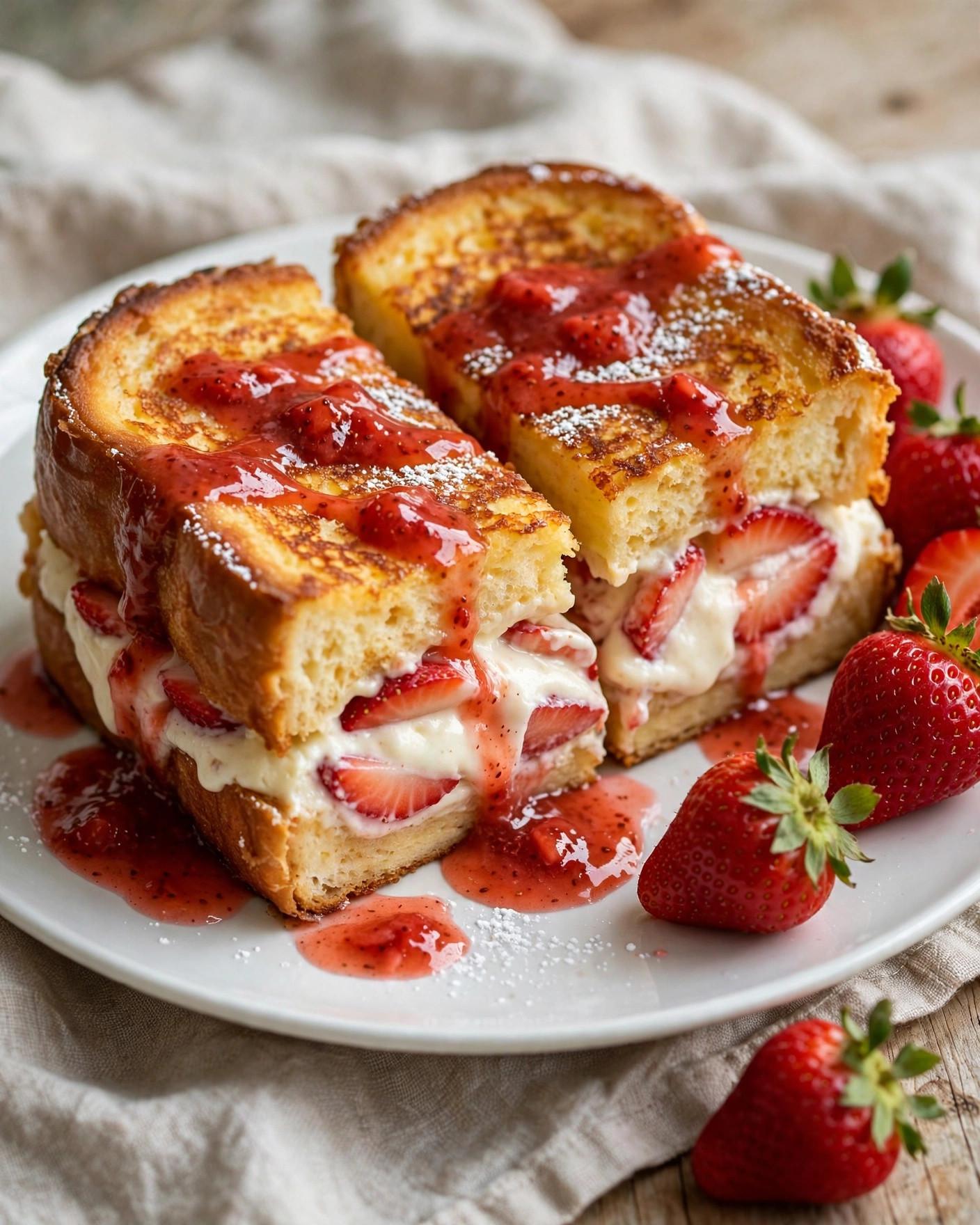
There are breakfasts that get the day started, and then there are breakfasts that make the whole morning feel like an occasion. Strawberry Cheesecake Stuffed French Toast belongs firmly in the second group: thick slices of golden brioche, a sweet and tangy cream cheese filling tucked inside with fresh strawberries, a warm vanilla-cinnamon custard soaking into every crumb, and a simple homemade strawberry sauce spooned over the top. Each bite gives you crisp, buttery edges, a soft custardy center, and that unmistakable cheesecake flavor in the middle. It tastes like dessert and breakfast decided to meet right in the middle, and neither one had to compromise.
It is an especially lovely choice for Valentine's Day, when a slow breakfast feels just as thoughtful as any evening plan. The colors help — deep red berries against golden toast and a dusting of powdered sugar make a plate that looks celebratory without fussy decorating. But it is not saved only for February: it is wonderful for birthdays, Mother's Day, or any Saturday when you want the kitchen to smell like vanilla and warm butter.
What makes this version work so reliably is the balance inside it. The filling is rich but not heavy, sweetened just enough to taste like cheesecake without overwhelming the berries. The strawberries inside soften only slightly on the griddle, so they stay juicy and bright rather than turning to jam. The custard is deliberately not too sweet, because the filling and the sauce bring plenty. And the bread matters: sturdy, thick-cut brioche holds the filling, soaks up the custard without falling apart, and griddles to a deep golden color with lacy, crisp edges.
If stuffed French toast sounds like a project, you will be pleasantly surprised. The filling stirs together in one bowl, the sauce simmers in a few minutes, and the assembly is as simple as making little sandwiches. You can even mix the filling and make the sauce the evening before, so the morning itself is just dipping, griddling, and serving.
Why You'll Love This Recipe
- Cheesecake flavor in every bite. The sweetened cream cheese filling, brightened with a little lemon zest and vanilla, tastes like the center of a favorite cheesecake, tucked warm inside golden toast where it turns soft and almost molten.
- Fresh strawberries, two ways. Sliced berries layered inside the sandwiches stay juicy and vivid, while a quick stovetop sauce made from more strawberries gives you a warm, glossy topping to spoon over generously at the table.
- Thick, custardy, and never soggy. Sturdy brioche, a brief soak rather than a long bath, and a properly heated skillet mean the centers turn tender and custard-like while the outsides stay crisp and deeply golden.
- Special enough for Valentine's Day, easy enough for a weekend. The plate looks like it came from a lovely brunch café, yet the steps are straightforward, the ingredients are familiar, and the whole recipe is ready in about 45 minutes.
- Make-ahead friendly for calm mornings. The filling and the strawberry sauce can both be prepared the day before and refrigerated, so on the morning you serve it there is very little to do besides assemble, dip, and griddle.
- Easy to dress up or keep simple. Serve it with the full sauce and powdered sugar for a celebration, or keep it simpler with just fresh berries and a little maple syrup — the stuffed toast itself carries the dish either way.

Ingredients
For the cheesecake filling
- 8 ounces (225 g) full-fat cream cheese, at room temperature
- 1/3 cup (40 g) powdered sugar, plus more for serving
- 1 teaspoon pure vanilla extract
- 1 teaspoon finely grated lemon zest
- 1 tablespoon heavy cream or whole milk
- Pinch of fine sea salt
For the stuffed toast
- 8 thick slices brioche bread, each about 3/4 to 1 inch (2 to 2.5 cm) thick, preferably a day old
- 1 1/2 cups (225 g) fresh strawberries, hulled and thinly sliced, plus more whole or halved berries for serving
- 3 large eggs, at room temperature if possible
- 3/4 cup (180 ml) whole milk
- 1/4 cup (60 ml) heavy cream
- 2 tablespoons granulated sugar
- 1 teaspoon pure vanilla extract
- 1/2 teaspoon ground cinnamon
- 1/4 teaspoon fine sea salt
- 2 to 3 tablespoons unsalted butter, for the skillet, plus more as needed
- 1 teaspoon neutral oil, such as avocado or vegetable oil, optional, to help the butter
For the quick strawberry sauce
- 2 cups (300 g) fresh or frozen strawberries, hulled and quartered
- 1/4 cup (50 g) granulated sugar, or to taste
- 1 teaspoon fresh lemon juice
- 1 teaspoon cornstarch mixed with 1 tablespoon cold water, optional, for a slightly thicker sauce
- Pinch of fine sea salt
Why these ingredients matter
Brioche bread. Brioche is the ideal bread for this recipe because it is rich, tender, and sturdy all at once. Its egg-and-butter crumb soaks up custard beautifully and tastes almost cake-like when griddled, yet a thick slice is strong enough to hold a generous layer of filling without tearing. Day-old brioche is even better, because slightly drier bread drinks in the custard more evenly. If your loaf is unsliced, cut slices a generous 3/4 to 1 inch (2 to 2.5 cm) thick — thin sandwich bread cannot do this job.
Cream cheese. Full-fat cream cheese, sold in a block rather than a tub, gives the filling its proper cheesecake body. Whipped or low-fat versions contain more water and air, and can turn thin when warmed. Let the block soften fully before you start, because cold cream cheese beats into lumps. Soft cheese blends with the sugar into a filling that spreads like frosting and melts into a creamy center.
Powdered sugar in the filling. Powdered sugar is chosen for the filling on purpose: it dissolves instantly into the cream cheese, so the filling is silky rather than grainy, and the small amount of cornstarch it contains helps the filling hold its shape. Granulated sugar can work in a pinch, but you may notice a faint grittiness. The amount here is modest — the filling should taste tangy and rich first, sweet second — because the sauce adds sweetness at serving.
Lemon zest and vanilla in the filling. These two small additions are what make the filling taste like cheesecake rather than simply sweetened cheese. Lemon zest adds brightness and a faint citrus lift that echoes a classic cheesecake topping, without making the filling taste lemony. Vanilla rounds out the tang and gives the filling a warm, bakery-like aroma. Use zest only, not juice, in the filling, so the texture stays thick.
Fresh strawberries inside. Berries layered inside the sandwiches bring freshness, color, and a gentle tartness that keeps the rich filling from feeling heavy. Slice them thinly, about 1/8 inch (3 mm) thick, so they lie flat, distribute evenly, and soften just slightly in the warmth of the toast. Thick chunks make the sandwiches hard to press and dip. If your berries are very juicy, pat the slices dry before layering, so they do not water down the filling.
Eggs, milk, and cream for the custard. The custard is the coating that turns stuffed sandwiches into true French toast. Eggs give it structure and that rich, set-custard texture, whole milk keeps it light enough to soak in rather than sit on the surface, and a small amount of heavy cream adds richness and helps the exterior brown beautifully. Too much liquid makes the bread soggy; too little and the coating is eggy and patchy. This balance soaks in within seconds per side and sets up tender, not wet.
Cinnamon and vanilla in the custard. Cinnamon gives the custard its classic warm French toast character and pairs naturally with both strawberries and cheesecake flavors, while vanilla deepens the aroma as the toast cooks. Keep the cinnamon at half a teaspoon so it supports the berries rather than competing with them.
Butter for the skillet. Butter is what creates the golden, crisp, almost caramelized edges that make French toast irresistible, and its flavor belongs in this dish. Butter alone can brown quickly, so a small drizzle of neutral oil helps it stay golden rather than scorched. Refresh the butter between batches if the pan darkens.
Strawberries, sugar, and lemon for the sauce. The sauce is deliberately simple so the berry flavor stays front and center. Strawberries and a modest amount of sugar cook down into a glossy, pourable sauce in just a few minutes, and lemon juice is the quiet hero: it brightens the berries, balances the sugar, and keeps the color a vivid red. The optional cornstarch slurry is there only if you prefer a sauce that clings rather than pooling like a syrup.
Instructions
- Make the strawberry sauce first. Place the quartered strawberries, granulated sugar, lemon juice, and pinch of salt in a small saucepan over medium heat. Cook, stirring occasionally and breaking up some of the berries with the back of a spoon, for 5 to 7 minutes, until the berries are soft, juicy, and deep red and the sauce is bubbling gently around the edges. If you would like a slightly thicker sauce, stir in the cornstarch slurry and simmer for 30 to 60 seconds more, until the sauce turns glossy and coats the spoon. Remove from the heat and set aside. The sauce will thicken a little as it cools. If you made it ahead, warm it gently before serving.
- Beat the cheesecake filling until smooth. Place the softened cream cheese in a medium bowl and beat it with a hand mixer or a sturdy whisk for about 1 minute, until it is completely smooth and fluffy with no lumps. Add the powdered sugar, vanilla, lemon zest, heavy cream or milk, and pinch of salt, and beat again just until everything is combined and the filling looks glossy and spreadable, like a thick frosting. Taste it: it should be tangy, gently sweet, and bright. Set aside at room temperature so it stays easy to spread. If made ahead, let refrigerated filling stand 20 to 30 minutes before using.
- Slice the strawberries for the filling. Hull the strawberries for the sandwiches and slice them thinly, about 1/8 inch (3 mm) thick, so you have flat pieces that layer neatly. You should have about 1 1/2 cups (225 g) of slices. If the slices look very wet, lay them briefly on a paper towel and pat the tops dry. This small step keeps the filling creamy instead of runny and helps the sandwiches hold together when you dip them in the custard.
- Assemble the stuffed sandwiches. Lay out all 8 slices of brioche on a clean work surface. Spread a generous layer of cheesecake filling over one side of every slice, using about 2 tablespoons per slice and spreading it nearly to the edges but not quite over them — leaving a tiny border helps seal the sandwiches. Arrange a single, even layer of strawberry slices over the filling on 4 of the slices, using roughly 1/3 cup of slices per sandwich and overlapping them slightly. Place the remaining 4 slices on top, filling side down, and press each sandwich together very gently with your palm, just enough to help it hold together without squeezing the filling out.
- Whisk the custard in a shallow dish. In a wide, shallow dish — a pie plate or a rimmed baking dish works well — whisk together the eggs, whole milk, heavy cream, granulated sugar, vanilla, cinnamon, and salt until the mixture is completely uniform, with no streaks of egg white remaining. The custard should be a pale, even gold. A shallow dish lets you lay each sandwich flat and coat both sides evenly, and thorough whisking matters too, because unmixed egg white cooks into pale patches on the toast.
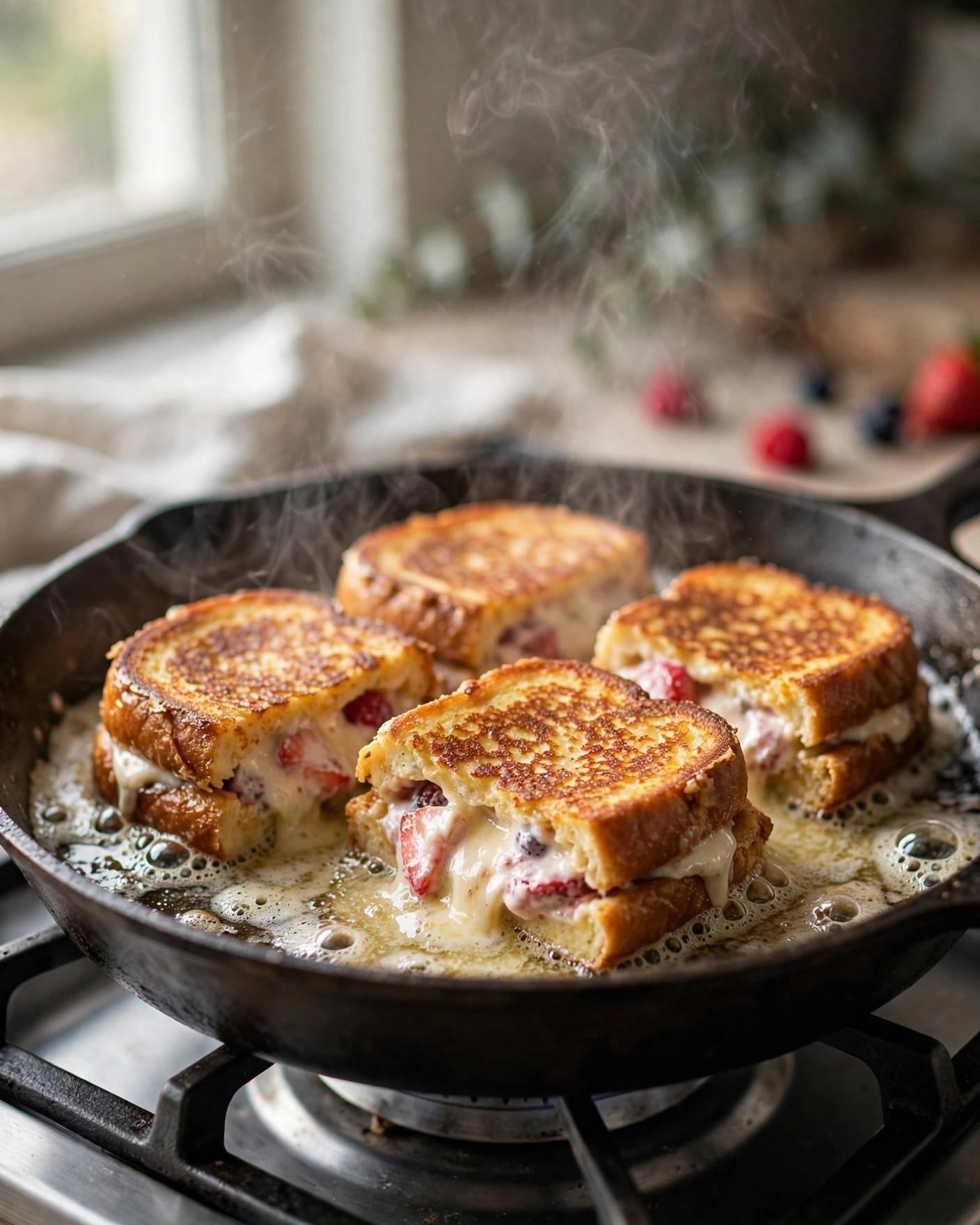
- Heat the skillet and prepare the pan. Place a large skillet or griddle, preferably nonstick or well-seasoned cast iron, over medium heat and let it warm for 2 to 3 minutes. A properly heated pan is essential: too cool and the toast steams and turns pale, too hot and the outside darkens before the filling warms through. Add about 1 tablespoon of butter and the teaspoon of oil, if using, and swirl until the butter has melted and is foaming lightly and evenly across the surface. The foam should look active but the butter should not be brown — if it browns quickly, lower the heat slightly and let the pan settle for a moment.
- Dip each sandwich briefly in the custard. Working with one sandwich at a time, lay it flat in the custard and let it soak for about 15 to 20 seconds. Carefully flip it with a wide spatula and soak the second side for another 15 to 20 seconds. The bread should feel well moistened and heavier, and the custard should reach into the crumb, but the sandwich should still hold its shape firmly when you lift it. Lift it out, let the excess drip back into the dish for a few seconds, and move it straight to the hot skillet. Do not soak all the sandwiches at once and leave them sitting — bread that waits in custard becomes fragile and soggy.
- Griddle until deeply golden on the first side. Lay the dipped sandwiches in the skillet, leaving a little space between them, and cook undisturbed for 3 to 4 minutes, until the underside is a deep, even golden brown with crisp edges and the kitchen smells like warm vanilla and butter. Resist the urge to move them early; steady contact with the pan is what builds the color and the delicate crust. If the toast is browning very quickly, reduce the heat to medium-low — the center needs time for the filling to become warm and soft, and a gentler heat protects the sugars in the custard from scorching.
- Flip carefully and cook the second side. Slide a wide spatula fully under each sandwich, supporting the whole piece, and flip it in one confident motion. Cook the second side for 2 to 3 minutes more, until it is equally golden and crisp and the sandwich feels set when pressed very lightly in the center. The filling should be warm and creamy and the strawberry slices inside just softened. If you are cooking in two batches, transfer the finished sandwiches to a wire rack set over a baking sheet in a low oven at 200°F (95°C) to stay warm without steaming, and add fresh butter to the pan before the next batch.
- Rest the toast briefly before slicing. Transfer the finished sandwiches to a cutting board and let them rest for 1 to 2 minutes. This pause lets the filling settle, so it stays inside when you cut rather than spilling out. While the toast rests, warm the sauce over low heat with a teaspoon of water if it has thickened too much.
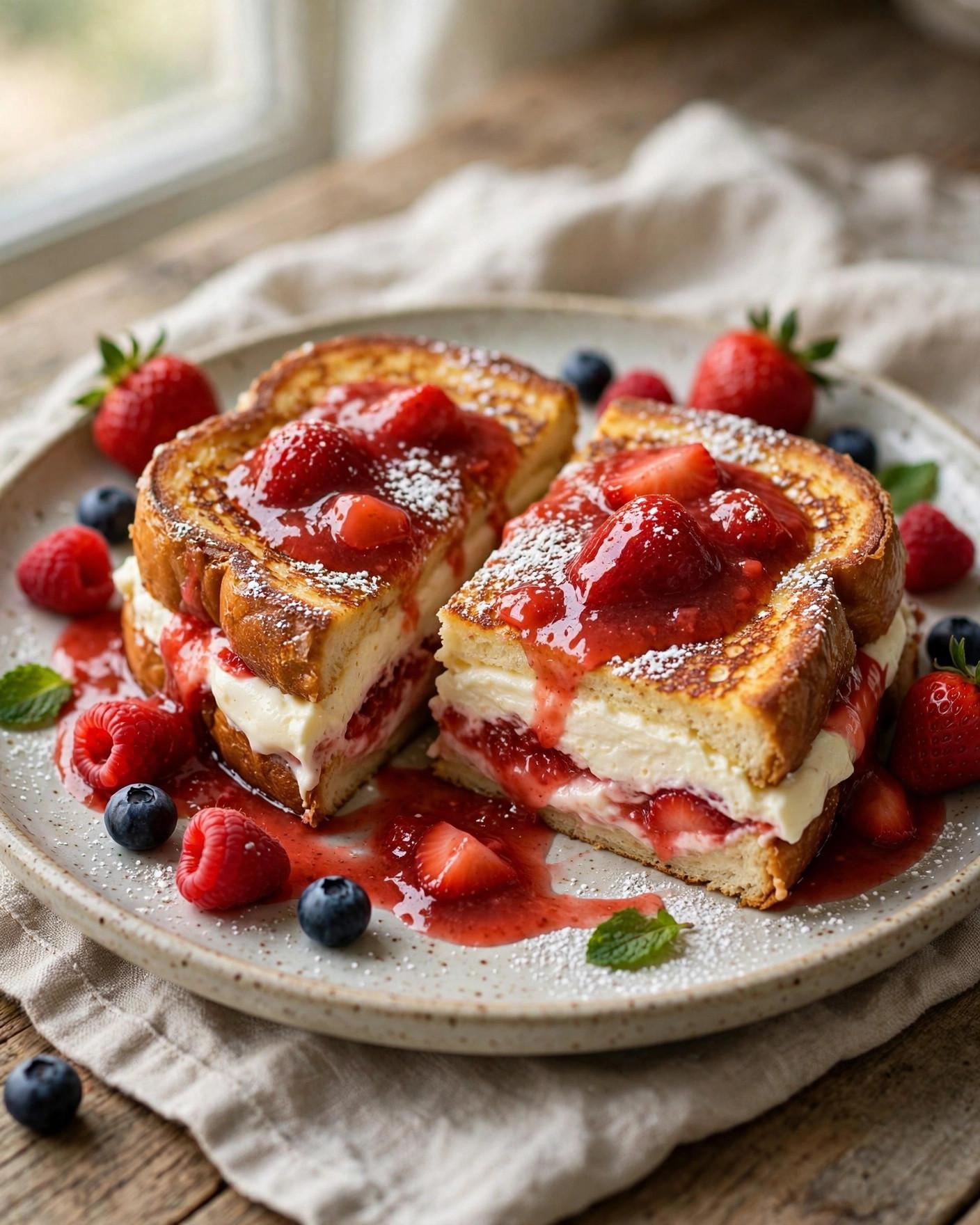
- Slice on the diagonal and arrange on warm plates. Using a sharp serrated knife and a gentle sawing motion so you do not compress the bread, cut each sandwich in half on the diagonal. The cut reveals the prettiest part of this recipe — the creamy white filling and the red strawberry layer against the golden crumb — so arrange the halves cut side up or leaning against each other on warmed plates. Serving on warm plates keeps the toast hot and the edges crisp for longer at the table, which is a small kindness worth the minute it takes.
- Sauce, dust, and serve right away. Spoon the warm strawberry sauce generously over each serving, letting some pool on the plate. Dust the tops lightly with powdered sugar through a small sieve, scatter a few fresh whole or halved strawberries over and around the plates, and serve immediately while the toast is crisp at the edges, warm in the center, and the filling is at its creamiest. Offer any remaining sauce and a small pitcher of maple syrup at the table for anyone who wants a little extra.


Tips for Success
- Start with room-temperature cream cheese. Cold cream cheese is the most common reason this filling turns lumpy. Leave the block on the counter for 45 to 60 minutes before you begin. Smooth filling spreads evenly, seals the sandwiches better, and melts into the creamiest center.
- Choose bread that can hold the filling. Thick-cut, slightly dry brioche is not a suggestion — it is the structure of the recipe. Fresh, very soft bread and thin sandwich slices absorb custard too quickly and can fall apart around a rich filling. If your brioche is very fresh, lay the slices on a rack for an hour to dry slightly before assembling.
- Keep the soak brief and confident. Fifteen to twenty seconds per side is enough for the custard to reach the crumb of a thick slice. Longer soaking does not make better French toast here; it makes fragile sandwiches that are hard to flip and that steam rather than crisp. Dip one sandwich at a time, so nothing sits wet and waiting.
- Let the pan heat fully, then keep it at medium. French toast needs a genuinely warm pan for its golden crust, but the sugar and dairy in the custard can scorch over high heat. Medium heat, butter just foaming, and a willingness to nudge the burner down if the first piece colors too fast will give you even, deep gold on every batch.
- Press gently, and flip with support. When assembling, press the sandwiches only enough to bring them together — hard pressing squeezes the filling toward the edges, where it can leak into the pan. When flipping, use the widest spatula you have and support the whole sandwich. A confident single flip keeps the filling where it belongs.
- Serve as soon as the last batch is done. Stuffed French toast is at its best in the first minutes off the griddle: crisp outside, warm and creamy inside, sauce glossy on top. Keep early batches warm on a rack in a low oven rather than under foil, which traps steam and softens the crust.
Variations
- Mixed berry cheesecake version. Replace half the strawberries inside and in the sauce with raspberries and blueberries. The filling stays the same, the flavor becomes a little more complex and tart, and the sauce turns a deep jewel red. Handle raspberries gently in the sandwiches, since they are delicate, and expect the sauce to need a touch more sugar if your berries are sharp.
- Chocolate strawberry version. Spread a thin layer of chocolate-hazelnut spread over the brioche before adding the cheesecake filling, or sprinkle 1 tablespoon of finely chopped dark chocolate over the strawberry layer in each sandwich. The chocolate melts into the warm filling and gives the plate a chocolate-covered strawberry character that suits Valentine's Day especially well.
- Lemon-blueberry cheesecake version. Swap the strawberries for blueberries, double the lemon zest in the filling, and make the sauce with blueberries and a squeeze of lemon. The result tastes like lemon-blueberry cheesecake in French toast form — bright and lovely in spring.
- Cinnamon-crunch coating. After dipping each sandwich in custard, press the top and bottom very lightly into a shallow plate of crushed cornflakes mixed with 1 tablespoon of sugar and 1/4 teaspoon of cinnamon before griddling. The coating cooks into an extra-crisp, lightly crunchy shell around the soft center. Watch the heat carefully, as the sugary coating browns a little faster than plain custard.
- Mini stuffed toasts for a brunch spread. Use smaller brioche rolls or cut regular slices in half before assembling to make petite versions for a buffet or a children's table. Reduce the soaking time slightly and the griddle time by about a minute per side. Minis are charming served in a warm pile with the sauce in a small bowl alongside for spooning or dipping.
- Dairy-lighter version. Replace the heavy cream in the custard with additional whole milk, use a good-quality plant-based cream cheese alternative in the filling, and griddle in a neutral oil or dairy-free butter alternative. The toast will be a little less rich and the filling a touch softer, but the strawberry and vanilla flavors still carry it, and the method stays exactly the same.
Storage
Stuffed French toast is best eaten fresh, but leftovers can still be very good if they are stored and reheated with a little care. Let any leftover sandwiches cool completely on a rack so steam does not soften them, then place them in a single layer in an airtight container, with parchment between layers if you need to stack them. Refrigerate promptly and enjoy within 2 days. Store leftover sauce separately in a covered jar in the refrigerator for up to 4 days; it is also lovely over yogurt or oatmeal.
To reheat, warm the toast in a 350°F (175°C) oven or toaster oven on a rack or baking sheet for 8 to 10 minutes, until hot through and crisp again at the edges. An air fryer at 350°F (175°C) for 4 to 5 minutes also works nicely. Avoid the microwave if you can — it leaves the bread soft and a little chewy. Warm the sauce separately in a small saucepan or in the microwave, stir it well, and spoon it over only after reheating, so the toast stays crisp.
Freezing is possible for the cooked sandwiches, though the fresh strawberries inside will be softer after thawing. Cool the toast completely, wrap individual pieces well, and freeze in an airtight container for up to 1 month. Thaw overnight in the refrigerator and reheat in the oven as above until hot and crisp. For the best texture, freeze assembled, uncooked sandwiches until firm, then wrap and freeze; dip in fresh custard once thawed and griddle as directed.
FAQ
Can I make Strawberry Cheesecake Stuffed French Toast ahead of time? Yes, in parts, and doing so makes the morning very calm. The cheesecake filling can be mixed and refrigerated in a covered container for up to 2 days; let it soften at room temperature for 20 to 30 minutes so it spreads easily. The strawberry sauce also keeps for up to 4 days in the refrigerator and reheats gently. You can assemble the sandwiches the night before, wrap and refrigerate them, then whisk the custard fresh in the morning, dip, and griddle. Do not dip ahead of time, because the bread will absorb too much liquid as it sits.
What is the best bread to use if I cannot find brioche? Challah is the closest and best substitute — it is also an enriched, eggy bread, and thick slices hold the filling and custard in the same way. A sturdy Texas toast or a thick-cut country white loaf can also work, provided the slices are at least 3/4 inch (2 cm) thick and preferably a day old. Avoid thin sandwich bread and strongly flavored breads such as sourdough, whose tang competes with the delicate filling.
How do I keep the filling from leaking out in the pan? A few small habits prevent most leaks. Spread the filling nearly to the edges but leave a tiny border, layer the strawberry slices in a single flat layer rather than a mound, and press the sandwiches together only gently. Keep the custard soak brief so the bread stays strong, and make sure the pan is properly hot before the toast goes in, so the exterior sets quickly and helps seal the edges. If a little filling peeks out, do not worry — a small amount caramelizing at the edge is genuinely delicious.
Can I use frozen strawberries for this recipe? Frozen strawberries work well in the sauce — cook them straight from frozen, adding a few extra minutes for the berries to soften and the sauce to reduce. For the filling layer inside the sandwiches, fresh strawberries are strongly preferred, because frozen berries release a lot of liquid as they warm and can make the filling runny and the bread damp. If frozen berries are all you have for the filling, thaw them completely, drain them very well, and pat them thoroughly dry before slicing and layering, and expect a slightly softer result.
Recipe Card
Strawberry Cheesecake Stuffed French Toast with Berry Sauce
- Prep Time: 25 minutes (PT25M)
- Cook Time: 20 minutes (PT20M)
- Total Time: 45 minutes (PT45M)
- Servings: 4 servings (8 slices, 4 stuffed sandwiches)
- Calories: 580 kcal per serving (estimated)
Thick brioche sandwiches filled with sweetened cream cheese and fresh strawberries, dipped in a vanilla-cinnamon custard, griddled until deeply golden, and served with a warm homemade strawberry sauce and a dusting of powdered sugar.
Nutrition (estimated): 580 kcal per serving (estimated, for one stuffed sandwich with sauce), 68 g carbohydrates, 13 g protein, 28 g fat, 3 g fiber, 38 g sugar, 420 mg sodium. Nutrition is estimated and will vary with the exact thickness of the brioche, the sweetness and size of the strawberries, the amount of sauce and powdered sugar served, and any variations or substitutions.
Can I make Strawberry Cheesecake Stuffed French Toast ahead of time?
Yes, in parts, and doing so makes the morning very calm. The cheesecake filling can be mixed and refrigerated in a covered container for up to 2 days; let it soften at room temperature for 20 to 30 minutes so it spreads easily. The strawberry sauce also keeps for up to 4 days in the refrigerator and reheats gently. You can assemble the sandwiches the night before, wrap and refrigerate them, then whisk the custard fresh in the morning, dip, and griddle. Do not dip ahead of time, because the bread will absorb too much liquid as it sits.
What is the best bread to use if I cannot find brioche?
Challah is the closest and best substitute — it is also an enriched, eggy bread, and thick slices hold the filling and custard in the same way. A sturdy Texas toast or a thick-cut country white loaf can also work, provided the slices are at least 3/4 inch (2 cm) thick and preferably a day old. Avoid thin sandwich bread and strongly flavored breads such as sourdough, whose tang competes with the delicate filling.
How do I keep the filling from leaking out in the pan?
A few small habits prevent most leaks. Spread the filling nearly to the edges but leave a tiny border, layer the strawberry slices in a single flat layer rather than a mound, and press the sandwiches together only gently. Keep the custard soak brief so the bread stays strong, and make sure the pan is properly hot before the toast goes in, so the exterior sets quickly and helps seal the edges. If a little filling peeks out, do not worry — a small amount caramelizing at the edge is genuinely delicious.
Can I use frozen strawberries for this recipe?
Frozen strawberries work well in the sauce — cook them straight from frozen, adding a few extra minutes for the berries to soften and the sauce to reduce. For the filling layer inside the sandwiches, fresh strawberries are strongly preferred, because frozen berries release a lot of liquid as they warm and can make the filling runny and the bread damp. If frozen berries are all you have for the filling, thaw them completely, drain them very well, and pat them thoroughly dry before slicing and layering, and expect a slightly softer result.

Hi, I’m Emma! I’m the cook and recipe developer behind Sizzle & Sage. From my sunny home kitchen, I share easy, flavor-packed recipes for real life — quick breakfasts, cozy weeknight dinners, and simple bakes anyone can make. Pull up a chair and stay a while!