Fluffy Tangzhong Thanksgiving Dinner Rolls (Make-Ahead)
Every Thanksgiving table needs a bread basket that holds its own against the turkey, and these Tangzhong Thanksgiving Dinner Rolls are built for exactly that job. The secret is tangzhong, a simple cooked paste of flour and milk borrowed from Japanese milk-bread baking, folded straight into the dough before kneading. That one extra five-minute step pre-gelatinizes the starches so they hold on to far more moisture, and the payoff is dramatic: rolls with an ultra-tender, feathery crumb, a glossy golden crust, and a shelf life that stretches for days without going stale.
This is a completely from-scratch recipe developed for home kitchens, with every ingredient listed in both US cups and grams so your measurements come out right whether you scoop or weigh. No yeast in the house — or no patience for rising? Our 3-ingredient no-yeast bread is the same-day loaf to make instead.
Why You’ll Love This Recipe
The tangzhong technique works like magic. Cooking a small portion of the flour and milk into a thick paste before mixing the dough sounds unusual, but the science is straightforward: gelatinized starches absorb and trap water that would otherwise evaporate in the oven. The result is a crumb so soft it practically pulls apart in wispy strands, and rolls that stay fresh-tasting noticeably longer than rolls made without the method.
Truly make-ahead friendly. Thanksgiving day is a marathon of timing, and oven space is precious. These rolls fit the holiday schedule beautifully: mix and shape them the day before, let them rise slowly in the refrigerator overnight, and bake them fresh while the turkey rests. A warm roll coming out of the oven as guests sit down is one of the easiest wins of the whole meal.
Simple ingredients, bakery-level results. Nothing here is exotic or hard to find. Bread flour, milk, butter, sugar, yeast, an egg, and salt are pantry staples in most kitchens, and the technique is the only special ingredient. You get the kind of lofty, golden, pull-apart rolls people assume came from a bakery, for a fraction of the cost.
Forgiving for newer bakers. The tangzhong-enriched dough is smooth, elastic, and easy to handle — less sticky than many enriched doughs and very tolerant of slight variations in rising time. The shaping is just rolling twelve smooth balls and nestling them into a pan.
Built for the whole holiday weekend. Because they stay soft for days, these rolls pull double and triple duty: dinner rolls on Thursday, turkey sandwiches on Friday, and warmed-up breakfast bread on Saturday.
Ingredients
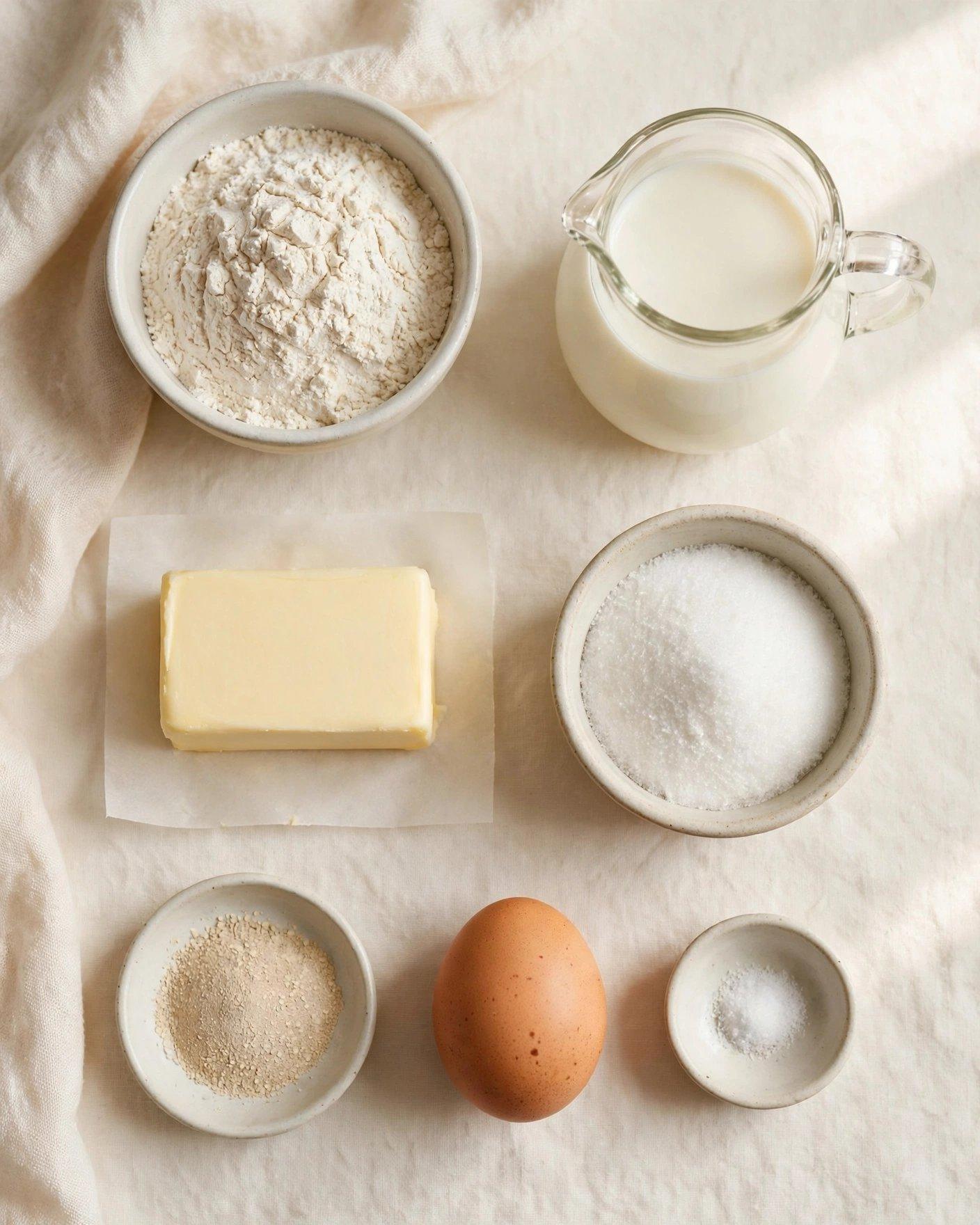
For the tangzhong
- 3 tablespoons (25 g) bread flour
- 1/2 cup (120 ml) whole milk
For the dough
- 3 1/3 cups (420 g) bread flour, plus extra for dusting
- 1/3 cup (65 g) granulated sugar
- 2 1/4 teaspoons (7 g) instant yeast (1 packet)
- 1 teaspoon (6 g) fine sea salt
- 1 large egg, at room temperature
- 1/2 cup (120 ml) warm whole milk (about 110°F / 43°C)
- All of the prepared tangzhong
- 4 tablespoons (57 g) unsalted butter, softened, plus 2 tablespoons melted for brushing
Why these ingredients matter
The bread flour matters more here than in many roll recipes: its higher protein content builds the strong gluten network that traps the extra moisture the tangzhong provides, giving the rolls their signature lofty structure. Whole milk enriches both the tangzhong and the dough with fat and milk solids, which tenderize the crumb and encourage that deep golden crust. Sugar feeds the yeast for a vigorous rise and helps the tops caramelize to a rich amber color.
Instant yeast lets you skip the separate proofing step and mix straight in with the dry ingredients; just make sure your packet is fresh, since expired yeast is the most common reason rolls fail to rise. The egg adds richness, color, and structure, while the softened butter worked in at the end of kneading coats the gluten strands for an exceptionally tender bite. Finally, salt is non-negotiable for flavor — without it, even the softest roll tastes flat.
Instructions
- Make the tangzhong. In a small saucepan, whisk the 3 tablespoons of bread flour and 1/2 cup of milk until completely smooth with no lumps. Set over medium-low heat and cook, whisking constantly, for 3 to 4 minutes, until the mixture thickens into a smooth, glossy paste that leaves visible trails behind the whisk. Transfer to a small bowl, press plastic wrap directly onto the surface, and let it cool until lukewarm, about 15 minutes.
- Combine the dry ingredients. In the bowl of a stand mixer fitted with the dough hook (or a large mixing bowl if kneading by hand), whisk together the 3 1/3 cups of bread flour, sugar, instant yeast, and salt until evenly distributed.
- Add the wet ingredients. Add the egg, warm milk, and all of the cooled tangzhong to the dry ingredients. Mix on low speed (or stir with a wooden spoon) until a shaggy dough comes together and no dry flour remains, about 2 minutes.
- Knead in the butter. With the mixer on medium-low, add the 4 tablespoons of softened butter one tablespoon at a time, waiting until each piece is absorbed before adding the next. Continue kneading for 8 to 10 minutes total, until the dough is smooth, elastic, and pulls away from the sides of the bowl. If kneading by hand, turn the dough onto a lightly floured surface and knead for 12 to 15 minutes, working the butter in gradually. The finished dough should be soft and slightly tacky — it should pass the windowpane test, stretching thin enough to see light through without tearing.

- First rise. Shape the dough into a smooth ball and place it in a lightly greased bowl, turning once to coat. Cover with plastic wrap or a damp kitchen towel and let rise in a warm, draft-free spot for 60 to 90 minutes, until roughly doubled in size.
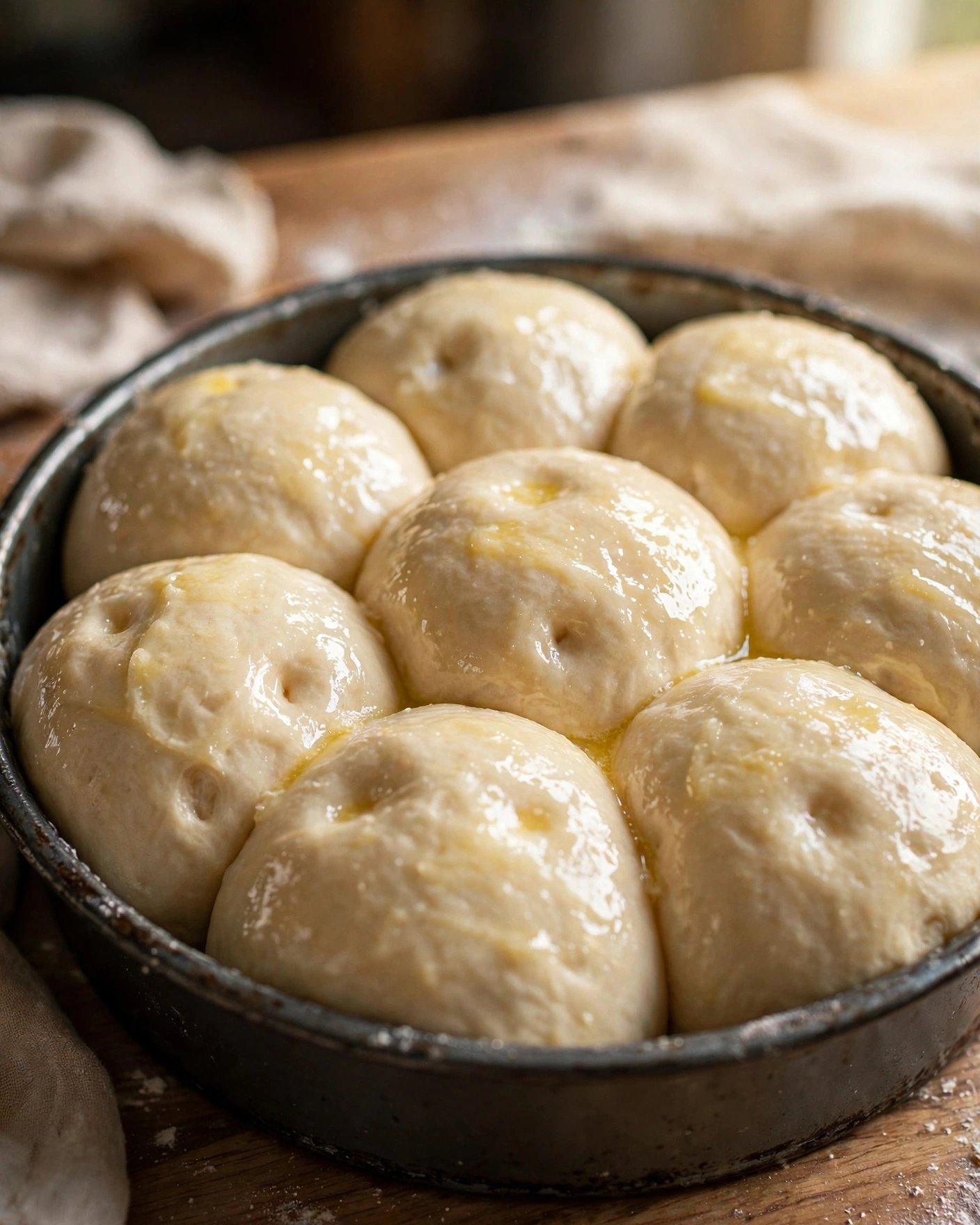
- Divide and shape. Punch the dough down gently and turn it onto a clean surface. Divide into 12 equal pieces (about 65 g each if you are weighing). Working with one piece at a time, pull the edges up and into the center, pinch to seal, then flip seam-side down and roll under your cupped palm to form a smooth, tight ball. Arrange the balls seam-side down in a greased 9-inch round cake pan or 10-inch cast-iron skillet so they just touch.
- Second rise. Cover the pan loosely with plastic wrap and let the rolls rise for 40 to 60 minutes, until puffy and touching with no gaps. For the overnight make-ahead option, cover tightly and refrigerate for 8 to 12 hours instead; the next day, let the pan sit at room temperature for 30 to 45 minutes while the oven preheats.
- Bake until golden. About 20 minutes before baking, position a rack in the center of the oven and preheat to 350°F (175°C). Brush the tops of the risen rolls gently with half of the melted butter. Bake for 22 to 25 minutes, until deeply golden brown on top and an instant-read thermometer inserted into the center roll registers 190°F (88°C). If the tops brown too quickly, tent loosely with foil for the final 5 minutes.
- Finish with butter and cool. Brush the hot rolls with the remaining melted butter for a soft, glossy crust. Let cool in the pan for 10 minutes, then serve warm.

Tips for Success
- Do not rush the tangzhong. The paste needs to reach a thick, pudding-like consistency with visible whisk trails — that is the visual cue that the starches have fully gelatinized. An undercooked, thin tangzhong will not deliver the same softness.
- Cool the tangzhong before adding it. If the paste is still hot, it can kill the yeast on contact. Lukewarm to the touch is the safe zone; 15 minutes of cooling is usually enough.
- Weigh the flour when you can. Cup measurements of flour can vary by 20 percent or more depending on how you scoop. The gram weights in this recipe take the guesswork out and give the most consistent crumb.
- Watch the dough, not the clock. Rising times shift with kitchen temperature. On a cold day, let the bowl sit in a turned-off oven with the light on to create a cozy proofing spot. The dough is ready when it has roughly doubled and a poked indentation springs back slowly.
- Do not over-flour the work surface. A lightly dusted surface is fine, but too much extra flour during shaping will dry out the dough and toughen the crumb. The dough is designed to be just barely tacky.
- Bake to temperature, not just color. A thermometer reading of 190°F in the center roll guarantees a fully baked interior without an over-browned crust — especially useful on a busy Thanksgiving when the oven door keeps opening.
Variations
- Honey butter rolls: Replace the granulated sugar with an equal amount of honey and brush the finished rolls with honey butter (melted butter whisked with a tablespoon of honey) instead of plain butter.
- Herb and garlic rolls: Knead 1 tablespoon of finely chopped fresh rosemary and 1 minced garlic clove into the dough with the butter, and sprinkle flaky sea salt over the tops before baking.
- Whole wheat blend: Swap 1 cup (120 g) of the bread flour for white whole wheat flour for a nuttier flavor and slightly heartier crumb. Expect a marginally less lofty rise.
- Sweet potato dinner rolls: Replace 1/4 cup of the milk in the dough with 1/4 cup of smooth mashed sweet potato for a beautiful golden crumb and subtle sweetness that pairs perfectly with Thanksgiving flavors.
- Pull-apart Christmas wreath: Arrange the shaped dough balls in a ring on a parchment-lined baking sheet instead of a skillet and garnish the baked wreath with rosemary sprigs for a festive holiday centerpiece.
- Dairy-free version: Use an unsweetened plain oat or soy milk in both the tangzhong and dough, and swap the butter for a good-quality vegan butter alternative. The tangzhong method works just as well with plant-based milk.
Storage
Store completely cooled rolls in an airtight container or zip-top bag at room temperature for up to 4 days — the tangzhong keeps them noticeably softer than standard rolls over this whole window. For longer storage, freeze the baked rolls in a single layer on a baking sheet until solid, then transfer to a freezer bag with the air pressed out; they keep well for up to 3 months. Reheat room-temperature rolls wrapped in foil in a 325°F (165°C) oven for 8 to 10 minutes, or warm a single roll in the microwave for 15 to 20 seconds. Unbaked shaped rolls can be refrigerated overnight before the second rise (see step 7).
Nutrition
Estimated per roll (recipe makes 12 rolls): 195 calories, 5 g protein, 32 g carbohydrates, 1 g fiber, 7 g sugar, 5 g fat, 3 g saturated fat, 210 mg sodium. These values are estimated using standard ingredient nutrition data and will vary with exact brands and measurements.

FAQ
What is tangzhong, exactly? Tangzhong is a cooked paste made from a small portion of a bread recipe’s flour and liquid, heated together until the starches gelatinize and thicken. Borrowed from Japanese milk-bread baking, the technique lets the dough hold significantly more moisture, producing a softer crumb and bread that stays fresh longer.
Can I make these dinner rolls the day before Thanksgiving? Yes — that is one of the best features of this recipe. Shape the rolls after the first rise, arrange them in the pan, cover tightly, and refrigerate for 8 to 12 hours. The next day, let them sit at room temperature for 30 to 45 minutes while the oven preheats, then brush with butter and bake as directed. They can also be baked fully a day ahead and reheated, since the tangzhong keeps them soft.
Can I use all-purpose flour instead of bread flour? You can, and the rolls will still be soft thanks to the tangzhong, but the texture will be slightly less chewy and lofty. Bread flour’s higher protein builds stronger gluten to support the extra moisture. If you only have all-purpose flour, reduce the milk in the dough by 1 tablespoon.
Why did my rolls turn out dense? The most common causes are expired yeast, an under-kneaded dough that never developed enough gluten, or under-proofing before baking. Check that your yeast is fresh, knead until the dough passes the windowpane test, and make sure the shaped rolls look visibly puffy and are touching with no gaps before they go into the oven.
Recipe Card
Tangzhong Thanksgiving Dinner Rolls
- Prep Time: 30 minutes (plus 2 hours rising)
- Cook Time: 25 minutes
- Total Time: 2 hours 55 minutes
- Servings: 12 rolls
- Calories: 195 kcal per serving (estimated)
These pillowy-soft Thanksgiving dinner rolls use the tangzhong method — a cooked flour-and-milk paste — for an ultra-tender crumb that stays fresh for days. Buttery, golden, and perfect for making ahead, they are the ideal holiday bread for soaking up gravy or sandwiching leftover turkey.

Hi, I’m Emma! I’m the cook and recipe developer behind Sizzle & Sage. From my sunny home kitchen, I share easy, flavor-packed recipes for real life — quick breakfasts, cozy weeknight dinners, and simple bakes anyone can make. Pull up a chair and stay a while!