
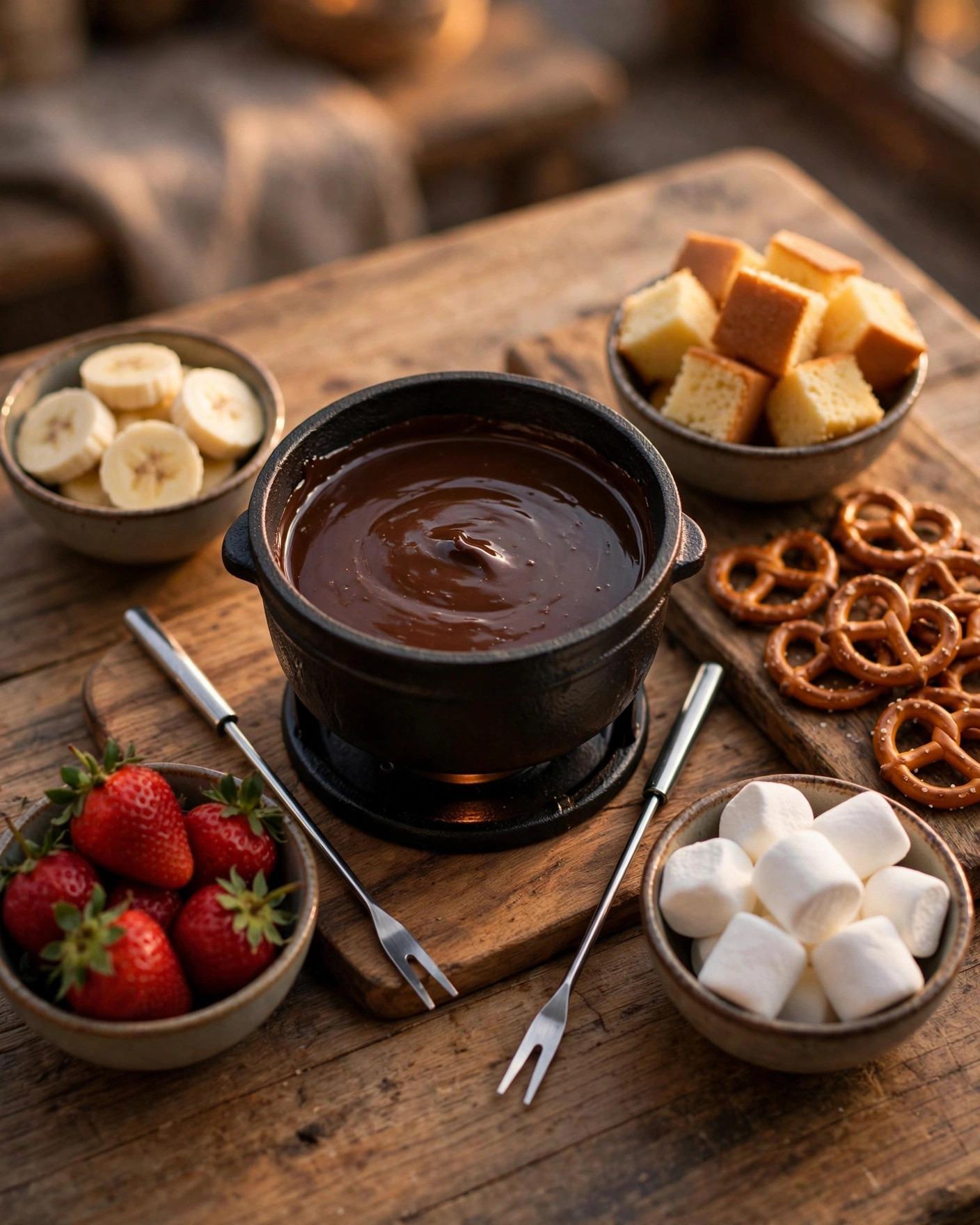
Chocolate Fondue for Two with Easy Dippers for a Cozy Date Night
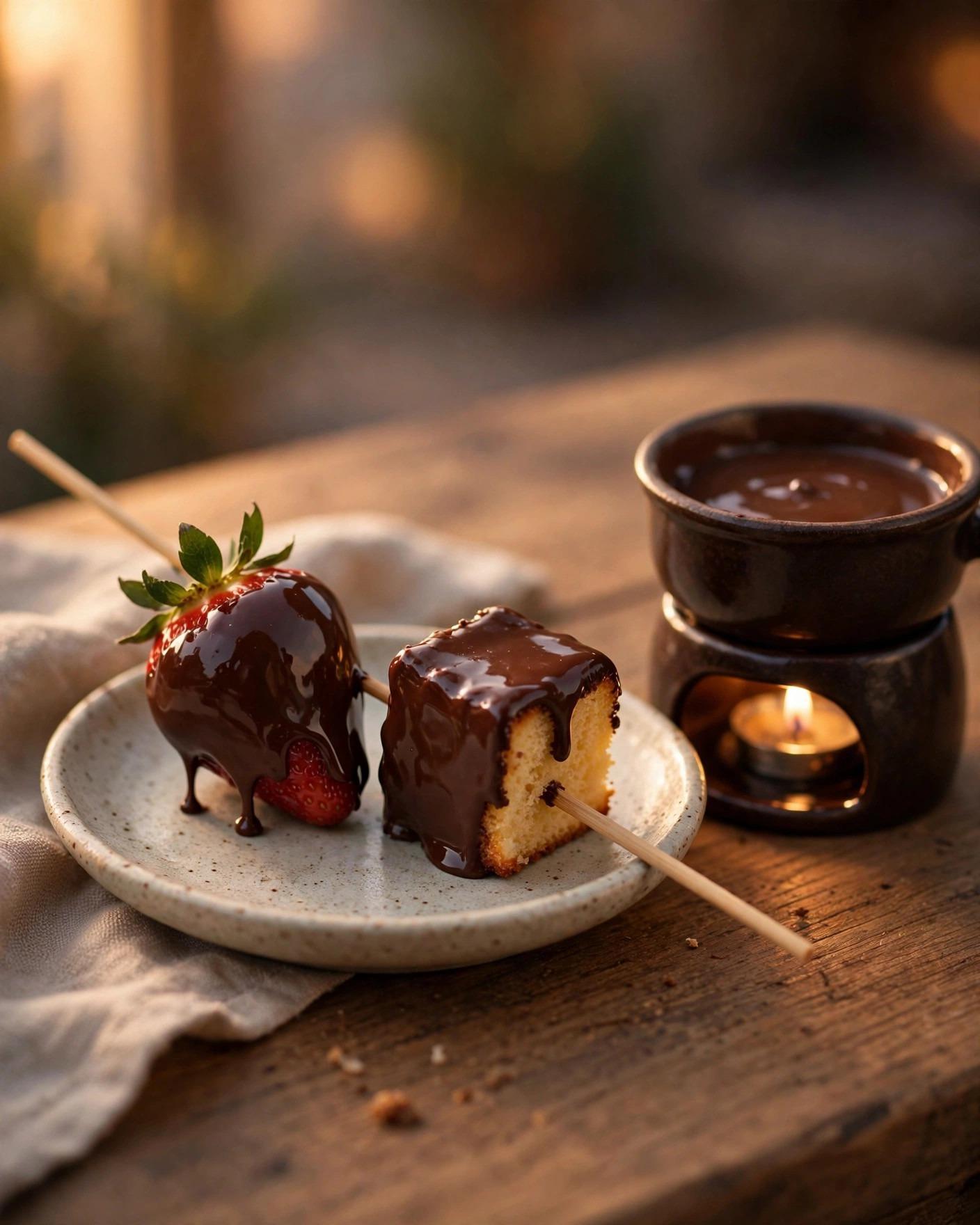
Chocolate fondue has a way of slowing an evening down in the best possible way. There is no plating under pressure and no dessert that needs to leave the table at exactly the right second. Instead, there is a small warm pot in the middle, a board of things to dip around it, and the unhurried pleasure of choosing what goes in next — a strawberry, a cube of pound cake, a marshmallow that comes out wearing a glossy chocolate coat. It is dessert and activity in one, which is why it suits a date night, an anniversary, or a quiet Valentine's Day at home so well.
This version is scaled honestly for two. Many fondue recipes are written for a crowd and leave a small household with a wide, shallow pool of chocolate that cools too fast, skins over, and mostly goes to waste. Here, a modest amount of chopped dark or semisweet chocolate melts into warm heavy cream to make just enough fondue to fill a small pot deeply enough for proper dipping — generous for two without being wasteful, and ready in about twenty minutes from start to first dip.
The method is gentle, and that gentleness is the whole secret. Chocolate does not like fierce heat, and it rewards patience with a smooth, shiny finish that clings beautifully to fruit and cake. Warm the cream until it is steaming but never boiling, let the chocolate melt mostly off the heat, and stir slowly from the center outward. Done that way, fondue is one of the most forgiving desserts you can make — no oven, no mixer, and very little washing up.
You also do not need a traditional fondue set. A small fondue pot with a tea light is lovely if you have one, but a heavy ceramic bowl warmed beforehand, or a small slow cooker on its lowest warm setting, keeps the chocolate dippable just as well. What matters is low, steady warmth, a stir now and then, and dippers that are dry, bite-sized, and ready before the chocolate is. Set it all out, sit down together, and let dessert take its time.
Why You'll Love This Recipe
- Scaled perfectly for two. A small batch fills a little pot properly and deeply, so every dip gets a real coating of chocolate, with no vast leftover pool and no skimping at the end either.
- Ready in about 20 minutes. Chop, warm, melt, stir, and serve. There is no baking, no chilling, and no decorating, so this is an easy dessert to pull together after dinner without advance planning.
- Silky, glossy, and never grainy when handled gently. Warming the cream without boiling it and melting the chocolate mostly off the heat gives a smooth fondue that stays pourable and shiny instead of turning thick or scorched.
- No fondue pot required. A warmed ceramic bowl or a small slow cooker on warm works well, so the recipe fits whatever your kitchen already has.
- Dippers you probably already love. Strawberries, banana, pound cake, marshmallows, and pretzels cover fresh, fruity, cakey, pillowy, and salty-crunchy in one board, and all are easy to find and prepare.
- Easy to change with your mood. Dark, milk, or white chocolate, a whisper of cinnamon or orange, different dippers each time — the base welcomes small twists without extra work.
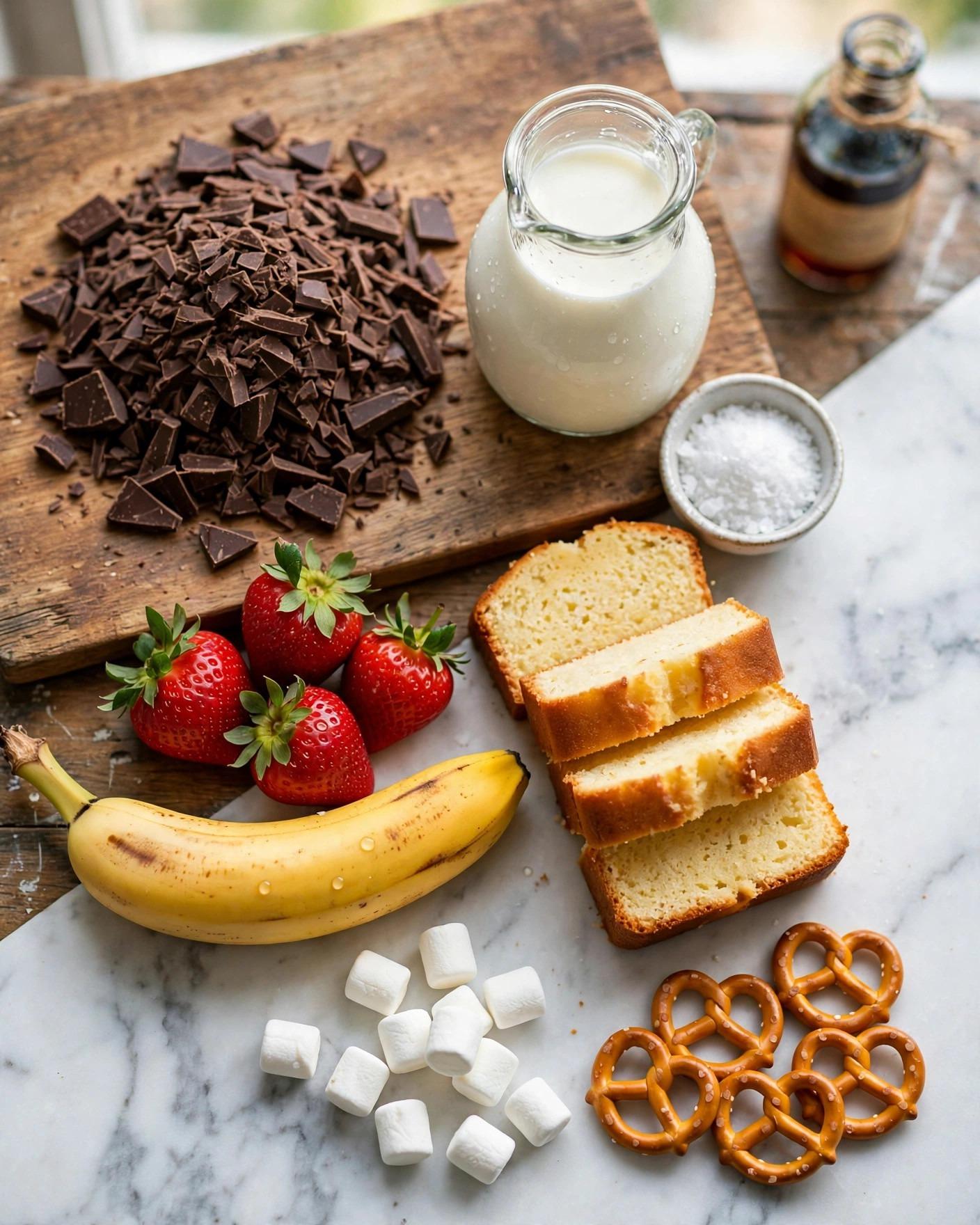
Ingredients
For the chocolate fondue
- 6 ounces (170 g) dark or semisweet chocolate (60 to 70% cacao), finely chopped, or good-quality chocolate bars chopped into small pieces
- 1/2 cup (120 ml) heavy cream, plus 1 to 2 tablespoons more as needed to adjust the consistency
- 1 tablespoon (14 g) unsalted butter (optional, for extra gloss and a slightly softer set)
- 1/8 teaspoon fine sea salt
- 1/2 teaspoon vanilla extract
- 1 to 2 teaspoons whole milk, only if needed to thin the fondue at serving time
For the dippers
- 1 1/2 cups (about 225 g) fresh strawberries, hulled, about 8 to 10 large berries, halved if very large
- 1 large ripe but firm banana, peeled and sliced into 3/4-inch (2 cm) rounds, about 1 cup (150 g)
- 2 cups (about 200 g) pound cake cubes, cut into 3/4-inch (2 cm) pieces, store-bought or homemade
- 8 to 10 large marshmallows, about 1 1/2 cups (75 g)
- 1 cup (about 60 g) small pretzel twists or pretzel rods broken into dipping lengths
- Fondue forks, long skewers, or regular forks, for dipping
Why these ingredients matter
Dark or semisweet chocolate. Chocolate is the entire foundation here, so the bar you choose is the flavor you get. A dark or semisweet chocolate in the 60 to 70% cacao range melts into a fondue that tastes deeply chocolatey without being bitter, and it balances the sweetness of the fruit, cake, and marshmallows. Chop it finely and evenly, because small, similar-sized pieces melt at the same pace. Bars melt more smoothly than most chips, since chips contain stabilizers that help them hold their shape in cookies, but good chips still work; just stir patiently and give them extra time off the heat.
Heavy cream. Cream does three jobs at once: it carries the heat that melts the chocolate, it sets the final consistency, and it gives the fondue its soft, rich mouthfeel. The ratio here — a half cup of cream to six ounces of chocolate — lands in the dipping sweet spot, thick enough to coat a strawberry generously but fluid enough to drip cleanly. Proper cream matters; milk alone makes a thinner, less stable mixture that can look separated. If your fondue ever feels too thick at the table, warm cream is also the fix, added a spoonful at a time.
Fine sea salt. An eighth of a teaspoon sounds like nothing, yet it is one of the most important things in the pot. Salt sharpens chocolate's deep, slightly bitter notes and keeps the sweetness from tasting flat, the same way it does in a good brownie. Nobody will call the fondue salty, but without it the chocolate tastes duller. Sprinkle it over the chopped chocolate before the cream goes on, so it dissolves evenly as everything melts.
Vanilla extract. Vanilla rounds out the chocolate and adds a warm aroma that makes the fondue taste complete rather than simply melted. Half a teaspoon is enough at this scale; more can taste perfumed. Add it after the chocolate has melted, off the heat, so its flavor stays fresh in every dip.
Unsalted butter (optional). A single tablespoon is not required, but it earns its place if you like a particularly glossy finish. Butter adds sheen, softens the way the chocolate sets on cold fruit, and rounds out the flavor. Add it with the vanilla, after melting, and stir just until it disappears. Leave it out freely for a purer chocolate-and-cream taste.
Strawberries. Fresh strawberries are the classic dipper for good reason: juicy, bright, and just tart enough to cut through rich chocolate, with firm flesh that holds onto a skewer. Choose berries that are ripe but still firm, wash them, and — this part matters — dry them thoroughly. Water is melted chocolate's enemy; moisture on a berry can make the coating slide off or drip back into the pot and thicken the whole batch. Halve very large berries into comfortable two-bite pieces.
Banana. Banana brings a soft, creamy sweetness that pairs with chocolate the way few fruits can. Pick one that is ripe but still firm, so the rounds hold their shape on a fork. Slice it shortly before serving, since banana browns quickly once peeled, and keep the slices a generous 3/4 inch (2 cm) thick — thin slices break, while thick rounds dip cleanly.
Pound cake. Pound cake is the sturdy, buttery backbone of the board. Its tight, fine crumb soaks up just a little chocolate without falling apart, and its gentle vanilla flavor echoes the vanilla in the fondue. Cut it into even cubes so they sit neatly on a fork; day-old cake is ideal, because it is a touch firmer. Angel food cake works as a lighter stand-in.
Marshmallows. Marshmallows add the pillowy contrast — soft, sweet, and chewy against the warm, flowing chocolate. Large marshmallows are the right size: big enough to spear securely, small enough to eat in two bites once coated. Keep them dry and separate on the board, away from cut fruit, so the chocolate coats them evenly.
Pretzels. Pretzels bring the salt and the crunch, and for many people they end up the surprise favorite of the board. The salty snap against sweet, warm chocolate is exactly the contrast that keeps you going back for one more dip. Small twists are easy to spear or hold. Choose a firm, crisp pretzel — a stale, soft one loses the crunch that makes it worth including.
Instructions
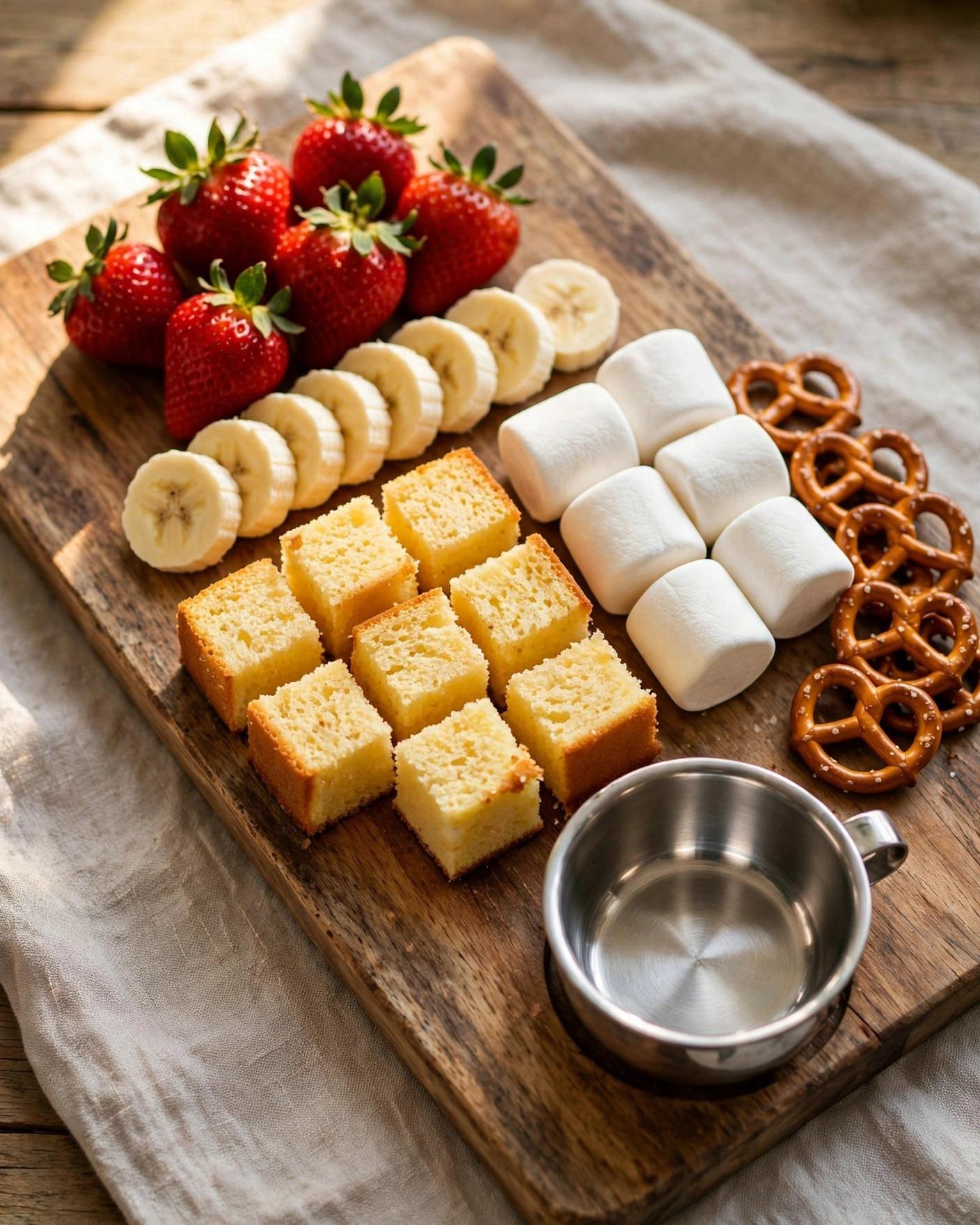
- Prepare the dippers first. Wash the strawberries and dry them very thoroughly, then hull them and halve any very large berries. Slice the banana into 3/4-inch (2 cm) rounds, and cut the pound cake into 3/4-inch (2 cm) cubes. Arrange everything on a board with a little space between the groups, and set out fondue forks or skewers. Doing this first matters: once the chocolate is melted, you want to sit down and eat, not stand at the counter slicing fruit while it cools.
- Chop the chocolate finely and evenly. Chop the chocolate into small, roughly pea-sized pieces and place them in a medium heatproof bowl with the fine sea salt. Small, even pieces are the quiet foundation of a smooth fondue, because they all melt at the same speed when the warm cream arrives. If you are using the optional butter, have it ready at room temperature so it melts in quickly at the end.
- Warm the cream gently — never let it boil. Pour the heavy cream into a small saucepan over medium-low heat. Warm it slowly, swirling the pan now and then, until it is steaming and small bubbles appear around the very edge — about 3 to 4 minutes. Take it off the heat the moment it steams well. Boiled cream can scorch, pick up a cooked flavor, and push the chocolate toward a grainy, separated texture instead of a glossy one. Gentle heat is not a suggestion in this recipe; it is the technique.
- Pour the cream over the chocolate and let it rest. Pour the hot cream evenly over the chopped chocolate, making sure most of it is covered. Do not stir yet. Let the bowl sit undisturbed for 2 full minutes, so the heat of the cream melts the chocolate from the inside out. This resting step feels passive, but it does most of the melting for you and lets you finish the fondue with almost no additional heat — the surest protection against overheating.
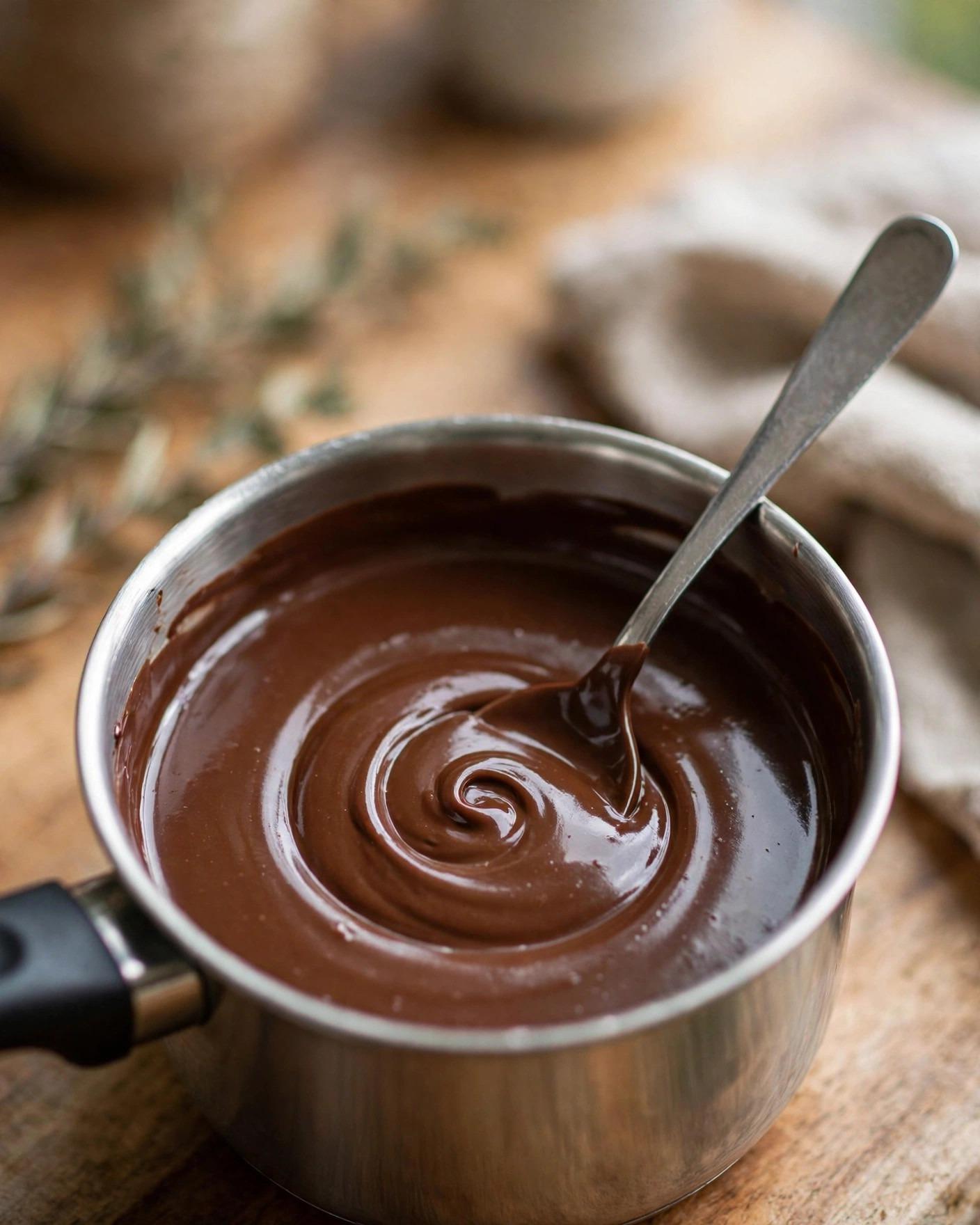
- Stir slowly from the center outward. With a small spatula or spoon, stir in slow, small circles in the center of the bowl. At first it will look streaky; keep going and a thick, glossy pool will form in the middle. Gradually widen your circles to draw in the chocolate at the edges until everything is melted, smooth, and shiny. Stir gently rather than whisking vigorously — hard whisking beats in air bubbles, while slow stirring keeps the texture dense and silky.
- Finish with vanilla and the optional butter. Stir in the vanilla and the optional butter until the butter has fully melted and disappeared. The fondue should pour from the spoon in a thick, slow ribbon and settle with a glossy surface. If a few unmelted flecks remain, set the bowl over a pan of barely simmering water for 30 to 60 seconds, stirring constantly, then remove it from the heat and stir again. Never use direct heat, and never let the water boil hard beneath the bowl.
- Check and adjust the consistency. Lift the spoon and watch how the fondue falls: it should coat the spoon thickly and drip slowly, like warm honey. If it feels too thick, stir in warm cream or milk a teaspoon at a time until it loosens — cold liquid can shock the chocolate, so warm whatever you add. If it seems too thin, stir in another 1/2 ounce (15 g) of finely chopped chocolate and let it melt in the residual warmth. Test-dip one strawberry: the chocolate should cling in a smooth coat before a small drip falls. Serve promptly.
- Warm your serving pot or bowl. If you have a small fondue pot, light its tea light or set its burner to the lowest warm setting and let the pot warm for a few minutes. If you are using a ceramic bowl instead, fill it with hot tap water for 5 minutes, then pour the water out and dry the bowl completely. A pre-warmed vessel is the difference between fondue that stays dippable all evening and fondue that firms up at the edges within ten minutes, because cold ceramic pulls heat out of a small batch very quickly.
- Transfer the fondue and keep it warm safely. Spoon the fondue into the warm pot or bowl and set it over its gentle heat source. Keep the heat low and steady — a tea light or the lowest warm setting, never a strong flame. The fondue should feel warm, never hot or bubbling, at the table. Stir briefly every few minutes to keep the temperature even. If you use a flame, keep napkins and sleeves at a sensible distance, set the pot on a heatproof trivet, never leave the flame unattended, and extinguish it as soon as you finish.
- Dip, twirl, and eat as you go. Spear a dipper firmly — through the top of a strawberry, the center of a cake cube, the side of a banana round — then dip it about three-quarters of the way into the chocolate. Lift it out, pause, and give it a small twirl so the excess drips back into the pot. Eat the pieces promptly while the chocolate is glossy and soft, or set them on a small plate for a minute if you like the coating to firm slightly. Avoid double-dipping shared pieces; a little chocolate portioned onto individual plates keeps the pot fresh for both of you.
- Tend the pot through the evening. As the level drops and the fondue cools, it will naturally thicken. A brief, gentle stir usually brings it back. If it firms up more than you like, stir in a teaspoon or two of warm cream and stir until it loosens. Never reheat fondue fiercely or microwave it in long blasts, which can scorch the edges while the center stays cool. Little and gentle, every time, keeps the last dip as good as the first.

Tips for Success
- Keep water far away from the chocolate. Even a spoonful of water dripped into melted chocolate can make it seize — turning suddenly stiff, dull, and grainy. Dry your berries well and use a completely dry bowl and spatula. If the fondue does seize, do not throw it out: remove it from any heat and stir in warm cream or warm milk one teaspoon at a time, stirring slowly after each addition. Enough warm liquid turns the stiff paste back into a proper sauce; it may take 2 to 4 teaspoons at this scale.
- Fix a fondue that turns out too thick. Thickness usually means the batch cooled or the chocolate-to-cream balance ran heavy. Stir in warm cream a teaspoon at a time, checking after each addition, until the fondue falls from the spoon in a slow ribbon again. Warm the added cream first — cold cream can thicken warm chocolate further before it helps. Reach for liquid first; extra heat alone risks scorching.
- Never let the cream or the fondue boil. Boiling causes most fondue disappointments: scorched flavors, a skin on the cream, and chocolate that turns grainy or splits. Steaming and just-bubbling at the edges is as far as the cream should ever go, and the finished fondue should be warm and still, with no bubbles at all. If anything starts to bubble actively, take it off the heat at once and stir until it calms.
- Chop small, melt off the heat. Finely chopped chocolate plus hot cream plus two patient minutes of resting melts the whole batch without direct heat ever touching the chocolate. That is the easiest route to a glossy finish, and it removes almost all the risk of overheating. Resist stirring during the rest — you would only lose heat to the room while the centers of the pieces stay firm.
- Dry dippers dip better. Chocolate slides straight off wet fruit and clings beautifully to dry surfaces. Pat strawberries dry and dip banana soon after slicing. Room-temperature dippers beat fridge-cold ones, too, since very cold fruit chills the coating on contact and makes it set thick and uneven.
- Serve small and stir often. A slow stir every few minutes keeps the temperature even and stops a skin from forming. If a faint skin does appear, stir it back in — at serving temperature it melts right back in.
Variations
- Milk chocolate fondue. Swap the dark chocolate for the same weight of good milk chocolate, 6 ounces (170 g), and reduce the cream to 1/3 cup (80 ml), since milk chocolate is softer and sweeter. Keep the salt — milk chocolate needs it even more. The result is milder and sweeter, and it pairs especially well with pretzels, marshmallows, and banana, where salt and fruit balance the sweetness.
- White chocolate fondue. Use 6 ounces (170 g) of real white chocolate (check that cocoa butter is in the ingredients) and warm the cream a little less aggressively, since white chocolate is the most heat-sensitive of the three. Start with 1/3 cup (80 ml) cream and add more only if needed. It is sweet and creamy, lovely with tart raspberries, strawberries, and crisp cookies, and a tiny pinch of extra salt keeps it from tasting one-note.
- Warmly spiced and flavored twists. Stir 1/4 teaspoon ground cinnamon and a pinch of cayenne in with the salt for a gentle Mexican-style warmth, add 1/2 teaspoon finely grated orange zest with the vanilla for a bright, citrus-edged fondue, or whisk in 1/2 teaspoon instant espresso powder to deepen the chocolate flavor without making it taste like coffee. Add flavorings in small amounts, taste on a plain pretzel, and adjust once — you can always add a little more.
- Peanut butter swirl fondue. Warm 2 tablespoons (32 g) of smooth peanut butter, drizzle it over the finished fondue, and swirl once or twice with a skewer for a marbled top rather than stirring it fully in. Banana, pretzels, and pound cake are outstanding with this version. For a fully blended pot, whisk the peanut butter into the warm cream before it goes over the chocolate.
- An adult splash (optional). For a grown-up version, stir 1 to 2 teaspoons of a favorite liqueur — orange, raspberry, coffee, or Irish cream — into the finished fondue with the vanilla. Start small; liqueur thins the fondue slightly and its flavor blooms in warm chocolate. This is an optional variation only: the base recipe is complete and family-friendly exactly as written.
- New dipper ideas. The board can change with the season and the pantry: crisp butter cookies, biscotti, graham crackers, rice crispy treats cut into cubes, pineapple chunks patted very dry, dried apricots, apple slices, brownie cubes, or cheesecake cubes. Keep the same rules — bite-sized, dry on the surface, and sturdy enough to stay on a fork through a dip and a twirl.
Storage
Fondue is at its silkiest the evening it is made, but leftovers keep well and are genuinely useful. Let any remaining chocolate cool to room temperature, scrape it into a small airtight container, and refrigerate for up to 5 days. As it chills it will firm into a soft, scoopable ganache-like texture — that is expected, not a sign anything went wrong. Cut fruit and cake dippers do not store well once set out, so slice only what you expect to eat, and wrap leftover pound cake tightly at room temperature for up to 2 days.
To reuse the chilled chocolate as fondue again, spoon it into a small heatproof bowl with a teaspoon or two of cream and warm it gently over a pan of barely simmering water, stirring often, until it melts back into a smooth, pourable sauce. Or microwave it in short 10 to 15 second bursts, stirring well between each one, and stop while a few soft lumps remain so the residual heat finishes the job. Bring it back to warm and glossy rather than hot, exactly as you did the first time.
Leftover chocolate sauce is also happy in entirely different roles. Warm it and pour it over ice cream, stir a spoonful into hot milk for a rich drinking chocolate, drizzle it over pancakes, or chill it until firm and roll small scoops into simple truffles dusted with cocoa powder. Because it contains cream, keep it refrigerated between uses and do not leave a reheated pot out for more than about 2 hours.
FAQ
Why did my fondue turn thick, stiff, or grainy? This is called seizing, and it almost always traces back to one of two causes: a little water got into the chocolate, or the mixture was heated too hard or boiled. A seized fondue looks dull and feels like a stiff paste instead of a pourable sauce. To rescue it, take it off the heat at once and stir in warm cream or warm milk one teaspoon at a time, stirring slowly after each spoonful. It may look worse for a few stirs before it relaxes, but with enough warm liquid it should smooth back into a glossy sauce. If tiny scorched flecks remain, pour the fondue through a fine-mesh strainer into your warm serving pot.
Can I make chocolate fondue without a fondue pot? Yes, easily. A heavy ceramic or stoneware bowl, pre-warmed with hot water and dried thoroughly, holds heat well enough for a relaxed dessert for two, especially set on a trivet to insulate it from a cold table. A small slow cooker on its lowest warm setting also works and holds the temperature steadiest of all. Whatever you choose, the principles stay the same: warm the vessel first, keep added heat low and gentle, and stir now and then. A plain cold bowl is the only arrangement to avoid, because it chills a small batch surprisingly fast.
Can I make the fondue ahead of time? You can make it a few hours ahead and hold it, or a day ahead and reheat it. For the same evening, cover the bowl so no skin forms and leave it at room temperature for up to 2 hours; warm it very gently before serving, stirring in a teaspoon of warm cream if it has thickened. For the next day, refrigerate it in an airtight container and reheat it slowly over barely simmering water or in short microwave bursts, stirring often, until just warm and pourable. Always prepare the dippers fresh, close to serving, since sliced banana browns and cut strawberries soften as they sit.
What chocolate works best, and can I use chocolate chips? A chopped bar of dark or semisweet chocolate between 60 and 70% cacao gives the smoothest melt and the deepest flavor, because bar chocolate is made to melt fluidly. Good-quality chips work in a pinch — they melt a little more stiffly because they contain ingredients that help them keep their shape in the oven, so give them an extra minute of resting in the hot cream, stir patiently, and add a teaspoon or two more warm cream if the fondue seems thick. Avoid unsweetened chocolate, which has no sugar and makes a harsh, bitter fondue. At this small scale, an extra ounce of chocolate noticeably thickens the pot, so measure honestly.
Recipe Card
Chocolate Fondue for Two with Easy Dippers
- Prep Time: 10 minutes (PT10M)
- Cook Time: 10 minutes (PT10M)
- Total Time: 20 minutes (PT20M)
- Servings: 2 servings
- Calories: 540 kcal per serving (estimated)
A small, silky batch of dark chocolate fondue made by melting finely chopped chocolate into gently warmed heavy cream with a pinch of salt and vanilla, served warm with strawberries, banana, pound cake cubes, marshmallows, and pretzels for dipping. The cream is heated only until steaming, never boiled, and the chocolate melts mostly off the heat for the glossiest finish.
Nutrition (estimated): 540 kcal per serving (estimated), 62 g carbohydrates, 6 g protein, 32 g fat, 6 g fiber, 44 g sugar, 210 mg sodium. Nutrition is estimated for the fondue plus an equal share of the listed dippers and will vary with which dippers are eaten, how much chocolate clings to each piece, and any variations or substitutions.
Why did my fondue turn thick, stiff, or grainy?
This is called seizing, and it almost always traces back to one of two causes: a little water got into the chocolate, or the mixture was heated too hard or boiled. A seized fondue looks dull and feels like a stiff paste instead of a pourable sauce. To rescue it, take it off the heat at once and stir in warm cream or warm milk one teaspoon at a time, stirring slowly after each spoonful. It may look worse for a few stirs before it relaxes, but with enough warm liquid it should smooth back into a glossy sauce. If tiny scorched flecks remain, pour the fondue through a fine-mesh strainer into your warm serving pot.
Can I make chocolate fondue without a fondue pot?
Yes, easily. A heavy ceramic or stoneware bowl, pre-warmed with hot water and dried thoroughly, holds heat well enough for a relaxed dessert for two, especially set on a trivet to insulate it from a cold table. A small slow cooker on its lowest warm setting also works and holds the temperature steadiest of all. Whatever you choose, the principles stay the same: warm the vessel first, keep added heat low and gentle, and stir now and then. A plain cold bowl is the only arrangement to avoid, because it chills a small batch surprisingly fast.
Can I make the fondue ahead of time?
You can make it a few hours ahead and hold it, or a day ahead and reheat it. For the same evening, cover the bowl so no skin forms and leave it at room temperature for up to 2 hours; warm it very gently before serving, stirring in a teaspoon of warm cream if it has thickened. For the next day, refrigerate it in an airtight container and reheat it slowly over barely simmering water or in short microwave bursts, stirring often, until just warm and pourable. Always prepare the dippers fresh, close to serving, since sliced banana browns and cut strawberries soften as they sit.
What chocolate works best, and can I use chocolate chips?
A chopped bar of dark or semisweet chocolate between 60 and 70% cacao gives the smoothest melt and the deepest flavor, because bar chocolate is made to melt fluidly. Good-quality chips work in a pinch — they melt a little more stiffly because they contain ingredients that help them keep their shape in the oven, so give them an extra minute of resting in the hot cream, stir patiently, and add a teaspoon or two more warm cream if the fondue seems thick. Avoid unsweetened chocolate, which has no sugar and makes a harsh, bitter fondue. At this small scale, an extra ounce of chocolate noticeably thickens the pot, so measure honestly.

Hi, I’m Emma! I’m the cook and recipe developer behind Sizzle & Sage. From my sunny home kitchen, I share easy, flavor-packed recipes for real life — quick breakfasts, cozy weeknight dinners, and simple bakes anyone can make. Pull up a chair and stay a while!


