Classic Deviled Eggs
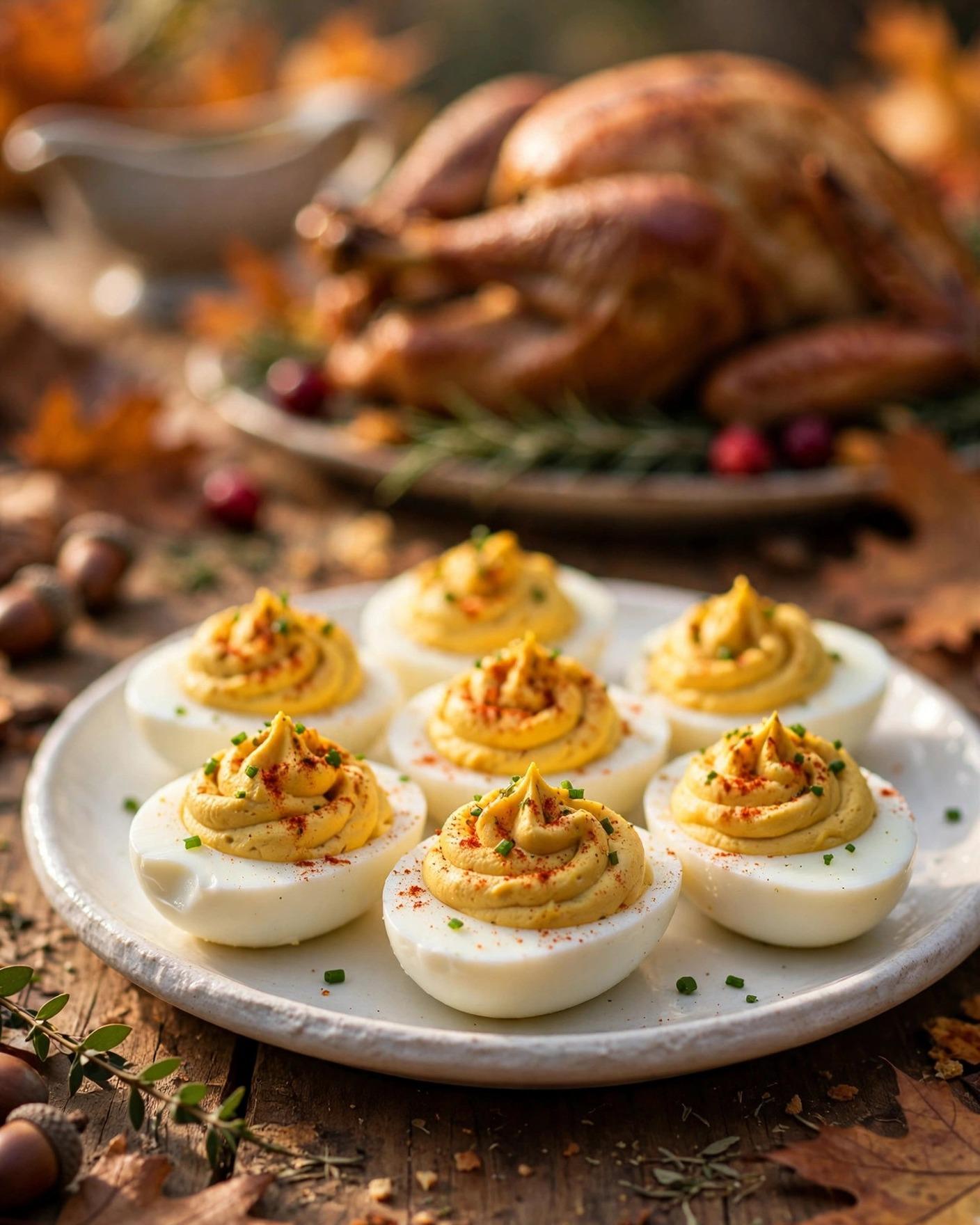
Some dishes earn their spot at the holiday table through sheer staying power, and classic deviled eggs have been doing exactly that for generations. They are the first thing to disappear from the appetizer spread at Thanksgiving, the plate that gets carried around the kitchen with a protective hand, and the recipe nobody writes down because everyone just knows it. Firm, tender egg whites hold a whipped-smooth filling of yolks, mayonnaise, yellow mustard, and a splash of vinegar, finished with a dusting of paprika that turns them from plain to festive in seconds.
The appeal is in the contrast: cool and creamy against the warmth of everything else on the table, rich yolk filling balanced by the gentle tang of mustard and vinegar. Each bite is a two-bite affair — silky filling first, then the clean snap of the white — and the whole tray can be made the day before the holiday rush. There is nothing fussy about this recipe. It uses six pantry ingredients, one pot, and about thirty minutes, and it scales up as easily as adding another dozen eggs to the pot.
What separates a great deviled egg from a forgettable one is technique, not ingredients. Eggs that peel cleanly, yolks whipped completely smooth, and a filling seasoned boldly enough to taste bright once chilled — those details are what this recipe walks you through. Follow the steps below and you will have a platter of deviled eggs with picture-perfect whites, a filling that holds its shape at room temperature during cocktail hour, and a flavor that keeps people coming back for "just one more."
Why You'll Love This Recipe
- The Southern-style classic — creamy mustard-mayo filling with vinegar tang, just like the holiday table version
- Six simple ingredients — eggs, mayo, mustard, vinegar, salt, pepper, and paprika for dusting
- Make-ahead friendly — boil the eggs and mix the filling a day ahead; assemble in minutes before serving
- Naturally gluten-free and low-carb — a holiday appetizer that fits almost every dietary table
- Scales up easily — one batch makes 24 halves; double or triple it for a crowd with no extra technique
- Always the first plate to empty — a proven Thanksgiving appetizer staple for generations
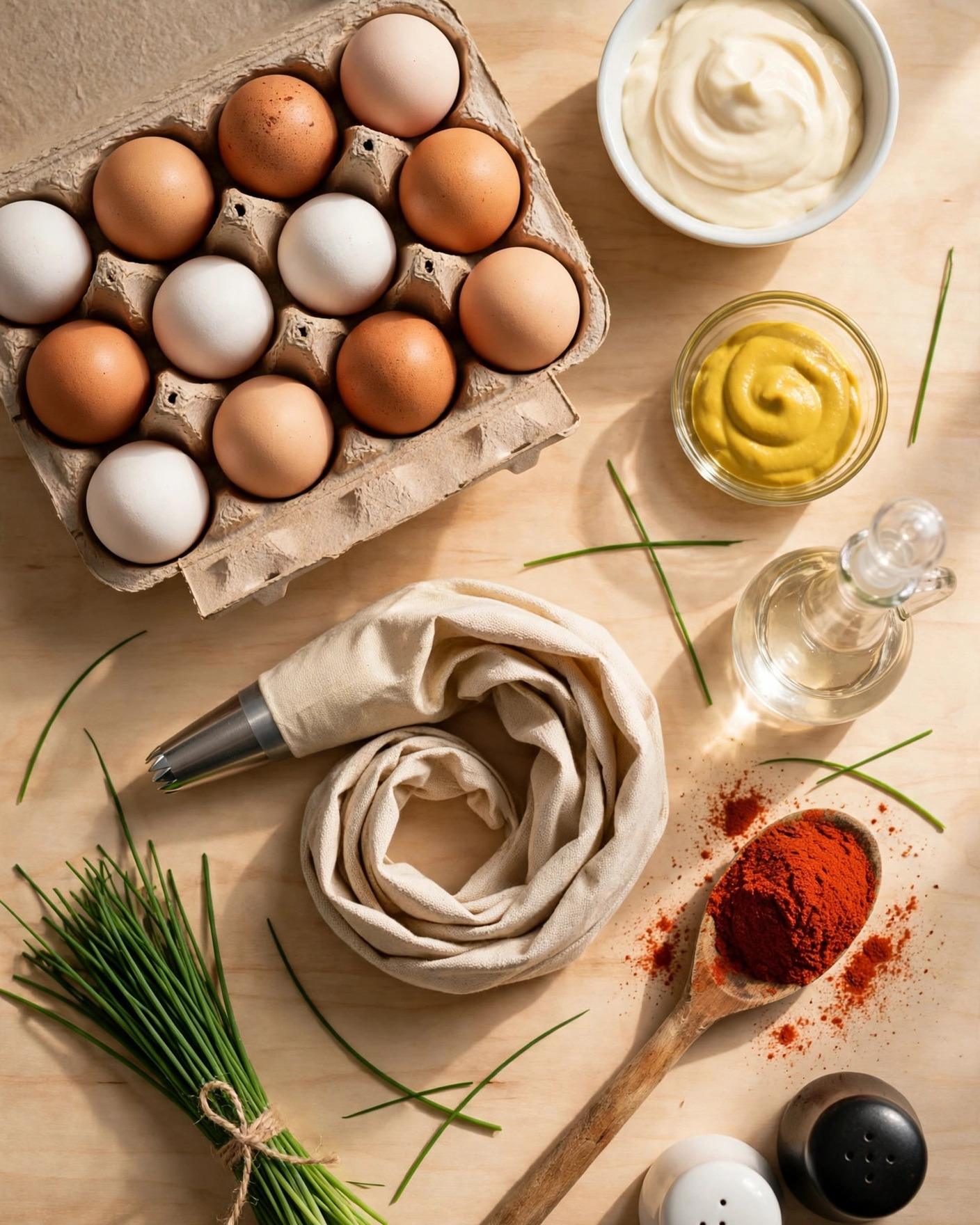
Ingredients
- 12 large eggs
- 1/2 cup (115 g) mayonnaise
- 1 1/2 tablespoons yellow mustard
- 1 tablespoon white vinegar (or apple cider vinegar)
- 1/2 teaspoon (3 g) kosher salt, plus more to taste
- 1/4 teaspoon (1 g) freshly ground black pepper, plus more to taste
- Paprika, for dusting (sweet or smoked)
- 2 tablespoons finely chopped fresh chives or parsley, for garnish (optional)
Instructions
- Boil the eggs. Place the eggs in a large saucepan or pot in a single layer and cover with cold water by 1 inch. Bring to a rolling boil over high heat, then immediately remove from the heat, cover with a lid, and let stand for 12 minutes.
- Ice bath. While the eggs stand, fill a large bowl with ice and water. Transfer the eggs to the ice bath with a slotted spoon and let them chill for at least 10 minutes — this stops the cooking and makes the shells release cleanly.
- Peel. Gently crack each egg all over on the counter and roll it to loosen the shell. Peel under cool running water, starting at the wide end where the air pocket sits. Pat the peeled eggs dry with paper towels.
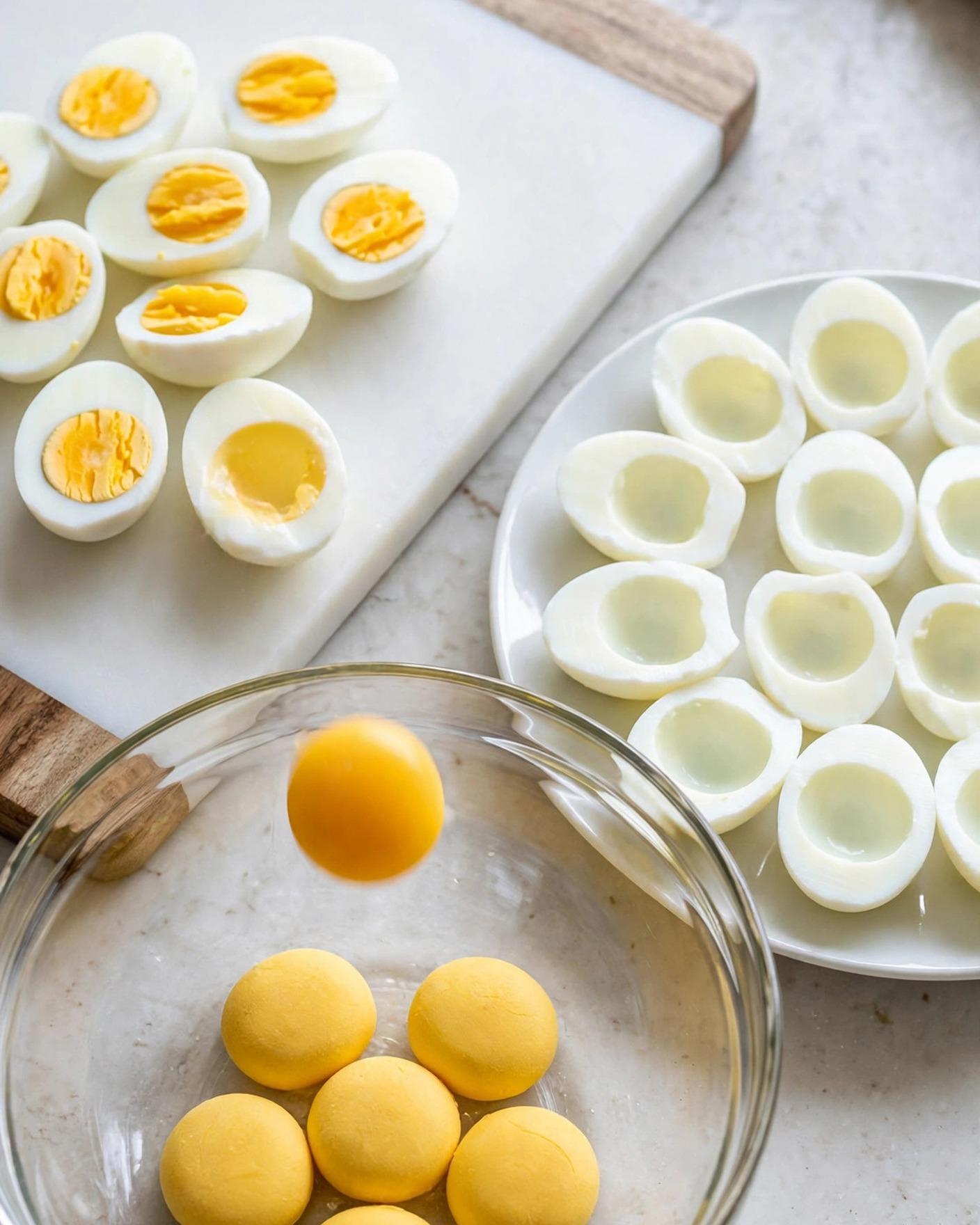
- Halve and separate. Slice each egg in half lengthwise with a sharp knife, wiping the blade between cuts for clean edges. Gently pop the yolks out into a medium mixing bowl; arrange the whites cut-side up on a serving platter or deviled-egg tray.
- Make the filling. Mash the yolks thoroughly with a fork until no lumps remain — or push them through a fine-mesh sieve for an extra-smooth texture. Add the mayonnaise, yellow mustard, vinegar, salt, and pepper, and stir until completely smooth and creamy. Taste and adjust the salt, pepper, and vinegar until the filling tastes bright and well-seasoned.
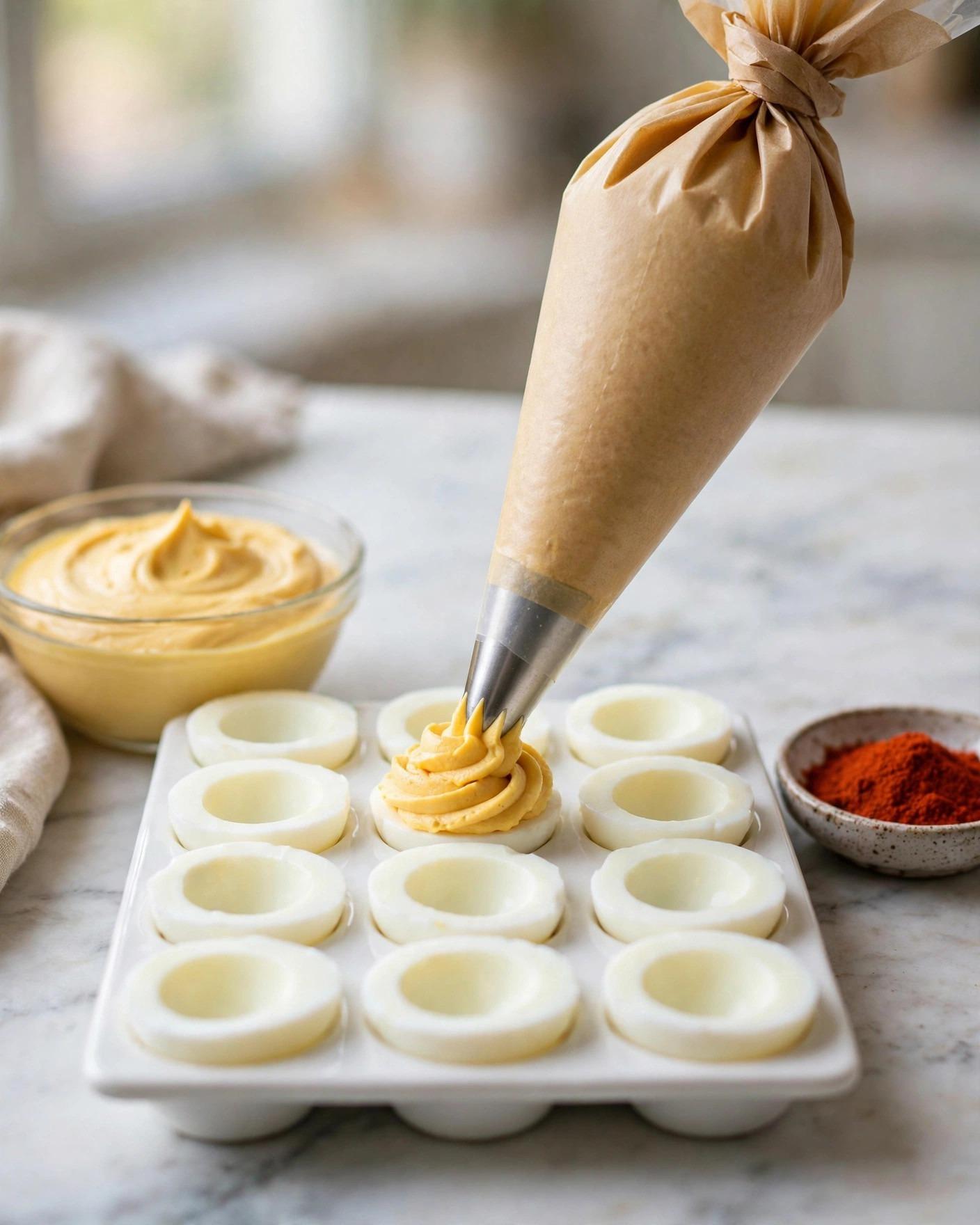
- Fill the whites. Spoon the filling generously into each egg-white half, or transfer the filling to a piping bag (or zip-top bag with the corner snipped off) fitted with a large star tip and pipe a tall swirl into each white for a classic catered look.
- Chill. Cover the platter loosely with plastic wrap and refrigerate for at least 30 minutes so the filling firms up and the flavors meld.
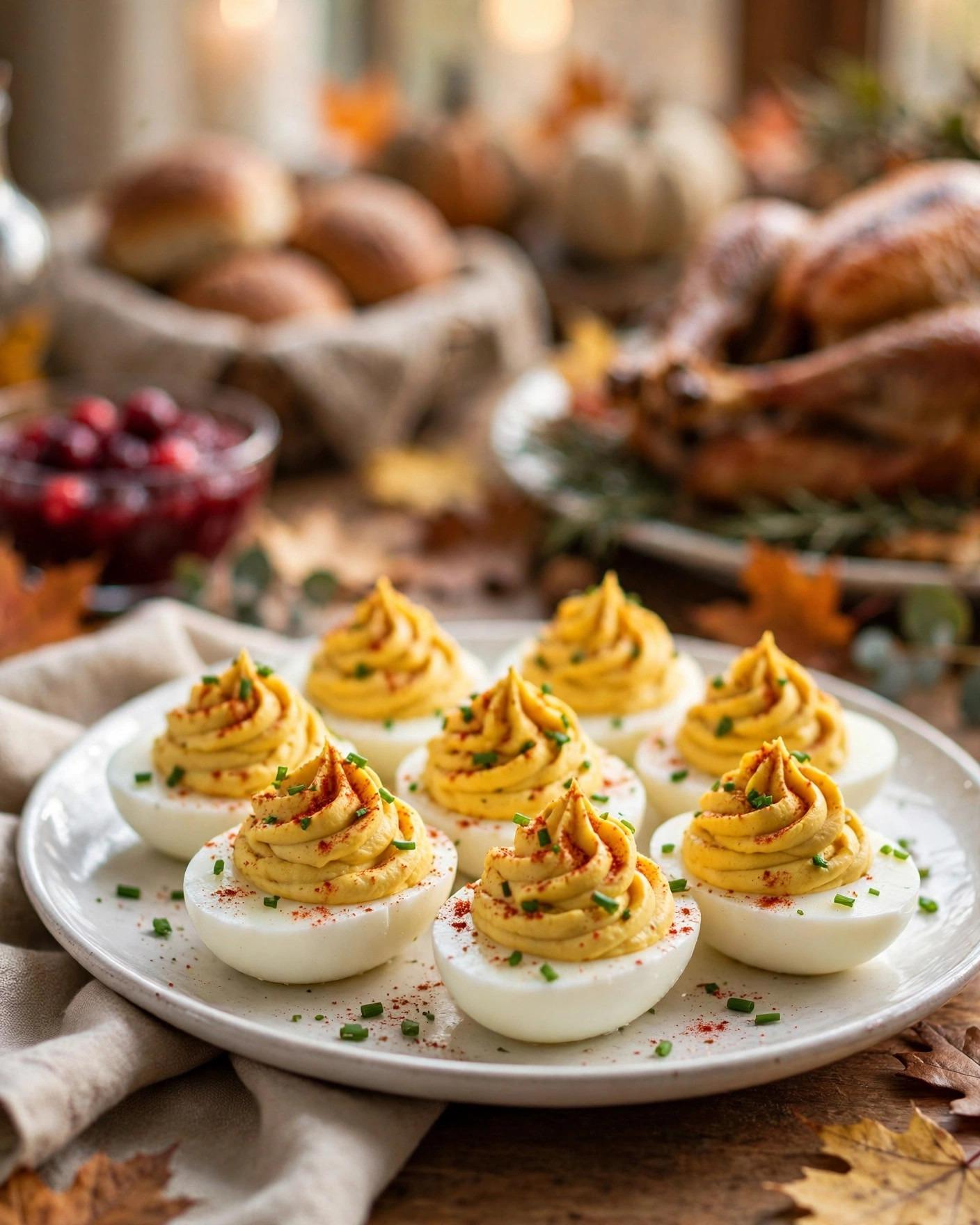
- Garnish and serve. Just before serving, dust the filled eggs lightly with paprika and scatter the chopped chives or parsley over the top. Serve chilled.

Tips for Success
- Start with cold water. Placing eggs in cold water and bringing it to a boil cooks them more evenly and reduces cracking compared to dropping them into already-boiling water.
- Don't skip the ice bath. The rapid chill is what makes peeling easy — the whites contract slightly and pull away from the shell membrane. Eggs that cool slowly are the ones that tear.
- Use eggs that aren't farm-fresh. Slightly older eggs (a week or so past purchase) peel far more cleanly than eggs bought the same day, because the air pocket at the wide end grows with time.
- Mash the yolks completely. Lumpy yolks make lumpy filling. A fork works, but pushing the yolks through a fine-mesh sieve gives the silkiest, most professional-looking result.
- Season boldly. Cold mutes flavor, so the filling should taste slightly over-seasoned at room temperature — once chilled, it will land exactly right.
- Keep them cold on the buffet. Deviled eggs are a perishable appetizer. Set the platter over a tray of ice for a long party, and don't leave them at room temperature longer than 2 hours.
Variations
- Dijon upgrade: swap the yellow mustard for Dijon mustard for a sharper, more complex tang.
- Sweet relish style: stir 2 tablespoons of sweet pickle relish into the filling and reduce the vinegar by half for the classic picnic version.
- Smoky bacon: fold 1/4 cup of crumbled cooked bacon into the filling and top each egg with an extra crumble.
- Spicy kick: add 1–2 teaspoons of prepared horseradish or a few dashes of hot sauce to the filling, and dust with smoked paprika.
- Herb and chive: fold 2 tablespoons of minced fresh dill and extra chives into the filling for a garden-fresh take.
- Curried deviled eggs: whisk 1 teaspoon of mild curry powder into the filling and garnish with a tiny cilantro leaf — a fun twist for a party platter.
Storage
Deviled eggs keep well in the refrigerator for up to 2 days. Store them in a single layer in an airtight container (a deviled-egg tray with a snap lid is ideal) so the filling doesn't get smushed. The paprika dust may bleed slightly into the filling after a day — if you're serving guests, garnish fresh rather than storing already-dusted eggs. Do not freeze deviled eggs; the whites turn rubbery and weep liquid when thawed. If the filling seems dry after storage, there's no fixing a filled egg, but unfilled whites and filling stored separately both keep for 2 days and can be assembled fresh.
Make-Ahead
Deviled eggs are an ideal make-ahead holiday appetizer. Boil, peel, and halve the eggs up to 2 days ahead, storing the whites and yolks separately in airtight containers in the refrigerator. Mix the filling up to 1 day ahead and refrigerate it in the piping bag or a covered bowl. Assemble and pipe no more than a few hours before serving, then dust with paprika and garnish just before the tray goes out. For Thanksgiving morning, the whole assembly takes about 10 minutes when the components are prepped the night before.
FAQ
Why do my egg whites tear when I peel the eggs? Torn whites almost always come from skipping the ice bath or peeling eggs that are too fresh. The ice bath shocks the white away from the shell membrane, and eggs that have been in the fridge for at least a week peel more cleanly because the air pocket has grown. Peeling under running water and starting at the wide end also helps the shell slip off.
How far in advance can I make deviled eggs? The components can be prepped up to 2 days ahead — whites and yolks stored separately — and the mixed filling keeps for 1 day in the refrigerator. Fully assembled deviled eggs are best within 24 hours and keep safely for up to 2 days refrigerated. Dust with paprika and add garnish just before serving so they look fresh.
Why is my deviled egg filling runny? Runny filling usually means too much liquid relative to yolks, or the yolks weren't mashed smoothly enough to hold an emulsion. Mash the yolks completely smooth first, then add the mayonnaise and mustard gradually rather than all at once. If it's already mixed, chilling the filling for an hour firms it considerably; a spare yolk mashed in can also rescue a loose batch.
Are deviled eggs safe to leave out at a party? Treat them like any perishable appetizer: no more than 2 hours at room temperature (1 hour if it's hot). For a long Thanksgiving grazing table, nest the serving platter over a tray of ice or set out half the batch and replenish from the fridge. Refrigerate leftovers promptly and eat within 2 days.
Recipe Card
- Prep time: 15 minutes
- Cook time: 12 minutes (plus 10 minutes ice bath)
- Total time: 40 minutes
- Servings: 24 deviled egg halves (12 servings of 2)
- Estimated calories per serving: ~70 per deviled egg half

Hi, I’m Emma! I’m the cook and recipe developer behind Sizzle & Sage. From my sunny home kitchen, I share easy, flavor-packed recipes for real life — quick breakfasts, cozy weeknight dinners, and simple bakes anyone can make. Pull up a chair and stay a while!