One-Pot Beef Stroganoff Pasta
One-Pot Beef Stroganoff Pasta takes everything comforting about a classic stroganoff — tender beef, golden mushrooms, sweet onion, and a tangy sour cream sauce — and builds it in a single pot with the pasta cooked right alongside. There is no separate pan for the noodles, no colander balanced in the sink, and no second saucepot to wash later. The beef browns first, the mushrooms and onion soften in those savory drippings, and then the egg noodles simmer directly in seasoned beef broth until they are tender and have absorbed a remarkable amount of flavor along the way.
That one-pot method is more than a shortcut for cleanup. Pasta cooked in broth tastes seasoned all the way through, rather than only coated at the end, and the starch the noodles release as they simmer quietly helps the finished sauce turn glossy and clinging. When the pot comes off the heat and the sour cream is stirred in, the broth transforms into the familiar pale, creamy stroganoff sauce — rich without being heavy, tangy without being sharp, and generous enough to coat every noodle, mushroom slice, and crumble of beef.
The flavor notes are the ones that make stroganoff recognizably itself. Sweet paprika brings warmth and color, Worcestershire sauce adds deep savory character, and a small spoonful of Dijon mustard sharpens the sauce in the background without making it taste like mustard at all. Garlic, black pepper, and a handful of fresh parsley at the end keep the richness in balance. None of these ingredients is difficult to find, and most home kitchens already have the seasonings on hand, which makes this a dinner you can decide on in the afternoon and serve the same evening.
This version is built for six servings and comes together in about 45 minutes from start to finish, with most of that time calm and hands-off once the noodles go in. Serve it straight from the pot, in warm bowls, with extra parsley scattered over the top.
Why You'll Love This Recipe
- Everything cooks in one pot. The beef, mushrooms, noodles, and sauce all happen in the same large pot, in sequence, so the flavors build on each other and the washing up afterwards is a fraction of what a traditional stroganoff with separately boiled pasta usually leaves behind.
- The noodles drink in the broth. Cooking the egg noodles directly in beef broth seasons them from the inside out, and their starch naturally thickens the sauce as they simmer, giving you a glossy finish without a complicated roux or a long reduction.
- Classic stroganoff flavor, weeknight timing. Paprika, Worcestershire, Dijon, garlic, and sour cream deliver the warm, tangy, savory character people expect from stroganoff, while ground beef keeps the cooking time short and the texture tender in every bite.
- Creamy finish, handled the gentle way. The sour cream goes in off the heat, at the very end, which keeps the sauce smooth and silky instead of split or grainy — a small detail in the method that makes a visible difference in the bowl.
- Mushrooms cooked properly. The mushrooms get real time in the pot after the beef browns, so they lose their excess moisture, pick up color, and taste deeply savory rather than pale and spongy, which is how mushrooms in a hurried one-pot dinner can sometimes end up.
- Generous, flexible, and leftover-friendly. Six hearty servings means dinner today with a good chance of lunch tomorrow, and the recipe adapts calmly to sliced beef, rotini instead of egg noodles, or a lighter dairy finish if that is what your household prefers.
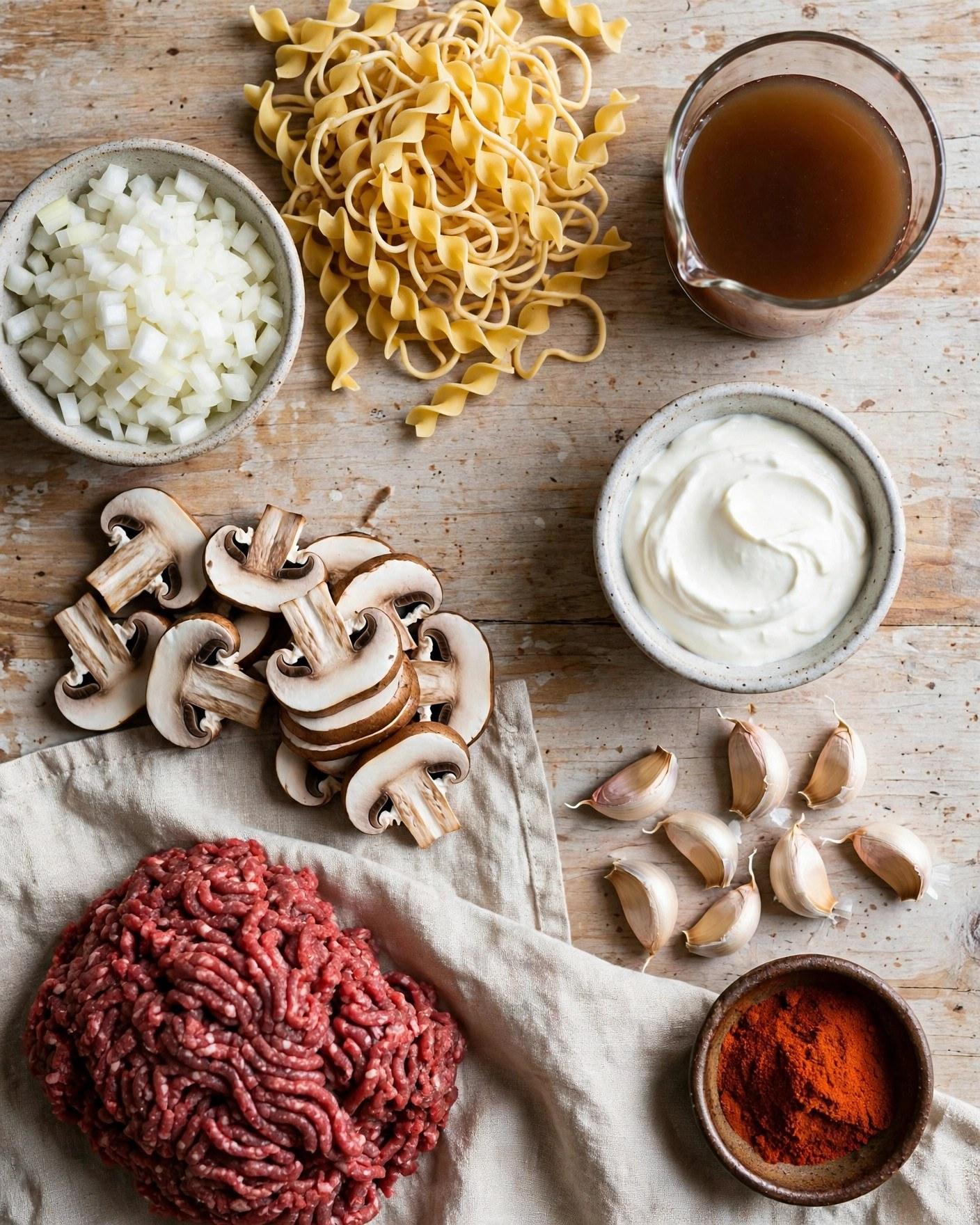
Ingredients
For the beef and vegetables
- 1 1/2 pounds (680 g) ground beef, 85% lean, or sliced beef (see Variations)
- 1 tablespoon olive oil, only if your beef is very lean
- 1 large yellow onion (about 2 cups / 300 g), finely diced
- 12 ounces (340 g) cremini mushrooms, cleaned and sliced about 1/4 inch (6 mm) thick
- 4 cloves garlic, minced (about 1 1/3 tablespoons)
- 1 1/2 teaspoons fine sea salt, plus more to taste
- 1 teaspoon black pepper, freshly ground if possible, plus more to taste
- 2 teaspoons sweet paprika
- 1/2 teaspoon smoked paprika, optional, for a deeper color and warmth
For the pasta and sauce
- 2 tablespoons all-purpose flour
- 4 cups (960 ml) low-sodium beef broth, plus up to 1/2 cup (120 ml) more as needed
- 1 tablespoon Worcestershire sauce
- 1 teaspoon Dijon mustard
- 12 ounces (340 g) dried wide egg noodles, or rotini (see Variations)
- 3/4 cup (180 g) full-fat sour cream, at room temperature
For serving
- 1/4 cup (15 g) fresh flat-leaf parsley, chopped
- Freshly ground black pepper, to taste
- Extra sour cream, optional, for dolloping at the table
Why these ingredients matter
Ground beef. Ground beef is what makes this stroganoff genuinely weeknight-friendly. It browns quickly, needs no slicing or long simmering to become tender, and breaks into bite-size crumbles that distribute evenly through the noodles, so every forkful carries some beef. An 85% lean blend offers a good balance: enough fat for rich flavor and proper browning, without leaving the finished sauce greasy. Whatever blend you choose, cook it all the way to 160°F (71°C), the safe temperature for ground beef, and judge that with a thermometer rather than by color alone.
Olive oil. Most ground beef renders enough of its own fat that extra oil is unnecessary, but very lean beef can stick and brown unevenly in a dry pot. A tablespoon of olive oil, added only when the beef needs it, helps the first contact with the hot pot go smoothly and also gives the mushrooms a little fat to cook in if the beef left the pot especially dry.
Yellow onion. Onion is the quiet sweetness underneath the whole dish. Diced finely and cooked until softened and translucent, it practically melts into the sauce, adding body and a gentle, cooked sweetness that balances the tang of the sour cream and the saltiness of the broth.
Cremini mushrooms. Mushrooms are not a garnish in stroganoff — they are half the character of the dish. Cremini mushrooms bring a deeper, earthier flavor than white button mushrooms and hold their shape well through browning and simmering. Slicing them about 1/4 inch (6 mm) thick keeps them substantial enough to notice in the finished pasta without being chewy. The important part is patience: mushrooms release a lot of water at first, and cooking past that stage, until the liquid evaporates and the edges take on color, is what turns them savory and concentrated instead of steamed.
Garlic. Four cloves, added after the onion and mushrooms have softened, perfume the pot without ever scorching. Garlic cooked briefly in the beef drippings loses its raw edge and settles into a warm background note that supports the paprika and Worcestershire.
Salt and black pepper. Seasoning in layers is what keeps a one-pot pasta from tasting flat in the middle. The beef is seasoned as it browns, the broth is already salted, and the finished dish gets a final taste and adjustment once the sour cream is in, because dairy softens the perception of salt. Freshly ground black pepper is worth using if you have it; its gentle heat is a traditional stroganoff note and it wakes up the creamy sauce at the end.
Sweet paprika and smoked paprika. Sweet paprika gives stroganoff its warm color and its mild, peppery sweetness, and it should taste fresh and fragrant from the jar — paprika that has sat for years loses most of its character. The small amount of optional smoked paprika deepens the color and adds a faint smokiness that suits beef and mushrooms very well.
All-purpose flour. Two tablespoons of flour, sprinkled over the browned beef and vegetables and stirred for a minute, is the small thickening step that gives the finished sauce its body. As the broth simmers with the noodles, the flour cooks out completely — there is no raw taste — and helps the sauce cling to the pasta instead of pooling thinly at the bottom of the bowl.
Beef broth. The broth does double duty here: it is both the cooking liquid for the noodles and the base of the sauce, which is why a good-tasting, low-sodium beef broth matters. Low-sodium keeps the final seasoning in your hands, since the liquid reduces slightly and the Worcestershire also contributes salt. The noodles will absorb a surprising amount as they cook, so having up to 1/2 cup (120 ml) extra broth nearby lets you adjust the sauce to a glossy, spoonable consistency at the end.
Worcestershire sauce and Dijon mustard. These two small additions are the savory backbone of the sauce. Worcestershire brings concentrated, tangy depth — the kind of background richness that makes people ask what is in the dish without being able to name it. Dijon adds a gentle sharpness that cuts through the cream and lifts the beef flavor, and at one teaspoon it will not make the sauce taste like mustard. Together they keep a creamy pasta from ever tasting bland or one-note.
Egg noodles. Wide egg noodles are the classic stroganoff partner: tender, slightly rich, and broad enough to carry the sauce and mushrooms in every bite. They also cook quickly and evenly in broth, usually in about 8 to 10 minutes, which suits the one-pot method perfectly.
Sour cream. Sour cream is the finish that makes stroganoff itself — tangy, creamy, and pale gold once it meets the paprika-tinted broth. Full-fat sour cream is strongly recommended because it is far less likely to split than low-fat versions, and bringing it to room temperature before stirring it in, off the heat, is the other half of that insurance.
Fresh parsley. A handful of chopped flat-leaf parsley, scattered over the finished pasta, adds the one fresh, green note in an otherwise deep and savory dish. It brightens the color in the bowl, lifts the aroma, and gives each serving a clean finish. Add it at the very end, never during the simmer, so it stays vivid rather than darkening into the sauce.
Instructions
- Prepare the ingredients and the sour cream. Take the sour cream out of the refrigerator first, measure 3/4 cup (180 g), and set it aside to lose its chill while you work — room-temperature sour cream blends into a hot sauce far more smoothly. Dice the onion finely, slice the mushrooms about 1/4 inch (6 mm) thick, and mince the garlic. Keep the mushrooms separate from the onion, since they go into the pot in stages.
- Brown the ground beef. Place a large, heavy pot or Dutch oven, at least 5 quarts (4.7 L), over medium-high heat. Add the olive oil only if your beef is very lean. Add the ground beef, sprinkle it with about half the salt and pepper, and cook for 6 to 8 minutes, breaking it into bite-size crumbles with a wooden spoon, until it is deeply browned in spots and cooked through to 160°F (71°C) on an instant-read thermometer — ground beef must reach that temperature for food safety, and color alone is not a reliable test. If the pot holds a lot of rendered fat, spoon off all but about 1 tablespoon; a little fat carries flavor, a pool of it will make the sauce greasy.
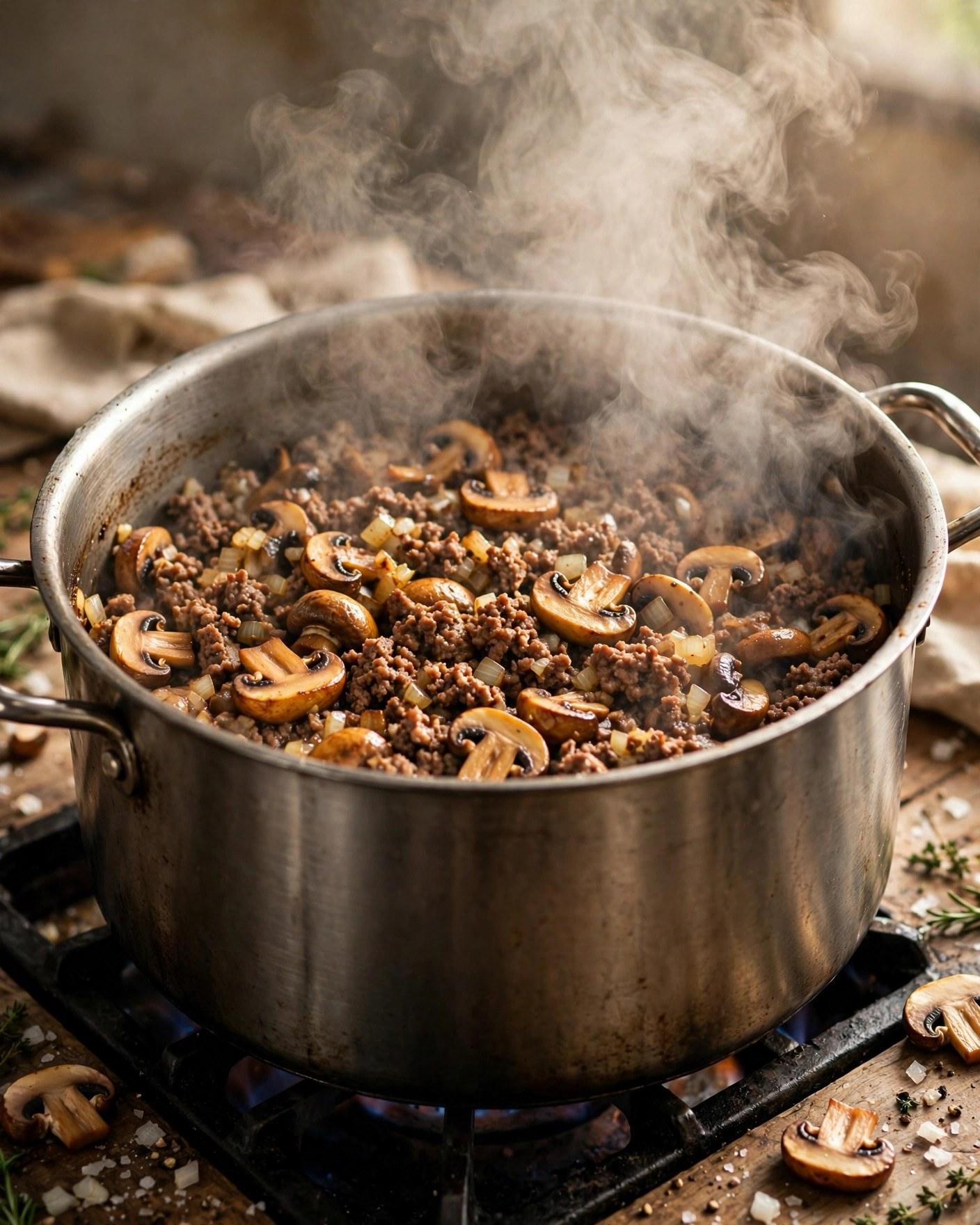
- Cook the mushrooms until golden. Add the sliced mushrooms to the beef in a single loose layer as best you can, and cook for 5 to 6 minutes, stirring only occasionally, until they have released their liquid, that liquid has mostly evaporated, and the slices are taking on golden edges. Resist stirring constantly at the start — mushrooms left undisturbed against the hot pot brown far better. This step concentrates their flavor and keeps the finished sauce from turning watery, so let it take the time it needs.
- Soften the onion and add the aromatics. Stir in the diced onion and cook for 3 to 4 minutes, until softened and translucent at the edges, scraping up the browned bits from the bottom of the pot as the onion releases its moisture. Add the garlic, sweet paprika, optional smoked paprika, and the remaining salt and pepper, and stir for about 30 seconds, just until fragrant. The paprika will tint the beef and vegetables a warm red-gold, which is exactly the color the finished sauce will carry.
- Sprinkle in the flour. Scatter the flour evenly over the beef and vegetables and stir constantly for 1 minute, coating everything and cooking the flour through the hot fat in the pot. The mixture will look a little pasty and the bottom of the pot may catch slightly — that is fine and expected. This brief cooking removes any raw flour taste and sets up the sauce to thicken gently as the noodles simmer in the next steps.
- Add the broth, Worcestershire, and Dijon. Pour in the beef broth slowly at first, stirring and scraping the bottom of the pot to lift every browned bit into the liquid, then add the rest of the broth along with the Worcestershire sauce and Dijon mustard. Stir until the mustard disappears into the broth. Bring the mixture to a lively simmer over medium-high heat, then taste the broth carefully and adjust the salt if it needs it — the noodles will absorb this seasoning as they cook, so the broth should taste well seasoned now, pleasantly savory rather than bland.
- Add the noodles and simmer. Stir in the dried egg noodles, pressing them down so they are mostly submerged in the broth. Return the pot to a gentle simmer, then reduce the heat to medium-low, cover with the lid slightly ajar, and cook for 8 to 10 minutes, stirring every 2 to 3 minutes so the noodles cook evenly and nothing sticks to the bottom. The noodles are done when they are tender with just a gentle bite. If they have absorbed the broth before they are tender, stir in extra broth a splash at a time, up to 1/2 cup (120 ml), and give them another minute or two.
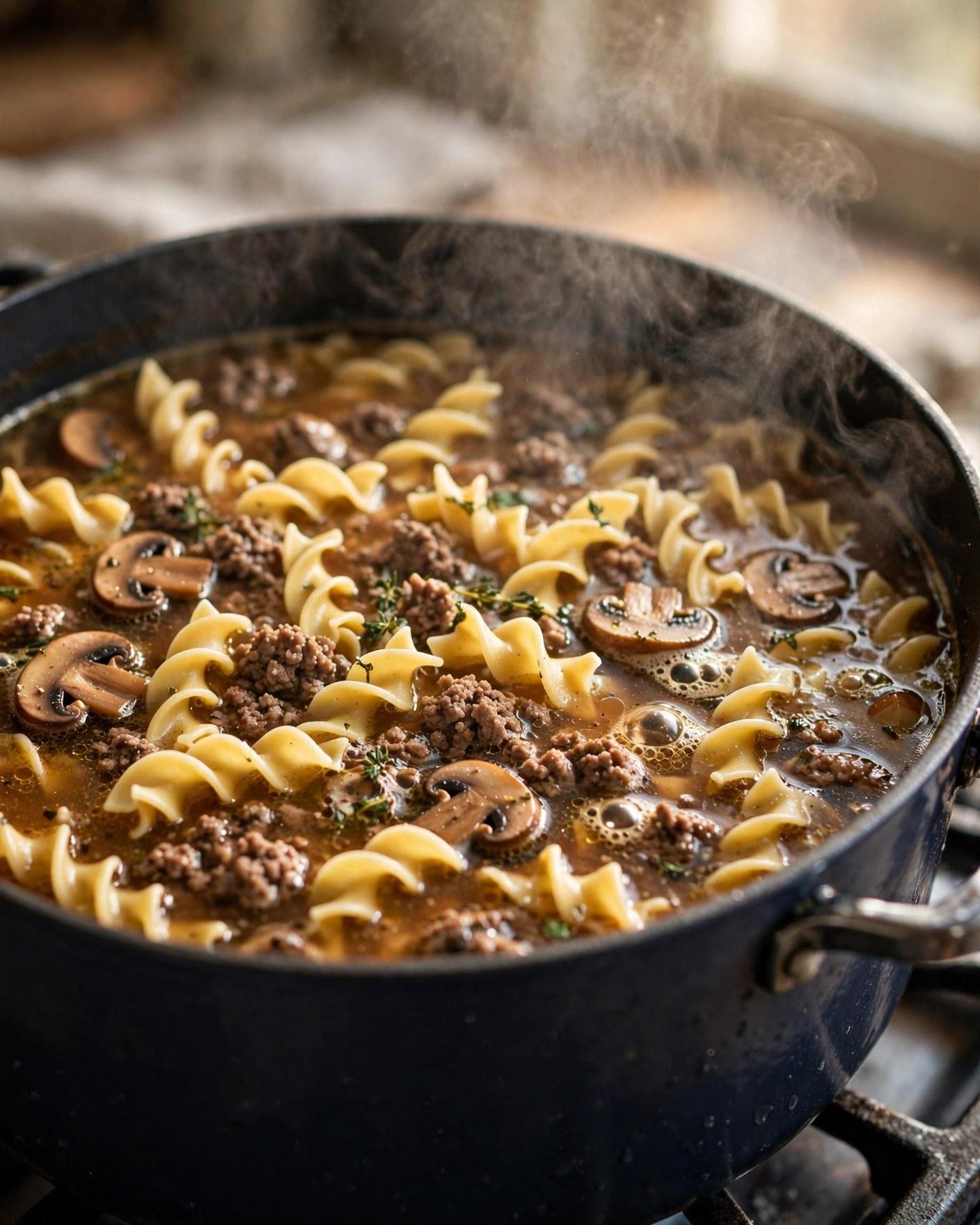
- Rest the pot briefly off the heat. When the noodles are tender, take the pot completely off the heat and let it stand, uncovered, for 2 minutes. The sauce will look a little loose at this moment, and that is correct — it thickens as it rests, and the brief cooling is important for the next step. A sauce that is steaming gently rather than bubbling hard is at exactly the right temperature to receive the sour cream without splitting.
- Stir in the sour cream off the heat. Spoon a few tablespoons of the hot broth from the pot into the room-temperature sour cream and stir it smooth — this tempers the sour cream so the temperature change is gradual. Scrape the tempered sour cream into the pot and fold it through the pasta gently but thoroughly, until the broth turns into an even, creamy, pale sauce that coats the noodles, beef, and mushrooms. Work the spoon down to the bottom of the pot so no pockets of plain broth remain. Do not return the pot to the heat or let the sauce boil after this point, because boiling is what makes a sour cream sauce grainy.

- Adjust, garnish, and serve. Taste the pasta and adjust the salt and black pepper; if the sauce has thickened more than you like, loosen it with a splash of warm broth until it looks glossy and spoonable. Scatter the chopped parsley generously over the top. Serve right away in warm, shallow bowls, straight from the pot, with extra black pepper and an optional small dollop of sour cream at the table for anyone who wants a little more tang.
Tips for Success
- Use a pot that is genuinely big enough. A pot of at least 5 quarts (4.7 L) gives the beef room to brown instead of steam, the mushrooms space to take on color, and the noodles room to move in the broth as they expand. In a cramped pot everything still cooks, but the browning suffers and the noodles are more likely to clump and stick.
- Brown first, stir later. Both the beef and the mushrooms reward patience. Let the beef develop deep brown spots before breaking it down too small, and let the mushrooms sit against the hot pot between stirs so their liquid evaporates and their edges color. Those two browning stages are where most of this dish's deep, savory flavor is built.
- Check the beef temperature, not just its color. Ground beef is safe at 160°F (71°C), and thoroughly browned crumbles can still hide undercooked centers in a crowded pot. A quick check with an instant-read thermometer in the thickest crumbles takes seconds and settles the question properly, which matters in a dish where the beef is not cooked a second time at high heat.
- Keep the noodles moving occasionally. Egg noodles cooking in a thickening broth can settle and stick to the bottom of the pot, especially in the last few minutes. A stir every 2 to 3 minutes, scraping the bottom gently, keeps them cooking evenly and protects the sauce from scorching underneath.
- Temper the sour cream, every time. Room-temperature sour cream, loosened with a little hot broth before it goes into the pot, and a sauce taken off the heat first — those three small habits together are what guarantee a smooth, creamy finish. Cold sour cream dropped into a bubbling sauce is the one reliable way to make this dish split, and it is entirely avoidable.
- Serve it promptly, and loosen leftovers gently. Stroganoff pasta is at its silkiest in the first minutes after the sour cream goes in, because the noodles keep drinking the sauce as they stand. If the pot has sat for a while before serving, a splash of warm broth stirred through restores the glossy texture in seconds.
Variations
- Sliced beef stroganoff pasta. Replace the ground beef with 1 1/2 pounds (680 g) of beef sirloin or flank steak, sliced thinly against the grain into bite-size strips. Sear the strips quickly in a single layer until browned at the edges, then proceed with the recipe; because sliced beef cooks fast, return it to the pot for only the last 2 to 3 minutes of the noodle simmer so it stays tender. Sliced whole beef should reach at least 145°F (63°C) with a 3-minute rest.
- Rotini instead of egg noodles. Swap the egg noodles for 12 ounces (340 g) of rotini and add about 2 to 3 minutes to the simmer, checking for tenderness as you go. Rotini's spirals trap the creamy sauce and small pieces of beef and mushroom beautifully, and the firmer pasta holds up especially well if you expect leftovers. Other sturdy short shapes, such as penne or cavatappi, work on the same timing.
- Extra mushroom stroganoff. Increase the mushrooms to 1 pound (450 g), mixing cremini with sliced shiitake or white button mushrooms if you like, and brown them in two additions so they color rather than steam. The result leans earthier and heartier, and the mushrooms take on an even bigger share of the dish alongside the beef.
- Lighter creamy finish. Replace half the sour cream with plain Greek yogurt, stirred in off the heat exactly the same way, and use the remaining sour cream as written. The sauce will taste a little tangier and lighter while staying creamy. Keep the pot off the heat just as carefully — yogurt is, if anything, even more inclined to split over direct heat than sour cream.
- A little tomato depth. Stir 1 tablespoon of tomato paste into the pot with the garlic and paprika and let it cook for a minute before the flour goes in. It deepens the color of the sauce and adds a gentle, concentrated sweetness behind the beef, without turning stroganoff into a tomato sauce.
- Herb finish, two ways. Keep the parsley for freshness, or swap half of it for chopped fresh dill, which has a long tradition alongside stroganoff flavors and adds a soft, distinctive aroma. A teaspoon of fresh thyme leaves, stirred in with the sour cream, is another lovely option that suits the mushrooms particularly well.
Storage
Let the pasta cool until it is no longer steaming, then transfer it to an airtight container and refrigerate promptly, within 2 hours of cooking. Stored this way, One-Pot Beef Stroganoff Pasta keeps well for up to 3 to 4 days. The noodles will continue to absorb the sauce as they sit, so leftovers will look thicker and tighter than the freshly made dish — that is expected, and it is easy to correct when you reheat. Keep any extra fresh parsley separate and add it after reheating, because herbs stored on top of hot pasta darken and lose the fresh lift that makes them worth adding.
To reheat, spoon a portion into a skillet or saucepan with a splash of beef broth, milk, or water — about 1 to 2 tablespoons per serving — and warm it over medium-low heat, stirring gently, until it is steaming hot throughout, at least 165°F (74°C) for leftovers. The added liquid loosens the sauce back toward its original glossy consistency as it warms. A microwave also works well for single servings: cover loosely, heat in short intervals, stir between each, and add that same splash of liquid if the pasta looks dry. If the sauce tastes a little flat after reheating, a small spoonful of fresh sour cream stirred in at the end, off the heat, restores its tang and creaminess beautifully.
Freezing is possible but comes with a texture trade-off worth knowing about. Sour cream sauces can turn slightly grainy after thawing, and egg noodles soften considerably, so this dish is at its best eaten fresh or from the refrigerator within a few days. If you do freeze it, cool it completely, pack it in freezer-safe containers, and freeze for up to 2 months. Thaw overnight in the refrigerator and reheat gently as above, stirring in a fresh spoonful of sour cream off the heat to bring the sauce back together.
FAQ
Can I use sliced beef instead of ground beef in One-Pot Beef Stroganoff Pasta? Yes — sliced beef is the more traditional choice, and it works very well here. Use 1 1/2 pounds (680 g) of sirloin or flank steak sliced thinly against the grain, sear it quickly until browned at the edges, and set it aside while you cook the mushrooms and onion. Return it to the pot for only the last 2 to 3 minutes of the noodle simmer so it stays tender rather than chewy, and cook whole sliced beef to at least 145°F (63°C) with a 3-minute rest. Ground beef, by contrast, must always reach 160°F (71°C).
Why did my sour cream sauce split, and how do I prevent it? A sour cream sauce splits when it gets too hot, too fast — usually because cold sour cream went straight into a bubbling pot, or the finished sauce was allowed to boil. Prevent it with three habits working together: bring the sour cream to room temperature, take the pot off the heat and let it rest for 2 minutes, and temper the sour cream with a few spoonfuls of hot broth before stirring it in. Full-fat sour cream is also more stable than low-fat. If a sauce does loosen slightly, gentle stirring off the heat often brings it back together.
Can I make this pasta ahead of time? It is best served fresh, because the noodles keep absorbing sauce as they stand, but making it a few hours ahead works with a small plan. Cook the recipe completely, cool and refrigerate it, then reheat it gently on the stove with a generous splash of broth until steaming hot, and stir in 2 to 3 tablespoons of fresh sour cream off the heat to restore the creamy finish. For a dinner party, a calmer approach is to brown the beef, mushrooms, and onion ahead and refrigerate that base, then add the broth and noodles and finish the dish fresh in about 15 minutes.
What can I use instead of egg noodles or sour cream? Rotini is the easiest noodle swap: use the same 12 ounces (340 g), add 2 to 3 minutes to the simmer, and expect a slightly firmer, very sauce-friendly result; penne and cavatappi also work. For the sour cream, plain full-fat Greek yogurt is the closest substitute in tang and body — replace it measure for measure and stir it in off the heat just as carefully. Heavy cream makes a richer, milder sauce without the signature tang, so if you use it, add a teaspoon of lemon juice or Dijon at the end to keep the flavors balanced.
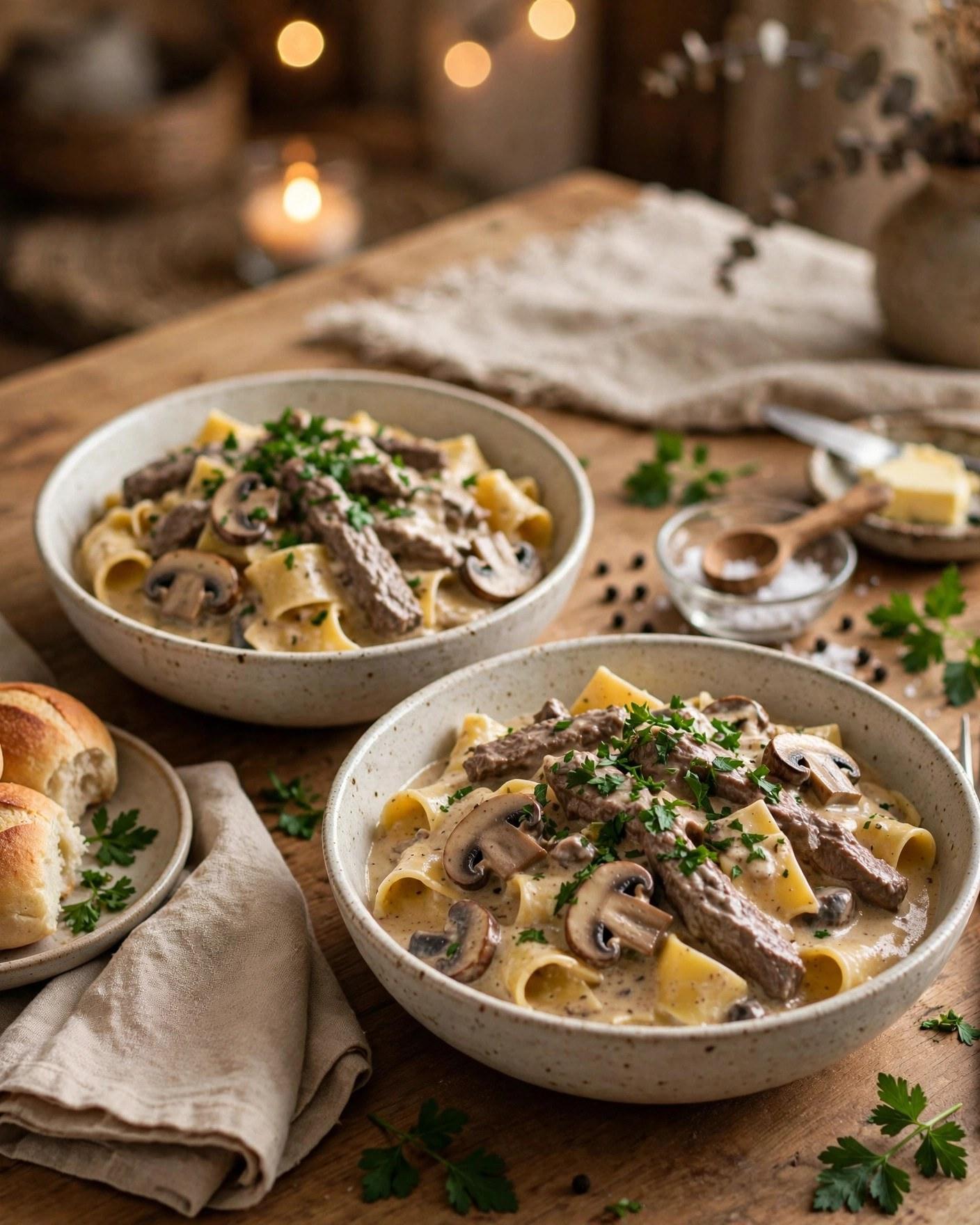
Recipe Card
One-Pot Beef Stroganoff Pasta
- Prep Time: 15 minutes (PT15M)
- Cook Time: 30 minutes (PT30M)
- Total Time: 45 minutes (PT45M)
- Servings: 6 servings
- Calories: 620 kcal per serving (estimated)
Ground beef, mushrooms, and onion browned in one pot, with egg noodles simmered in seasoned beef broth and a paprika, Worcestershire, and Dijon sauce finished with sour cream off the heat and fresh parsley on top.
Nutrition (estimated): 620 kcal per serving (estimated, for stroganoff pasta with ground beef, egg noodles, mushrooms, and sour cream), 48 g carbohydrates, 34 g protein, 32 g fat, 3 g fiber, 6 g sugar, 680 mg sodium. Nutrition is estimated and will vary with the leanness of the beef, the brand of broth and noodles, how much fat is spooned off, and any variations or substitutions.
Can I use sliced beef instead of ground beef in One-Pot Beef Stroganoff Pasta?
Yes — sliced beef is the more traditional choice, and it works very well here. Use 1 1/2 pounds (680 g) of sirloin or flank steak sliced thinly against the grain, sear it quickly until browned at the edges, and set it aside while you cook the mushrooms and onion. Return it to the pot for only the last 2 to 3 minutes of the noodle simmer so it stays tender rather than chewy, and cook whole sliced beef to at least 145°F (63°C) with a 3-minute rest. Ground beef, by contrast, must always reach 160°F (71°C).
Why did my sour cream sauce split, and how do I prevent it?
A sour cream sauce splits when it gets too hot, too fast — usually because cold sour cream went straight into a bubbling pot, or the finished sauce was allowed to boil. Prevent it with three habits working together: bring the sour cream to room temperature, take the pot off the heat and let it rest for 2 minutes, and temper the sour cream with a few spoonfuls of hot broth before stirring it in. Full-fat sour cream is also more stable than low-fat. If a sauce does loosen slightly, gentle stirring off the heat often brings it back together.
Can I make this pasta ahead of time?
It is best served fresh, because the noodles keep absorbing sauce as they stand, but making it a few hours ahead works with a small plan. Cook the recipe completely, cool and refrigerate it, then reheat it gently on the stove with a generous splash of broth until steaming hot, and stir in 2 to 3 tablespoons of fresh sour cream off the heat to restore the creamy finish. For a dinner party, a calmer approach is to brown the beef, mushrooms, and onion ahead and refrigerate that base, then add the broth and noodles and finish the dish fresh in about 15 minutes.
What can I use instead of egg noodles or sour cream?
Rotini is the easiest noodle swap: use the same 12 ounces (340 g), add 2 to 3 minutes to the simmer, and expect a slightly firmer, very sauce-friendly result; penne and cavatappi also work. For the sour cream, plain full-fat Greek yogurt is the closest substitute in tang and body — replace it measure for measure and stir it in off the heat just as carefully. Heavy cream makes a richer, milder sauce without the signature tang, so if you use it, add a teaspoon of lemon juice or Dijon at the end to keep the flavors balanced.

Hi, I’m Emma! I’m the cook and recipe developer behind Sizzle & Sage. From my sunny home kitchen, I share easy, flavor-packed recipes for real life — quick breakfasts, cozy weeknight dinners, and simple bakes anyone can make. Pull up a chair and stay a while!