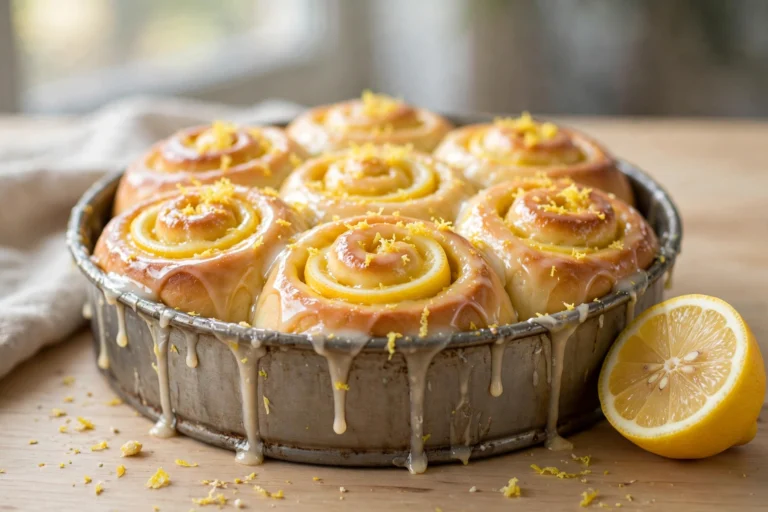
Air Fryer Cinnamon Rolls
There is a particular kind of morning that calls for cinnamon rolls — slow, a little celebratory, and best started with the smell of cinnamon and brown sugar drifting through the kitchen. The trouble with a classic pan of rolls is the scale: a big batch, a hot oven, and more rolls than a small household can happily eat while they are at their best. These air fryer cinnamon rolls solve that neatly. They are a small batch of eight soft, yeasted rolls, mixed and kneaded by hand or mixer, filled with a generous brown sugar-cinnamon butter, and baked right in the air fryer basket at 320 degrees F (160 degrees C) until puffed and golden.
The air fryer is surprisingly good at this job. Its compact chamber holds gentle, even heat around a small round of rolls, so the edges turn lightly golden while the centers stay tender and a little gooey in the middle — exactly the contrast you want. There is no need to heat a full oven for eight rolls, and the whole project fits a weekend morning without feeling like a production. Plan on about an hour for the dough to rise, a few minutes to roll and fill it, and just 10 to 12 minutes in the air fryer.
A simple cream cheese glaze finishes them: tangy, sweet, and soft enough to melt into every swirl while the rolls are still warm. Serve them straight from the basket, glazed at the table so everyone gets that first glossy spoonful. Whether this is a holiday morning, a birthday breakfast, or simply a Saturday that deserved better than toast, these rolls deliver the bakery feeling in a size that makes sense — warm, swirled, and gone before they have a chance to go stale.
Why You'll Love This Recipe
- Small batch, just eight rolls. Sized for real households, not a bake sale. You get a full, satisfying round of rolls with no tray of leftovers slowly drying out on the counter.
- No oven required. The air fryer preheats in minutes and bakes the rolls in about 10 to 12 minutes at 320 degrees F (160 degrees C), keeping the kitchen cool and the morning simple.
- Real yeasted dough, soft and pillowy. This is a proper enriched dough with milk, butter, and egg — tender, lightly sweet, and sturdy enough to roll into clean, tight swirls.
- Brown sugar-cinnamon filling that stays gooey. Softened butter carries the sugar and cinnamon into every layer, and a pinch of salt keeps the sweetness balanced instead of flat.
- Cream cheese glaze with real tang. Cream cheese, butter, powdered sugar, and a splash of milk make a glaze that tastes like more than sugar — it cuts the richness and melts beautifully over warm rolls.
- Holiday-ready but weeknight-easy. The dough can rise while you make coffee, and the rolls can be shaped the night before and refrigerated, ready to air fry in the morning.

Ingredients
For the dough
- 3/4 cup (180 ml) whole milk, warm to 100 to 110 degrees F (38 to 43 degrees C)
- 2 1/4 teaspoons (7 g) active dry yeast (1 standard packet)
- 1/4 cup (50 g) granulated sugar
- 1 large egg, at room temperature
- 1/4 cup (57 g) unsalted butter, melted and slightly cooled
- 2 3/4 cups (345 g) all-purpose flour, plus more for dusting
- 3/4 teaspoon fine sea salt
For the brown sugar-cinnamon filling
- 1/3 cup (75 g) unsalted butter, very soft
- 2/3 cup (135 g) packed light brown sugar
- 1 1/2 tablespoons ground cinnamon
- 1/4 teaspoon fine sea salt
- 1 teaspoon cornstarch (optional, helps the filling stay in the swirls)
For the cream cheese glaze
- 4 ounces (115 g) cream cheese, softened
- 2 tablespoons (28 g) unsalted butter, softened
- 3/4 cup (90 g) powdered sugar, sifted if lumpy
- 1/2 teaspoon vanilla extract
- 2 to 3 tablespoons milk, as needed for drizzling consistency
- Pinch of fine sea salt
Why these ingredients matter
Warm milk. Milk gives this enriched dough its tender crumb and gentle richness. Warm it to 100 to 110 degrees F (38 to 43 degrees C) — warm to the touch, never hot. Milk hotter than about 120 degrees F (49 degrees C) can kill the yeast before it starts, while cold milk slows the rise to a crawl.
Active dry yeast. Yeast is what turns a sweet dough into pillowy rolls instead of dense spirals. It needs that warm milk and a little sugar to wake up; within 5 to 10 minutes it should look foamy. If it does not foam, the yeast is dead or the milk was too hot — start over with a fresh packet rather than hoping for the best.
Granulated sugar in the dough. A modest amount sweetens the dough itself and feeds the yeast. The real sweetness lives in the filling and glaze, so the dough stays balanced and bakes up golden rather than cloying.
Egg. One room-temperature egg enriches the dough, adds structure, and helps the rolls bake up soft with a fine, even crumb. A cold egg can cool the warm dough and slow the rise, so set it out when you warm the milk.
Melted butter in the dough. Butter is flavor and tenderness at once. Melt it and let it cool slightly before mixing — piping-hot butter can scramble the egg and harm the yeast. In the filling and glaze, butter plays different roles, which is why the recipe calls for it three ways: melted, very soft, and softened.
All-purpose flour. All-purpose flour is the right middle ground here: enough protein to hold the swirls and give a gentle chew, not so much that the rolls turn bready. Measure by weight if you can — 345 grams is consistent, while scooped cups vary. Add flour gradually; the dough should be soft and slightly tacky, not stiff.
Fine sea salt. Salt seasons the dough, controls the yeast, and — in the filling and glaze, in small pinches — sharpens every other flavor. Cinnamon rolls without enough salt taste sweet and somehow empty; with it, the cinnamon and brown sugar come forward.
Brown sugar. Light brown sugar brings molasses depth that white sugar cannot, and it melts into the butter to form the gooey layer inside each swirl. Pack it firmly when measuring, and break up any hard lumps before mixing so the filling spreads evenly.
Ground cinnamon. Use cinnamon you would happily smell straight from the jar — fresh, warm, and fragrant. It is the headline flavor, so tired, dusty cinnamon makes tired rolls. One and a half tablespoons sounds like a lot; it is exactly right for eight well-swirled rolls.
Cornstarch in the filling. Optional but clever: a teaspoon of cornstarch thickens the melting butter-sugar mixture slightly as it bakes, so more of the filling stays in the swirls instead of pooling and burning on the parchment.
Cream cheese. The glaze's tang is what separates a great cinnamon roll from a merely sweet one. Use full-fat block cream cheese, softened so it beats smooth; whipped or tub-style cream cheese can make the glaze thin and watery.
Powdered sugar and vanilla. Powdered sugar dissolves instantly into a smooth glaze with no grittiness. Vanilla rounds it out. Add the milk a spoonful at a time — you want a glaze that drapes and drips slowly, not one that runs off and disappears.
Instructions
- Bloom the yeast. Pour the warm milk into a large mixing bowl or the bowl of a stand mixer. Sprinkle the yeast and 1 teaspoon of the granulated sugar over the top, stir gently, and let it stand for 5 to 10 minutes, until foamy and fragrant. If nothing happens, discard it and start again with fresh yeast and milk at the right temperature.
- Mix and knead the dough. Whisk the remaining sugar, egg, and melted butter into the foamy yeast mixture. Add the flour and salt and stir until a shaggy dough forms. Knead by hand on a lightly floured surface for 8 to 10 minutes, or with a dough hook on medium-low for 6 to 7 minutes, until the dough is smooth, elastic, and only slightly tacky. If it sticks stubbornly, add flour 1 tablespoon at a time — stop as soon as it clears the bowl, because a soft dough makes soft rolls.
- Let the dough rise. Shape the dough into a ball, place it in a lightly greased bowl, and cover with a damp towel or plastic wrap. Let it rise in a warm, draft-free spot for 60 to 75 minutes, until doubled in size. In a cool kitchen this can take up to 90 minutes; judge by size, not the clock — the dough should look puffy and hold a gentle fingerprint when poked.
- Mix the filling. While the dough rises, stir the very soft butter, brown sugar, cinnamon, salt, and cornstarch (if using) in a small bowl until it forms a smooth, spreadable paste, like thick frosting. Set it aside at room temperature — if it firms up, it will tear the dough when you spread it.
- Roll out the dough. Turn the risen dough onto a lightly floured surface and press out the large air bubbles. Roll it into a rectangle about 12 by 9 inches (30 by 23 cm), with a long side facing you and an even thickness throughout. Square the corners gently with your hands so the end rolls are not tiny scraps.

- Fill and roll up. Spread the cinnamon filling evenly over the dough, leaving a 1/2-inch (1.3 cm) bare border along the far long edge. Starting from the long edge closest to you, roll the dough away from you into a tight log, keeping the tension even so the swirls stay compact. Pinch the bare border seam firmly to seal, then turn the log seam-side down.
- Cut into 8 rolls. For clean cuts that do not squash the swirls, use unflavored dental floss or a long piece of kitchen thread: slide it under the log, cross the ends over the top, and pull to slice. Cut the log in half, then each half in half again, and each quarter in half once more, to get 8 even rolls about 1 1/2 inches (3.8 cm) thick. A serrated knife with a gentle sawing motion also works.

- Arrange on parchment and proof briefly. Line the air fryer basket with a round of parchment paper sized to fit the basket floor, leaving a little room at the edges for airflow. Arrange the rolls cut-side up on the parchment — one in the center and seven around it, or in two neat rows in a square basket — with a small gap between them. Cover loosely and let them rest for 20 to 25 minutes, until slightly puffed and just touching. If your basket is small, bake in two batches of four rather than crowding.
- Air fry at 320 degrees F. Preheat the air fryer to 320 degrees F (160 degrees C) for 3 minutes. Set the parchment with the rolls into the basket — parchment and all — and air fry for 10 to 12 minutes, until the rolls are puffed, deeply golden on top, and cooked through in the center. The center roll is the last to finish; its middle should look set and spring back when pressed gently, and an instant-read thermometer in the center roll should read about 190 degrees F (88 degrees C). If the tops brown too fast, lower the temperature to 300 degrees F (150 degrees C) for the final minutes on your next batch and note it — air fryers vary.

- Glaze and serve warm. While the rolls bake, beat the cream cheese and butter together until smooth, then beat in the powdered sugar, vanilla, and salt. Add milk 1 tablespoon at a time until the glaze drips slowly from a spoon. Let the baked rolls rest in the basket for 3 to 4 minutes — just enough to set — then spread or drizzle the glaze generously over the warm rolls so it melts into the swirls. Lift them out by the parchment and serve warm.
Tips for Success
- Respect the milk temperature. Between 100 and 110 degrees F (38 to 43 degrees C) is the yeast's comfort zone. A cheap thermometer removes the guesswork, and foamy yeast within 10 minutes is your proof everything is on track.
- Keep the dough soft. Resist adding extra flour. A slightly tacky dough kneads into tender rolls; a stiff, over-floured dough bakes up dry and bready no matter how good the filling is.
- Use floss for cutting. A knife drags and pinches the log, smearing the swirl. Thread or unflavored floss slices cleanly, so each roll shows a distinct spiral and bakes evenly.
- Parchment is not optional. Sugary filling bubbles out as it bakes. Parchment sized to the basket floor keeps the rolls from sticking, makes lifting them out easy, and saves the basket from baked-on sugar. Do not let parchment edges curl up into the heating element, and never preheat loose parchment alone — weigh it down with the rolls first.
- Do not crowd the basket. Air needs to circulate. Eight rolls fit most 5-quart and larger baskets with small gaps; in a smaller basket, bake four at a time and keep the second batch covered while the first bakes.
- Glaze warm, not scorching. Wait 3 to 4 minutes after baking. Glazed immediately, the glaze melts off entirely; glazed when cool, it sits on top like frosting. Warm rolls give you the best of both — a little melt into the swirls, a little glossy drape on top.
Variations
- Apple-cinnamon rolls. Scatter 1/2 cup (about 75 g) of finely diced peeled apple over the filling before rolling. The apple softens into jammy pockets that love the brown sugar. Pat the dice dry first so the filling does not get watery.
- Pecan sticky rolls. Sprinkle 1/3 cup (40 g) finely chopped toasted pecans over the filling, and add an extra tablespoon of brown sugar. Serve glaze-light, or skip the glaze and spoon the parchment's caramel juices over the top instead.
- Orange-cardamom rolls. Add 1 teaspoon finely grated orange zest and 1/2 teaspoon ground cardamom to the filling, and swap 1 tablespoon of the glaze's milk for orange juice. Bright, warm, and lovely for a holiday morning.
- Maple glaze. Replace the milk in the glaze with pure maple syrup and add an extra pinch of salt. The cream cheese tang against maple is excellent with the cinnamon filling.
- Overnight rolls. Shape the rolls, arrange them on parchment, cover tightly, and refrigerate for up to 12 hours. In the morning, let them sit at room temperature for 30 to 40 minutes until slightly puffed, then air fry as directed. This is the move for Christmas morning.
Storage
Cinnamon rolls are at their absolute best within an hour of baking, but leftovers keep well. Store glazed or unglazed rolls in an airtight container at room temperature for up to 2 days, or in the refrigerator for up to 5 days. To reheat, air fry a roll at 300 degrees F (150 degrees C) for 2 to 3 minutes, until warm and soft again — the air fryer restores the texture far better than a microwave, which can make the dough tough. If the rolls are unglazed, add fresh glaze after reheating.
For longer storage, freeze the baked, unglazed rolls: cool completely, wrap each roll tightly, and freeze in a freezer bag for up to 2 months. Thaw at room temperature for about an hour, reheat in the air fryer at 300 degrees F (150 degrees C) for 3 to 4 minutes, and glaze while warm. You can also freeze the shaped, unbaked rolls on parchment, transfer them to a bag once solid, and thaw overnight in the refrigerator before proofing and baking as directed — a small stash of future slow mornings, ready when you are.
FAQ
Can I make these cinnamon rolls without a stand mixer? Yes — this dough is small and soft, and kneading by hand is genuinely pleasant work. Stir it together with a wooden spoon until it holds together, then knead on a lightly floured counter for 8 to 10 minutes, until smooth and elastic. The dough is ready when it stretches thin without tearing right away and springs back slowly when poked. A stand mixer with a dough hook (6 to 7 minutes on medium-low) is faster, not better — both routes give you the same tender rolls.
Why did my rolls turn out dense instead of fluffy? Dense rolls almost always trace back to the yeast or the flour. Check that your yeast foamed in the warm milk — if it did not, the rise was never going to happen. Milk hotter than about 120 degrees F (49 degrees C) can kill yeast, so measure the temperature rather than guessing. The other common cause is too much flour: scooping cups packs in extra, so weigh the flour or add it gradually and stop while the dough is still soft and slightly tacky. Finally, let the dough truly double before shaping; an under-risen dough bakes up tight and heavy.
Can I bake these in the oven instead of the air fryer? You can. Arrange the rolls in a greased 9-inch (23 cm) round cake pan or small baking dish, proof as directed, and bake in a preheated 350 degree F (175 degree C) oven for 20 to 25 minutes, until golden and set in the center. The air fryer version is faster and sized for eight rolls in a basket, but the dough, filling, and glaze are exactly the same. Tent loosely with foil if the tops brown before the centers are done.
Do I have to use parchment paper in the air fryer? For this recipe, yes — it earns its place. The brown sugar filling melts and bubbles as the rolls bake, and without parchment it welds the rolls to the basket and burns onto the surface. Cut the parchment to fit the basket floor with a little clearance at the edges for airflow, keep the edges from curling up toward the heating element, and always set the rolls on it before it goes into a hot air fryer — loose parchment alone in a preheating basket can lift and touch the element. Perforated air fryer parchment rounds work especially well here.

Recipe Card
Air Fryer Cinnamon Rolls
- Prep Time: 30 minutes (PT30M)
- Cook Time: 12 minutes (PT12M)
- Total Time: 2 hours 15 minutes (PT2H15M)
- Servings: 8 rolls
- Calories: 385 kcal per roll (estimated)
Soft homemade yeasted cinnamon rolls sized for the air fryer — eight brown sugar-cinnamon swirls baked at 320 degrees F (160 degrees C) until golden, finished with a tangy cream cheese glaze that melts into every layer.

Hi, I’m Emma! I’m the cook and recipe developer behind Sizzle & Sage. From my sunny home kitchen, I share easy, flavor-packed recipes for real life — quick breakfasts, cozy weeknight dinners, and simple bakes anyone can make. Pull up a chair and stay a while!