One-Bowl Banana Bread (Moist, Easy and Christmas-Morning Ready)
Christmas morning has a rhythm all its own. The stockings are empty, the wrapping paper is everywhere, the coffee is finally brewing, and somebody is hungry — right now, before the presents are even finished. That is the moment a loaf of banana bread earns its place on the table. Not a fussy layer cake, not a project that needs a mixer and three bowls, but a warm, golden loaf you can slice while it is still a little steamy, butter melting straight into the crumb. One-bowl banana bread answers that moment: everything happens in a single bowl with a fork and a spatula.
Every kitchen has the same small scene in December: a bunch of bananas on the counter that went from yellow to speckled to deeply brown while nobody was looking. Those bananas are not past their best — they are exactly where banana bread wants them. The darker the peel, the sweeter and more fragrant the fruit inside, and the more banana flavor ends up in the loaf. Three very ripe bananas, melted butter, brown sugar, two eggs, a spoonful of sour cream, and a handful of pantry staples turn into a loaf with a crackly golden top, a soft and tender middle, and a warm cinnamon note that tastes like the holidays. There is no mixer to wash, no creaming step, no separate wet and dry bowls. You mash, you stir, you fold, you pour, you bake.
Banana bread is one of the oldest quick breads in the American kitchen, and it has stayed popular for a simple reason: it is forgiving, it is fast, and it uses up fruit that would otherwise go to waste. A quick bread is leavened with baking soda and baking powder instead of yeast, so there is no rising time and no kneading. The banana does most of the work, its sugars caramelizing as the loaf bakes and its moisture keeping the crumb soft for days. The sour cream in this version is the quiet upgrade — a quarter cup adds a gentle tang and a richness that keeps the crumb moist without making the loaf heavy, and it works with the baking soda to give the bread a beautiful, even rise.
If you are planning a Christmas-morning table, this loaf fits into it in a way few other bakes can. It can be mixed and baked the night before, while the stockings are being filled and the kitchen is already warm, and it slices beautifully the next morning at room temperature or gently warmed. It feeds twelve slices from a single nine-by-five-inch pan, so it covers a family table without doubling, and it pairs with everything else on a holiday brunch spread — a breakfast casserole, scrambled eggs, fruit, coffee, hot cocoa for the kids.
The difference between a good banana bread and a great one comes down to a few small things, and this recipe is built around all of them. First, the bananas must be genuinely ripe — heavily speckled or nearly black — because underripe bananas make a pale, bland loaf. Second, the batter must be mixed gently and briefly, because overmixing develops the gluten in the flour and turns a tender loaf dense and tough. Third, the pan must be lined with parchment with an overhang, so the loaf lifts out cleanly instead of sticking and tearing. Fourth, the loaf must be tested for doneness in the center, because banana bread browns early on top while the middle is still catching up. And fifth, it must rest before slicing, so the crumb sets and every slice comes out clean.
If you have ever been disappointed by a banana bread, it was probably one of three things: bananas that were not ripe enough, a batter that was stirred too long and too hard, or a loaf pulled from the oven too soon that sank and turned gummy in the middle. All three are easy to avoid once you know what to look for. It holds well, travels well, and freezes beautifully, and it tastes even better the next day. So if your Christmas morning needs one bake that is warm, golden, and ready before the coffee is finished brewing, this is it. If you would like the full recipe without scrolling, jump to the recipe card below.
Why You’ll Love This Recipe
- Truly one bowl, no mixer. Everything is mashed, stirred, and folded in a single large bowl with a fork and a spatula — the only thing you wash is the bowl, the pan, and a spoon.
- Built for overripe bananas. The browner the bananas, the sweeter and more fragrant the loaf, so this recipe turns the fruit on your counter into the best thing on the table.
- Soft, moist crumb that lasts. Sour cream and a butter-and-oil combination keep the loaf tender for days, not hours, and it slices even better the next morning.
- A crackly golden top. A spoonful of granulated sugar and a sprinkle of turbinado sugar give the crust a lightly crisp, sugary finish that contrasts beautifully with the soft middle.
- Christmas-morning ready. Bake it the night before and it is waiting on the counter when the stockings come down — no early alarm, no oven juggling.
- Feeds a crowd from one pan. Twelve generous slices from a single nine-by-five-inch loaf, and the recipe doubles cleanly into two loaves for a bigger table or a neighbor gift.
- Flexible for your table. Fold in walnuts, pecans, or chocolate chips, or leave it plain — the method stays the same and the results stay reliable.
- Freezer friendly. The whole loaf or individual slices freeze beautifully for up to three months, so a December bake can carry you into January.
- Simple, everyday ingredients. Bananas, butter, sugar, eggs, flour, and spices you already own — no specialty shopping, no last-minute store run.

Ingredients
- 3 very ripe bananas, peeled (about 1 1/2 cups / 340 g mashed)
- 1/3 cup (75 g) unsalted butter, melted and slightly cooled
- 2 tablespoons (30 ml) neutral oil, such as vegetable or avocado oil
- 2/3 cup (135 g) packed light brown sugar
- 2 tablespoons (25 g) granulated sugar, plus more for the top if you like
- 2 large eggs, at room temperature
- 1/4 cup (60 g) sour cream, at room temperature
- 1 teaspoon (5 ml) pure vanilla extract
- 1 3/4 cups (220 g) all-purpose flour
- 1 teaspoon (5 g) baking soda
- 1/2 teaspoon (2 g) baking powder
- 3/4 teaspoon ground cinnamon
- 1/4 teaspoon ground nutmeg
- 3/4 teaspoon fine sea salt
- 3/4 cup (85 g) chopped toasted walnuts or semisweet chocolate chips (optional)
- 1 tablespoon turbinado sugar, for sprinkling on top (optional)
- Butter or parchment paper, for preparing the pan
Why these ingredients matter
Very ripe bananas. Three very ripe bananas are the heart of this loaf, and ripeness is the one thing you cannot fake. Look for peels that are heavily speckled with brown, or almost entirely black — the fruit inside should be soft, sweet, and fragrant, and it should mash easily with a fork. As bananas ripen, their starches turn into sugars, which is why a ripe banana gives the bread its deep flavor and golden color. About one and a half cups of mashed banana, roughly 340 grams peeled, is the right amount: enough to make the loaf unmistakably banana, not so much that the center stays wet and heavy.
Unsalted butter. A third of a cup of melted unsalted butter gives the loaf its rich, buttery flavor and its tender crumb. Melting it means it stirs straight into the mashed bananas with no creaming step and no mixer. Let it cool for a few minutes after melting, so it is warm rather than hot — butter that is too hot can start cooking the eggs when they go in.
Neutral oil. Two tablespoons of neutral oil are the small addition that keeps this loaf moist for days. Butter gives flavor, but butter firms up as it cools, and a loaf made with butter alone can taste a little drier by the second day. Oil stays liquid at room temperature, so it keeps the crumb soft and tender long after the loaf has cooled.
Light brown sugar. Two-thirds of a cup of packed light brown sugar is the main sweetener. Brown sugar is white sugar with molasses, and that molasses brings moisture and a warm caramel note that white sugar alone cannot give. Brown sugar also holds on to water, which is a baker’s way of saying a loaf sweetened with it stays moist. Pack the sugar firmly into the cup, and use light rather than dark brown sugar, so the caramel note stays gentle.
Granulated sugar. Two tablespoons of granulated sugar do a different job from the brown sugar. Stirred into the batter, they help the top of the loaf bake up with a light, crackly crust, and a little extra sprinkled over the batter before baking gives the finished loaf its sugary sparkle. Granulated sugar also balances the brown sugar’s softness with a cleaner sweetness, so the loaf tastes sweet without tasting heavy.
Large eggs. Two large eggs are the structure of the loaf — they bind the batter together, help it rise, and give the crumb its richness and golden color. Use large eggs, because the recipe’s balance of wet and dry ingredients is built on them, and bring them to room temperature before mixing, so they blend smoothly into the mashed bananas.
Sour cream. A quarter cup of sour cream is the quiet upgrade that sets this banana bread apart. It adds a gentle tang that sharpens the banana flavor, a richness that deepens the crumb, and extra moisture that keeps the loaf soft for days. It also works with the baking soda: the acid in the sour cream reacts with the soda to give the loaf a little extra lift, so the crumb bakes up light and even. Plain full-fat Greek yogurt is the closest substitute.
Pure vanilla extract. One teaspoon of pure vanilla extract rounds out the flavors of the loaf the way salt rounds out a soup. Vanilla does not make the bread taste like vanilla; it makes the banana taste more like banana, the brown sugar taste more caramelized, and the cinnamon taste warmer.
All-purpose flour. One and three-quarter cups of all-purpose flour give the loaf its body, and the amount matters more than it looks. Too little flour and the loaf sinks and turns gummy; too much and it bakes up dry and dense. Spoon the flour into the measuring cup and level it off with a knife, or weigh it if you have a scale — 220 grams is the target — because a packed cup can hold far more flour than the recipe intends.
Baking soda. One teaspoon of baking soda is the main leavener, and it works because there is acid in the batter — the bananas and the sour cream both provide it. When soda meets acid in a hot oven, it releases carbon dioxide, and those little bubbles are what lift the loaf and open up its crumb. Measure it carefully: too much soda leaves a soapy, metallic taste, and too little leaves the loaf flat.
Baking powder. Half a teaspoon of baking powder is the backup leavener, and it does a job the soda cannot do alone. Baking powder lifts twice — once when it meets liquid, and again when it meets heat — so it keeps working through the long bake and helps the center of the loaf rise instead of sinking. The combination of soda and powder is what gives this loaf its tall, even rise in a nine-by-five-inch pan.
Ground cinnamon. Three-quarters of a teaspoon of cinnamon is the spice that makes this loaf taste like the holidays. Cinnamon is the natural partner for banana: its warmth deepens the fruit’s sweetness without covering it up, and it perfumes the whole kitchen as the loaf bakes.
Ground nutmeg. A quarter teaspoon of nutmeg is the background note that makes people ask what is in the bread. Nutmeg adds a warm, slightly sweet depth that makes the cinnamon taste richer and the crumb taste more complex. Keep the amount small, because nutmeg is a background note, and too much of it turns the loaf bitter and medicinal.
Fine sea salt. Three-quarters of a teaspoon of fine sea salt seasons the bananas, the sugar, the butter, and the flour all at once, and an under-salted banana bread tastes flat and one-note no matter how good the bananas are. Salt is what makes sweetness taste sweet, and it is what keeps a rich loaf from tasting cloying. Fine sea salt dissolves evenly into the batter, where coarse salt might leave salty pockets.
Walnuts or chocolate chips. Three-quarters of a cup of chopped toasted walnuts or semisweet chocolate chips is entirely optional, and the loaf is complete without either — but each one changes the loaf in a lovely way. Walnuts add crunch and a toasty, slightly bitter contrast to the sweet crumb, and toasting them first in a dry skillet for a few minutes wakes up their flavor. Chocolate chips melt into little pockets of chocolate that make the loaf feel like a dessert. Fold either one in at the very end, with the last few strokes of mixing.
Turbinado sugar. A tablespoon of turbinado sugar sprinkled over the batter before baking is the finishing touch. Its large, golden crystals do not melt away in the oven the way fine sugar does, so they stay on top as a crackly, sparkling crust that catches the light and crunches gently under the knife. It is the detail that makes a homemade loaf look like it came from a bakery.
Instructions
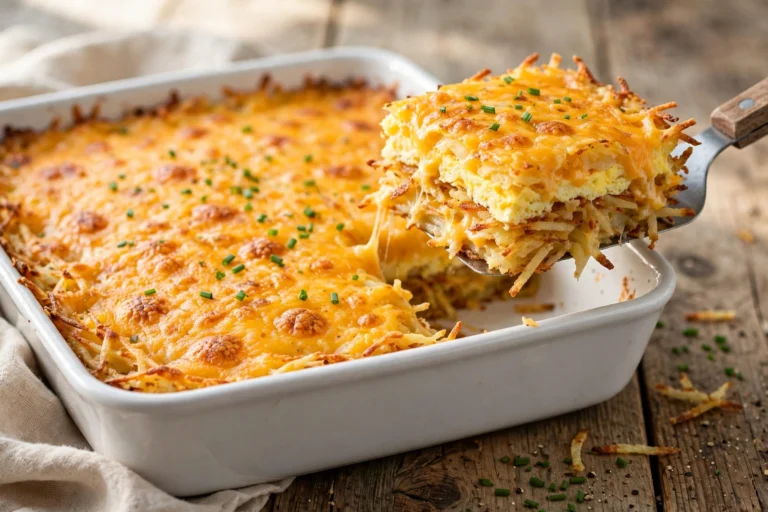
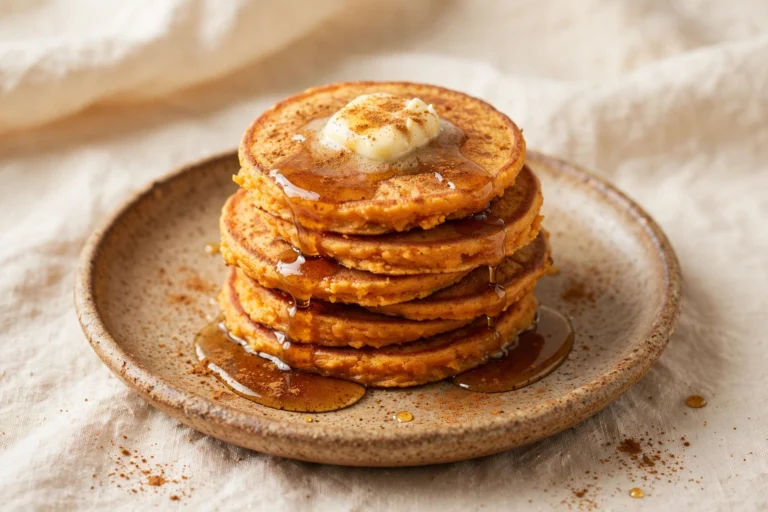
If you are building the full Christmas-morning table, our Christmas Morning Breakfast Casserole is the savory anchor that sits beautifully beside this loaf, and the Fluffy Egg-Free Banana Pancakes are the other banana on the table if your family wants pancakes too. For something sweet to follow, the Lemon Sweet Rolls bring a bright citrus finish, and the Cinnamon Roll French Toast Casserole (Overnight) is the make-ahead dish that lets the whole brunch come together without a morning rush.
- Preheat the oven and prepare the pan. Preheat the oven to 350°F (175°C). Grease a 9×5-inch (23×13 cm) loaf pan with butter, then line it with a sheet of parchment paper, leaving a couple of inches of overhang on the two long sides. The parchment sling is what lets you lift the finished loaf straight out of the pan without it sticking or tearing.
- Mash the bananas in one bowl. Peel the bananas into a large mixing bowl and mash them with a fork until mostly smooth. A few small lumps are perfectly fine — in fact, they are welcome, because little pockets of banana in the finished loaf are one of the best parts of eating it. You are aiming for about one and a half cups of mashed banana, and it should look soft, creamy, and fragrant.
- Stir in the butter and oil. Pour the melted, slightly cooled butter and the oil over the mashed bananas and stir them in with the fork or a spatula until combined. The mixture will look glossy and loose, and that is exactly right. Stirring the fat in first helps the batter stay tender.
- Add the sugars, eggs, sour cream, and vanilla. Add the brown sugar and granulated sugar to the bowl and stir until they are mostly dissolved into the banana mixture. Add the eggs, one at a time, stirring well after each one until it disappears into the batter. Stir in the sour cream and the vanilla extract until the mixture is smooth, creamy, and a warm golden color. Scrape the sides of the bowl so no streaks of sugar or sour cream are hiding along the edges.
- Whisk the dry ingredients together. In a small bowl, whisk together the flour, baking soda, baking powder, cinnamon, nutmeg, and salt until they are evenly combined. Whisking the dry ingredients separately takes thirty seconds and it matters, because it distributes the soda and the spices evenly through the flour — and a pocket of undissolved baking soda in the finished loaf tastes soapy and bitter.
- Fold the dry ingredients into the wet. Pour the dry ingredients into the banana mixture all at once and fold them in gently with a spatula, using slow strokes from the bottom of the bowl up and over the top. Stop as soon as the last streaks of flour disappear — the batter should look thick, a little lumpy, and just barely combined. Do not stir it smooth, because every extra stroke develops gluten and pushes the loaf toward dense and tough.

- Fold in the walnuts or chocolate chips. If you are using walnuts or chocolate chips, scatter them over the batter now and fold them in with three or four gentle strokes, just until they are distributed. Resist the urge to stir them in thoroughly. The batter should still look thick and slightly lumpy when you stop.
- Pour the batter into the pan and top it. Scrape the batter into the prepared loaf pan, using the spatula to get every last bit out of the bowl. Smooth the top gently with the back of the spatula, pushing the batter slightly toward the corners so the loaf bakes up level rather than domed in the middle. Sprinkle the turbinado sugar evenly over the top if you are using it, letting it fall in a thin, even layer.
- Bake until deeply golden. Slide the pan into the center of the 350°F (175°C) oven and bake for 55 to 65 minutes. The loaf is on its way when the top turns a deep golden brown and the kitchen smells like warm banana and cinnamon, and you will see the top crack open along the center — that crack is a good sign, not a flaw, and it is where the sugary crust gets its crunch. Start checking at 55 minutes, because ovens vary.

- Test the center for doneness. A banana bread is done when a wooden skewer or thin knife inserted into the very center comes out clean or with a few moist crumbs clinging to it, but no wet batter. Test in the center, not near the edge, because the edges always bake first and the middle is the last part to set. If the skewer comes out wet, bake 5 minutes more and test again. If the top is browning too quickly, tent a sheet of foil loosely over the pan for the remaining time.
- Cool in the pan, then on a rack. Remove the loaf from the oven and let it cool in the pan on a wire rack for 15 minutes. The loaf is still setting during this time, and moving it too soon can make it crack or crumble. After 15 minutes, lift it out by the parchment overhang and set it directly on the wire rack to cool completely, at least 1 hour, before slicing. A loaf cut into while it is still hot will be soft and crumbly and will not slice cleanly, no matter how sharp the knife.

- Slice and serve. Once the loaf is completely cool, peel away the parchment and slice it with a long, sharp serrated knife, using gentle sawing strokes rather than pressing down. Cut twelve slices, each about three-quarters of an inch thick, wiping the blade between slices for the cleanest cuts. Serve at room temperature, or warm a slice gently for a few seconds in the microwave, with softened butter or a drizzle of honey.
Tips for Success
- Use genuinely ripe bananas. Heavily speckled or nearly black peels are what you want — underripe bananas make a pale, bland loaf no matter how much sugar you add.
- Measure the flour correctly. Spoon it into the cup and level it off, or weigh 220 grams.
- Fold, do not stir, the flour in. Slow spatula strokes from the bottom up, stopping the moment the flour disappears, keep the crumb tender instead of tough.
- Use room-temperature eggs and sour cream. Cold eggs can re-solidify the melted butter into flecks.
- Line the pan with a parchment sling. The overhang lets you lift the loaf out cleanly.
- Test the center, not the edges. The middle is the last part to set, so a skewer in the center is the only test that tells you the loaf is truly done.
- Tent with foil if the top browns early. A loose sheet of foil stops the top from darkening while the center finishes baking — do not press it down onto the loaf.
- Let it cool completely before slicing. The crumb is still setting as the loaf cools, and a hot loaf crumbles under the knife no matter how sharp it is.
- Bake at 350°F, not higher. A gentle oven lets the center bake through before the top over-browns, and a hot oven gives you a dark crust with a wet middle.
Variations
- Chocolate chip banana bread. Fold in 3/4 cup of semisweet chocolate chips with the last strokes of mixing, and add a few extra scattered over the top before baking for a bakery look.
- Walnut banana bread. Fold in 3/4 cup of chopped toasted walnuts, and save a small handful to sprinkle over the top — toasting them in a dry skillet for 3 to 4 minutes wakes up their flavor.
- Cinnamon swirl banana bread. Mix 2 tablespoons of brown sugar with 1 teaspoon of cinnamon, pour half the batter into the pan, sprinkle the cinnamon sugar over it, add the remaining batter, and swirl once with a knife.
- Banana muffins. Divide the batter among 12 lined muffin cups, filling each about two-thirds full, and bake at 350°F (175°C) for 20 to 24 minutes.
- Peanut butter banana bread. Swirl 1/3 cup of creamy peanut butter through the batter in the pan with a knife before baking, and sprinkle the top with chopped peanuts.
- Cranberry walnut holiday loaf. Fold in 1/2 cup of dried cranberries and 1/2 cup of chopped walnuts for a festive loaf that tastes like December and looks beautiful sliced.
- Dairy-free version. Use melted coconut oil in place of the butter and oil, and a dairy-free yogurt in place of the sour cream.
Storage
Let the baked loaf cool completely, then wrap it tightly in plastic wrap or aluminum foil, or store it in an airtight container. At room temperature, the loaf keeps well for up to 3 days.
To refrigerate, wrap the cooled loaf tightly and keep it in the refrigerator for up to 1 week. The cold firms the crumb, so let a slice come to room temperature for about 20 minutes before serving, or warm it for 10 to 15 seconds in the microwave — the butter will melt right back into it and the loaf will taste freshly baked.
To freeze, cool the loaf completely, wrap it tightly in plastic wrap and then foil, or freeze individual slices in a freezer-safe bag with parchment between them, and freeze for up to 3 months. Thaw a whole loaf overnight in the refrigerator, or thaw individual slices at room temperature for about an hour. A frozen slice warmed for 20 seconds in the microwave tastes nearly as good as a fresh one.
You can also bake the loaf a full day ahead for Christmas morning: bake it, cool it completely, wrap it tightly, and leave it on the counter overnight. In the morning, slice it and serve it at room temperature, or warm the whole loaf, wrapped loosely in foil, in a 300°F (150°C) oven for 10 to 12 minutes.
FAQ
Can I make one-bowl banana bread ahead for Christmas morning? Yes. Bake the loaf the day before, let it cool completely, wrap it tightly in plastic wrap or foil, and leave it on the counter overnight. In the morning, slice it and serve it at room temperature, or warm the whole loaf, wrapped loosely in foil, in a 300°F (150°C) oven for 10 to 12 minutes. The loaf slices more neatly on the second day, when the crumb has firmed up.
Can I use frozen bananas for banana bread? Yes. Thaw the bananas completely first, and do not drain off the liquid that collects — that sweet banana juice belongs in the batter. Mash the thawed bananas with their juices and measure out about one and a half cups, just as you would with fresh bananas. Keeping a bag of overripe bananas in the freezer means you are always one bowl away from banana bread.
Why did my banana bread sink in the middle or turn out dense? The most common cause is a batter that was mixed too long after the flour went in. Every extra stroke develops gluten, and gluten makes the loaf rise fast in the oven and then collapse as it cools, leaving a dense, sunken middle. Fold the flour in gently and stop the moment the last streak disappears. Too much banana or a loaf pulled from the oven too soon can do the same, so measure one and a half cups and test the very center with a skewer.
Can I bake this banana bread as muffins instead of a loaf? Yes. Divide the batter among 12 lined muffin cups, filling each about two-thirds full, and bake at 350°F (175°C) for 20 to 24 minutes, until a toothpick inserted into the center of a muffin comes out clean or with a few moist crumbs. Muffins freeze beautifully — cool them completely, freeze them in a bag, and warm one at a time for 20 seconds in the microwave. The same batter, the same flavor, just a different shape.

Recipe Card
One-Bowl Banana Bread (Moist, Easy and Christmas-Morning Ready)
- Prep Time: 15 minutes (PT15M)
- Cook Time: 60 minutes (PT1H)
- Total Time: 1 hour 15 minutes (PT1H15M)
- Servings: 12 servings
- Calories: 285 kcal per serving (estimated)
A soft, moist one-bowl banana bread made with very ripe bananas, brown sugar, sour cream and warm cinnamon — no mixer needed, baked in a single bowl, and ready for Christmas morning.
Nutrition (estimated): 285 kcal per serving (estimated, for one of 12 servings), 40 g carbohydrates, 4 g protein, 13 g fat, 2 g fiber, 22 g sugar, 210 mg sodium. Nutrition is estimated and will vary with the bananas, sugars, butter, and any walnuts or chocolate chips used.

Hi, I’m Emma! I’m the cook and recipe developer behind Sizzle & Sage. From my sunny home kitchen, I share easy, flavor-packed recipes for real life — quick breakfasts, cozy weeknight dinners, and simple bakes anyone can make. Pull up a chair and stay a while!