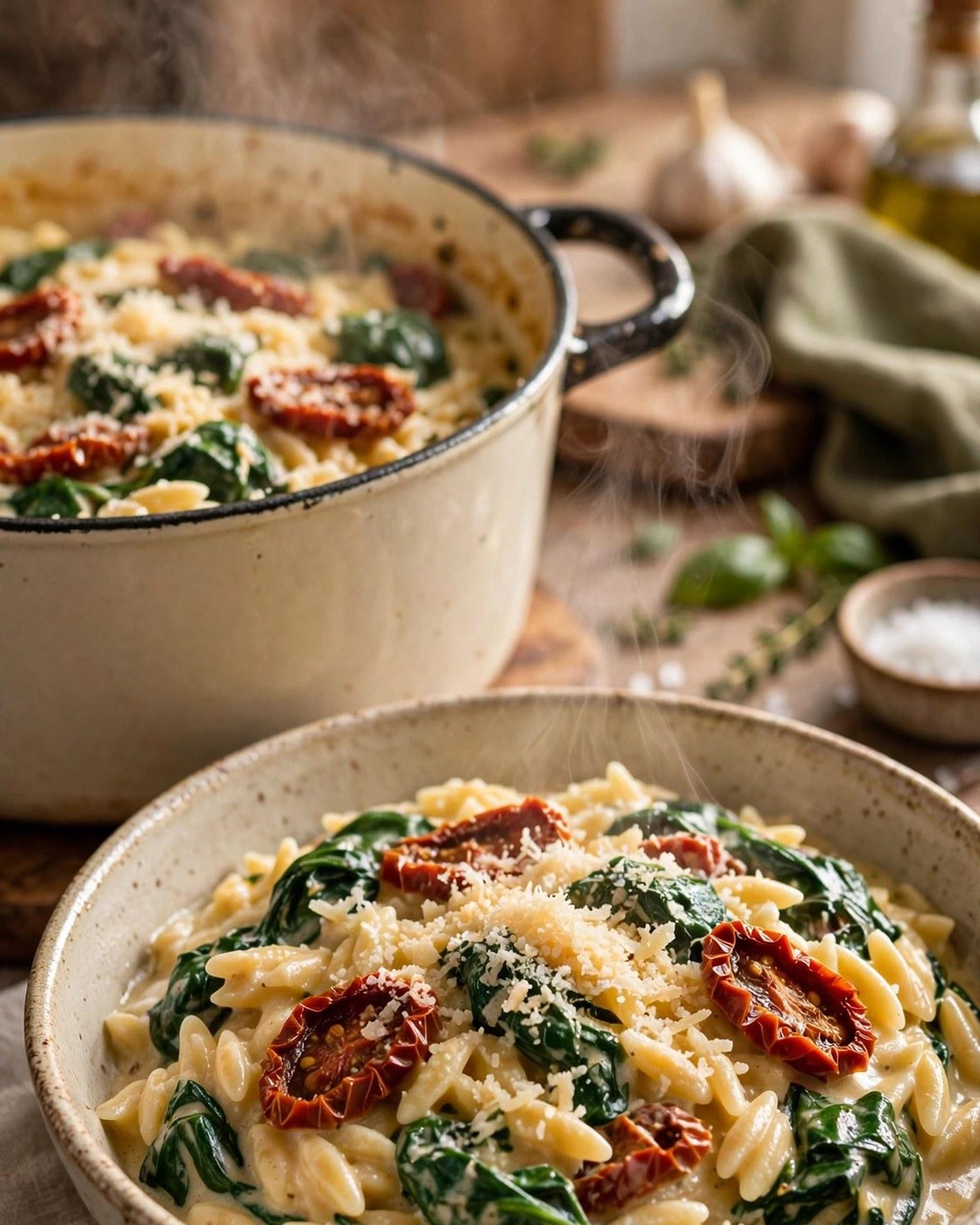
One-Pot Creamy Tuscan Orzo
One-Pot Creamy Tuscan Orzo is the kind of dinner that solves a weeknight without asking you to wash a sink full of pans. Small, rice-shaped orzo goes straight into one pot with garlic, sun-dried tomatoes, broth, and cream, and it cooks right there in the sauce. As the orzo simmers, it releases a little starch into the liquid around it, so the broth and cream tighten into something glossy and spoon-coating instead of thin. Wilted spinach, Italian seasoning, and a generous handful of Parmesan finish it, and in about half an hour you have a warm, creamy bowl that feels generous and calm at the same time.
It helps to say clearly what this recipe is — and what it is not. This is not a chicken skillet with pasta on the side, and it is not a long, twirly pasta tossed through a separate pan sauce. There is no chicken here at all. The orzo itself is the heart of the dish, meatless and satisfying on its own, and it never leaves the pot to boil in a second pan of water. Every grain cooks in the seasoned, creamy broth, which means every grain tastes like the sauce, not just like pasta that met the sauce at the end.
The Tuscan flavors here are familiar and friendly: sun-dried tomatoes bring a concentrated, slightly sweet tang, garlic brings warmth, spinach brings color and a gentle earthiness, and Parmesan brings the salty, savory finish that pulls cream and tomatoes together. Nothing is hard to find, nothing needs a special technique, and the one-pot method is forgiving in the best way — stir often, keep the simmer gentle, taste near the end, and adjust.
This makes six servings, a comfortable amount for a family dinner with a little left over, or for a smaller household happy to eat it again tomorrow. Serve it straight from the pot while it is steaming, with extra Parmesan and torn basil over the top. Leftovers reheat kindly with a splash of broth or milk. It is cozy without being heavy work, and built for nights when you want a real, hot dinner and one pot to wash afterward.
Why You'll Love This Recipe
- Truly one pot, start to finish. The orzo cooks directly in the broth and cream in the same pot where the onion, garlic, and sun-dried tomatoes started. There is no separate pasta water, no colander, and no second sauce pan waiting in the sink.
- Ready in about 30 minutes. A short toast, a gentle simmer of about 12 to 14 minutes, and a few minutes for the spinach to wilt and the Parmesan to melt are all that stand between the counter and the table.
- Creamy from the method, not just the cream. Orzo releases starch as it cooks in the pot, and that starch naturally thickens the broth and cream into a silky sauce that clings to every small grain instead of pooling underneath it.
- Meatless and satisfying. Sun-dried tomatoes, garlic, Italian herbs, spinach, and Parmesan give this dinner deep, savory flavor without any meat, so it suits a vegetarian-leaning table while still feeling complete and hearty.
- Big Tuscan flavor from pantry staples. Most of what you need — orzo, sun-dried tomatoes, dried herbs, broth, and Parmesan — keeps well and is easy to keep on hand, with only spinach, cream, onion, and garlic to pick up fresh.
- Easy to adjust at the end. A squeeze of lemon, an extra pinch of red pepper flakes, a little more Parmesan, or another handful of spinach can all go in during the final minutes, so you can tune the finished pot to your household without changing the recipe itself.
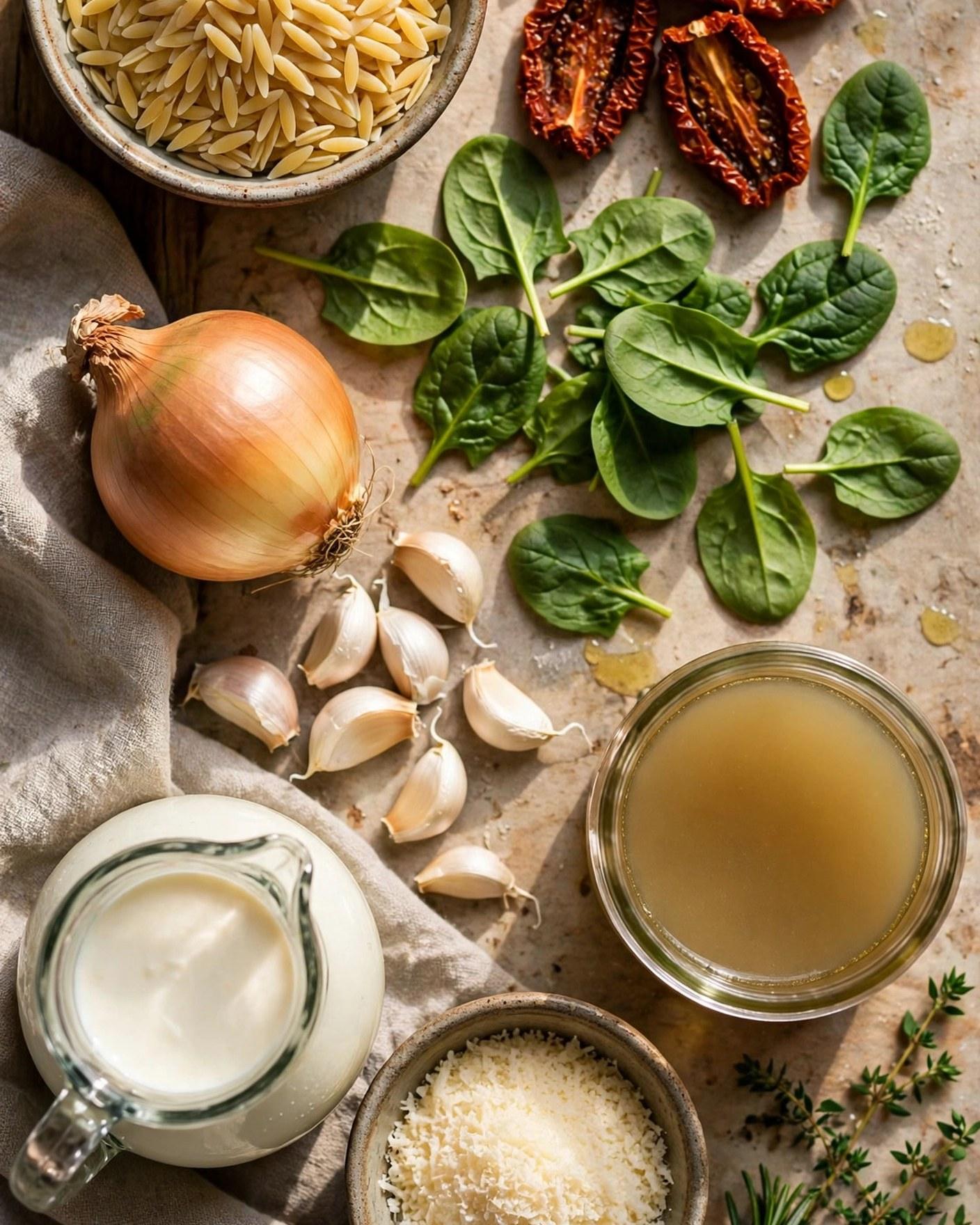
Ingredients
For the creamy Tuscan orzo
- 2 tablespoons olive oil, or oil from the sun-dried tomato jar
- 1 medium yellow onion (about 1 cup / 150 g), finely diced
- 5 cloves garlic, minced (about 1 1/2 tablespoons)
- 3/4 cup (110 g) sun-dried tomatoes in oil, drained and thinly sliced
- 2 teaspoons Italian seasoning
- 1/2 teaspoon sweet paprika
- 1/4 teaspoon red pepper flakes, optional, plus more to taste
- 1 1/2 cups (300 g / 10 1/2 ounces) dried orzo, uncooked
- 3 1/2 cups (840 ml) low-sodium vegetable broth, warmed if possible
- 3/4 cup (180 ml) heavy cream
- 1/2 cup (120 ml) whole milk
- 3/4 teaspoon fine sea salt, plus more to taste
- 1/2 teaspoon black pepper, freshly ground if possible, plus more to taste
For finishing and serving
- 5 ounces (140 g) baby spinach, about 5 loosely packed cups, tough stems removed
- 3/4 cup (75 g) finely grated Parmesan cheese, plus more for serving
- 1 teaspoon lemon zest, optional
- 1 tablespoon fresh lemon juice, optional, to taste
- 1/4 cup (15 g) fresh basil leaves, torn, for serving
- Freshly ground black pepper, for serving
Why these ingredients matter
Olive oil, or the oil from the tomato jar. Oil does more than keep the onion from sticking. It carries the flavor of the garlic, herbs, and sun-dried tomatoes through the pot, and a spoonful of the seasoned oil from the tomato jar begins with extra tomato richness already built in. Either choice works; keep the heat at medium so the garlic that follows does not scorch.
Yellow onion. A finely diced onion softens in the first few minutes and becomes the quiet, sweet base under everything else. Cut it small and let it turn translucent before the garlic goes in, and it will practically disappear into the sauce, leaving sweetness and depth rather than distinct pieces in a dish where texture should stay smooth.
Garlic. Five cloves sounds generous, and in a pot this size it is exactly right. Garlic mellows as it simmers in broth and cream, settling into a warm, savory background that supports the tomatoes and Parmesan. Add it after the onion has softened and stir only until fragrant, about 30 seconds, because garlic burned at the start will taste bitter through the whole pot.
Sun-dried tomatoes. These are the concentrated heart of the Tuscan flavor here. Drying intensifies the tomatoes, so a modest amount brings sweetness, tang, and deep tomato character that fresh tomatoes cannot give a 30-minute sauce. Slice them thin so they soften quickly and distribute in small, flavorful pieces rather than large chunks. If yours are packed dry, soak them in hot water for about 15 minutes and pat dry before slicing.
Italian seasoning, paprika, and red pepper flakes. Italian seasoning brings the familiar blend — basil, oregano, thyme, and rosemary — that makes this taste Tuscan rather than simply creamy. Sweet paprika adds gentle warmth and rich color. The flakes are optional and deliberately light: a quarter teaspoon through six servings warms the background without making the dish spicy.
Orzo. Orzo is a small, rice-shaped pasta, and its size is the whole point. Each grain has plenty of surface for sauce to cling to, it cooks quickly and evenly in a modest amount of liquid, and as it simmers it gives off starch that thickens the pot from within. Toasting it briefly in the seasoned oil coats every grain and adds a faint, nutty depth under the cream.
Vegetable broth. Broth is the main cooking liquid, so it seasons the orzo from the inside as the grains absorb it. Vegetable broth keeps the dish meatless, and low-sodium is practical because Parmesan and sun-dried tomatoes both add salt later. Warm broth keeps the pot at a steady simmer when it goes in; cold broth works too, it simply takes a minute longer to come back to a simmer.
Heavy cream and whole milk. Using both gives you control over the richness. Cream brings body and a soft texture broth alone cannot, while milk lightens the sauce enough that it stays spoonable instead of turning heavy as the orzo stands. Add them with the broth, and keep a gentle simmer — a hard boil can make a cream sauce look split and catch the orzo on the bottom.
Salt and black pepper. Season in layers and taste at the end. Broth, Parmesan, and sun-dried tomatoes all arrive with salt of their own, so the listed amount is a starting point rather than a promise. A final taste after the Parmesan melts is the moment that matters.
Baby spinach. Spinach goes in at the very end because it needs only the residual heat of the pot to wilt. Five ounces looks like an enormous pile and cooks down to bright green ribbons. No chopping is needed, though removing long, tough stems keeps the texture soft. Add it in handfuls, stirring each down before the next, so it wilts evenly.
Parmesan cheese. Parmesan is both seasoning and finisher. Stirred in off the boil, it melts into the hot sauce, adding salt, savoriness, and body, and makes cream, tomato, and spinach taste like one sauce. Finely grated cheese melts far more smoothly than coarse shreds. For a strictly vegetarian table, choose a Parmesan-style cheese made without animal rennet.
Lemon zest, lemon juice, and basil, all for finishing. Small, optional touches with an outsized effect. A little lemon lifts the richness and sharpens the tomato flavor without making anything taste sour, and torn basil brings a fresh scent dried herbs cannot. Add lemon gradually and taste as you go; you want brightness in the background, not a lemon sauce.
Instructions
- Prepare everything before the heat goes on. Finely dice the onion and mince the garlic. Drain the sun-dried tomatoes, saving a spoonful of their oil if you want to use it for cooking, and slice the tomatoes thinly. Measure the orzo, broth, cream, and milk, grate the Parmesan finely, and wash the spinach and remove any long, tough stems. This recipe moves quickly and calmly once the pot is hot, and having everything measured and within reach is what keeps the garlic from scorching and the orzo from sitting too long in the oil while you hunt for the next ingredient.
- Soften the onion. Heat the olive oil in a large, heavy pot or Dutch oven over medium heat until it shimmers lightly. Add the diced onion with a small pinch of the salt and cook, stirring often, for 4 to 5 minutes, until the onion is soft, translucent at the edges, and sweet-smelling, with no browning beyond the faintest gold in a few places. Softening the onion properly at this stage builds the base of the sauce; rushing it leaves raw onion flavor that will still be noticeable in the finished, creamy pot.
- Add the garlic, tomatoes, and seasonings. Stir in the garlic, sliced sun-dried tomatoes, Italian seasoning, paprika, and red pepper flakes if using. Cook, stirring constantly, for about 1 minute, until the garlic is fragrant and the herbs and paprika have bloomed in the warm oil and colored it a deep, appetizing red-gold. Keep everything moving and keep the heat at medium; this short step wakes up the dried herbs and spices, but garlic and paprika can both scorch if they sit still in a hot, dry spot on the bottom of the pot.
- Toast the orzo. Add the dry orzo to the pot and stir it thoroughly through the onion mixture, so every grain is coated in the seasoned oil and flecked with tomato and herbs. Cook, stirring often, for 1 to 2 minutes, until the grains look glossy and slightly more opaque at the edges and smell faintly nutty. This brief toast is worth the minute it takes: the coating helps the grains stay distinct as they simmer, and the gentle toasting adds a quiet depth underneath the cream that you would miss if the orzo went straight into liquid.
- Pour in the broth, cream, and milk. Add the vegetable broth, heavy cream, and whole milk, along with the remaining salt and the black pepper, stirring well and scraping the bottom of the pot with a wooden spoon to lift any toasted bits and make sure no orzo is hiding in a dry corner. Raise the heat to medium-high and bring the pot just to a gentle boil, stirring often as it heats. As soon as you see steady bubbles, reduce the heat to low or medium-low, to the setting that holds a calm, lazy simmer with small bubbles breaking the surface here and there rather than a rolling boil.

- Simmer the orzo, stirring often. Simmer uncovered for 12 to 14 minutes, stirring every 2 to 3 minutes and scraping right across the bottom of the pot each time, until the orzo is tender with a gentle bite and the sauce has thickened noticeably. Stirring is not optional with orzo: the small grains settle, and a layer left undisturbed on the bottom can stick and scorch while the top still looks perfect. If the pot ever bubbles too hard, lower the heat a little; if the sauce thickens before the orzo is tender, stir in extra broth or milk, 2 tablespoons at a time, and give it another minute or two.
- Check the texture and adjust the sauce. Taste a few grains near the end of the simmer. The orzo should be tender all the way through, with just a slight firmness at the center — it will continue to soften and absorb sauce as it stands. The sauce at this point should look a little looser than you ultimately want, roughly like a thick soup that coats the back of a spoon, because the Parmesan and a short rest will tighten it. If it already looks tight and dry, stir in a splash of broth or milk now rather than later; creamy orzo is far easier to loosen while it is still bubbling gently in the pot.

- Wilt the spinach. Reduce the heat to low. Add the baby spinach by generous handfuls, stirring each handful through the hot orzo until it just wilts before adding the next, which will take about 2 to 3 minutes in total. The pile will look impossibly large at first and then fold down into bright green ribbons, exactly as it should. Keep the heat low for this step: the spinach needs only the warmth of the pot, and boiling it hard would dull its color and squeeze extra water into a sauce you have just thickened to the right consistency.
- Stir in the Parmesan off the boil. Take the pot off the heat. Sprinkle the finely grated Parmesan over the orzo and stir gently but thoroughly until it melts completely into the sauce, turning it glossy and a shade thicker. Adding the cheese off the heat matters — Parmesan stirred into a fiercely boiling cream sauce can turn grainy or stringy, while the same cheese folded into a hot but calm pot melts smoothly. Stir in the lemon zest and lemon juice now, if using, starting with the smaller amount and tasting before you add more brightness.
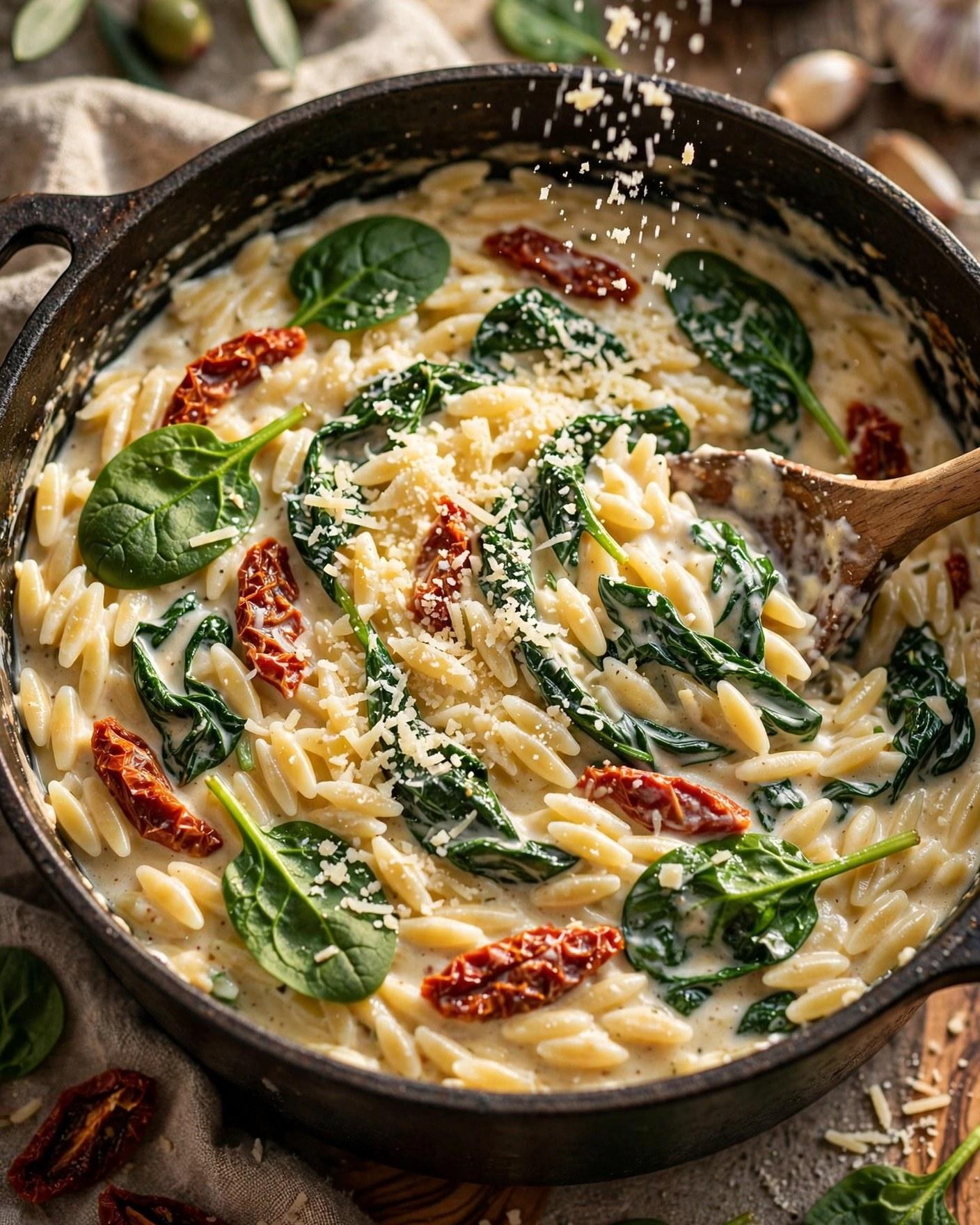
- Rest, taste, and serve. Cover the pot and let the orzo rest off the heat for 2 to 3 minutes. This short rest lets the sauce settle around every grain and reach its final, spoon-coating consistency. Lift the lid, give everything one last gentle stir, and taste carefully: add a pinch more salt, a grind of pepper, another pinch of red pepper flakes, or a final squeeze of lemon as your household prefers. If the sauce has tightened more than you like during the rest, stir in warm broth or milk a tablespoon at a time until it loosens. Spoon into warm, shallow bowls, finish with extra Parmesan, torn basil, and a grind of black pepper, and serve right away while the orzo is creamy and steaming.
Tips for Success
- Stir often, and scrape the bottom. This is the single most important habit for one-pot orzo. The grains are small, starchy, and quick to settle into a layer, so stir every 2 to 3 minutes and run the spoon across the whole bottom of the pot, especially into the edges and center, to keep anything from catching or scorching.
- Keep the simmer gentle once the cream is in. A rolling boil is too much for a broth-and-cream sauce: it can make the surface look split, reduce the liquid too fast, and leave the orzo unevenly cooked. Aim for small, lazy bubbles and adjust the burner rather than the recipe if your stove runs hot.
- Judge the sauce a little loose in the pot. Orzo keeps absorbing liquid as it stands, and the Parmesan thickens the sauce further. Pull the pot off the heat when the sauce still flows slowly from a spoon; after the short rest it will be properly creamy. A pot that looks perfect at a full simmer often turns tight by the time it reaches the table.
- Grate the Parmesan finely, and add it off the heat. Fine grating melts smoothly and quickly into a hot sauce, while coarse shreds can clump or turn stringy. Taking the pot off the burner before the cheese goes in protects both the cheese and the cream, and gives you the glossy finish this dish is meant to have.
- Slice the sun-dried tomatoes thin. Thin slices soften quickly, spread evenly through thousands of small grains, and give you a little tomato in most bites. Thick chunks stay chewy and concentrated in a few mouthfuls only. If your tomatoes are dry-packed, soak, drain, and pat them dry first so they do not pull moisture from the sauce.
- Taste only after the Parmesan melts. Broth, sun-dried tomatoes, and Parmesan each bring salt, so salting confidently at the start can overshoot by the end. Season lightly as you go, then make the real decision at the finish, when every salty ingredient is in the pot and the lemon, if you used it, has had its say as well.
Variations
- White bean Tuscan orzo. Stir in 1 can (15 ounces / 425 g) of white beans, such as cannellini, drained and rinsed, during the last 3 to 4 minutes of the simmer, just long enough to heat them through. The beans make the pot heartier and add a soft, creamy texture of their own that suits the sauce beautifully. Mash a small spoonful of them against the side of the pot if you want the sauce a touch thicker still.
- Mushroom and spinach orzo. Sauté 8 ounces (225 g) of sliced cremini mushrooms in the pot before the onion, cooking them until they release their liquid and turn golden at the edges, then set them aside and stir them back in with the spinach. Mushrooms deepen the savory character of the dish and make the meatless pot feel even more substantial at the table.
- Lighter creamy orzo. Replace the heavy cream with an equal amount of half-and-half and keep the milk as written, simmering a touch more gently and giving the pot the full rest before serving. The sauce will be slightly looser and lighter in flavor, so finish with a little extra Parmesan and lemon to keep it tasting full. Avoid a hard boil, as lighter dairy is less forgiving at high heat.
- Roasted red pepper version. Swap half the sun-dried tomatoes for 3/4 cup (130 g) of drained, finely chopped roasted red peppers from a jar, added with the garlic and seasonings. The peppers bring a sweeter, softer tomato-pepper flavor and a warm color, and the dish stays recognizably Tuscan in spirit while tasting a little gentler and less tangy than the original.
- Greens beyond spinach. Replace the spinach with about 4 cups (120 g) of finely chopped kale, tough stems removed, added 4 to 5 minutes before the orzo finishes so the sturdier leaves have time to soften, or with 5 ounces (140 g) of chopped Swiss chard added in handfuls just like the spinach. Each green changes the pot slightly — kale earthier, chard a little sweeter — and all of them keep that bright green finish.
- Extra-herb, lemon-forward finish. Stir 2 tablespoons of chopped fresh parsley and an extra teaspoon of lemon zest in with the Parmesan, and serve with lemon wedges. This version leans fresh and bright over rich, lovely alongside a crisp green salad.
Storage
Let the orzo cool until it is no longer steaming, then transfer it to an airtight container and refrigerate promptly. It keeps well for up to 3 to 4 days. Know before you store it that orzo continues to absorb sauce in the refrigerator, so a pot that was perfectly creamy at the table will look noticeably thicker and tighter the next day — that is normal, expected, and easy to fix at reheating time. Keep any extra Parmesan and fresh basil separate and add them only when you serve, because both taste brightest added fresh to a hot bowl rather than after days in the container.
To reheat, spoon a portion into a saucepan with 2 to 3 tablespoons of broth, milk, or water per serving and warm it over medium-low heat, stirring often and gently, until it is steaming hot throughout and the sauce loosens back into a creamy coating. A microwave also works well for single servings: add the same splash of liquid, cover loosely, and heat in short intervals, stirring between each, until hot. Add the liquid a little at a time — you can always stir in another spoonful, and reheated orzo that starts out too loose will tighten slightly again as it stands in the warm bowl.
Freezing is possible but not this dish's best moment, and it is worth saying so plainly. Cream sauces can separate slightly as they thaw, and orzo softens further after freezing, so a thawed portion will taste good but will not have quite the same silky texture as a fresh pot. If you do freeze it, cool it completely, pack it in freezer-safe containers with a little headspace, and freeze for up to 2 months. Thaw overnight in the refrigerator and reheat gently on the stove with a generous splash of broth or milk, stirring steadily as it warms to bring the sauce back together.
FAQ
Can I make One-Pot Creamy Tuscan Orzo with a different pasta? Yes, with a small adjustment to the liquid and timing. Small shapes that cook in roughly the same time work best — try small shells, ditalini, or acini di pepe at the same weight, 10 1/2 ounces (300 g), and start checking a few minutes early, since each shape drinks up liquid at its own pace. Add extra broth a splash at a time if the pot looks dry before the pasta is tender. Avoid long pasta here: it does not stir or simmer evenly in this amount of sauce, and broken pieces change the character of a dish that is really built around small, sauce-coated grains.
Is this recipe vegetarian, and can I make it vegan? As written, it is meatless: the broth is vegetable broth and there is no meat anywhere in the pot. For a strictly vegetarian table, check the Parmesan, because traditional Parmesan is made with animal rennet — a vegetarian Parmesan-style cheese works in exactly the same amount. To make it vegan, use olive oil as written, replace the cream and milk with 1 1/4 cups (300 ml) of an unsweetened, creamy plant-based alternative such as oat or cashew cream, and swap the Parmesan for a plant-based Parmesan-style topping or 3 tablespoons of nutritional yeast stirred in at the end. Keep the simmer especially gentle with plant-based dairy, and expect a slightly softer, less tangy finish.
Why did my orzo stick to the bottom, or turn out gummy? Sticking almost always comes down to stirring and heat: orzo settles fast, so if it sits undisturbed at a lively simmer, the bottom layer catches. Stir every 2 to 3 minutes, scrape the whole bottom, and keep the bubbles lazy rather than rolling. Gumminess usually means the orzo cooked a little too long or stood too long in the hot pot before serving, since it keeps absorbing sauce as it rests. Next time, pull it off the heat while the grains still have a slight bite and the sauce looks a little loose — and if it has already tightened, stir in warm broth or milk a tablespoon at a time until it relaxes.
Can I add chicken or another protein to this pot? You can, and cooked protein should go in at the end rather than cooking in the pot from the start. Stir in about 2 cups (280 g) of already-cooked, sliced chicken, a drained can of white beans, or cooked shrimp during the last few minutes, just long enough to heat through, with a splash of broth if the pot looks tight. That said, the recipe stands on its own without meat — sun-dried tomatoes, Parmesan, herbs, and cream give it complete flavor as written.

Recipe Card
One-Pot Creamy Tuscan Orzo
- Prep Time: 10 minutes (PT10M)
- Cook Time: 20 minutes (PT20M)
- Total Time: 30 minutes (PT30M)
- Servings: 6 servings
- Calories: 460 kcal per serving (estimated)
Orzo simmered in one pot with vegetable broth, cream, garlic, and sun-dried tomatoes, finished with wilted spinach, Italian seasoning, lemon, and Parmesan for a creamy, meatless Tuscan-style dinner. The orzo cooks directly in the sauce, so stir often, keep the simmer gentle, and serve it straight from the pot with extra Parmesan and torn basil.
Nutrition (estimated): 460 kcal per serving (estimated), 44 g carbohydrates, 14 g protein, 20 g fat, 4 g fiber, 6 g sugar, 680 mg sodium. Nutrition is estimated and will vary with the exact brand of broth, cream, and cheese, how much oil is drained from the sun-dried tomatoes, and any variations or substitutions.
Can I make One-Pot Creamy Tuscan Orzo with a different pasta?
Yes, with a small adjustment to the liquid and timing. Small shapes that cook in roughly the same time work best — try small shells, ditalini, or acini di pepe at the same weight, 10 1/2 ounces (300 g), and start checking a few minutes early, since each shape drinks up liquid at its own pace. Add extra broth a splash at a time if the pot looks dry before the pasta is tender. Avoid long pasta here: it does not stir or simmer evenly in this amount of sauce, and broken pieces change the character of a dish that is really built around small, sauce-coated grains.
Is this recipe vegetarian, and can I make it vegan?
As written, it is meatless: the broth is vegetable broth and there is no meat anywhere in the pot. For a strictly vegetarian table, check the Parmesan, because traditional Parmesan is made with animal rennet — a vegetarian Parmesan-style cheese works in exactly the same amount. To make it vegan, use olive oil as written, replace the cream and milk with 1 1/4 cups (300 ml) of an unsweetened, creamy plant-based alternative such as oat or cashew cream, and swap the Parmesan for a plant-based Parmesan-style topping or 3 tablespoons of nutritional yeast stirred in at the end. Keep the simmer especially gentle with plant-based dairy, and expect a slightly softer, less tangy finish.
Why did my orzo stick to the bottom, or turn out gummy?
Sticking almost always comes down to stirring and heat: orzo settles fast, so if it sits undisturbed at a lively simmer, the bottom layer catches. Stir every 2 to 3 minutes, scrape the whole bottom, and keep the bubbles lazy rather than rolling. Gumminess usually means the orzo cooked a little too long or stood too long in the hot pot before serving, since it keeps absorbing sauce as it rests. Next time, pull it off the heat while the grains still have a slight bite and the sauce looks a little loose — and if it has already tightened, stir in warm broth or milk a tablespoon at a time until it relaxes.
Can I add chicken or another protein to this pot?
You can, and cooked protein should go in at the end rather than cooking in the pot from the start. Stir in about 2 cups (280 g) of already-cooked, sliced chicken, a drained can of white beans, or cooked shrimp during the last few minutes, just long enough to heat through, with a splash of broth if the pot looks tight. That said, the recipe stands on its own without meat — sun-dried tomatoes, Parmesan, herbs, and cream give it complete flavor as written.

Hi, I’m Emma! I’m the cook and recipe developer behind Sizzle & Sage. From my sunny home kitchen, I share easy, flavor-packed recipes for real life — quick breakfasts, cozy weeknight dinners, and simple bakes anyone can make. Pull up a chair and stay a while!