Thanksgiving Stuffing Muffins (Sage, Sausage & Cranberry)
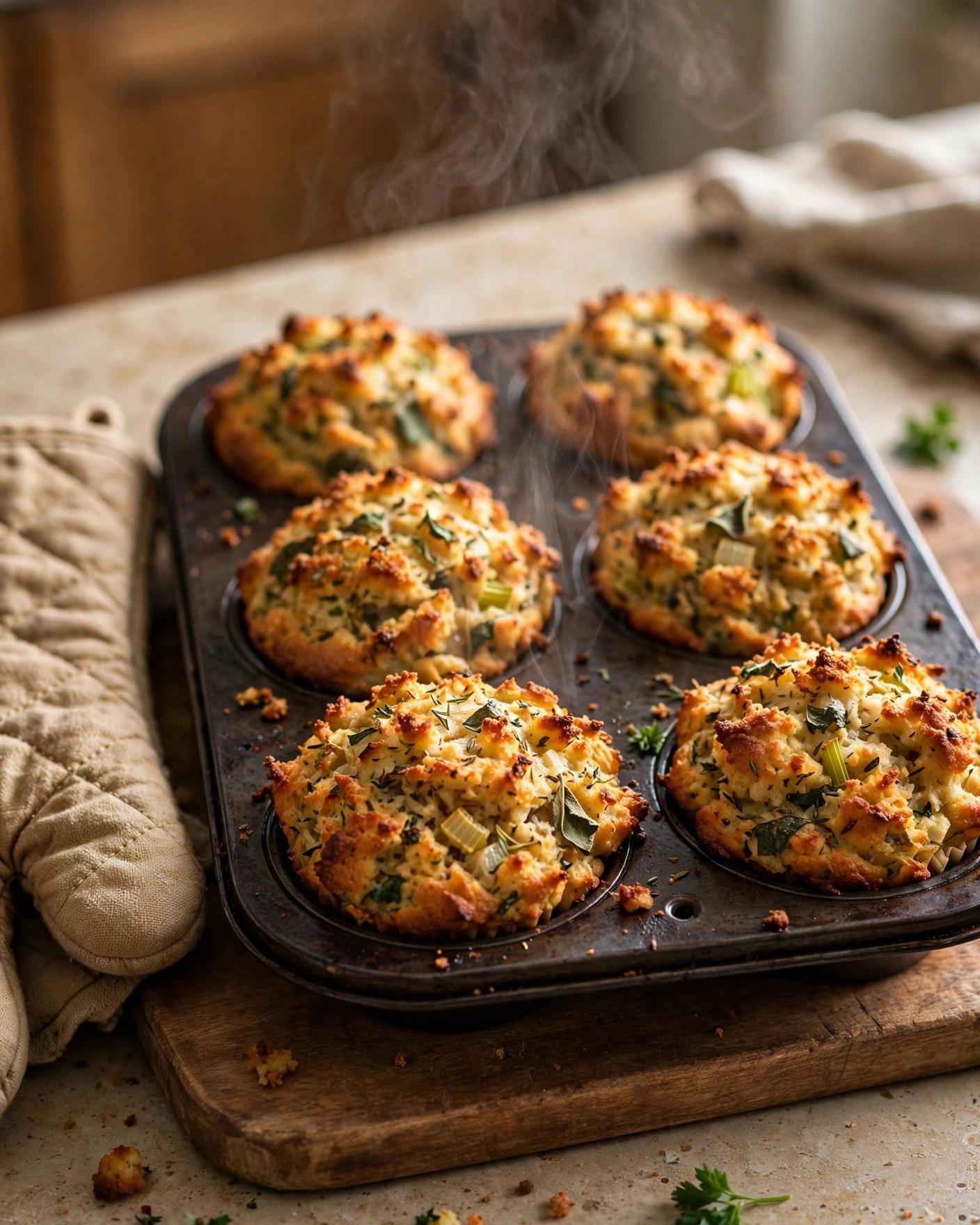
Every Thanksgiving table has an unspoken contest, and it is not about the turkey. It is about the corner pieces of the stuffing — the browned, crispy, caramelized edges that everyone quietly fights over while the soft middle goes untouched. These Thanksgiving stuffing muffins end that argument for good. By baking classic sage-and-sausage stuffing in a muffin tin, every single portion becomes a corner piece: golden, crunchy, deeply browned on the outside, with a tender, buttery center. Inside each one you get everything a great holiday stuffing should have — browned breakfast sausage, sweet onion and celery softened in butter, a generous hand of fresh sage, and tart dried cranberries that pop against all that richness.
This recipe was born out of a familiar Thanksgiving traffic jam: not enough oven space, too many side dishes, and a crowd of people who all wanted 'just a little more stuffing.' A muffin tin solves all three problems at once. The portions are built in, so there is no scooping, no crumbling, and no stuffing landslide across the serving plate. The muffins bake in about half the time of a deep casserole dish, and two tins fit in the oven side by side. Best of all, they reheat beautifully, which means you can bake them a day ahead, free the oven for the turkey, and still serve stuffing with genuinely crispy edges.
The flavor is deliberately old-school: sage and sausage, celery and onion, butter and broth, the way stuffing tasted at grandmother's table. The dried cranberries are the one modern twist, and they earn their place — their chewiness and gentle tang keep the richness from turning heavy, and they look like little jewels against the golden bread. This is a from-scratch recipe written for real holiday cooks, with day-old bread, honest US cup measurements, oven temperatures in Fahrenheit, and every step laid out for one full muffin tin of twelve.
Why You'll Love This Recipe
- Every muffin is a corner piece. More surface area touching the pan means crisp, golden, caramelized edges on every single serving — the part everyone fights over at Thanksgiving, multiplied by twelve.
- Built-in portion control. There is no guessing how much stuffing lands on each plate and no stuffing landslide when you try to serve it. Each muffin is its own tidy scoop, which also makes them brilliant for buffets, potlucks, and Friendsgiving.
- Faster than a casserole. A deep 9×13 dish of stuffing needs nearly an hour to bake through to the center. These bake in 30 to 35 minutes, and you can slide two tins into the oven at once when you are feeding a crowd.
- A genuine make-ahead side. Bake them a day or two ahead, refrigerate, and reheat — the edges crisp right back up in a hot oven. They also freeze beautifully, which your future Thanksgiving self will thank you for.
- Classic flavor, zero shortcuts. Real fresh sage, well-browned breakfast sausage, butter, and good broth — nothing from a box — but the technique is simple enough for a first-time holiday cook to pull off with confidence.
- Kid-friendly and lunchbox-ready. Individual portions are easy for little hands at a crowded table, and leftover stuffing muffins are dangerously good tucked into a lunchbox the next day.

Ingredients
For the stuffing base
- 10 cups (about 1 lb / 450 g) day-old sturdy bread, cut into 3/4-inch cubes (sourdough, country loaf, or French bread)
- 4 tablespoons (55 g) unsalted butter, plus more for greasing the tin
- 1 tablespoon olive oil
For the sausage and aromatics
- 12 ounces (340 g) bulk breakfast sausage (sage-flavored if you can find it)
- 1 large yellow onion, diced (about 1 1/2 cups)
- 3 ribs celery, diced (about 1 1/4 cups)
- 2 cloves garlic, minced
- 2 tablespoons chopped fresh sage, plus extra whole leaves for garnish
- 1 tablespoon chopped fresh thyme leaves
- 3/4 cup (90 g) dried cranberries
For the custard
- 2 large eggs
- 2 1/2 cups (590 ml) low-sodium chicken broth
- 1 teaspoon fine sea salt, plus more to taste
- 1/2 teaspoon freshly ground black pepper
Why these ingredients matter
Day-old sturdy bread. Stuffing lives or dies on the bread. Day-old bread that has gone slightly stale has lost moisture, so it drinks up the broth and egg custard without collapsing into mush. A sturdy loaf — sourdough, country bread, or French bread — holds its cube shape through mixing and baking, which is what gives the finished muffins their craggy, crunchy texture. Soft sandwich bread turns gummy, so save it for sandwiches.
Unsalted butter plus olive oil. Butter brings the unmistakable richness that makes stuffing taste like the holidays, and it is what browns the onion and celery to sweetness. A spoonful of olive oil raises the smoke point of the fat in the pan so the butter does not burn while the sausage browns. Greasing the tin generously with extra butter is what guarantees those dark, crispy bottoms that make these muffins special.
Bulk breakfast sausage. Breakfast sausage is already seasoned with sage, black pepper, and a whisper of sweetness, so it does half the seasoning work for you. Browning it well — letting it sit undisturbed until it develops a deep crust — creates the savory, caramelized flavor that defines this recipe. If you can find a sage-flavored variety, it doubles down on the classic Thanksgiving profile.
Yellow onion and celery. This is the holy trinity of classic American stuffing (minus the bell pepper, which belongs in other recipes). Diced onion softened in butter turns sweet and mellow, and celery adds a faint herbal freshness and a little textural backbone. Cut them small and even so they distribute through every muffin and soften fully in the time the bread toasts.
Fresh sage. Sage is the signature herb of Thanksgiving stuffing, and fresh sage is noticeably better here than dried. Fresh leaves have a piney, almost citrusy brightness that dried sage loses, and chopping them releases their oils right into the butter. Save a few whole leaves to press onto the tops of the muffins before baking — they crisp into beautiful, fragrant garnishes.
Dried cranberries. These are the recipe's bright counterpoint. The sausage and butter are rich and savory, and the cranberries cut through with tartness and a chewy texture that keeps every bite interesting. They also rehydrate slightly in the custard as the mixture rests, so they bake up plump rather than hard. If your dried cranberries are very firm, give them a ten-minute soak in warm water first.
Eggs. Two eggs whisked into the broth create a light custard that binds the bread cubes together, which is what lets the muffins hold their shape once baked. Without them you get loose, crumbly stuffing that falls apart when you unmold it. They also enrich the interior, keeping the centers soft and spoonable against the crisp crust.
Low-sodium chicken broth. Broth is what turns bread cubes into stuffing, and low-sodium gives you control — sausage and butter already bring plenty of salt, so you can season to taste instead of overshooting. Add the broth gradually and let the mixture rest; the bread should be thoroughly moistened but not swimming. Different breads absorb at different rates, so trust your eyes over the measuring cup.
Instructions
- Dry the bread. If your bread is not already a day or two old, spread the cubes in a single layer on two rimmed baking sheets and toast in a 300 degrees F (150 degrees C) oven for 15 to 20 minutes, tossing once, until dry to the touch but not browned. Drying the bread ahead of time is the single biggest insurance against soggy stuffing muffins, so do not skip it. Transfer the dried cubes to a very large mixing bowl and set aside.
- Brown the sausage. Heat the olive oil in a large skillet over medium-high heat. Add the bulk sausage and break it into small crumbles with a wooden spoon. Let it cook undisturbed for 2 to 3 minutes at a time so it develops a deep brown crust, then stir and continue until no pink remains, about 8 to 10 minutes total. Use a slotted spoon to transfer the sausage to the bowl with the bread cubes, leaving the rendered fat in the skillet.
- Sauté the aromatics. Reduce the heat to medium and add the 4 tablespoons of butter to the sausage drippings in the skillet. Once melted, add the diced onion and celery with a pinch of salt and cook, stirring occasionally, until softened and just starting to turn golden at the edges, about 8 minutes. Stir in the garlic, chopped sage, and thyme and cook for 1 minute more, until fragrant. Scrape everything — butter, vegetables, and all the browned bits — into the bowl with the bread and sausage, then fold in the dried cranberries.
- Whisk the custard. In a medium bowl or large measuring cup, whisk the eggs until smooth, then whisk in the chicken broth, fine sea salt, and black pepper. Taste the broth and add another small pinch of salt if it tastes flat — remember that the bread will mute the seasoning slightly.
- Soak the mixture. Pour the custard evenly over the bread mixture and toss gently but thoroughly so every cube gets moistened. Let the bowl rest for 10 minutes, tossing once halfway through. The bread should absorb most of the liquid and feel saturated but not soupy — if you see a pool of broth at the bottom of the bowl, add another handful of bread cubes.
- Heat the oven and prep the tin. Position a rack in the center of the oven and heat to 375 degrees F (190 degrees C). Grease a standard 12-cup muffin tin very generously with softened butter, getting into every corner and up the sides — this is what creates the crispy, release-able crust. A light spritz of cooking spray over the butter does not hurt.
- Fill the muffin cups. Using a large cookie scoop or a 1/3-cup measure, mound the stuffing mixture generously into each muffin cup, pressing it down firmly with the back of the scoop so each cup is well packed. The cups should be heaped slightly above the rim — the muffins will not rise like cake batter. Press one or two whole sage leaves onto the top of each muffin for garnish if you like.
- Bake until deeply golden. Bake for 30 to 35 minutes, until the tops are deeply golden brown with crisp, dark edges and the muffins feel firm when pressed in the center. An instant-read thermometer inserted into the center of a muffin should read at least 160 degrees F (71 degrees C). If the tops are browning too fast before the centers are done, tent the tin loosely with foil for the last 10 minutes.
- Rest, unmold, and serve. Let the muffins rest in the tin for 5 to 10 minutes — this lets the egg custard finish setting so they unmold cleanly. Run a thin knife or offset spatula around each muffin and lift them out. Serve warm, with gravy on the side for pouring over.


Tips for Success
- Start with truly dry bread. Whether you leave it out overnight or toast it in a low oven, the bread cubes should feel dry and firm to the touch before the custard goes in. Moist, fresh bread cannot absorb the broth properly and bakes up dense and gummy instead of craggy and crisp.
- Do not over-soak the mixture. After the ten-minute rest, the bread should be saturated but the bowl should not have standing liquid. Too much broth makes muffins that steam instead of crisp and can fall apart when unmolded. Different loaves absorb differently, so adjust with a handful of extra cubes if needed.
- Grease the tin like you mean it. Every crispy edge depends on fat between the stuffing and the pan. Use softened butter and a pastry brush or paper towel to coat each cup thoroughly, all the way up the sides. This is not the place for a light mist of spray alone.
- Pack the cups firmly. Pressing the mixture down with the back of a scoop compacts the bread so the muffins hold together and develop maximum contact with the hot pan. Loosely filled cups bake up crumbly and pale. Do not be shy — really press.
- Use a scoop for even portions. A large cookie scoop or 1/3-cup measure gives you twelve evenly sized muffins that bake at the same rate. Eyeballing it leads to one giant muffin that is raw in the middle next to a small one that is burnt on top.
- Let them rest before unmolding. The egg custard keeps setting as the muffins cool in the hot tin, which is what firms them up enough to lift out cleanly. Five to ten minutes is the sweet spot — unmold too soon and they slump; leave them too long and the crispy edges soften from trapped steam.
Variations
- Vegetarian stuffing muffins. Skip the sausage and sauté 8 ounces of sliced cremini mushrooms with the onion and celery until deeply browned, then swap the chicken broth for a rich vegetable broth. Add an extra tablespoon of butter for richness — you will not miss the meat.
- Apple, walnut, and sage. Fold in 1 cup of diced tart apple (like Granny Smith) and 3/4 cup of toasted chopped walnuts along with the cranberries. The apple softens into sweet-tart pockets and the walnuts add a buttery crunch that plays beautifully with the sage.
- Cornbread stuffing muffins. Replace half of the bread cubes with crumbled day-old cornbread for a Southern-leaning version with a sweeter crumb and even crisper edges. Cornbread absorbs broth faster, so add the custard a little at a time and stop when it is just saturated.
- Spicy andouille and pepper. Swap the breakfast sausage for andouille and add 1/2 teaspoon of cayenne plus one diced poblano pepper with the onion and celery. It is a bold, smoky twist that stands up beautifully next to a simply roasted turkey.
- Wild mushroom and leek. Replace the onion with 2 sliced leeks and add 8 ounces of mixed wild mushrooms (shiitake, oyster, cremini), sautéed until golden. Finish with a teaspoon of chopped fresh rosemary alongside the sage for an earthy, elegant variation.
Storage
Baked and fully cooled stuffing muffins keep at room temperature, loosely covered, for up to 1 day. For longer storage, refrigerate them in an airtight container for up to 4 days — the egg-and-sausage custard means they should not sit out longer than that. To reheat and bring back the crispy edges, warm them in a 375 degrees F (190 degrees C) oven for 8 to 10 minutes rather than microwaving, which softens the crust.
To freeze, cool the muffins completely, then wrap each one individually in plastic wrap or foil and place them in a freezer bag with the air pressed out. They keep for up to 3 months. Thaw overnight in the refrigerator, then reheat in a 375 degrees F (190 degrees C) oven for 10 to 12 minutes until heated through and crisp on the edges again. They also reheat well straight from frozen — just add about 10 extra minutes.
For make-ahead planning, you have two good options. You can assemble the full mixture through the soaking step, cover the bowl tightly, and refrigerate it for up to 24 hours, then portion and bake it fresh — give it 10 minutes at room temperature before scooping so it is not ice cold going into the oven. Or bake the muffins completely up to 2 days ahead, refrigerate, and reheat as above. Either way, the day-of work shrinks to almost nothing.
FAQ
Can I make these stuffing muffins without the sausage? Yes. Skip the sausage entirely and sauté 8 ounces of sliced cremini or mixed mushrooms with the onion and celery until they are deeply browned, then use vegetable broth instead of chicken broth. Add an extra tablespoon of butter for richness. The muffins will still hold together and crisp up the same way, and the mushroom version is genuinely delicious rather than just a compromise.
Why did my stuffing muffins fall apart when I unmolded them? The most common cause is under-soaking — if the bread cubes did not fully absorb the egg custard, there is not enough binder to hold the muffin together. Make sure the mixture rests the full 10 minutes and that every cube is saturated. The other culprits are packing the cups too loosely and unmolding too soon; press the mixture in firmly and let the muffins rest 5 to 10 minutes in the tin so the custard finishes setting.
Can I use store-bought stuffing cubes instead of fresh bread? Yes, seasoned or unseasoned boxed stuffing cubes work as a shortcut. Use the same 10-cup volume, but reduce the added salt by half since boxed cubes are already salted, and add the broth gradually — dried commercial cubes absorb liquid very aggressively and can go mushy fast. You will still get crispy edges from the muffin tin, though the flavor will be a little less rich than with bakery bread.
Can I bake this recipe as a regular casserole instead of muffins? Absolutely. Spread the soaked mixture into a buttered 9×13-inch baking dish and bake at 375 degrees F (190 degrees C) for 45 to 55 minutes, until deeply golden on top and set in the center. You will lose the all-over crispy edges that make the muffin version special, but the flavor is identical — and it is a good fallback if you do not own a second muffin tin for a crowd.

Recipe Card
Thanksgiving Stuffing Muffins (Sage, Sausage & Cranberry)
- Prep Time: 25 minutes (PT25M)
- Cook Time: 35 minutes (PT35M)
- Total Time: 60 minutes (PT60M)
- Servings: 12 muffins
- Calories: 260 kcal per muffin (estimated)
Classic sage-and-sausage stuffing with dried cranberries, baked in a muffin tin so every portion gets crispy, golden edges and a soft, buttery center — a make-ahead-friendly Thanksgiving side.

Hi, I’m Emma! I’m the cook and recipe developer behind Sizzle & Sage. From my sunny home kitchen, I share easy, flavor-packed recipes for real life — quick breakfasts, cozy weeknight dinners, and simple bakes anyone can make. Pull up a chair and stay a while!