Air Fryer Cornbread Bites (Golden, Honey Butter Glazed)
Cornbread has a way of disappearing in two-bite pieces. A big skillet or square pan is wonderful for a Sunday supper, but for a crowded holiday table, a game-day spread, or a weeknight chili night, mini bites are simply easier to serve, easier to pass, and much harder to stop eating. These air fryer cornbread bites bake up golden at the edges, tender and moist in the middle, and just sweet enough to welcome a glossy brush of honey butter the moment they come out of the basket. They look like something you fussed over. They are not.
The air fryer is ideal for a batch this size. Its circulating heat browns the little cups evenly without heating up the whole kitchen, and because the bites are small, they cook in about nine minutes per batch instead of the twenty-five a full pan needs. That matters most on Thanksgiving, when the oven is already claimed by stuffing, casseroles, and a pie that cannot wait. A basket can be mixed, baked, and glazed on the counter while everything else finishes, and a second basket can land warm right as people sit down.
The batter is a straightforward, pantry-friendly mix: fine yellow cornmeal for classic corn flavor, a little all-purpose flour to keep the bites light instead of crumbly, buttermilk for tang and tenderness, and honey in both the batter and the warm glaze. It rests for ten minutes before baking — a small pause that hydrates the cornmeal and makes a real difference — and fills twenty-four mini cups, enough for twelve servings of two bites each. Make them plain, or use the variations below for cheddar and jalapeño, warm spices, or sweet corn kernels.
Why You'll Love This Recipe
- Two-bite, no-crumbling servings. Mini cups give everyone a neat, handheld portion with golden edges all the way around — no slicing a pan, no servings falling apart on the way to the plate.
- Ready in about nine minutes per batch. Small cups plus fast-circulating air fryer heat means fresh, warm cornbread long before a full oven pan would even finish baking.
- Frees your oven on busy days. The whole recipe happens on the countertop, which is exactly where you want a side dish to live when the oven is full of holiday mains and casseroles.
- Tender, not dry or gritty. Buttermilk, melted butter, eggs, and a ten-minute batter rest keep the crumb moist and soft, while the cornmeal still gives the bites their proper character.
- Honey butter glaze on top. Brushing the warm bites with melted honey butter adds shine, a little extra sweetness, and a pinch of flaky salt that makes the corn flavor pop.
- Easy to vary and make ahead. The base batter welcomes cheese, peppers, herbs, or corn kernels, and the finished bites reheat beautifully in the air fryer for serving later.

Ingredients
For the cornbread bites
- 1 cup (140 g) fine yellow cornmeal
- 1 cup (120 g) all-purpose flour, spooned and leveled
- 1/4 cup (50 g) granulated sugar
- 1 tablespoon baking powder
- 1/2 teaspoon fine sea salt
- 1/4 teaspoon baking soda
- 1 cup (240 ml / 245 g) buttermilk, at room temperature
- 2 large eggs, at room temperature
- 1/3 cup (75 g) unsalted butter, melted and cooled slightly
- 2 tablespoons honey
For the honey butter glaze
- 3 tablespoons (42 g) unsalted butter, melted
- 1 tablespoon honey
- Pinch of flaky sea salt, for finishing
You will also need
- 24 silicone mini muffin cups, or a silicone mini muffin pan that fits your air fryer basket
- Neutral oil spray or a little softened butter, for the cups if they are not nonstick silicone
Why these ingredients matter
Fine yellow cornmeal. Cornmeal is the whole point of cornbread, and fine-ground yellow cornmeal gives these bites a tender, cake-like crumb with real corn flavor instead of a coarse, gritty bite. Medium grind works in a pinch, but the mini cups bake so quickly that a finer grind hydrates more completely during the short batter rest. Stone-ground cornmeal has lovely flavor; if you use it, expect a slightly heartier texture and let the batter rest the full ten minutes.
All-purpose flour. Cornmeal on its own has no gluten, so a batter made only from cornmeal tends to crumble the moment you pick it up. An equal amount of all-purpose flour gives the bites structure and lift, keeping them light and cohesive without turning them into plain muffins. Spoon the flour into the measuring cup and level it off; scooping straight from the bag packs in extra flour and dries out small bakes like these first.
Granulated sugar. A quarter cup sweetens the batter gently — enough to round out the corn and complement the honey glaze, not enough to make the bites taste like dessert. Cornbread sweetness is a matter of house style: you can drop the sugar to 2 tablespoons for a more savory bite meant for chili, or keep the full amount when the bites are headed for a holiday table alongside salty, rich sides.
Baking powder and baking soda. This recipe uses both on purpose. Baking powder does most of the lifting, while the small amount of baking soda reacts with the acidic buttermilk for extra rise and a more tender crumb. Together they give the little cups their domed tops. Check that your baking powder is fresh — if it has been open for more than about six months, test a pinch in hot water; it should fizz energetically.
Fine sea salt. Salt keeps cornbread from tasting flat and makes both the corn and the honey read more clearly. Fine salt dissolves evenly through the dry ingredients. The flaky salt in the finish is different — it stays on the surface of the glaze in tiny, pleasant pops, so keep the two separate if you can.
Buttermilk. Buttermilk brings tang, moisture, and acidity in one ingredient. It softens the crumb, balances the sweetness, and activates the baking soda. Room-temperature buttermilk blends into the batter without re-solidifying the melted butter into little flecks. If you are out, you can stir 1 tablespoon of lemon juice or white vinegar into 1 cup (240 ml) of whole milk and let it stand for ten minutes, though real buttermilk gives the best flavor and texture.
Eggs. Two large eggs bind the batter, add richness, and help the bites set into neat cups you can pop out cleanly. Room-temperature eggs whisk more smoothly into the buttermilk and butter. To warm cold eggs quickly, set them in a bowl of warm — not hot — tap water for about five minutes while you measure everything else.
Unsalted butter, melted. Butter gives these bites a richness oil alone cannot match, and using unsalted butter lets you control the salt in both the batter and the glaze. Melt it gently and let it cool for a minute or two before whisking it in; piping-hot butter can scramble the eggs on contact. A little butter also goes into the glaze, so the flavor carries from the crumb right through to the glossy top.
Honey, in two places. Two tablespoons in the batter perfume the whole bite, and another tablespoon in the glaze concentrates that honey flavor right where you taste it first. A mild, light honey such as clover or wildflower keeps the corn in front; a darker honey will taste stronger and more floral. Either way, brushing the glaze on while the bites are warm lets it soak slightly into the tops instead of sitting on them.
Instructions
- Preheat the air fryer and prepare the cups. Set the air fryer to 330 degrees F (165 degrees C) and preheat it for 5 minutes with the empty basket inside. Arrange 24 silicone mini muffin cups on a tray or small baking sheet you can lift easily. Most silicone cups do not need greasing, but if yours are metal or tend to stick, mist them lightly with neutral oil spray or brush them with softened butter. Check that the cups you plan to bake first fit in your basket in a single layer with a little space between them — most standard baskets hold 8 to 12 mini cups at a time, so you will bake in two or three batches.
- Whisk the dry ingredients. In a large mixing bowl, whisk together the cornmeal, flour, sugar, baking powder, fine sea salt, and baking soda until the mixture looks uniform and pale gold, with no streaks of white flour. Whisking does more than combine here: it distributes the leaveners evenly, which is what makes every cup rise the same amount instead of leaving one batch domed and the next flat. Use a bowl larger than you think you need, because the batter will be added and folded in the same bowl.
- Whisk the wet ingredients. In a medium bowl or large measuring jug, whisk the buttermilk and eggs until completely smooth and pale. Whisk in the melted, slightly cooled butter in a slow stream, then whisk in the 2 tablespoons of honey until the mixture is glossy and even. The honey likes to settle at the bottom of the jug, so give the mixture one final whisk right before you pour it over the dry ingredients.
- Combine the batter and let it rest. Pour the wet mixture over the dry ingredients and fold gently with a spatula just until no dry pockets of cornmeal remain — about twelve to fifteen strokes. A few small lumps are fine and even preferable; overmixing develops the flour's gluten and makes the bites tough and peaked. Set the bowl aside for a full 10 minutes at room temperature. During the rest, the cornmeal absorbs liquid, the batter thickens noticeably, and the baking powder begins its work, all of which gives you a moister crumb and a better dome.
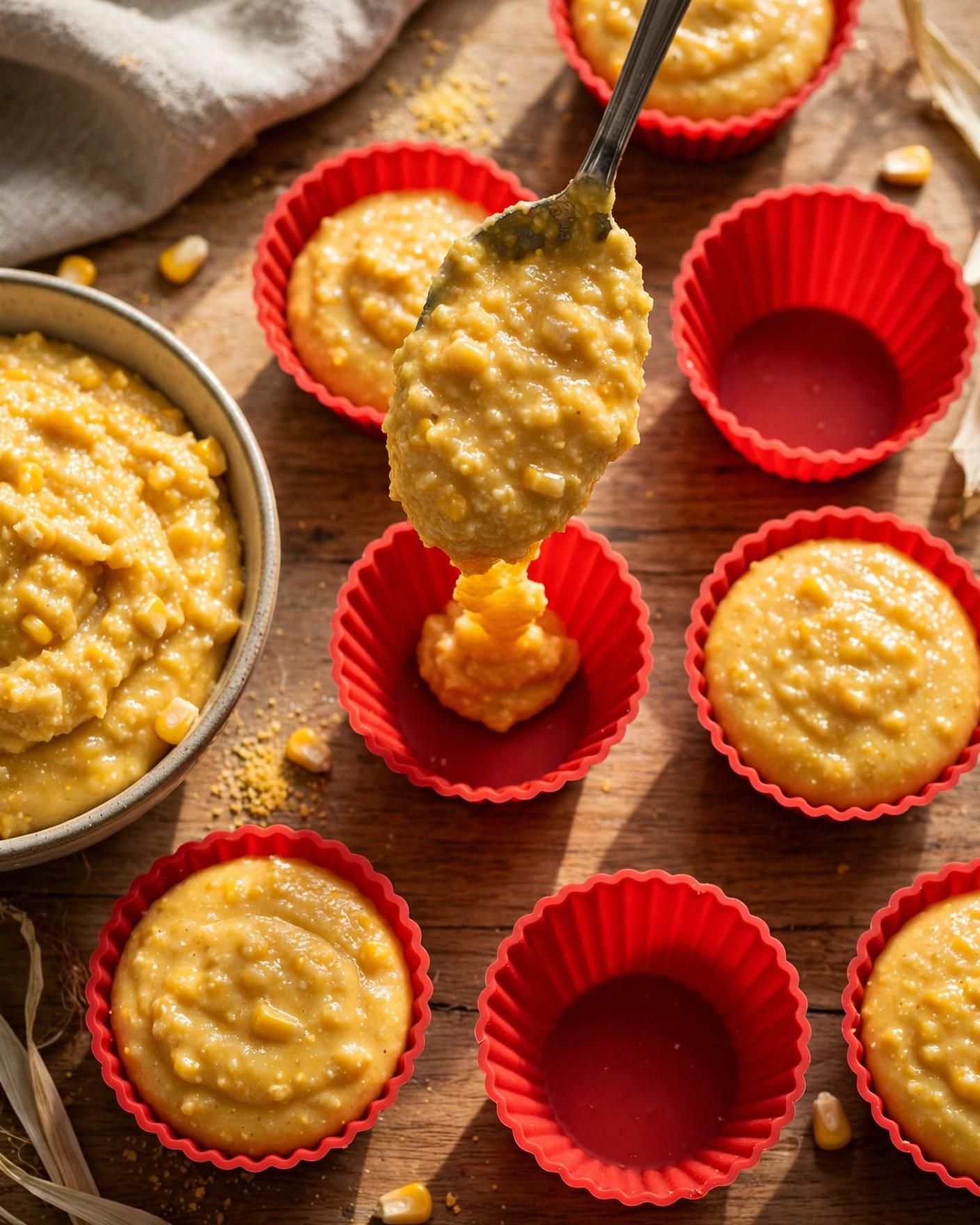
- Fill the cups. Spoon or scoop the rested batter into the prepared cups, filling each about three-quarters full — roughly 1 1/2 tablespoons of batter per mini cup. A small cookie scoop makes this fast and keeps the portions even, which matters because evenly filled cups finish at the same time. Wipe any drips off the rims; batter baked onto the outside of a silicone cup makes the finished bites harder to release neatly. Fill only as many cups as will fit in your basket for the first batch, and keep the remaining batter covered at room temperature.
- Arrange the first batch in the basket. Using the tray for support, transfer the filled cups into the preheated basket in a single layer, leaving a small gap between cups so the hot air can circulate around each one. Do not stack cups and do not crowd them edge to edge — blocked airflow is the difference between evenly golden bites and pale, uneven ones. Slide the basket in gently so the cups do not tip; the batter is thick enough to stay put as long as the cups go in level.
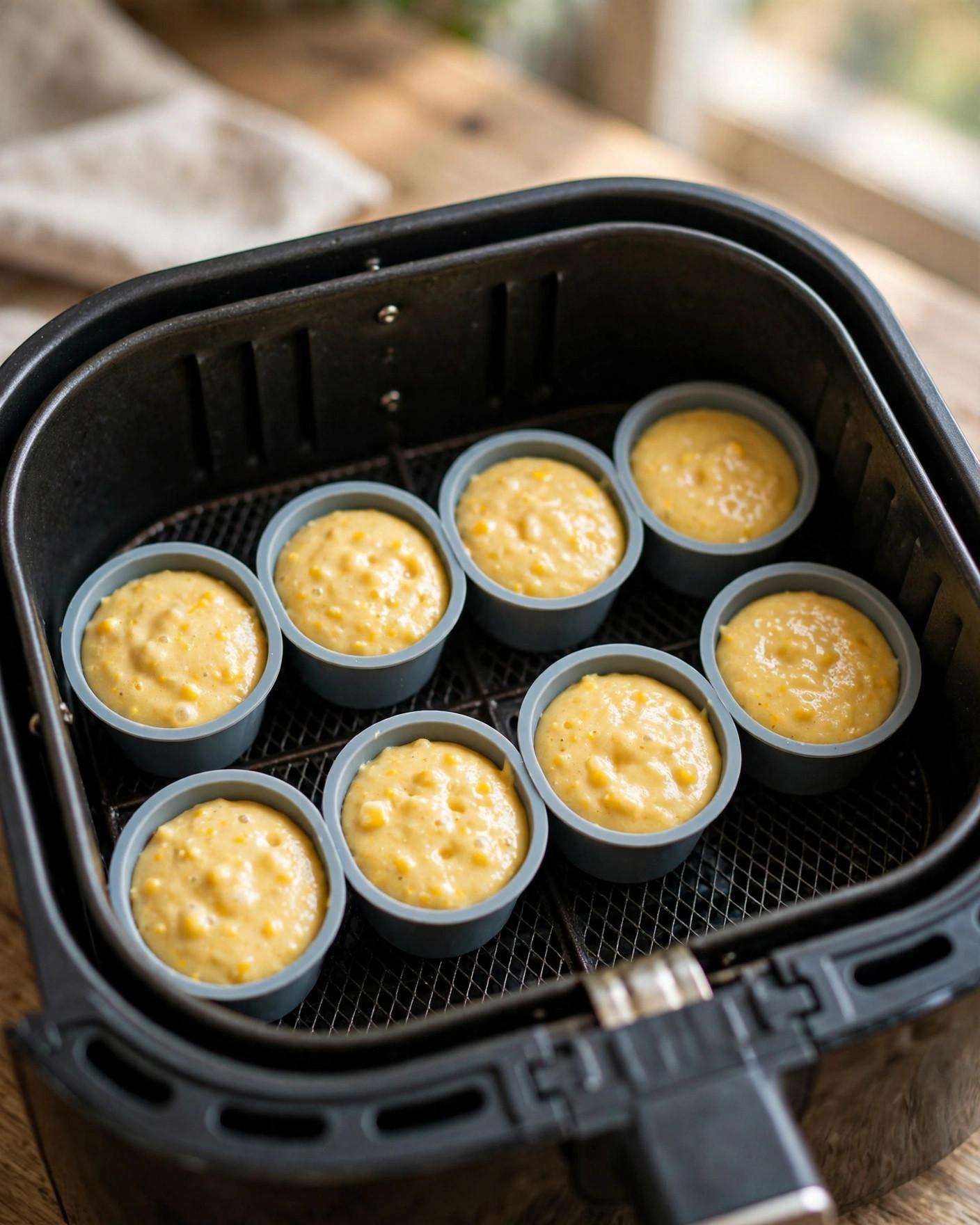
- Air fry until golden and set. Cook at 330 degrees F (165 degrees C) for 8 to 10 minutes, until the tops are domed and deep golden at the edges and a toothpick inserted into the center of a bite comes out clean or with a few moist crumbs. The bites should spring back when you press a top lightly. If your air fryer runs hot, start checking at 7 minutes — mini cups can move from golden to dark quickly in the last minute. There is no need to flip these; the circulating heat browns them all over.
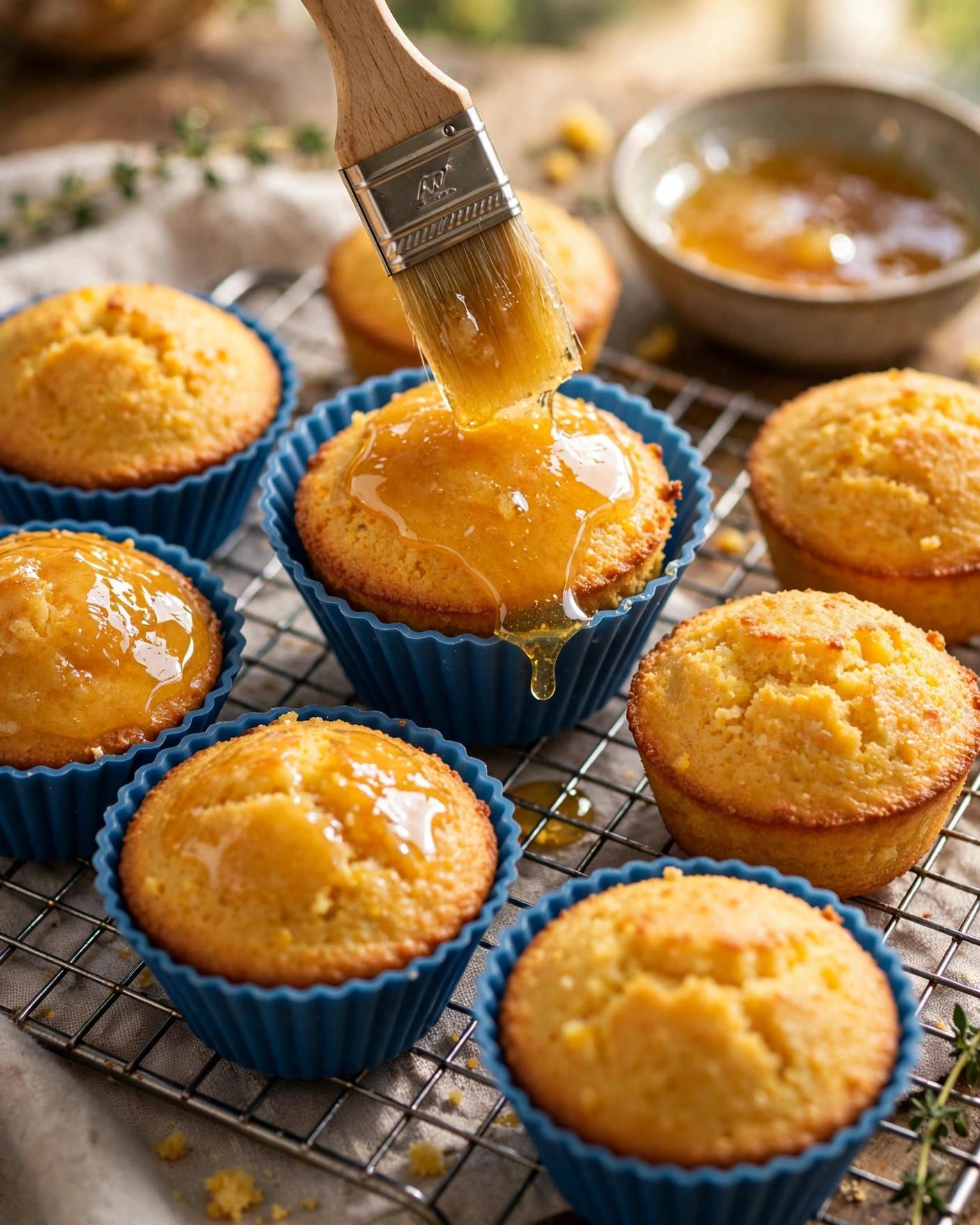
- Glaze while warm and cool briefly. While the first batch bakes, stir the 3 tablespoons of melted butter and 1 tablespoon of honey together in a small bowl. As soon as the bites come out, brush their tops generously with the honey butter and sprinkle with a pinch of flaky sea salt. Let the bites cool in their cups for 3 to 4 minutes — they firm up as they stand — then pop them out onto a wire rack. Warm bites release cleanly from silicone with a gentle squeeze and twist from underneath.
- Repeat and serve. Return the empty cups to your tray, refill them with the remaining batter, and repeat the arranging, baking, and glazing for the second batch, and a third if your basket is smaller. Give the air fryer a moment to return to 330 degrees F (165 degrees C) between batches if the temperature has drifted. Serve the bites warm, piled in a cloth-lined basket or on a warm plate, with any extra honey butter in a small dish alongside for passing at the table.
Tips for Success
- Respect the batter rest. Those ten minutes are not optional downtime. Dry cornmeal needs time to hydrate; skipping the rest leaves the crumb gritty and dry even when every other step is right. Set a timer and prepare the glaze and cups while you wait.
- Keep the temperature moderate. Cornbread batter browns fast because of its sugar and honey. At 330 degrees F (165 degrees C) the centers set before the tops over-darken. If your model has no 330 setting, use 325 or 335 degrees F and watch the first batch closely to learn your machine's pace.
- Fill evenly and only three-quarters full. Overfilled cups overflow into domes that stick to neighboring cups and bake unevenly, while underfilled cups dry out. A small scoop pays for itself in a single batch of minis.
- Bake in a single layer, in batches. Crowding and stacking trap steam and block airflow. A slightly longer total time spent on proper batches beats one crowded basket of pale, gummy bites every time.
- Use room-temperature dairy and eggs. Cold buttermilk can seize melted butter into flecks and make the batter uneven. Twenty minutes on the counter for the buttermilk and eggs is enough to take the chill off.
- Glaze hot, salt last. Honey butter soaks in best on just-baked bites, and flaky salt sprinkled over the wet glaze stays on the surface where you can taste it. Glazing cold bites just makes them greasy on top.
Variations
- Cheddar and jalapeño. Fold 1/2 cup (55 g) finely shredded sharp cheddar and 1 to 2 tablespoons finely minced jalapeño — seeded for mild heat — into the batter before resting, and reduce the sugar to 2 tablespoons. A tiny pinch of extra cheddar on top of each cup before baking gives a lacy, crisp cheese cap.
- Sweet corn and scallion. Stir 1/2 cup (75 g) thawed frozen corn kernels, patted dry, and 2 thinly sliced scallions into the finished batter. The kernels add little bursts of sweetness and moisture, and the scallions keep the bites firmly on the savory side for chili and barbecue nights.
- Maple brown butter. Brown the butter for the batter in a small skillet until nutty and amber, let it cool slightly, and swap the honey in the glaze for pure maple syrup. The result tastes deeper and toastier, and it is especially good alongside roasted vegetables and holiday mains.
- Warmly spiced honey. Add 1/2 teaspoon ground cinnamon and a pinch of ground nutmeg to the dry ingredients, and stir a pinch of cinnamon into the honey butter glaze as well. These lean gently sweet and make a lovely addition to a brunch spread or a fall soup supper.
- Gluten-free bites. Replace the all-purpose flour with an equal amount (120 g) of a cup-for-cup gluten-free flour blend that contains xanthan gum, and confirm your cornmeal is certified gluten-free if that matters for your table. The texture stays tender; let the batter rest the full ten minutes so the blend hydrates properly.
Storage
At room temperature, cooled cornbread bites keep well for up to 2 days. Let them cool completely on a wire rack first — trapping warm bites in a container steams their tops and turns the glaze sticky — then store them in an airtight container lined with a paper towel to absorb excess moisture. Keep them on the counter, not in direct sun, and warm them before serving rather than eating them cold from the container, because a short reheat restores almost all of their just-baked texture.
In the refrigerator, the bites keep for up to 5 days in an airtight container. The crumb will firm up as the butter chills, which is normal and fully reversible. To reheat, air fry at 300 degrees F (150 degrees C) for 3 to 4 minutes until warmed through and the edges crisp again, or warm a plateful in a 300 degree F (150 degree C) oven for about 8 minutes. A brief microwave warm-up works in a pinch — about 15 seconds for two bites — but the edges will be soft rather than crisp. If you have leftover honey butter, a fresh brush after reheating makes day-old bites taste newly glazed.
For longer storage, freeze the bites for up to 3 months. Freeze them first in a single layer on a tray until solid, about 1 hour, then transfer them to a freezer bag with the air pressed out and label it with the date. Freezing them unglazed gives you the most flexibility; add fresh honey butter after reheating. Thaw at room temperature for about 30 minutes, or reheat straight from frozen in the air fryer at 300 degrees F (150 degrees C) for 5 to 6 minutes, checking that the centers are warm. To make these ahead for a holiday, bake a full batch the day before, refrigerate, and reheat in batches just before serving — the countertop method means your oven never has to make room for them.
FAQ
Can I use a metal mini muffin pan instead of silicone cups? Yes, as long as the pan fits your air fryer basket with room for air to circulate around it. Grease a metal pan well, fill the wells three-quarters full, and expect the timing to be close to the silicone cups — start checking at 7 to 8 minutes, since metal conducts heat a little faster and can brown the bottoms more deeply. Individual silicone cups are more flexible for oddly shaped baskets because you can arrange exactly as many as fit, but the batter itself does not change either way.
Why did my cornbread bites turn out dry or crumbly? The three usual causes are overbaking, overmixing, and skipped rest time. Mini cups are small, so even one extra minute can dry them — pull them as soon as a toothpick comes out clean. Mix the batter only until the dry pockets disappear, and always rest it for the full 10 minutes so the cornmeal hydrates. Measuring flour by spooning and leveling also helps; a scooped, packed cup of flour is one of the most common reasons small bakes turn out dry.
Can I make the batter ahead of time? It is better to bake the batter within about 30 minutes of mixing. Baking powder starts working as soon as it meets liquid, and a batter that sits for hours loses lift and can taste faintly metallic. If you need a head start, whisk the dry ingredients and the wet ingredients separately, cover both, and refrigerate the wet mixture for up to a day. Combine them, rest for 10 minutes, and bake when you are ready — you get the convenience without giving up the rise.
What should I serve with air fryer cornbread bites? Almost anything that likes a sweet-salty, buttery side. They are a natural partner for chili, bean soups, and stews, where a bite can be dipped or used to catch the last of the broth. On a holiday table they sit happily beside stuffing, casseroles, and roasted vegetables, and their small size means guests can take one without committing to a big slice of anything. They are also lovely on their own, still warm, with extra honey butter or a spoonful of jam for a simple snack.

Recipe Card
Air Fryer Cornbread Bites (Golden, Honey Butter Glazed)
- Prep Time: 15 minutes (PT15M)
- Cook Time: 20 minutes (PT20M)
- Total Time: 45 minutes (PT45M)
- Servings: 12
- Calories: 155 kcal per serving (estimated)
Golden mini cornbread bites with a tender, buttermilk-soft crumb, air-fried in silicone cups at 330 degrees F until domed and crisp-edged, then brushed warm with honey butter and finished with flaky salt — two-bite sides that free your oven for everything else.

Hi, I’m Emma! I’m the cook and recipe developer behind Sizzle & Sage. From my sunny home kitchen, I share easy, flavor-packed recipes for real life — quick breakfasts, cozy weeknight dinners, and simple bakes anyone can make. Pull up a chair and stay a while!