Air Fryer French Toast Sticks
There is a particular kind of quiet that settles over a weekend morning when breakfast is easy. No pan to babysit, no long line of slices waiting their turn on a griddle — just a basket of crisp, golden French toast sticks, cooked all at once, and a small bowl of warm maple syrup in the middle of the table. Air fryer French toast sticks take everything people love about classic French toast — the custardy middle, the golden edges, the cinnamon warmth — and reshape it into something you can pick up with your fingers and dip.
The shape is the whole idea. Cutting a thick brioche loaf into sticks gives you more surface than a slice ever could: more edges to crisp, more cinnamon sugar to cling to, and a center that stays soft because each stick is thick enough to hold a proper soak. These are not thin, dried-out batons. At four sticks to a slice of day-old brioche, each one eats like a small, complete serving of French toast — crisp outside, tender inside, ready in about half an hour from start to table.
They suit slow Saturday mornings, sleepover breakfasts, holiday brunches, and the very practical problem of feeding a table of people who all want French toast at the same time. Everything goes into the air fryer in a single layer, and the whole batch is on the table while the coffee is still hot.
Why You'll Love This Recipe
- Crisp edges all the way around. Sticks have four long sides instead of two flat faces, so every bite gets golden, lightly crisp edges with a soft custardy middle — the contrast that makes French toast worth making.
- Made for dipping. A stick is a natural dipper: sturdy enough for a pot of warm maple syrup, a spoonful of berry compote, or a dusting of powdered sugar. Kids, in particular, need no convincing.
- No stove hovering. Everything cooks in the air fryer at 375 degrees F (190 degrees C) in a single layer, all pieces at the same time. No standing over a skillet flipping slices one by one while the first batch goes cold.
- Ready in about 30 minutes. Fifteen minutes of prep, two short batches in the air fryer, and breakfast is done — fast enough for a weekday treat, special enough for a brunch table.
- Thick-cut and properly soaked. Day-old brioche cut a full inch thick drinks up the custard without falling apart, so the centers set up tender instead of soggy or dry.
- Cinnamon sugar, if you like. An optional roll through cinnamon sugar while the sticks are warm gives them a faint crunch and a bakery-counter finish. Skip it and dust with powdered sugar instead — both ways work.

Ingredients
For the French toast sticks
- 8 thick slices day-old brioche, about 1 inch (2.5 cm) thick — about 12 ounces (340 g) total
- 3 large eggs
- 3/4 cup (180 ml) whole milk
- 2 tablespoons (25 g) granulated sugar
- 1 1/2 teaspoons vanilla extract
- 1 teaspoon ground cinnamon
- 1/4 teaspoon fine sea salt
- 2 tablespoons (28 g) unsalted butter, melted (or neutral cooking spray), for the basket and sticks
For the cinnamon sugar (optional)
- 1/4 cup (50 g) granulated sugar
- 1 teaspoon ground cinnamon
For serving
- Warm maple syrup
- Powdered sugar, for dusting (optional)
- Fresh berries (optional)
Why these ingredients matter
Brioche. Brioche is the right bread for sticks because it is rich, sturdy, and faintly sweet. Its egg-and-butter crumb soaks up custard like a sponge while still holding its shape when you lift a soaked stick with both hands. Day-old is better than fresh: slightly dried bread drinks in more custard and is far less likely to tear or turn gummy. If your loaf is fresh, the dry-out trick in the tips below fixes it in ten minutes.
Eggs. Three eggs give the custard enough body to set as it cooks, so the centers turn tender and creamy rather than wet. Too few eggs and the sticks taste like sweetened bread; too many and they read as eggy and rubbery. Three against three quarters of a cup of milk is the balanced middle.
Whole milk. Milk thins the eggs into a soakable custard and adds gentle richness. Whole milk keeps the flavor round; half-and-half works for a richer result. Very low-fat milk makes a thinner custard that browns less and tastes a little lean against the cinnamon.
Granulated sugar in the custard. Two tablespoons sweetens the soak itself, so the sticks taste finished even before any topping. Sugar also helps the surface caramelize in the hot air, which is where a good part of the golden color comes from.
Vanilla extract. Vanilla is the background note that makes French toast taste like French toast. A teaspoon and a half is generous on purpose — it perfumes the whole batch without reading as an obvious flavor of its own.
Ground cinnamon. Cinnamon goes in the custard so the warmth runs through the stick rather than sitting only on the surface. Use a jar that smells sweet and woody when you open it; tired cinnamon reads as dust rather than spice.
Fine sea salt. A quarter teaspoon will not make anything salty. It sharpens the vanilla and cinnamon and keeps the sweetness in balance, the same way it does in any custard.
Butter. A little melted butter brushed on the sticks (and the basket) does three jobs: it keeps the custard-soaked surface from sticking, encourages even browning, and adds the fried flavor people expect from French toast. Cooking spray is the lighter alternative and works fine.
Instructions
- Cut the sticks. Trim the crusts if you like a uniform finish (optional — the crust adds chew and browns well). Cut each thick slice of brioche into 3 sticks about 1 inch (2.5 cm) wide, keeping them as even as you can. You should have 24 sticks. If the bread is fresh, spread the sticks on a baking sheet and dry them in a 300 degrees F (150 degrees C) oven for 8 to 10 minutes first; they should feel dry at the surface but not toasted. Even sizes matter here — thin sticks overcook while thick ones are still setting.
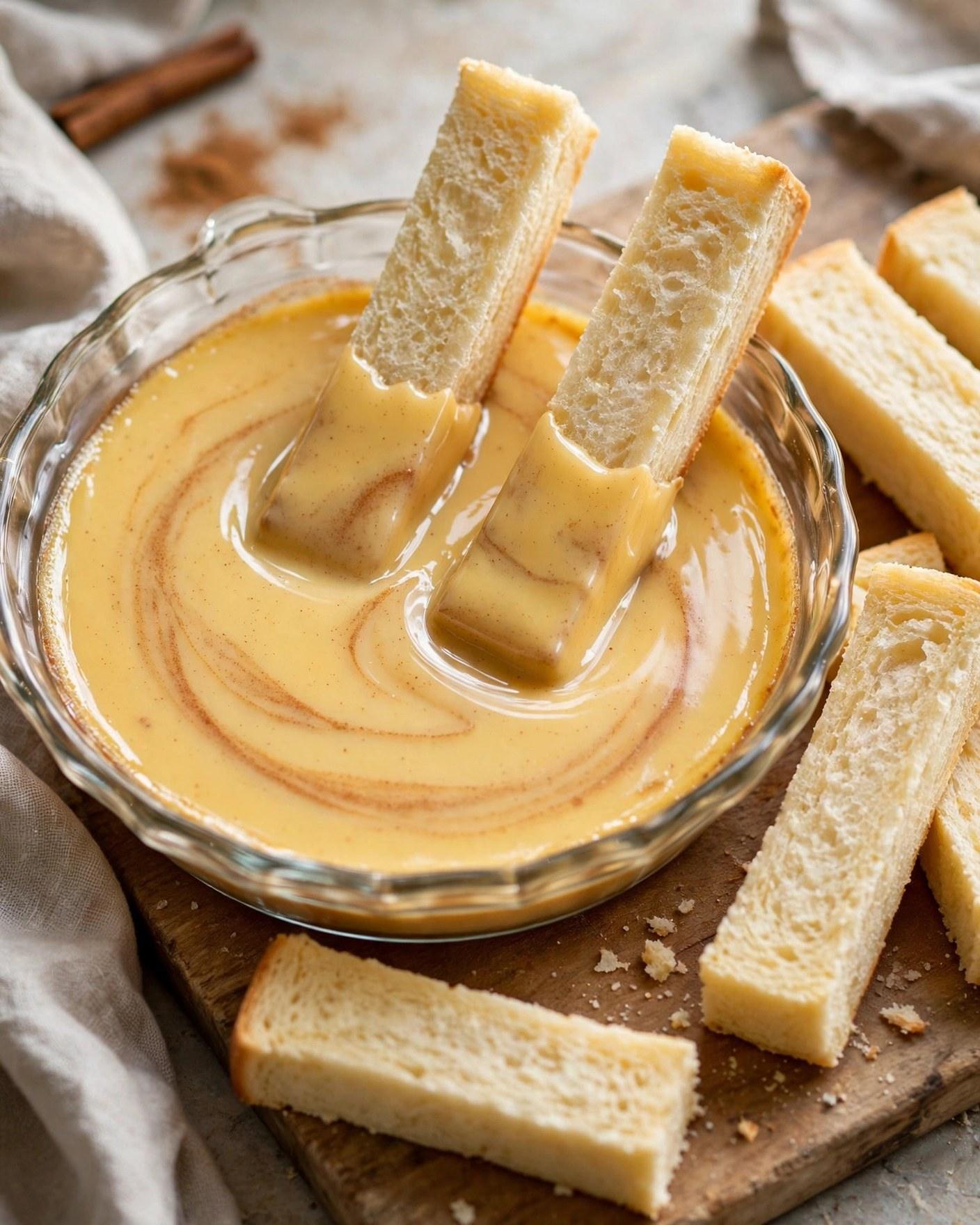
- Whisk the custard. In a shallow, wide dish (a pie plate or small baking dish is ideal), whisk the eggs, milk, granulated sugar, vanilla, cinnamon, and salt until completely smooth with no streaks of egg white. A shallow dish lets you lay the sticks flat and turn them easily; a deep bowl forces you to fish around and breaks the soaked bread.
- Dip and rest. Working with 4 to 6 sticks at a time, lay them in the custard for about 20 seconds per side. They should feel heavy and saturated but still hold together when lifted — dripping wet is too much, so let the excess run off for a second before moving them. Rest the dipped sticks in a single layer on a parchment-lined tray for 3 to 5 minutes while you finish the batch. This short rest lets the custard settle into the crumb instead of pooling on the surface, and is the difference between a tender center and a soggy one.
- Preheat the air fryer. Preheat the air fryer to 375 degrees F (190 degrees C) for 3 minutes. Lightly brush or spray the basket. Hot air hitting a hot basket is what sets the bottoms quickly and gives you clean, crisp edges instead of pale, steamed ones.
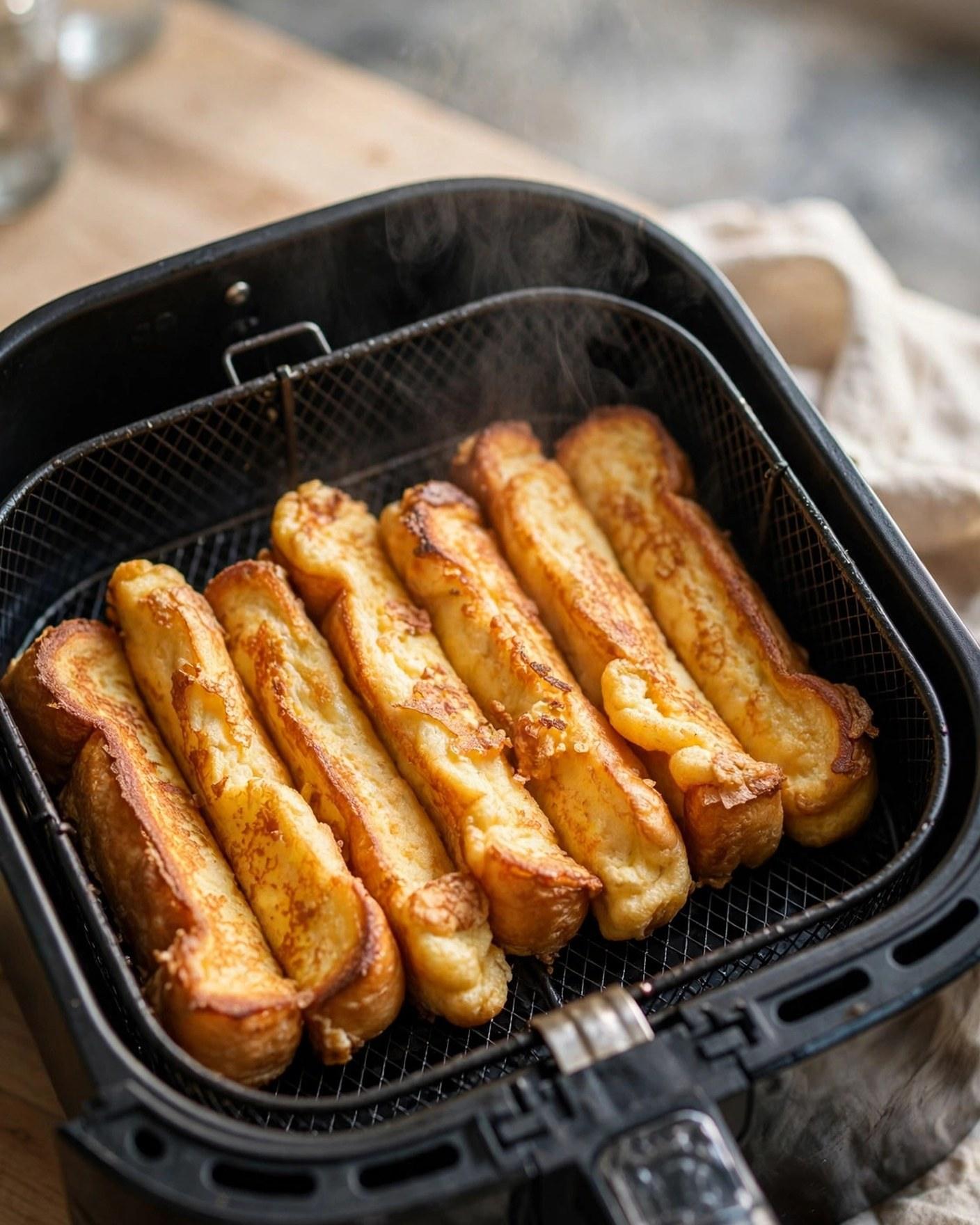
- Load in a single layer. Brush the tops of the rested sticks lightly with melted butter (or mist with spray) and arrange half of them in the basket in a single layer with a little space between each stick. Crowding is the enemy of crisp edges — touching sticks steam where they meet and stay soft. Cook in two batches rather than forcing all 24 in at once.
- Cook. Air fry at 375 degrees F (190 degrees C) for 7 to 8 minutes, turning the sticks once halfway through with tongs, until deep golden with crisp edges and centers that feel set when pressed gently. Some air fryers run hot — start checking at 6 minutes on the first batch and adjust. The second batch often cooks about a minute faster in a fully hot basket, so keep an eye on it.
- Make the cinnamon sugar (optional). While the sticks cook, stir the granulated sugar and cinnamon together in a shallow bowl wide enough to roll a stick. Have it ready by the stove before the first batch comes out — coating waits for no one, because it only clings properly to warm sticks.
- Coat while warm. As each batch finishes, roll the sticks in the cinnamon sugar while hot, turning to coat all four sides, or skip the sugar and dust with powdered sugar instead. Work in small handfuls so every stick gets an even coat before the surface cools and dries.
- Serve. Pile the sticks on a warm plate and serve immediately with warm maple syrup for dipping and berries alongside if you like. They are at their best within minutes — edges crisp, centers soft, sugar still faintly crunchy.

Tips for Success
- Day-old bread is the whole trick. Slightly dry brioche absorbs more custard and holds its stick shape through dipping, resting, and turning. Fresh, soft bread soaks unevenly and tears. Ten minutes in a low oven gives fresh bread the same advantage.
- Soak, then rest — do not rush either. Twenty seconds a side gets the custard in; the 3 to 5 minute rest gets it settled. Sticks that go straight from the dish to the basket drip, pool, and cook up soggy underneath.
- Single layer, always. It is better to run three quick batches than one crowded one. Air needs to move around every stick for the edges to crisp; overlapped sticks come out pale and soft where they touched.
- Turn once, gently. A single flip at the halfway mark evens the color. Use tongs and a light hand — soaked sticks are tender, and squeezing them pushes custard out.
- Warm your syrup. Twenty seconds in the microwave takes the chill off maple syrup so it does not cool the sticks on contact. It is a small step that makes the whole plate taste freshly cooked.
- Coat immediately. Cinnamon sugar sticks to a hot, just-cooked surface. Five minutes of cooling is enough to lose the tackiness, and no amount of pressing will fix a patchy coat afterwards.
Variations
- Orange-vanilla. Add 1 teaspoon finely grated orange zest to the custard and serve with a simple orange syrup (maple syrup warmed with a squeeze of orange juice). Bright, brunchy, and lovely with berries.
- Chocolate-hazelnut dippers. Skip the cinnamon sugar, dust lightly with powdered sugar, and serve with a small pot of warmed chocolate-hazelnut spread thinned with a spoonful of warm milk for dipping.
- Pumpkin spice. Replace the cinnamon in the custard with 1 1/2 teaspoons pumpkin pie spice in autumn, and add a pinch of the same blend to the coating sugar.
- Berry compote. Simmer 1 1/2 cups (about 225 g) mixed berries with 1 tablespoon sugar and a squeeze of lemon for 5 minutes until jammy, and spoon over the sticks instead of syrup.
- Challah or Texas toast. Swap the brioche for day-old challah for a slightly chewier stick, or thick-cut Texas toast for a sturdier, more diner-style version. Both hold the same soak and timing.
Storage
French toast sticks are best the moment they come out of the basket. Leftovers keep, though: cool completely, then refrigerate in an airtight container, layered with parchment so the coating does not glue them together, for up to 3 days. Reheat in the air fryer at 350 degrees F (175 degrees C) for 3 to 4 minutes until hot and re-crisped at the edges — the microwave softens them and is not recommended. If you coated them in cinnamon sugar, expect the coating to soften in the fridge; a light re-roll in fresh cinnamon sugar after reheating brings the finish back.
To freeze, spread cooked, uncoated sticks in a single layer on a parchment-lined tray and freeze until solid, about 1 hour. Transfer to a freezer bag and freeze for up to 2 months. Reheat from frozen at 350 degrees F (175 degrees C) for 5 to 6 minutes, turning once, then coat or dust as you like. For a make-ahead morning, you can also cut the sticks and whisk the custard the night before — store them separately, the bread covered at room temperature and the custard covered in the fridge, and dip fresh in the morning.
FAQ
Why are my French toast sticks soggy? Sogginess almost always comes from one of three places: bread that was too fresh and soft to hold the soak, sticks dipped and cooked immediately so the custard pooled instead of settling, or a crowded basket where the sticks steamed each other. Use day-old (or briefly oven-dried) brioche, give the dipped sticks their 3 to 5 minute rest, and cook in a true single layer with space between the sticks. If a finished batch still seems soft, two more minutes at 375 degrees F (190 degrees C) will usually set the centers and re-crisp the edges.
Can I make these without an air fryer? Yes. For the oven, arrange the dipped, rested sticks on a parchment-lined, buttered baking sheet and bake at 425 degrees F (220 degrees C) for 12 to 15 minutes, turning once, until golden and crisp at the edges. For a skillet, cook in a little butter over medium heat for 2 to 3 minutes per side, working in small batches. The air fryer version is the most hands-off and crisps the most evenly on all four sides, but the custard, soak, and timing logic are the same either way.
Can I use a different bread? Challah is the closest swap — similar richness, slightly chewier crumb — and thick-cut Texas toast or a sturdy white sandwich loaf also work, as long as the slices are about 1 inch (2.5 cm) thick and a day old or dried. Avoid very soft, thin sandwich bread, which tears when soaked, and avoid crusty artisan loaves, whose open crumb lets the custard run straight through and whose hard crust turns tough. Whole wheat bread works but gives a denser, less tender stick and benefits from the full soak time.
How do I keep the sticks warm while the second batch cooks? Put a wire rack on a baking sheet in a 200 degrees F (95 degrees C) oven and move each finished batch there as it comes out of the air fryer. The low heat keeps them warm without cooking them further, and the rack keeps the undersides from steaming soft on a solid plate. Hold them for up to 30 minutes this way. If you are coating in cinnamon sugar, coat each batch while it is hot, before it goes into the oven — the sugar will not cling properly to a stick that has been sitting.

Recipe Card
Air Fryer French Toast Sticks
- Prep Time: 15 minutes (PT15M)
- Cook Time: 16 minutes (PT16M)
- Total Time: 31 minutes (PT31M)
- Servings: 4 servings (24 sticks)
- Calories: 390 kcal per serving (estimated)
Thick-cut day-old brioche sticks soaked in a vanilla-cinnamon custard, air fried at 375 degrees F (190 degrees C) until crisp at the edges and tender in the middle, then rolled in cinnamon sugar or dusted with powdered sugar and served with warm maple syrup for dipping.
Nutrition (estimated): 390 kcal per serving (estimated), 52 g carbohydrates, 11 g protein, 15 g fat, 2 g fiber, 24 g sugar, 320 mg sodium. Nutrition is estimated and will vary with the bread used, how much custard the sticks absorb, and any variations or toppings added.

Hi, I’m Emma! I’m the cook and recipe developer behind Sizzle & Sage. From my sunny home kitchen, I share easy, flavor-packed recipes for real life — quick breakfasts, cozy weeknight dinners, and simple bakes anyone can make. Pull up a chair and stay a while!