One-Pot Lemon Garlic Butter Pasta
One-Pot Lemon Garlic Butter Pasta is the dinner I make when I want something that tastes like a little Italian bistro but behaves like a weeknight shortcut. Spaghetti cooks directly in a measured mix of vegetable broth and water, right in the same pot where garlic has just sizzled in butter and olive oil, so every strand drinks up flavor as it softens. The pasta’s own starch turns the cooking liquid silky, and then — off the heat — fresh lemon juice, the rest of the butter, and a shower of Parmesan get tossed through until the whole pot glistens.
Here’s the lovely thing about the timing: the lemon is split in two. The zest goes in early, where its fragrant oils bloom in the warm fat and perfume the broth. The juice waits until the very end, because lemon juice cooked for twenty minutes loses its sparkle and can even turn a little bitter. Added off the heat, it stays bright and lively, the way lemon should be. You get depth from the zest and a fresh, clean pop from the juice, in the same easy pot.
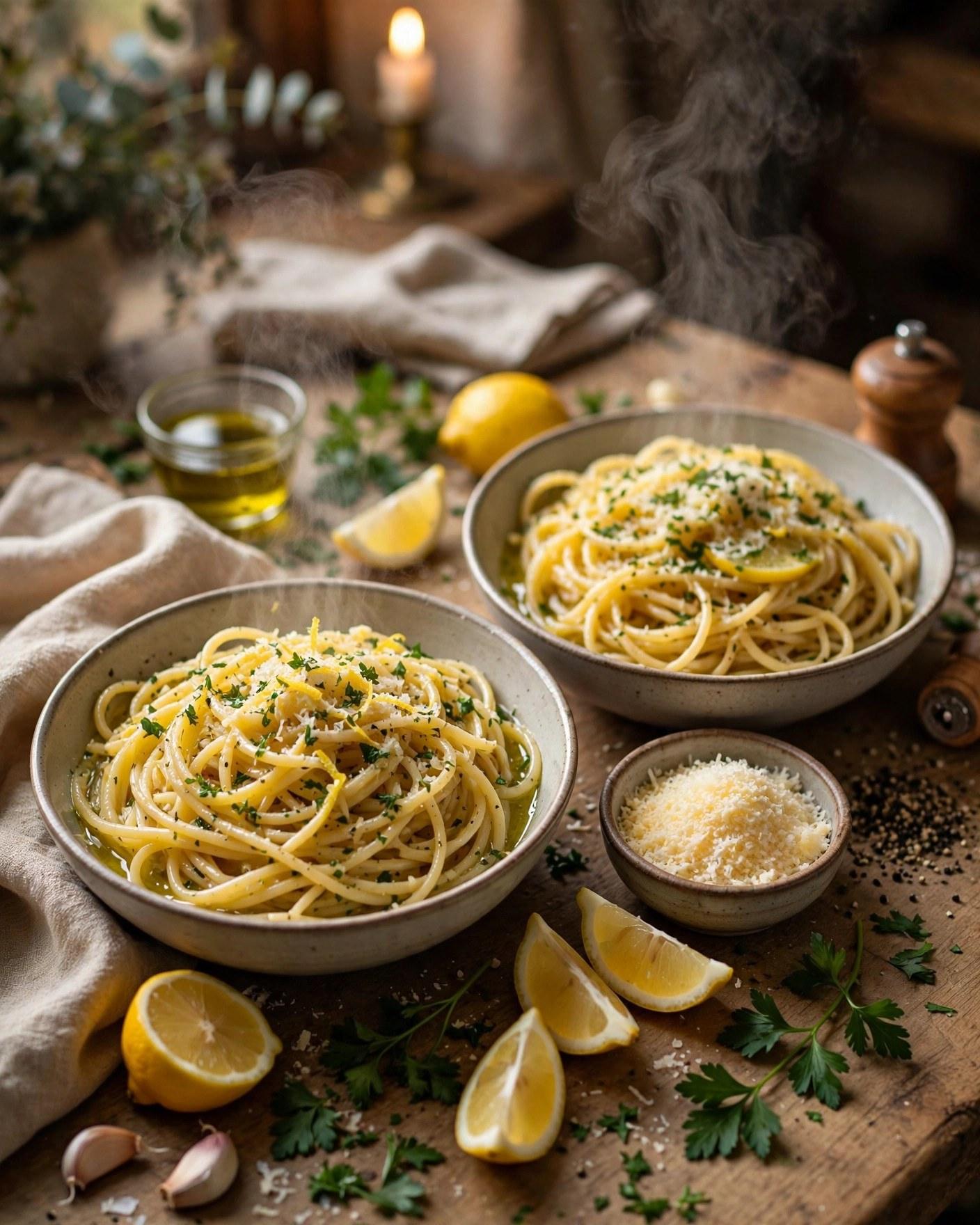
The result is glossy, golden pasta with soft ribbons of lemon flavor running through it, plenty of garlic warmth, and a sauce that clings instead of pooling. A handful of parsley at the end keeps it green and fresh, and a pinch of red pepper flakes wakes everything up without making it spicy. It is vegetarian, pantry-friendly, and on the table in about 35 minutes, most of it hands-off simmering.
If you are nervous about one-pot pasta — maybe you have had a gummy batch, or a scorched one — this recipe is written to talk you through it kindly. The liquid is measured, the stirring rhythm is simple, and the finish is forgiving: a splash of hot water loosens, a handful of Parmesan tightens. Once you have made it once, you will be riffing on it all spring.
Why You’ll Love This Recipe
- Truly one pot. The pasta cooks in the same pot as the sauce, so the starch-thickened broth becomes the sauce and washing up is a single pot, a board, and a knife.
- Two-layer lemon flavor. Zest blooms early in the butter for depth, and fresh lemon juice goes in off the heat so it stays bright instead of bitter.
- Glossy, not gummy. A short rest off the heat, cold butter tossed through at the end, and Parmesan added gradually give you a sauce that shines and clings to every strand.
- Ready in about 35 minutes. Fifteen minutes of simple prep and about twenty minutes of cooking, most of it a gentle simmer with the occasional stir.
- Vegetarian and pantry-friendly. Spaghetti, broth, butter, garlic, lemons, Parmesan, and parsley — nothing exotic, nothing wasted, and easy to shop for.
- Easy to dress up. White beans, peas, spinach, or asparagus all fold in beautifully, so the same base recipe becomes a different dinner every time.
Ingredients
For the pasta
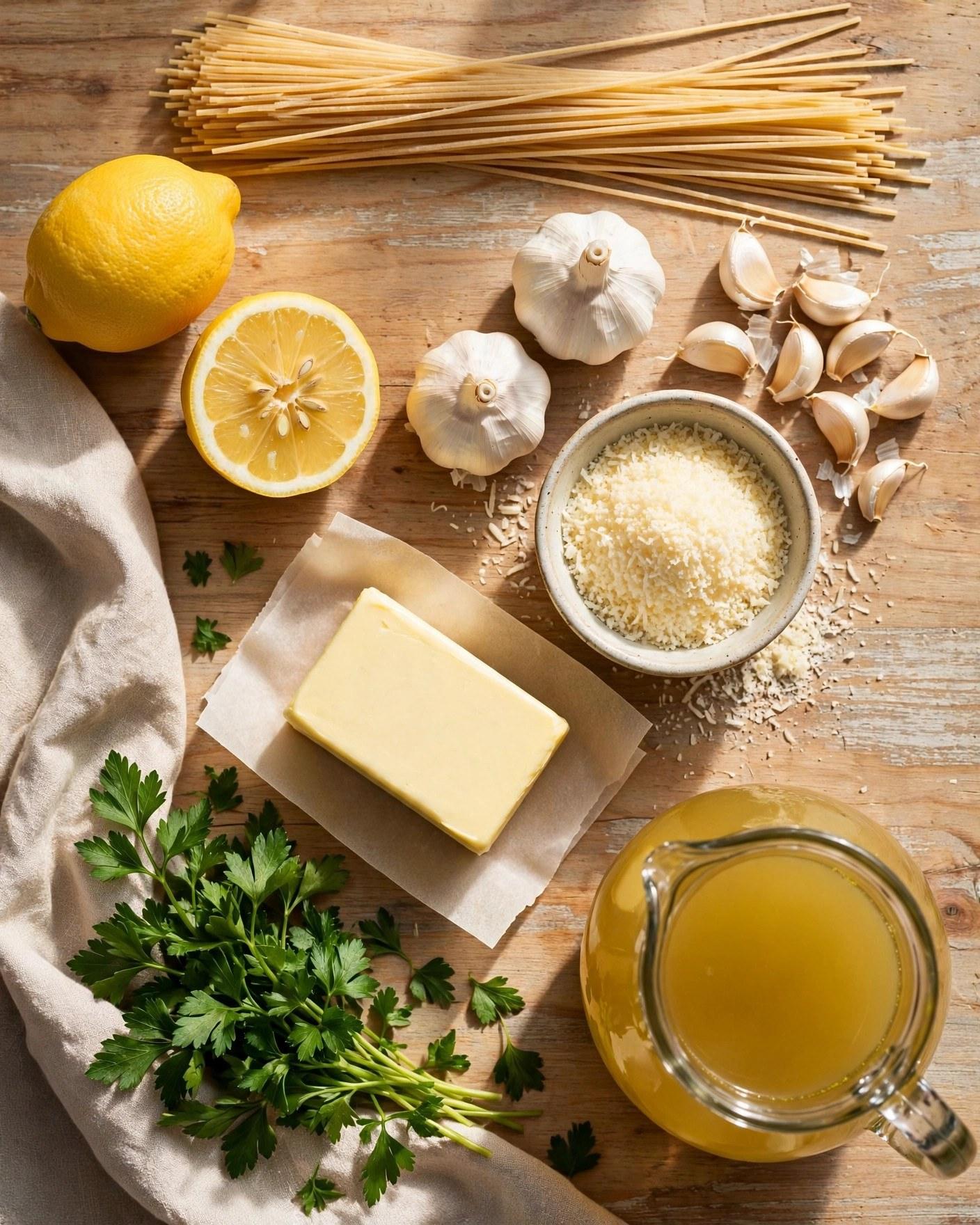
- 12 ounces (340 g) dried spaghetti or linguine
- 3 cups (720 ml) low-sodium vegetable broth
- 1 1/2 cups (360 ml) water, plus more as needed
- 4 tablespoons (56 g) unsalted butter, divided
- 1 tablespoon olive oil
- 6 cloves garlic, minced (about 2 tablespoons)
- 1 tablespoon lemon zest, from 2 large lemons, divided
- 1 teaspoon fine sea salt, plus more to taste
- 1/2 teaspoon black pepper, freshly ground if possible, plus more to taste
- 1/4 teaspoon red pepper flakes (chili flakes), optional, plus more to taste
For finishing and serving
- 1/3 cup (80 ml) fresh lemon juice, from 2 large lemons
- 3/4 cup (75 g) finely grated Parmesan cheese, plus more for serving
- 1/3 cup (20 g) fresh flat-leaf parsley, chopped, plus more for serving
- Lemon wedges, for serving
- Extra lemon zest, for serving, optional
Why these ingredients matter
Spaghetti or linguine. Long strands are the happiest shape for the one-pot method: they soften gradually, release starch steadily, and twirl beautifully in the finished sauce. Keep the amount at 12 ounces (340 g) — the liquid in this recipe is measured for exactly that weight, so resist the urge to use a full pound or the pot will be dry before the pasta is tender.
Vegetable broth and water. Three cups (720 ml) of low-sodium vegetable broth plus 1 1/2 cups (360 ml) of water is the sweet spot: enough liquid for the pasta to drink, not so much that the sauce turns soupy. Splitting broth with water keeps the flavor clean and lets the lemon and garlic lead, and low-sodium broth means you — not the carton — control the salt.
Butter, divided on purpose. Half the butter melts at the start to sizzle the garlic and bloom the zest. The other half is tossed in cold, off the heat, at the very end, where it emulsifies into the starchy liquid and gives the sauce its restaurant-style gloss. This one small division is the difference between a nice pasta and a memorable one.
Olive oil. A tablespoon of olive oil mixed with the first butter keeps the butter from browning too fast while the garlic sizzles, and adds its own gentle fruitiness underneath the lemon.
Garlic, and plenty of it. Six cloves sounds bold, but garlic mellows as it simmers in broth, becoming sweet and round rather than sharp. Mince it finely so it melts into the sauce instead of landing in bites, and give it its full minute in the fat — under-sizzled garlic tastes raw no matter what you do later.
Lemon zest first, juice last. The zest holds the lemon’s aromatic oils, and those oils love fat: blooming the zest in butter and oil at the start perfumes the whole pot. The juice is mostly bright acid, and acid fades and dulls with long heat, so it goes in at the end, off the boil. Two lemons give you both, generously.
Parmesan. Finely grated Parmesan does double duty: salty, savory flavor and real thickening power, because the cheese melts into the starchy liquid and tightens the sauce. Grate it finely — a Microplane or the small holes of a box grater — so it melts smoothly instead of clumping, and add it gradually, off the heat.
Parsley. A third of a cup of chopped flat-leaf parsley is not a garnish afterthought; it is a full ingredient. Its fresh, green bite cuts through the butter and cheese and makes the lemon taste even brighter. Add most of it to the pot and save a little for the top of each bowl.
Red pepper flakes. Optional, but lovely: a quarter teaspoon will not make the pasta hot, it just adds a low warmth at the back of each bite that makes the lemon sparkle. Add more at the table if your household likes heat.
Instructions
- Zest and juice the lemons, and prepare everything first. Wash and dry 2 large lemons. Using a Microplane or the fine side of a box grater, zest them until you have 1 tablespoon of zest, turning the fruit as you go and stopping at the white pith, which is bitter. Halve the lemons and squeeze them until you have 1/3 cup (80 ml) of juice; pick out any seeds. Divide the zest in two rough halves — about half goes into the pot early, and the rest is saved for serving. Mince the 6 cloves of garlic, grate the Parmesan finely, chop the parsley, and cut the butter into pieces, keeping 2 tablespoons separate for the finish. One-pot pasta moves calmly when everything is ready, and frantically when it is not, so this preparation is worth the few minutes it takes.
- Sizzle the garlic in butter and olive oil. Set a large, wide pot or deep sauté pan — one with a lid — over medium heat. Add 2 tablespoons of the butter and the 1 tablespoon of olive oil. When the butter has melted and is foaming lightly, add the minced garlic, half of the lemon zest, and the red pepper flakes, if using. Cook, stirring constantly with a wooden spoon, for 60 to 90 seconds, until the garlic is pale gold at the edges and smells wonderful. Do not let it brown deeply: dark garlic turns bitter, and the lemon cannot rescue it. If it is coloring too fast, slide the pot off the heat and keep stirring for a few seconds.
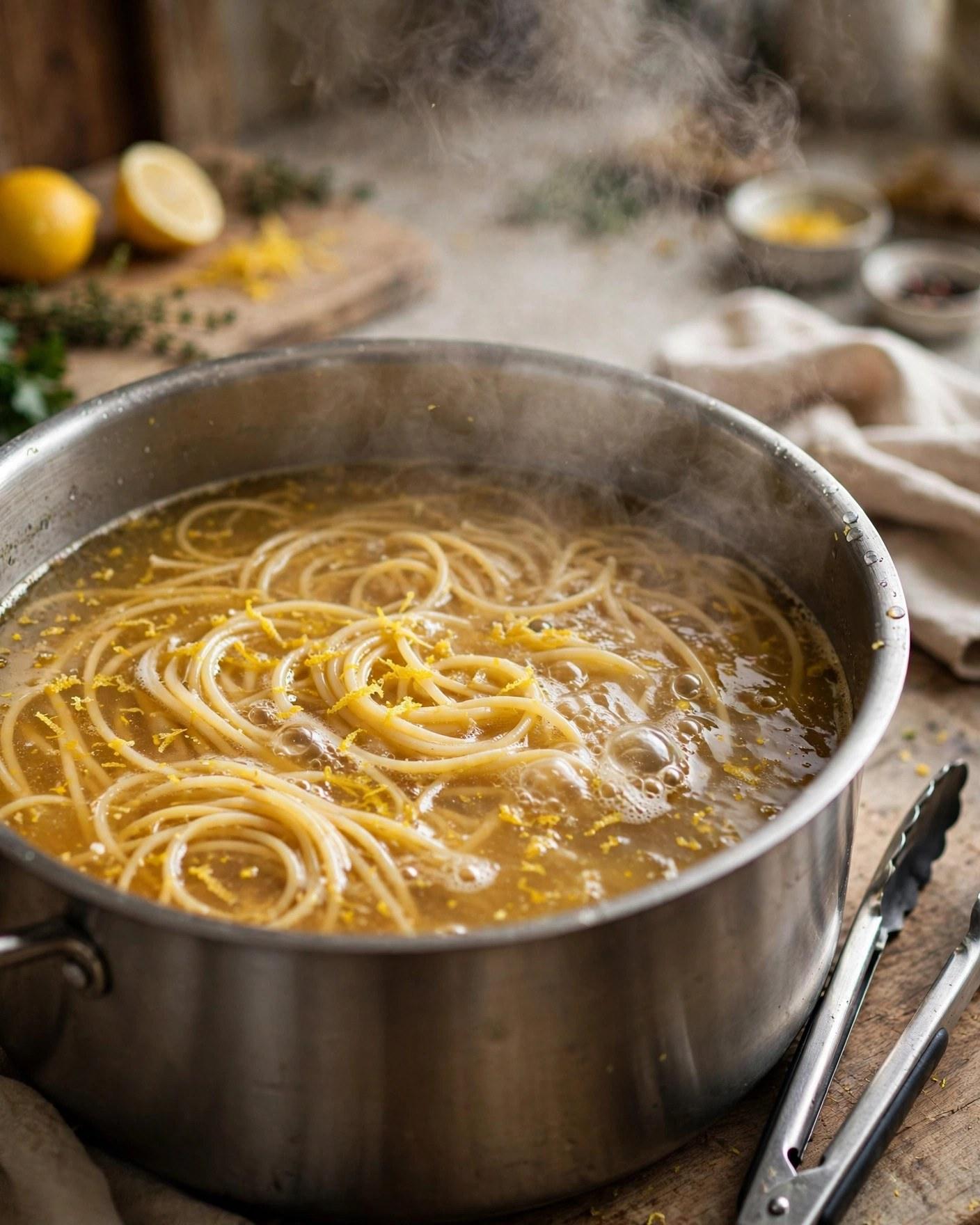
- Add the pasta, liquids, and first layer of lemon. Lay the 12 ounces (340 g) of spaghetti or linguine into the pot. Long strands rarely fit flat at first; lay them across the pot and let the ends soften for a minute, then bend them down gently with tongs — or snap the strands in half before adding if your pot is small, which is not a crime whatever anyone says. Pour in the 3 cups (720 ml) of vegetable broth and 1 1/2 cups (360 ml) of water. Add the 1 teaspoon of fine sea salt and the 1/2 teaspoon of black pepper. The liquid should just about cover the pasta once it slumps; a few tips poking out are fine, they will sink within a minute or two.
- Simmer, stirring and tossing often. Bring the pot to a lively simmer over medium-high heat, then reduce the heat to medium so it bubbles steadily rather than violently. Cook uncovered for about 12 to 15 minutes, using tongs to stir, lift, and turn the pasta every 2 minutes or so, and more often in the last few minutes. This tossing does three jobs: it keeps strands from welding together, stops anything catching on the base, and encourages the pasta to release starch evenly into the liquid. Keep the simmer gentle but real — lazy bubbles, not a rolling boil, and not a still pot. If the liquid drops low and the pasta is still quite firm, splash in hot water 1/4 cup (60 ml) at a time; one-pot pasta is a conversation, not a contract.

- Judge the pasta by taste, not only by the clock. Start tasting at the 11-minute mark. You want the strands tender with the faintest bite in the center — what cooks call al dente — because they will drink a little more liquid and soften slightly as the sauce is finished. The liquid in the pot should have reduced to a shallow, glossy pool that looks a bit loose: it will tighten as it rests and again when the cheese goes in. If the pasta is ready but there is a lot of liquid sloshing around, simmer one more minute, tossing constantly. If it looks dry and tight already, loosen it with a splash of hot water now.
- Rest the pot briefly off the heat. Take the pot off the burner and let it sit, undisturbed, for 2 minutes. This short pause matters more than it sounds: the pasta finishes absorbing liquid, the starch settles into a silky consistency instead of a gummy one, and the temperature drops just enough that the cheese in the next step melts smoothly instead of seizing into strings. Warm your serving bowls during this pause — a ladle of the pasta’s hot water swirled in each bowl, then emptied, does the job — because glossy pasta sulks in a cold bowl.
- Add the lemon juice, remaining butter, and Parmesan. Pour in the 1/3 cup (80 ml) of lemon juice and scatter over the remaining 2 tablespoons of butter, cut into small pieces. Toss vigorously with tongs for 30 seconds, lifting the pasta up and over itself, until the butter melts and the sauce turns shiny. Now add the 3/4 cup (75 g) of Parmesan in three small handfuls, tossing well between each addition so it melts into the sauce rather than clumping. The sauce should coat the back of a spoon and leave a brief trail when you drag the spoon across the base of the pot. If it feels too thick, toss in hot water a tablespoon at a time; if too thin, one more handful of Parmesan and another minute of tossing will pull it together.
- Finish with parsley and adjust the seasoning. Fold through the 1/3 cup (20 g) of chopped parsley and the remaining lemon zest. Taste carefully and adjust: another pinch of salt sharpens everything, a squeeze more lemon lifts it, and black pepper adds quiet depth. The flavor should be bright first, buttery second, with garlic humming underneath. If you love heat, this is the moment for an extra pinch of red pepper flakes. Pasta waits for no one, so call everyone to the table before you do the final toss.
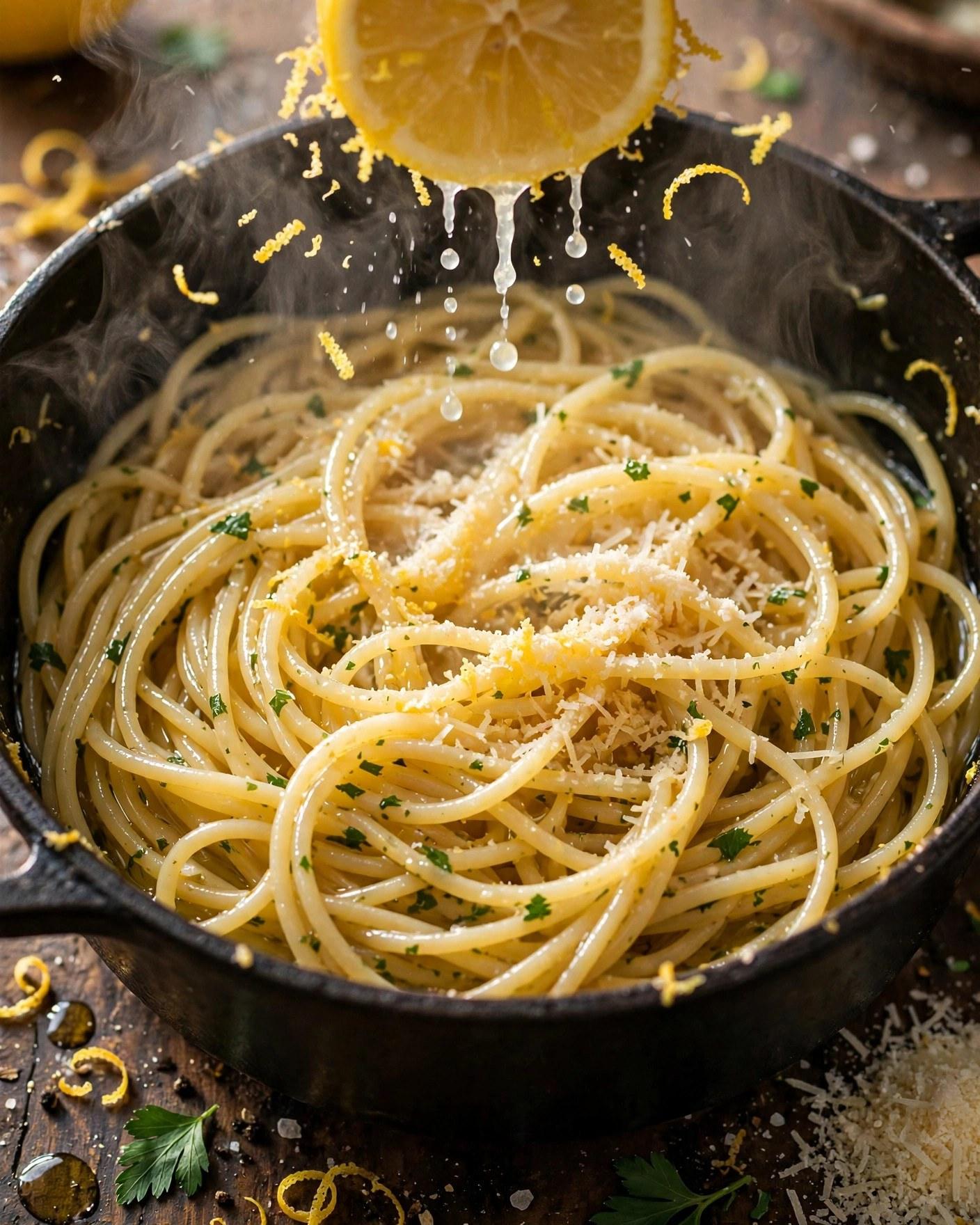
- Serve right away, in warm bowls. Twirl generous nests of pasta into the warmed bowls, spooning any sauce from the base of the pot over the top. Finish each bowl with extra Parmesan, a little more chopped parsley, and a pinch of fresh lemon zest if you saved some. Set lemon wedges on the table for anyone who wants an extra squeeze, and serve immediately while the sauce is at its glossiest. A simple green salad and a piece of crusty bread for the last of the sauce are all it needs beside it.
Tips for Success
- Use a wide pot, not a deep narrow one. A wide pot or deep sauté pan gives the strands room to move, exposes more liquid to evaporation, and makes tossing easy. In a narrow pot the pasta clumps, cooks unevenly, and scorches on the bottom before the top strands soften.
- Toss on a rhythm. Every 2 minutes, and almost constantly for the final 3. Starch is the sauce here, and tossing is how you harvest it evenly instead of letting it glue the pasta to the base of the pot.
- Never add the lemon juice early. It is the single most common way this dish disappoints. Juice that simmers for 15 minutes tastes flat and can turn faintly bitter; juice added off the heat tastes like fresh lemon. Zest early, juice late — that is the whole secret.
- Add cheese off the heat, in handfuls. Boiling liquid makes Parmesan seize into grainy strings. The 2-minute rest brings the pot to a cheese-friendly temperature, and adding the Parmesan gradually lets each handful melt before the next arrives.
- Keep hot water ready. A kettle or a jug of hot water beside the stove makes adjustments effortless. One-pot pasta should always finish slightly loose, because it tightens as it sits — by the time bowls reach the table it will be perfect.
- Salt in layers and taste at the end. The broth, the salted liquid, and the Parmesan all bring salt. Season fully only after the cheese goes in, when you can taste the finished balance and adjust with confidence.
Variations
- White bean and spinach. Stir a drained 15-ounce (425 g) can of white beans and 3 cups (90 g) of baby spinach through the pasta during the 2-minute rest; the residual heat wilts the spinach and warms the beans, and the dish becomes a fuller, protein-rich dinner without another pot.
- Spring pea and asparagus. Add 1 cup (145 g) of peas and a handful of asparagus cut into short pieces for the last 4 minutes of simmering, so they stay green and just-tender in the lemony sauce.
- Creamy lemon garlic pasta. For a richer finish, stir 1/4 cup (60 ml) of heavy cream in with the lemon juice and butter. The sauce turns extra silky and softens the lemon’s edge slightly — lovely for anyone who finds the original a touch bright.
- Garlic-herb swap. Replace half the parsley with torn basil leaves, or add a teaspoon of fresh thyme leaves with the garlic. Basil makes it taste like summer; thyme makes it feel quietly French.
- Pasta shape. Penne, fusilli, farfalle, or medium shells work as well — just keep 12 ounces (340 g), stir a little more often because short shapes settle, and expect the simmer to land in the same 12 to 15 minute window.
Storage
One-pot lemon pasta is at its absolute best straight from the pot, because the glossy sauce tightens as it stands. That said, leftovers are still very welcome. Let the pasta cool for no more than 30 minutes, then refrigerate it in an airtight container for up to 3 days. The strands will absorb the sauce and look dry when cold — that is expected, and easily fixed.
To reheat, put the pasta in a wide pan with a splash of water or broth — about 2 tablespoons per cup of pasta — and warm it over medium-low heat, tossing gently, until it loosens and shines again, 3 to 4 minutes. A small knob of butter and a squeeze of fresh lemon at the end will wake it right back up. The microwave works too: sprinkle with water, cover loosely, and heat in 45-second bursts, tossing between each. Freezing is not recommended; the sauce turns grainy and the pasta goes soft when thawed.
FAQ
Can I use a short pasta shape instead of spaghetti or linguine? Yes. Penne, fusilli, farfalle, or medium shells all work well in this lemon garlic butter pasta. Keep the amount at 12 ounces (340 g), and stir even more often than you would with long strands, because short shapes like to settle and stick to the base in patches. The finish is the same: lemon juice, butter, and Parmesan off the heat, tossed until glossy.
Why does the lemon juice go in at the end instead of with the broth? Lemon zest and lemon juice do different jobs, and treating them differently is what makes the flavor sing. The zest’s aromatic oils bloom beautifully in warm butter at the start and perfume the whole pot. The juice, though, is bright acid — and acid that simmers for 15 minutes loses its sparkle and can taste muted or faintly bitter. Added off the heat, the juice stays fresh and lively, like a squeeze of lemon over the finished dish, because that is essentially what it is.
My sauce looks too thin — or too thick. How do I fix it? Both directions are easy to correct, which is the joy of this recipe. Too thin: simmer for one more minute while tossing, then remember that the Parmesan and the 2-minute rest will tighten it further — or simply add another small handful of cheese. Too thick or sticky: loosen with hot water or broth, one tablespoon at a time, tossing as you go, until the strands move freely and shine. Always judge after tossing, not before, because the sauce changes dramatically once it coats the pasta.
Can I double the recipe, or make it ahead for guests? Doubling works if your pot is genuinely large and wide — a big Dutch oven — because the pasta needs room to be tossed; add the liquid in the same proportions and stir even more often, with extra splashes of hot water as needed. Making it fully ahead is the one thing I would not do: the sauce tightens and the pasta keeps drinking as it sits, so it never reheats to quite the same gloss. Instead, do all the preparation ahead — zest and juice the lemons, grate the cheese, chop the parsley — and cook the pasta when your guests arrive. It takes about 20 minutes, and you will look effortlessly calm.
Recipe Card
One-Pot Lemon Garlic Butter Pasta
- Prep Time: 15 minutes (PT15M)
- Cook Time: 20 minutes (PT20M)
- Total Time: 35 minutes (PT35M)
- Servings: 4 servings
- Calories: 520 kcal per serving (estimated)
A bright, silky one-pot spaghetti with garlic sizzled in butter, lemon zest bloomed in the warm fat, and fresh lemon juice and Parmesan tossed through off the heat until glossy. One pot, about 35 minutes, and a finish that tastes like a restaurant pan sauce.
Nutrition (estimated): 520 kcal, 68 g carbohydrates, 16 g protein, 20 g fat, 3 g fiber, 640 mg sodium per serving. Estimates only; values vary with the exact broth, cheese, and pasta used.
Can I use a short pasta shape instead of spaghetti or linguine?
Yes. Penne, fusilli, farfalle, or medium shells all work well in this lemon garlic butter pasta. Keep the amount at 12 ounces (340 g), and stir even more often than you would with long strands, because short shapes like to settle and stick to the base in patches. The finish is the same: lemon juice, butter, and Parmesan off the heat, tossed until glossy.
Why does the lemon juice go in at the end instead of with the broth?
Lemon zest and lemon juice do different jobs, and treating them differently is what makes the flavor sing. The zest’s aromatic oils bloom beautifully in warm butter at the start and perfume the whole pot. The juice, though, is bright acid — and acid that simmers for 15 minutes loses its sparkle and can taste muted or faintly bitter. Added off the heat, the juice stays fresh and lively, like a squeeze of lemon over the finished dish, because that is essentially what it is.
My sauce looks too thin — or too thick. How do I fix it?
Both directions are easy to correct, which is the joy of this recipe. Too thin: simmer for one more minute while tossing, then remember that the Parmesan and the 2-minute rest will tighten it further — or simply add another small handful of cheese. Too thick or sticky: loosen with hot water or broth, one tablespoon at a time, tossing as you go, until the strands move freely and shine. Always judge after tossing, not before, because the sauce changes dramatically once it coats the pasta.
Can I double the recipe, or make it ahead for guests?
Doubling works if your pot is genuinely large and wide — a big Dutch oven — because the pasta needs room to be tossed; add the liquid in the same proportions and stir even more often, with extra splashes of hot water as needed. Making it fully ahead is the one thing I would not do: the sauce tightens and the pasta keeps drinking as it sits, so it never reheats to quite the same gloss. Instead, do all the preparation ahead — zest and juice the lemons, grate the cheese, chop the parsley — and cook the pasta when your guests arrive. It takes about 20 minutes, and you will look effortlessly calm.

Hi, I’m Emma! I’m the cook and recipe developer behind Sizzle & Sage. From my sunny home kitchen, I share easy, flavor-packed recipes for real life — quick breakfasts, cozy weeknight dinners, and simple bakes anyone can make. Pull up a chair and stay a while!