Air Fryer Apple Fritters with Vanilla Glaze
A good apple fritter is a study in contrasts: a craggy, golden outside, a soft and tender middle, and apples in nearly every bite — warm, cinnamon-spiced, and just soft enough to melt into the batter around them. The bakery version usually comes out of a deep fryer, which is wonderful at a bakery counter and considerably less appealing on a Tuesday morning at home. These air fryer apple fritters keep everything that makes the original worth seeking out and leave the pot of oil out of it entirely. They cook on parchment at 350 degrees F (175 degrees C), with no yeast, no rising, and no standing over hot oil.
The batter is a simple baking-powder batter, closer to a thick pancake batter than a bread dough, and that is exactly the right texture for a fritter. It stirs together in one bowl in a few minutes, folds around a generous pile of diced cinnamon apples, and scoops into rough mounds that puff and crisp into those signature uneven edges. Because there is no yeast, there is nothing to proof and no dough to knead — the longest part of the whole recipe is dicing the apples.
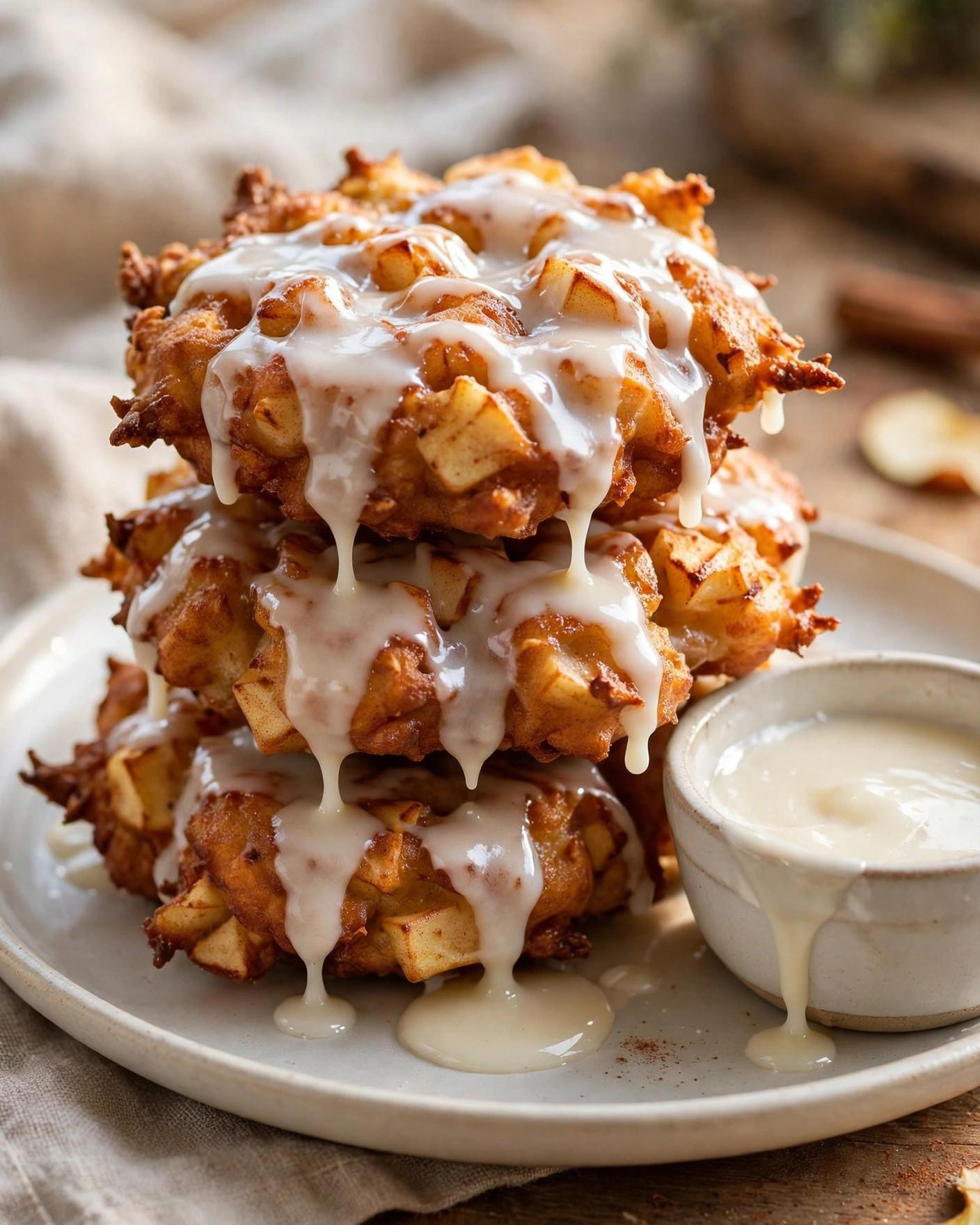
The finish is a quick vanilla glaze, whisked from powdered sugar, milk, and vanilla while the last batch cooks. Dip the warm fritters, or drizzle the glaze over the tops and let it set into a thin, sweet shell that cracks gently when you bite in. Serve them warm, with coffee, for a weekend breakfast that feels like a trip to the bakery, an afternoon snack, or a simple fall dessert. This is orchard-season baking at its most approachable: a bowl, a scoop, and an air fryer.
Why You'll Love This Recipe
- No deep frying, no pot of oil. The air fryer crisps the fritters at 350 degrees F (175 degrees C) on a sheet of parchment, so there is no oil to heat, monitor, or strain — and cleanup is mostly a bowl and a basket liner.
- No yeast and no rising. A baking-powder batter means these go from mixing bowl to air fryer in about 20 minutes of hands-on time. No proofing, no kneading, no waiting for a dough to double.
- Apples in every bite. Two full cups of diced apples folded through a modest amount of batter means the fruit is the main event, not a garnish. Cinnamon and a pinch of nutmeg season the apples before they ever meet the batter.
- Craggy edges that crisp. Scooped, rough mounds — never smoothed — give you lots of lacy, golden edges, and those edges are where the texture lives.
- A real vanilla glaze. Powdered sugar, milk, vanilla, and a pinch of salt whisk into a glossy glaze in about a minute. Dip for full coverage or drizzle for a lighter finish.
- A sensible batch of 12. Enough for a family breakfast or a small brunch spread, without a bakery case of leftovers. The recipe halves and doubles cleanly if your crowd is smaller or bigger.
Ingredients
For the cinnamon apples
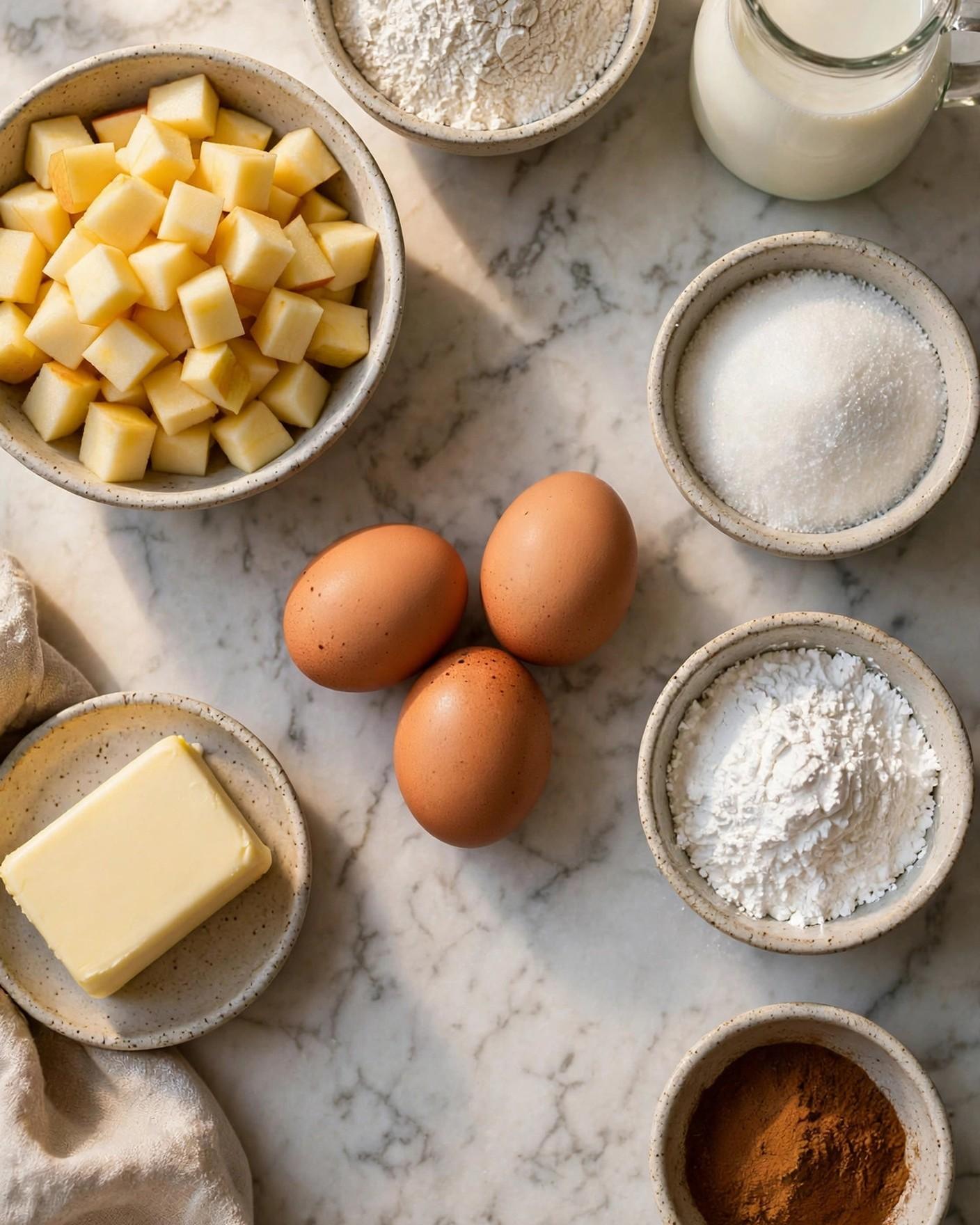
- 2 medium firm apples (about 12 ounces / 340 g total), peeled, cored, and diced into 1/4-inch (0.6 cm) pieces — about 2 cups diced
- 1 tablespoon fresh lemon juice
- 2 tablespoons (25 g) granulated sugar
- 1 teaspoon ground cinnamon
- 1/4 teaspoon ground nutmeg
For the fritter batter
- 2 cups (250 g) all-purpose flour, spooned and leveled
- 1/4 cup (50 g) granulated sugar
- 2 teaspoons baking powder
- 1 teaspoon ground cinnamon
- 1/2 teaspoon fine sea salt
- 1/4 teaspoon ground nutmeg
- 2 large eggs, at room temperature
- 2/3 cup (160 ml) whole milk, at room temperature
- 2 tablespoons (28 g) unsalted butter, melted and slightly cooled
- 1 teaspoon vanilla extract
- Neutral cooking spray or a little neutral oil, for the parchment
For the vanilla glaze
- 1 1/2 cups (180 g) powdered sugar, sifted
- 3 to 4 tablespoons (45 to 60 ml) whole milk or heavy cream
- 1 teaspoon vanilla extract
- Pinch of fine sea salt
Why these ingredients matter
Apples. The apples are the point of a fritter, so choose firm, flavorful fruit that holds its shape in the heat. Honeycrisp, Granny Smith, Braeburn, and Pink Lady all work well: Honeycrisp stays sweet and distinct, Granny Smith leans tart and balances the glaze, and the others sit comfortably in between. Dice them small — about 1/4 inch (0.6 cm) — so they soften through in the same time the batter cooks. Big chunks stay raw in the center and weigh the fritters down.
Lemon juice. A tablespoon of lemon juice tossed with the diced apples does two jobs: it slows browning while you mix the batter, and its quiet acidity brightens the apple flavor so the finished fritters taste like fruit, not just sugar and spice. You will not taste lemon in the final fritter.
Granulated sugar in the apples. Sugar draws a little juice out of the diced apples and dissolves with the cinnamon into a light spiced coating, so the apples arrive in the batter already seasoned rather than relying on the batter alone. It also helps the apple edges take on a little color as they cook.
Ground cinnamon. Cinnamon appears twice — with the apples and in the batter — because a fritter should taste of cinnamon all the way through, not just at the surface. Use a jar that smells warm and sweet when you open it; old, dusty cinnamon will read as flat no matter how much you add.
Ground nutmeg. A quarter teaspoon is a background note, not a headline. Nutmeg deepens the warm-spice profile and makes the cinnamon taste more like itself. Freshly grated is lovely if you have whole nutmeg, but pre-ground is perfectly fine at this quantity.
All-purpose flour. Flour gives the batter its structure. This is a thick batter — closer to a drop-biscuit dough than a pourable pancake batter — and that thickness is what suspends two cups of apple pieces instead of letting them sink, and what holds a mound shape on the parchment instead of spreading into a puddle. Spoon and level the flour so you do not pack extra into the cup; too much flour is the fastest route to a heavy fritter.
Baking powder. Baking powder is the entire rise here — there is no yeast and no soda. Two teaspoons against two cups of flour gives a steady, reliable lift that puffs the batter around the apples and keeps the interior tender. Check that yours is in date: baking powder that has sat open for a year loses its strength, and a fritter batter has no second chance to rise.
Fine sea salt. Salt keeps a sweet batter from tasting one-note. It sharpens the apple flavor, rounds out the spices, and balances the glaze. Fine salt disperses evenly through a batter that only gets a few stirs.
Eggs. Two eggs bind the batter, add richness, and help the exterior set and color. Room-temperature eggs whisk into the milk smoothly instead of chilling the melted butter into little solid flecks — if yours are cold from the refrigerator, a few minutes in a bowl of warm tap water fixes that.
Whole milk. Milk brings the batter together at exactly the right thickness. Whole milk gives the most tender result; low-fat milk works, but the fritters will be a touch leaner. Measure it properly — a batter that is too wet spreads and steams instead of crisping, and one that is too dry cooks up bready.
Unsalted butter. Two tablespoons of melted butter is a small amount with a clear job: flavor and tenderness. It keeps the crumb soft rather than rubbery and adds the buttery note you expect from a bakery fritter. Let it cool slightly after melting so it does not scramble the eggs on contact.
Vanilla extract. Vanilla ties the batter and the glaze together. In the batter it reads as background warmth; in the glaze it is the main flavor, so use real extract if you have it — the glaze is only four ingredients, and each one shows.
Powdered sugar. Powdered sugar is the base of the glaze because it dissolves instantly into milk with no grittiness and sets into that thin, opaque shell. Sift it if it is lumpy; a lumpy glaze stays lumpy. Granulated sugar cannot substitute here — it will not dissolve in this small amount of liquid and the glaze will be gritty.
Cooking spray or neutral oil. A light mist on the parchment keeps the batter mounds from sticking as they set and makes them easy to flip. Keep it light — a heavy coating can pool under the fritters and fry the bottoms unevenly.
Instructions
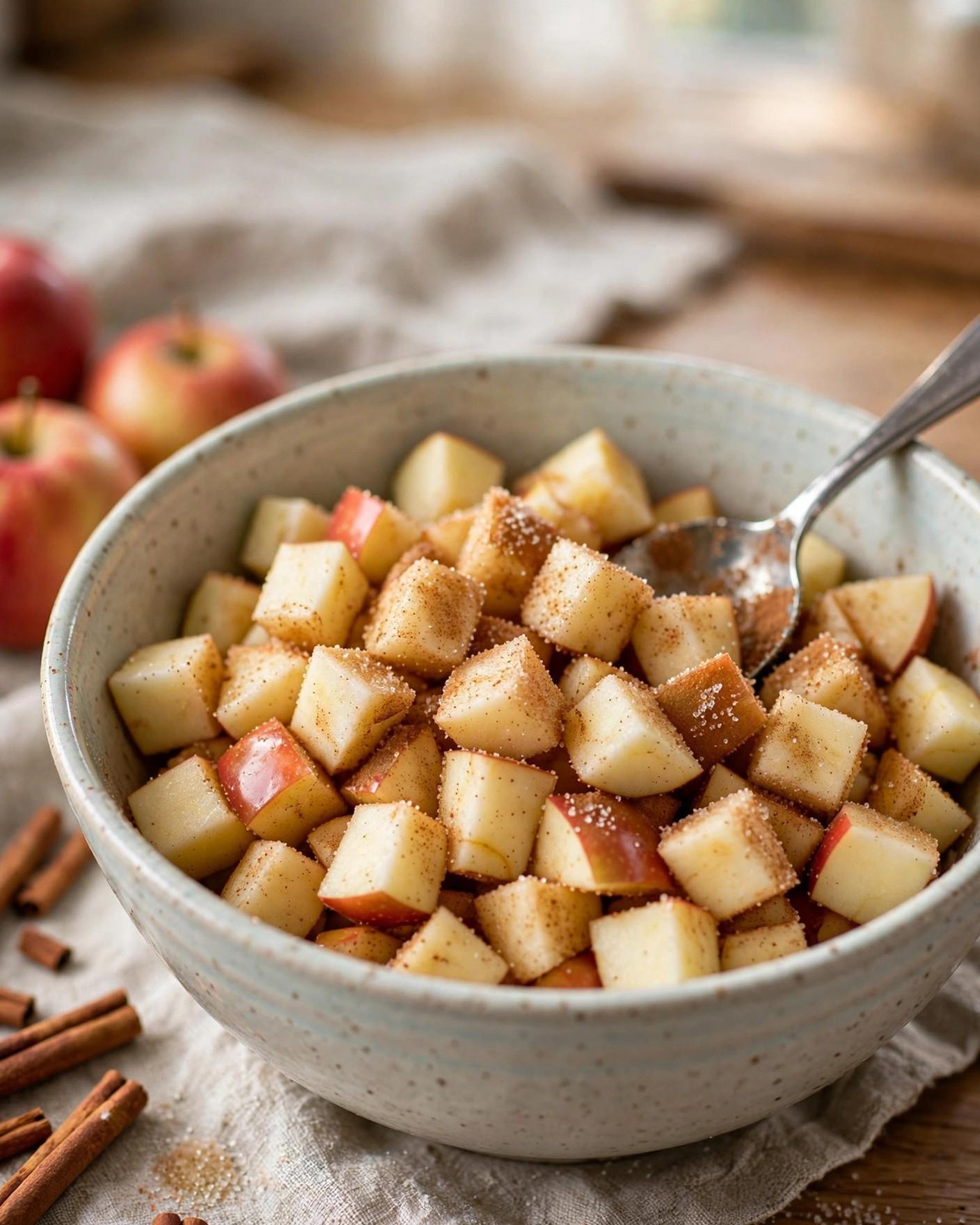
- Prep the apples. Peel, core, and dice the apples into small 1/4-inch (0.6 cm) pieces — you should have about 2 cups. Put them in a medium bowl, add the lemon juice, and toss to coat. Sprinkle over the granulated sugar, cinnamon, and nutmeg for the apples and toss again until every piece looks evenly spiced. Set the bowl aside while you mix the batter; the apples will release a little juice, and that spiced juice goes into the batter with them — it is flavor, not waste.
- Mix the dry ingredients. In a large mixing bowl, whisk together the flour, granulated sugar, baking powder, cinnamon, salt, and nutmeg until the spices are evenly distributed and there are no streaks of cinnamon. Whisking now matters because the batter itself only gets a few stirs later, and this is your one chance to spread the baking powder and spices evenly through the flour.
- Mix the wet ingredients. In a second bowl or a large measuring jug, whisk the eggs until the yolks and whites are fully combined, then whisk in the milk, melted butter, and vanilla until smooth. The mixture should look uniform and pale. If the butter resolidifies into little flecks when it hits cold milk, let the bowl sit for a minute and whisk again — small flecks are not a problem, but large solid pieces should be remelted gently before you continue.
- Combine the batter. Pour the wet ingredients into the dry and stir with a spatula or wooden spoon just until no dry flour remains — about 15 to 20 strokes. The batter will be very thick, almost like a soft drop-biscuit dough, and a few small lumps are fine. Stop as soon as it comes together: every extra stir develops more gluten, and overmixed fritters bake up tough and bready instead of tender.
- Fold in the apples. Tip the bowl of cinnamon apples — juice and all — into the batter and fold gently until the pieces are evenly distributed and every mound you scoop will carry plenty of fruit. The batter should look heavily loaded, with apple pieces visible throughout rather than hiding at the bottom. If the apples released a lot of juice and the batter suddenly looks loose, fold in 1 extra tablespoon of flour; it should hold a rough mound on a spoon, not pour.
- Rest the batter and preheat. Let the batter rest at room temperature for 5 minutes while you preheat the air fryer to 350 degrees F (175 degrees C) for 3 minutes. The short rest lets the flour hydrate and the baking powder begin its work, and it makes the batter easier to scoop into neat mounds. Do not let it sit much longer than 10 minutes, though — baking powder starts losing lift once it is wet, and these are best cooked promptly.
- Prep the parchment. Cut a piece of parchment paper to fit the floor of your air fryer basket, leaving a little clearance at the edges so hot air can circulate. Lightly mist it with cooking spray. Set the parchment aside outside the basket for now — never preheat loose parchment on its own, as it can lift into the heating element. You will load the fritters onto the parchment first, then lower the whole sheet into the hot basket.
- Scoop the first batch. Using a 1/4-cup (60 ml) measure or a large cookie scoop, portion the batter into 6 rough mounds on the prepared parchment, spacing them at least 1 inch (2.5 cm) apart. Leave the tops craggy — do not smooth, pat, or flatten them. Those bumps and points become the crisp, lacy edges that make a fritter a fritter. A light second mist of cooking spray over the tops helps them color evenly.
- Air fry the first batch. Carefully lower the loaded parchment into the preheated basket. Air fry at 350 degrees F (175 degrees C) for 9 to 11 minutes, carefully flipping each fritter with a spatula or tongs at the 6-minute mark so both sides color. The fritters are done when they are deep golden all over, firm and springy when pressed lightly, and a toothpick inserted into a batter-only spot comes out clean. If the centers still look wet or the toothpick drags batter, give them 1 to 2 minutes more — an underdone fritter stays gummy around the apples, and there is no fixing it after glazing.
- Cook the second batch. Lift the finished fritters out onto a wire rack set over a sheet pan — the rack keeps the bottoms crisp instead of steaming on a plate. Cut a fresh piece of parchment if the first sheet is heavily browned, load the remaining 6 mounds the same way, and air fry at 350 degrees F (175 degrees C) for 9 to 11 minutes, flipping at 6 minutes. While this batch cooks, make the glaze.
- Make the vanilla glaze. Whisk the sifted powdered sugar, 3 tablespoons (45 ml) of the milk or cream, the vanilla, and the pinch of salt in a medium bowl until completely smooth and glossy. The glaze should fall from the whisk in a thick ribbon and slowly level out. If it is too thick to dip, whisk in the remaining milk a teaspoon at a time; if it is too thin and runs off in a watery sheet, whisk in another tablespoon or two of powdered sugar. Aim for the consistency of thick honey.
- Glaze and serve warm. While the fritters are still warm — not hot enough to melt the glaze straight off, but warm — dip the top of each one into the glaze, let the excess drip back into the bowl, and return it to the rack, or spoon and drizzle the glaze over the tops for a lighter finish. Let the glaze set for about 5 minutes, until it turns from glossy to a soft matte shell. Serve warm. A second quick dip, once the first layer sets, gives you the thicker bakery-style coating if that is the fritter you are after.


Tips for Success
- Dice small and evenly. Pieces around 1/4 inch (0.6 cm) soften through in the same time the batter cooks. Large chunks stay firm and raw-tasting in the center and can leave wet pockets around them. Even dice also means every scoop carries a similar amount of apple.
- Keep the batter thick. This batter should mound, not pour. Thickness is what holds the fritters' shape on the parchment, suspends the apples, and produces crisp edges instead of thin, spread-out pancakes. If your apples were very juicy, the extra tablespoon of flour in Step 5 is your correction.
- Do not overmix. Stir just until the flour disappears. Overmixing develops gluten and works the air out of the baking powder's lift, and the result is a dense, bready fritter. A few small lumps in the batter are not a flaw — they disappear in the cooking.
- Never smooth the mounds. The rough, scooped surface is functional, not rustic styling. Every bump and point crisps and browns, giving you the contrast between lacy edges and soft center that defines a fritter. Flattened mounds cook up like muffins.
- Give them room and flip once. Crowded fritters steam each other and brown unevenly, so keep at least 1 inch (2.5 cm) between mounds and cook in two batches. One careful flip at the 6-minute mark colors both sides without tearing the set batter.
- Test a batter spot, not an apple. A toothpick pushed through an apple will come out wet even when the fritter is fully cooked. Test a spot that is clearly batter, and judge doneness by color, firmness, and spring as well — done fritters feel light for their size and spring back when pressed.
- Glaze warm, not hot. Fritters straight from the basket will melt the glaze into a thin, transparent soak-in. A few minutes on the rack — warm to the touch, no longer steaming hard — is the sweet spot where the glaze clings, coats, and sets into a proper shell.
Variations
- Salted caramel drizzle. Skip the vanilla glaze and warm a little store-bought or homemade caramel sauce instead, drizzling it over the warm fritters and finishing with a pinch of flaky sea salt. Apple and salted caramel is a classic pairing, and the salt keeps the sweetness in check.
- Cinnamon sugar fritters. For a churro-style finish, brush the hot fritters lightly with melted butter and toss or sprinkle generously with a mixture of 1/2 cup (100 g) granulated sugar and 1 tablespoon ground cinnamon. Serve them unglazed and warm, with any leftover cinnamon sugar at the table.
- Maple glaze. Replace the milk in the glaze with real maple syrup, reduce the vanilla to 1/2 teaspoon, and keep the pinch of salt. The glaze will be a shade darker and deeply maple-flavored — a natural partner for the apples, especially in the fall.
- Nutty crunch top. Scatter 1/3 cup (35 g) finely chopped toasted pecans or walnuts over the fritters immediately after glazing, while the glaze is still wet, so the nuts stick. The crunch plays well against the soft centers.
- Extra-spiced autumn version. Add 1/4 teaspoon ground ginger and a pinch of ground cloves to the batter spices, and use apple cider in place of the milk in the glaze, simmered down by half first if you want a stronger cider note. The profile leans toward mulled cider and spiced donuts.
- Pear fritters. Swap the apples for firm, ripe pears diced the same small size, and replace the nutmeg with a pinch of ground cardamom if you have it. Pears release a little more juice, so use the extra-tablespoon-of-flour correction in Step 5 without hesitation.
Storage
Apple fritters are at their best the day they are made, ideally within the first few hours, while the edges are still crisp and the glaze has its gentle crackle. If you are serving them later the same day, leave them unglazed on a wire rack at room temperature, covered loosely with a clean towel, and glaze them close to serving — the glaze is what softens first as it sits against the crumb. Unglazed fritters keep in an airtight container at room temperature for up to 1 day, or in the refrigerator for up to 3 days. Keep the glaze separate in a covered container in the refrigerator for up to 5 days; it will thicken as it chills, so whisk in a few drops of milk to bring it back to a drizzling consistency.
To refresh stored fritters, air fry them unglazed at 325 degrees F (165 degrees C) for 3 to 4 minutes, until warmed through and crisped at the edges again, then glaze them warm as directed. Refrigerated fritters benefit from a few minutes at room temperature first so the centers warm evenly. Avoid the microwave for reheating if you can — it softens the edges you worked for, though 15 to 20 seconds will take the chill off in a pinch.
For longer storage, freeze the fritters unglazed: cool completely, freeze in a single layer on a sheet pan until solid, then transfer to a freezer bag or container for up to 2 months. Reheat from frozen in the air fryer at 325 degrees F (165 degrees C) for 5 to 6 minutes, until hot and crisp, then glaze while warm. Freezing the raw batter mounds is not recommended — the baking powder loses its lift and the apples weep as they thaw — so freeze the cooked fritters instead and enjoy them nearly as good as fresh.
FAQ
Which apples are best for apple fritters? Firm apples that hold their shape and bring real flavor are best. Honeycrisp is sweet, juicy, and stays distinct in the cooked fritter; Granny Smith is tart and firm, which balances the sweet glaze nicely; Braeburn, Pink Lady, and Jonagold all sit in between and work well too. Avoid soft, mealy apples such as Red Delicious — they break down into mush, release excess water into the batter, and disappear instead of giving you recognizable apple pieces. Whatever variety you choose, dice it small, about 1/4 inch (0.6 cm), so it softens in the same time the batter needs.
Why are my fritters dense or still gummy in the middle? Density usually comes from the batter: overmixing after the wet and dry ingredients meet, flour packed into the cup instead of spooned and leveled, or baking powder that has lost its strength. Gumminess around the apples usually means the fritters needed another minute or two, or the apple pieces were cut too large to cook through. Keep the dice small, stir only until the flour disappears, space the mounds so they are not steaming each other, and test doneness in a batter-only spot — a toothpick through an apple will always look wet. When in doubt, give them the extra minute; a slightly deeper golden fritter is far better than a raw-centered one.
Can I bake these in the oven instead of the air fryer? Yes. Scoop the mounds onto a parchment-lined baking sheet with space between them, exactly as you would for the basket, and bake in a preheated 375 degree F (190 degree C) oven for 14 to 17 minutes, flipping once halfway through, until deep golden, firm, and springy, with a toothpick in a batter spot coming out clean. The oven version takes a little longer and the edges are slightly less craggy, since there is no concentrated circulating air, but the batter, apples, and glaze are identical. Glaze them warm, the same way, once they come out.
Can I make the batter ahead of time? It is better not to. This is a baking-powder batter, and the lift starts the moment the powder meets liquid — batter held for more than about 10 minutes rises less, and the diced apples weep juice that thins it as it sits. For a head start, you can dice and spice the apples and whisk the dry ingredients together up to a day ahead, keeping them separate and covered, then whisk the wet ingredients and combine everything just before cooking. Cooked fritters, on the other hand, hold and reheat well — see the Storage section above for refreshing and freezing directions.
Recipe Card
Air Fryer Apple Fritters with Vanilla Glaze
- Prep Time: 20 minutes (PT20M)
- Cook Time: 20 minutes (PT20M)
- Total Time: 45 minutes (PT45M)
- Servings: 6 servings (12 fritters)
- Calories: 285 kcal per serving (estimated)
Baking-powder fritters loaded with diced cinnamon apples, air fried on parchment at 350 degrees F (175 degrees C) until golden and craggy, then dipped in a simple vanilla glaze made from powdered sugar, milk, and vanilla.
Nutrition (estimated): 285 kcal per serving (estimated), 52 g carbohydrates, 4 g protein, 7 g fat, 2 g fiber, 30 g sugar, 290 mg sodium. Nutrition is estimated and will vary with the apple variety used, how much glaze clings to each fritter, and any variations or substitutions.
Which apples are best for apple fritters?
Firm apples that hold their shape and bring real flavor are best. Honeycrisp is sweet, juicy, and stays distinct in the cooked fritter; Granny Smith is tart and firm, which balances the sweet glaze nicely; Braeburn, Pink Lady, and Jonagold all sit in between and work well too. Avoid soft, mealy apples such as Red Delicious — they break down into mush, release excess water into the batter, and disappear instead of giving you recognizable apple pieces. Whatever variety you choose, dice it small, about 1/4 inch (0.6 cm), so it softens in the same time the batter needs.
Why are my fritters dense or still gummy in the middle?
Density usually comes from the batter: overmixing after the wet and dry ingredients meet, flour packed into the cup instead of spooned and leveled, or baking powder that has lost its strength. Gumminess around the apples usually means the fritters needed another minute or two, or the apple pieces were cut too large to cook through. Keep the dice small, stir only until the flour disappears, space the mounds so they are not steaming each other, and test doneness in a batter-only spot — a toothpick through an apple will always look wet. When in doubt, give them the extra minute; a slightly deeper golden fritter is far better than a raw-centered one.
Can I bake these in the oven instead of the air fryer?
Yes. Scoop the mounds onto a parchment-lined baking sheet with space between them, exactly as you would for the basket, and bake in a preheated 375 degree F (190 degree C) oven for 14 to 17 minutes, flipping once halfway through, until deep golden, firm, and springy, with a toothpick in a batter spot coming out clean. The oven version takes a little longer and the edges are slightly less craggy, since there is no concentrated circulating air, but the batter, apples, and glaze are identical. Glaze them warm, the same way, once they come out.
Can I make the batter ahead of time?
It is better not to. This is a baking-powder batter, and the lift starts the moment the powder meets liquid — batter held for more than about 10 minutes rises less, and the diced apples weep juice that thins it as it sits. For a head start, you can dice and spice the apples and whisk the dry ingredients together up to a day ahead, keeping them separate and covered, then whisk the wet ingredients and combine everything just before cooking. Cooked fritters, on the other hand, hold and reheat well — see the Storage section above for refreshing and freezing directions.
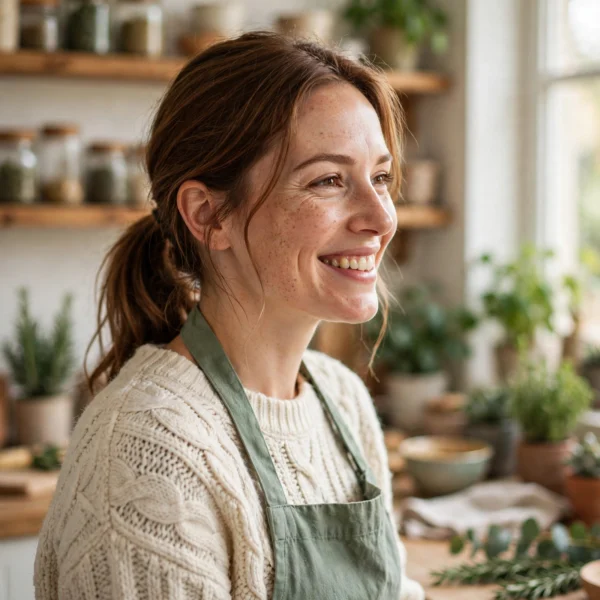
Hi, I’m Emma! I’m the cook and recipe developer behind Sizzle & Sage. From my sunny home kitchen, I share easy, flavor-packed recipes for real life — quick breakfasts, cozy weeknight dinners, and simple bakes anyone can make. Pull up a chair and stay a while!