French-Style Pecan Pie (Brown Butter & Cognac)
Pecan pie is already one of the great American holiday desserts, but it becomes something else entirely when it borrows a few tricks from French pâtisserie. The filling gets its depth from brown butter — butter cooked just past melted until its milk solids turn amber and smell like toasted hazelnuts — plus dark brown sugar, maple syrup, real vanilla bean, and a spoonful of cognac that adds a warm, rounded finish. The crust is a pâte brisée, the classic French shortcrust: rich, buttery, and shattering rather than chewy, with a high butter-to-flour ratio that bakes up crisp even under a wet custard filling.
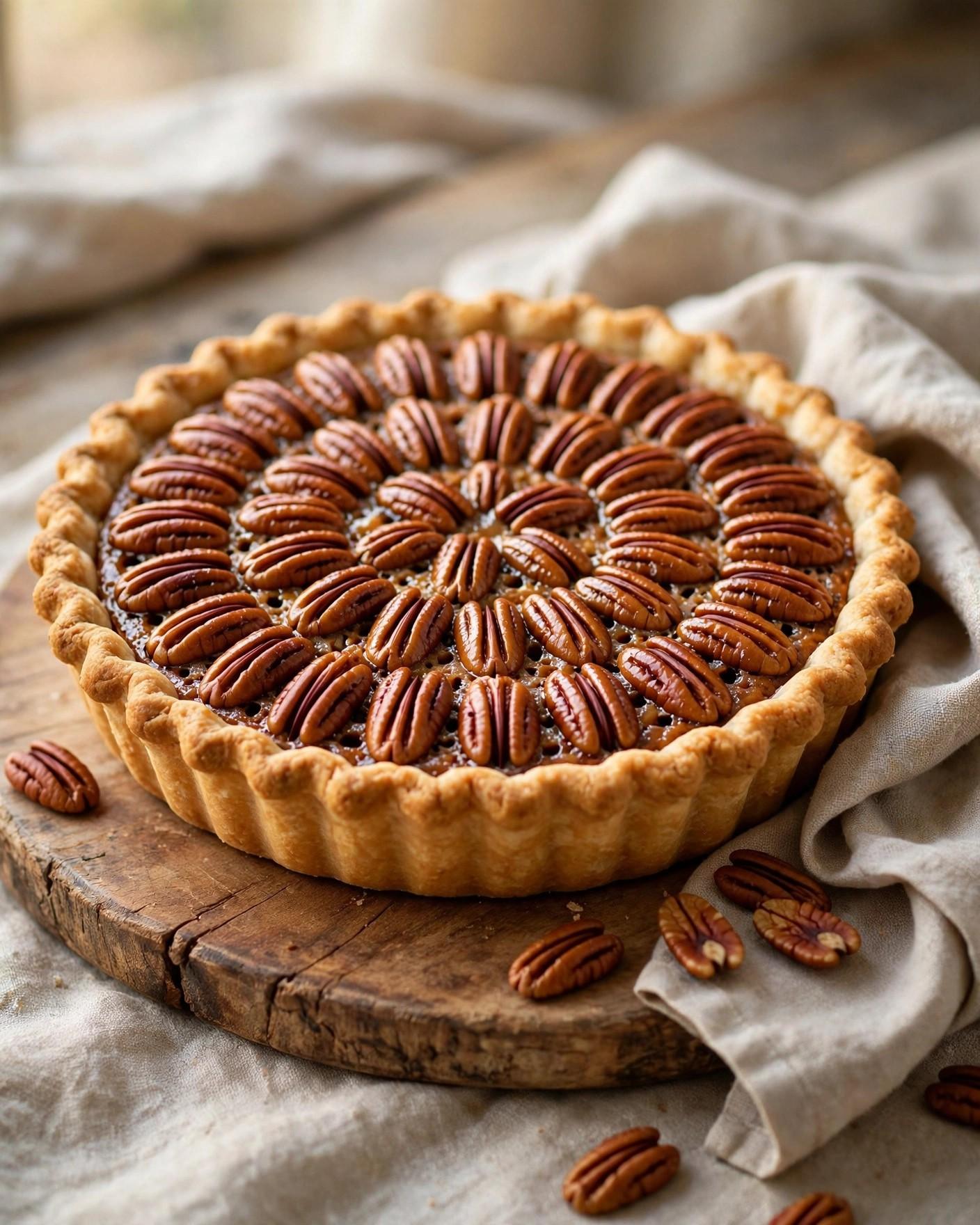
What sets this version apart is technique more than ingredients. The crust is blind-baked before the filling ever touches it — the professional answer to the soggy bottom that plagues so many pecan pies. The filling is mixed rather than cooked on the stove, so the pecans stay glossy and distinct. And the pecans go in two ways: chopped pieces through the custard for texture in every bite, and whole halves in concentric rings on top for a glossy, bakery-window finish.
This French-style pecan pie is built for Thanksgiving and Christmas baking, when you want a dessert that tastes familiar enough for traditionalists but refined enough to earn compliments. It feeds twelve comfortably, it actually improves after a night in the refrigerator as the filling firms up, and every component can be made ahead — the dough freezes beautifully, and the baked pie holds for days. Plan for one blind-baking step and a long cool-down, and the rest is straightforward mixing and patient baking.
Why You'll Love This Recipe
- Brown-butter depth. Cooking the butter until it foams, browns, and smells nutty gives the filling a toffee-like complexity that plain melted butter cannot match, and it takes about five extra minutes.
- A genuinely crisp crust. Pâte brisée plus a proper blind bake means the bottom crust stays flaky and golden under the wet filling instead of turning gummy — the number one pecan-pie complaint, solved.
- Bakery-window presentation. Arranging pecan halves in concentric rings on top takes ten minutes and produces a pie that looks like it came from a Parisian pâtisserie rather than a weeknight kitchen.
- Thanksgiving-ready make-ahead. The dough can be made two days ahead or frozen for a month, and the baked pie keeps for up to four days refrigerated, so holiday baking never bottlenecks on dessert.
- No corn syrup. Dark brown sugar and pure maple syrup provide all the sweetness and gooey structure, giving a deeper, less one-dimensional sweetness than the classic corn-syrup versions.
- Feeds a crowd cleanly. The filling sets firmly once cooled, so it slices into twelve neat wedges that hold their shape on the plate — no weeping, no slumping, no filling running across the dessert plate.
Ingredients
For the pâte brisée crust
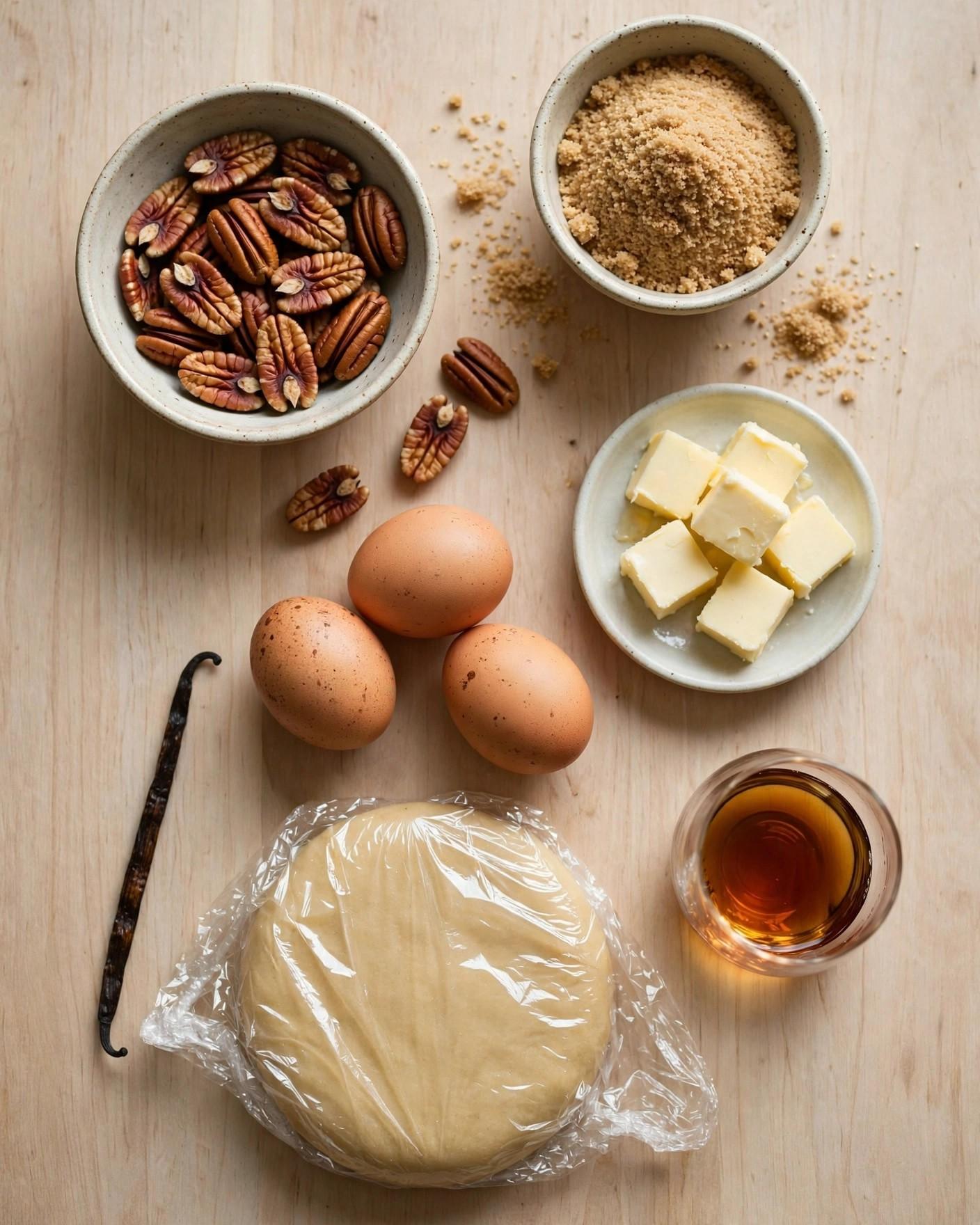
- 1 1/4 cups (155 g) all-purpose flour, plus more for dusting
- 1/2 teaspoon fine sea salt
- 1 tablespoon granulated sugar
- 1/2 cup (115 g) cold unsalted butter, cut into 1/2-inch cubes
- 3 to 4 tablespoons ice water
- 1 large egg, beaten, for the egg-wash seal (optional)
For the brown-butter filling
- 1/2 cup (115 g) unsalted butter
- 3 large eggs, at room temperature
- 1 cup (200 g) packed dark brown sugar
- 3/4 cup (180 ml) pure maple syrup
- 2 tablespoons cognac
- 1 vanilla bean, split and seeds scraped (or 2 teaspoons pure vanilla extract)
- 1/2 teaspoon fine sea salt
- 2 cups (200 g) pecan halves, divided (1 cup chopped, 1 cup left whole)
- Flaky sea salt, for finishing (optional)
Why these ingredients matter
Pâte brisée instead of American pie dough. French shortcrust uses a higher proportion of butter and a touch of sugar, mixed less aggressively so the butter stays in distinct pieces. Those pockets steam in the oven and create a crumbly, cookie-like crispness rather than the layered flakiness of traditional pie crust — a structure that holds up noticeably better under a heavy custard filling.
Cold butter, handled cold. The cubes of butter in the crust must stay solid until they hit the hot oven. If the butter melts into the flour during mixing, you lose the pockets that make the crust tender, and the baked shell turns dense and hard. Work quickly, and if the dough ever feels soft or greasy, chill it for fifteen minutes before continuing.
Brown butter. When butter is heated past the melting point, its milk solids toast and the water cooks off, leaving a nutty, amber liquid that tastes like toffee and hazelnuts. Because pecans themselves are deeply nutty, brown butter amplifies the pie's core flavor instead of just adding richness. A light-colored saucepan is worth using because it lets you see the color change.
Dark brown sugar and maple syrup. Classic pecan pie leans on corn syrup for its gooey set; this version replaces it with dark brown sugar, which brings molasses depth, and pure maple syrup, which brings a woodsy sweetness that pairs naturally with toasted pecans. Together they thicken and set the filling without any glucose syrup.
Cognac. Two tablespoons is enough to perfume the whole pie without making it taste boozy — most of the alcohol cooks off in the oven, leaving dried-fruit and oak notes that bridge the caramelized sugar and the nuts.
Vanilla bean. The seeds of one vanilla bean carry far more aromatic intensity than extract alone, and the tiny black specks are a visual signature of real vanilla in the filling. If you only have extract, use two teaspoons and add it with the cognac rather than whisking it into hot butter, which dulls its flavor.
Room-temperature eggs. Cold eggs can cause the warm brown butter to seize into little flecks when the two meet. Setting the eggs out for thirty minutes before mixing keeps the filling smooth and glossy, and they whisk into the sugar more readily, which helps the filling set evenly.
Pecan halves, two ways. The chopped cup gets folded through the filling so every slice has nutty texture throughout, while the whole halves go on top in rings for structure and appearance. Fresh pecans matter here — taste one before you start; if it is stale or rancid, the whole pie will carry that off flavor.
Instructions
- Make the pâte brisée. In a large bowl, whisk the flour, fine sea salt, and sugar. Add the cold butter cubes and cut them in with a pastry cutter or your fingertips until the mixture looks like coarse crumbs with some pea-sized pieces of butter still visible. Drizzle in 3 tablespoons of ice water and toss with a fork until the dough just holds together when squeezed, adding the last tablespoon only if it still feels dry. Gather it into a ball, flatten into a 1-inch-thick disk, wrap tightly in plastic, and refrigerate for at least 1 hour and up to 2 days.
- Line the pan. On a lightly floured surface, roll the chilled dough into a 12-inch circle about 1/8 inch thick, turning it a quarter turn after every few rolls to keep it from sticking. Ease it into a 9-inch pie pan or fluted tart pan, pressing it gently into the corners without stretching it. Trim the overhang to about 1/2 inch, fold it under itself, and crimp or flute the edge. Prick the bottom a few times with a fork, then refrigerate the lined shell for 30 minutes. A well-chilled shell holds its shape in the oven instead of slumping.
- Blind bake the crust. Heat the oven to 375 degrees F (190 degrees C). Line the chilled shell with parchment paper, letting the paper overhang the edges, and fill it to the brim with pie weights or dried beans. Bake for 18 to 20 minutes, until the edges look set and lightly golden. Lift out the parchment and weights, then return the shell to the oven for 5 to 7 minutes more, until the bottom looks dry and pale gold. For extra insurance against a soggy bottom, brush the hot shell with a thin layer of beaten egg and bake 2 minutes more to seal it. Let the shell cool on a rack while you reduce the oven to 350 degrees F (175 degrees C).
- Brown the butter. Melt the 1/2 cup of butter in a light-colored saucepan over medium heat. It will foam, then the foam will subside and the milk solids at the bottom will turn golden, then amber. Swirl the pan occasionally and watch closely — it goes from perfect to burnt in under a minute. As soon as it smells nutty and looks like liquid caramel, about 4 to 5 minutes total, pour it into a heatproof bowl, scraping in all the browned bits. Let it cool for 5 minutes so it is warm but not hot.
- Mix the filling. In a large bowl, whisk the eggs and dark brown sugar for about a minute until slightly thickened and no lumps of sugar remain. Whisk in the maple syrup, cognac, vanilla bean seeds, and fine sea salt. Slowly stream in the warm brown butter while whisking constantly, and whisk just until smooth and glossy. Fold in the 1 cup of chopped pecans.
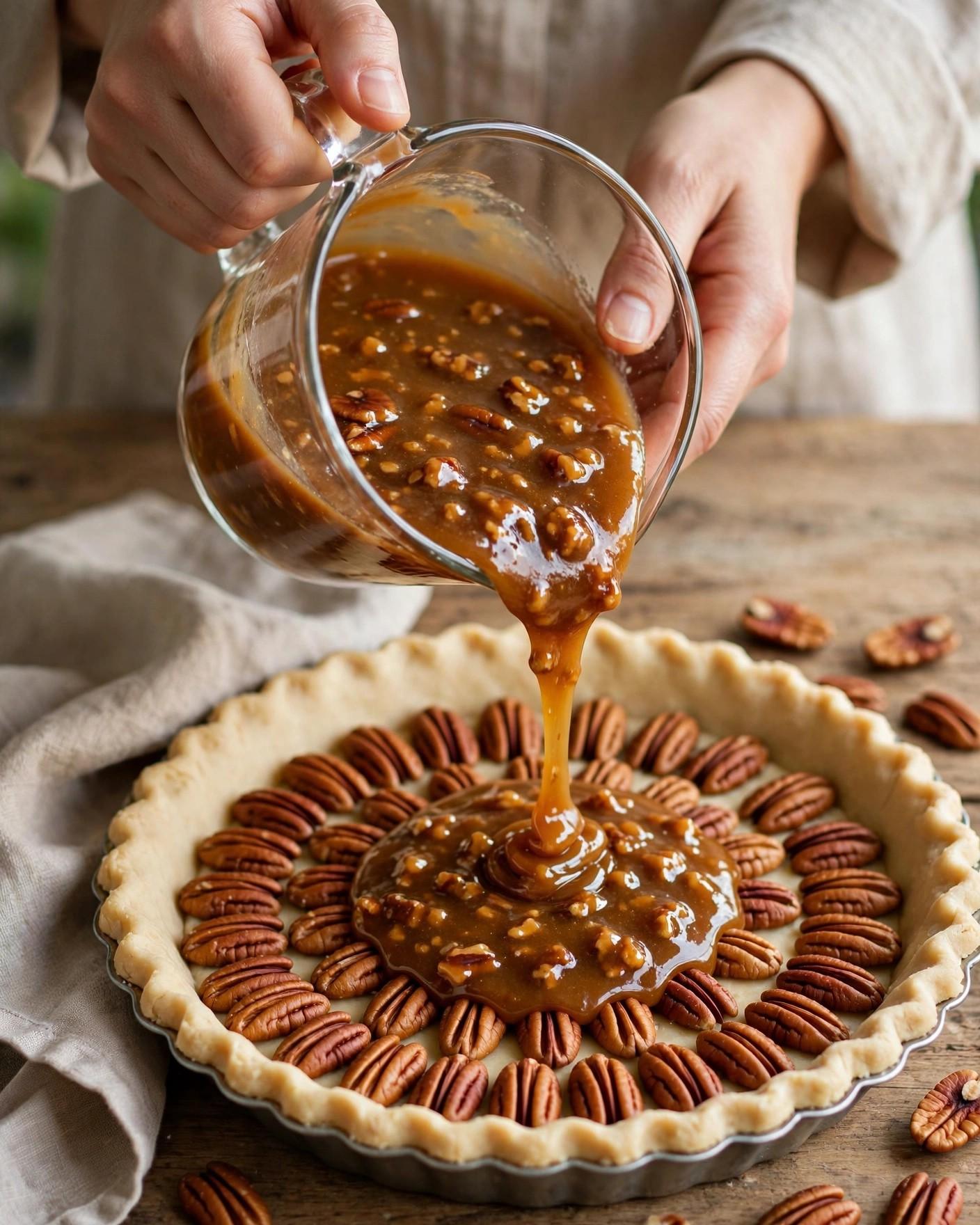
- Assemble the pie. Arrange the 1 cup of whole pecan halves in concentric circles over the bottom of the blind-baked shell, starting at the outer edge and working inward. Pour the filling slowly over the arranged pecans, using a spoon to guide it so the pecan pattern stays in place. The filling should come to just below the rim of the crust. If any pecans float up, nudge them back into their rings.
- Bake. Set the pie on a rimmed baking sheet to catch any drips and bake at 350 degrees F (175 degrees C) for 55 to 65 minutes. After 30 minutes, check the crust edges — if they are browning faster than the filling, tent the rim loosely with strips of foil or a pie shield. The pie is done when the outer 2 inches are set and puffed but the very center still has a gentle jiggle when the pan is nudged. An instant-read thermometer should read about 200 degrees F (93 degrees C) in the center.
- Cool completely. Transfer the pie to a wire rack and let it cool for at least 3 to 4 hours at room temperature. The filling continues to set as it cools, and slicing too early is the most common reason a pecan pie turns runny. Do not refrigerate it while it is still warm, or condensation will form on the top.
- Finish and serve. Just before serving, sprinkle the top with a pinch of flaky sea salt if you like the sweet-salty contrast. Slice with a long, sharp knife dipped in hot water and wiped dry between cuts for the cleanest wedges. Serve at room temperature or lightly chilled, with softly whipped cream, crème fraîche, or vanilla ice cream.


Tips for Success
- Chill at every stage. Cold dough, a chilled lined shell, and a fully preheated oven are what keep the crust from shrinking and slumping. If your kitchen is warm, return the dough to the refrigerator whenever it starts to feel soft.
- Do not skip the blind bake. A raw shell under a wet custard filling is the direct cause of soggy bottoms. Twenty minutes with pie weights sets the structure so the crust bakes crisp instead of steaming under the filling.
- Watch the brown butter like a hawk. The difference between amber and burnt is about sixty seconds. The moment you smell toasted hazelnuts and see amber flecks, get it off the heat — carryover heat keeps it cooking.
- Tent the crust edges. Pecan pie bakes for nearly an hour, and thin crimped edges will over-brown long before the filling is done. Loose foil strips after the 30-minute mark keep the rim golden rather than dark.
- Trust the jiggle. The center should wobble like set gelatin when you pull the pie out. It firms up during the long cool, and an overbaked pie turns dry and cracks across the top.
- Cool for the full time. Three to four hours at room temperature is when the filling's sugars finish setting. Plan the bake around it, especially on Thanksgiving when the oven is in demand.
Variations
- Bourbon pecan pie. Swap the cognac for an equal amount of bourbon and add 1/2 teaspoon of ground cinnamon to the filling for a warmer, more American-leaning spice profile.
- Dark chocolate pecan pie. Scatter 4 ounces (115 g) of chopped dark chocolate over the blind-baked shell before adding the pecans and filling. It melts into a thin ganache layer that pairs beautifully with the brown butter.
- Orange zest and clove. Add the finely grated zest of one orange and a pinch of ground cloves to the filling for a citrusy, holiday-spice variation that cuts the richness.
- Mini tartlets. Roll the dough a little thinner and press it into a muffin tin for twelve tartlets; blind bake 12 minutes, fill, and bake 25 to 30 minutes. Reduce the pecan topping to three or four halves per tartlet.
- Walnut version. Replace the pecans with walnut halves for a slightly more bitter, tannic counterpoint to the sweet filling — particularly good with the cognac.
Storage
A baked and fully cooled French-style pecan pie keeps at room temperature, loosely covered, for up to 1 day. For longer storage, refrigerate it — covered with plastic wrap or in an airtight container — for up to 4 days. The filling actually firms up nicely overnight, so many bakers prefer day-two slices for the cleanest cut.
To freeze, cool the pie completely, wrap it tightly in two layers of plastic wrap followed by a layer of foil, and freeze for up to 2 months. Thaw overnight in the refrigerator, then bring to room temperature for about an hour before serving. The crust stays remarkably crisp through freezing because it was blind-baked.
For make-ahead planning: the pâte brisée dough can be made up to 2 days ahead and refrigerated, or frozen for up to 1 month (thaw overnight in the refrigerator before rolling). The blind-baked shell can be prepared 1 day ahead and kept at room temperature, covered. The fully baked pie can be made 2 days before a holiday and refrigerated. Whipped cream should always be made the day it is served.
FAQ
Why do I need to blind-bake the crust for pecan pie? Because the filling is a wet custard that bakes for nearly an hour. If it goes into a raw shell, the bottom crust steams instead of baking and turns gummy, no matter how crisp the edges get. Blind-baking sets the crust's structure first, and an optional egg-wash seal adds a waterproof layer, so the finished pie has a bottom crust that is as crisp as the rim.
How do I know when the pie is done baking? Look for edges that are set and slightly puffed with a center that still jiggles gently when the pan is nudged — it should move like set gelatin, not ripple like liquid. An instant-read thermometer inserted in the center should read about 200 degrees F (93 degrees C). The filling firms up substantially during the 3-to-4-hour cool, so pulling it at the jiggle stage prevents a dry, cracked pie.
Can I make this pecan pie without the cognac? Yes. Replace the 2 tablespoons of cognac with 2 tablespoons of bourbon or dark rum for a similar effect, or make it alcohol-free by omitting it entirely and adding 1 extra teaspoon of vanilla extract to the filling. The cognac adds background depth rather than booziness — most of the alcohol cooks off during the long bake — so the pie is still balanced without it.
Can I make French-style pecan pie ahead of time and freeze it? Yes, it is an excellent make-ahead dessert. Bake the pie completely, cool it fully, then refrigerate for up to 4 days before serving. For longer storage, wrap the cooled pie tightly in plastic wrap plus foil and freeze for up to 2 months; thaw overnight in the refrigerator and bring to room temperature for an hour before slicing. The dough alone can be frozen for a month, and the blind-baked shell keeps 1 day at room temperature.

Recipe Card
French-Style Pecan Pie
- Prep Time: 30 minutes (PT30M)
- Cook Time: 65 minutes (PT65M)
- Total Time: 95 minutes (PT95M)
- Servings: 12
- Calories: 510 kcal per serving (estimated)
A classic pecan pie elevated with French pâtisserie technique: nutty brown-butter filling with dark brown sugar, maple syrup, vanilla bean, and cognac, baked in a flaky pâte brisée crust that is blind-baked for a crisp bottom. Topped with glossy pecan halves, finished with flaky sea salt — perfect for Thanksgiving or Christmas.

Hi, I’m Emma! I’m the cook and recipe developer behind Sizzle & Sage. From my sunny home kitchen, I share easy, flavor-packed recipes for real life — quick breakfasts, cozy weeknight dinners, and simple bakes anyone can make. Pull up a chair and stay a while!