Copycat Honey-Baked Ham (Glazed Spiral Ham Recipe)
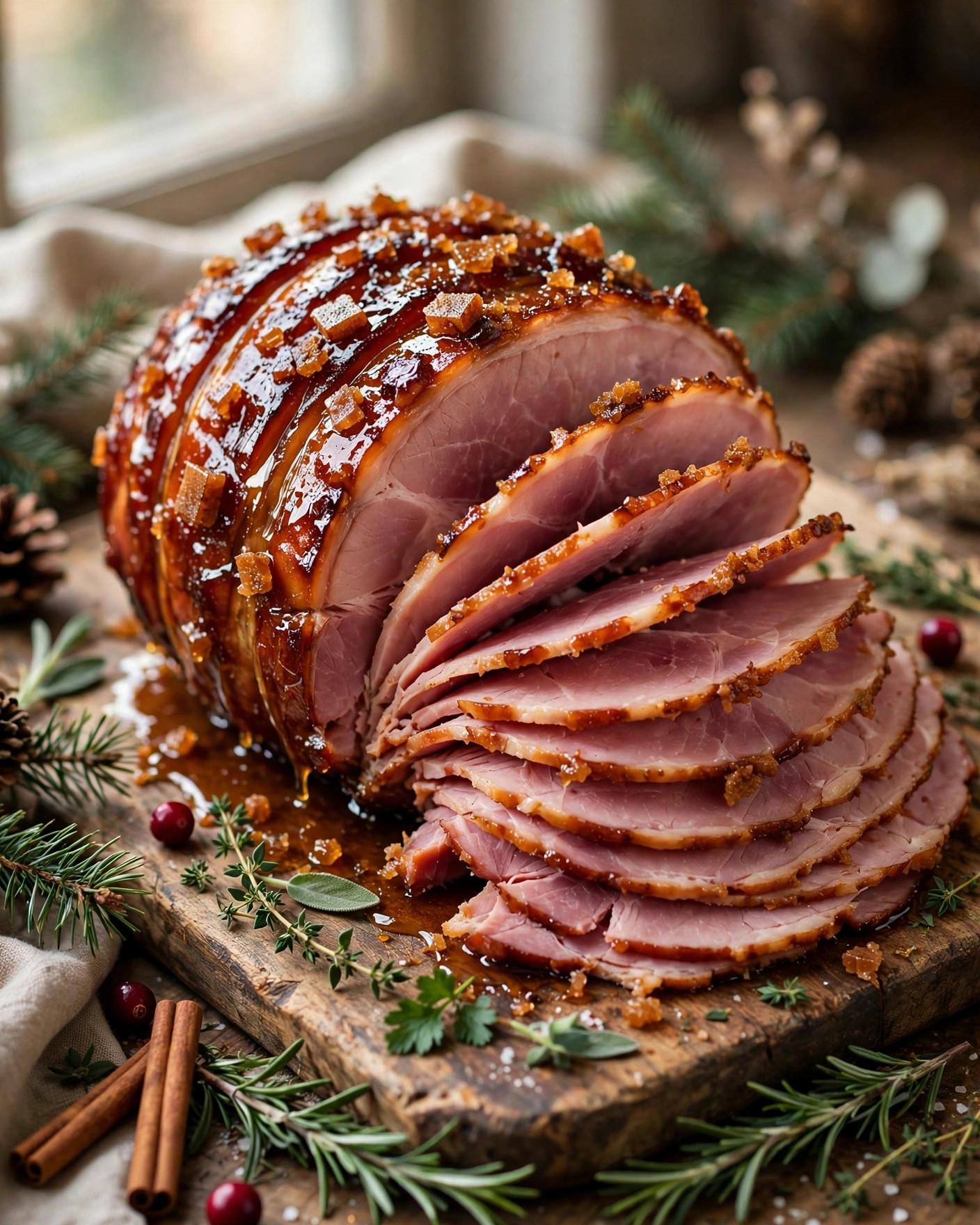
A honey-baked ham is the kind of centerpiece that makes a holiday dinner feel like an occasion the moment it lands on the table: a lacquered, crackling glaze, slices fanning apart like petals, and a sweet-salty aroma that pulls everyone toward the kitchen. The good news is that you do not need a specialty shop to get that result. This copycat honey-baked ham recipe starts with a store-bought fully cooked spiral-sliced ham and builds the signature finish at home — a honey and brown sugar glaze that caramelizes into the crackly crust the famous version is known for.
The method is deliberately simple and forgiving. Because the ham is already cooked, your real job is warming it gently without drying it out, then giving the glaze time to set into a burnished, crunchy shell. A low-and-slow first bake keeps the meat juicy; a hot finishing blast with repeated brushings of glaze builds the crust. The glaze itself is pantry-friendly: honey, brown sugar, butter, Dijon mustard, and warm spices, simmered into a thick syrup that clings to every slice and seeps between them.
This recipe is built for Christmas and Easter tables, where a ham feeds a crowd with very little last-minute work. It scales easily, the leftovers are famously versatile, and most of the effort happens in the first fifteen minutes of prep — the oven does the rest. What follows is the full blueprint: how to choose the right ham at the store, how to tent it so it warms gently, when to start brushing on the glaze, and how to finish it so the crust crackles instead of scorching.
Why You'll Love This Recipe
- That crackly glaze, made at home. A simmered honey, brown sugar, and butter glaze, brushed on in layers and finished hot, sets into the crisp, caramelized crust that defines a honey-baked ham — no special equipment required.
- A fully cooked ham does the hard work. You are warming, not cooking, which means the process is forgiving and the timing is flexible. An hour in a low oven while you finish the sides is all the heavy lifting this recipe needs.
- Spiral-sliced means built-in serving ease. The slices are already cut, so the glaze seeps between every layer and guests can pull off exactly what they want. Carving is essentially optional.
- Feeds a crowd on a holiday timeline. One 7- to 9-pound ham serves about twelve people, warms hands-off, and rests while you finish everything else — ideal for Christmas dinner or Easter brunch.
- Leftovers are a second gift. Sliced ham keeps for days and turns into sandwiches, soups, breakfast hashes, and casseroles. Save the bone, too — it makes one of the best soups of the year.

Ingredients
For the ham
- 1 fully cooked, bone-in, spiral-sliced half ham, 7 to 9 pounds (3.2 to 4 kg)
- 1 cup (240 ml) low-sodium chicken broth or water
For the honey-brown sugar glaze
- 1 cup (340 g) honey
- 3/4 cup (150 g) packed dark brown sugar
- 4 tablespoons (57 g) unsalted butter
- 2 tablespoons Dijon mustard
- 1 tablespoon apple cider vinegar
- 1 teaspoon ground cinnamon
- 1/2 teaspoon ground cloves
- 1/4 teaspoon ground nutmeg
- 1/4 teaspoon fine sea salt
Choosing the right ham at the store
Look for a ham labeled "fully cooked" — not "cook before eating" — so all you have to do is warm it. A bone-in, spiral-sliced half ham in the 7- to 9-pound range is the sweet spot for this recipe: the bone adds flavor and gives you a soup bone afterward, and the spiral cuts let the glaze reach every slice. You will see two common cuts, the shank end and the butt end; either works here, though the shank end is leaner and easier to carve around. Avoid hams that list a high percentage of added water or "ham and water product" on the label, since they shrink more in the oven and dilute the flavor. A ham with the natural juices is fine — that is normal for spiral-sliced hams.
Instructions
- Bring the ham to room temperature. Take the ham out of the refrigerator 1 to 2 hours before baking and set it on the counter, still wrapped. Starting closer to room temperature shortens the oven time and helps the ham warm evenly instead of staying cold in the center while the outside overcooks.
- Heat the oven and set up the pan. Position a rack in the lower third of the oven and preheat to 275°F (135°C). Lay two long sheets of heavy-duty aluminum foil in a large roasting pan in a cross pattern, with plenty of overhang on all sides. Set the ham cut-side down in the center of the foil. Pour the chicken broth or water into the pan around the ham — the liquid creates gentle steam that keeps the meat moist during the long, slow warm-up.
- Tent the ham and warm it gently. Pull the foil up and over the ham and crimp the edges tightly so the package is sealed; the goal is a steamy, enclosed environment, not open roasting. Bake for 12 to 14 minutes per pound, about 1 hour 30 minutes to 2 hours for an 8-pound ham, until the center of the ham reads about 110°F (43°C) on an instant-read thermometer. The ham is already cooked, so this step is purely about even warming.
- Simmer the honey glaze. While the ham warms, combine the honey, brown sugar, butter, Dijon mustard, apple cider vinegar, cinnamon, cloves, nutmeg, and salt in a medium saucepan. Bring to a gentle simmer over medium heat, stirring, then reduce the heat to low and cook for 3 to 4 minutes, until the sugar is fully dissolved and the mixture is thick enough to coat the back of a spoon. Keep it warm over the lowest heat setting; if it thickens too much while it waits, whisk in a tablespoon of warm water.

- Brush on the first coat of glaze. Carefully open the foil and fold it back to expose the ham, keeping the foil in place as a liner under and around the ham to catch drips. Increase the oven temperature to 425°F (220°C). Using a pastry brush or spoon, coat the entire outside of the ham generously with about one-third of the warm glaze, working it down into and between the spiral slices so every layer gets some. The slices will open slightly as the ham warms, which helps the glaze seep in.
- Finish hot to build the crackly crust. Return the ham to the oven, uncovered, and bake for 10 minutes. Brush on another third of the glaze, getting between the slices again, and bake 10 minutes more. Repeat with the remaining glaze for a third coating and bake a final 5 to 10 minutes, until the glaze is deeply browned, bubbling, and set into a crisp shell. Watch closely in this stage — the sugars in the glaze can go from caramelized to scorched quickly. The finished ham should read 140°F (60°C) in the thickest part.
- Rest the ham before carving. Transfer the ham, still on its foil, to a cutting board and tent it loosely with a fresh sheet of foil. Rest for 15 to 20 minutes. This pause lets the juices redistribute through the meat so the slices stay succulent, and it gives the glaze time to firm up into its signature crackle.
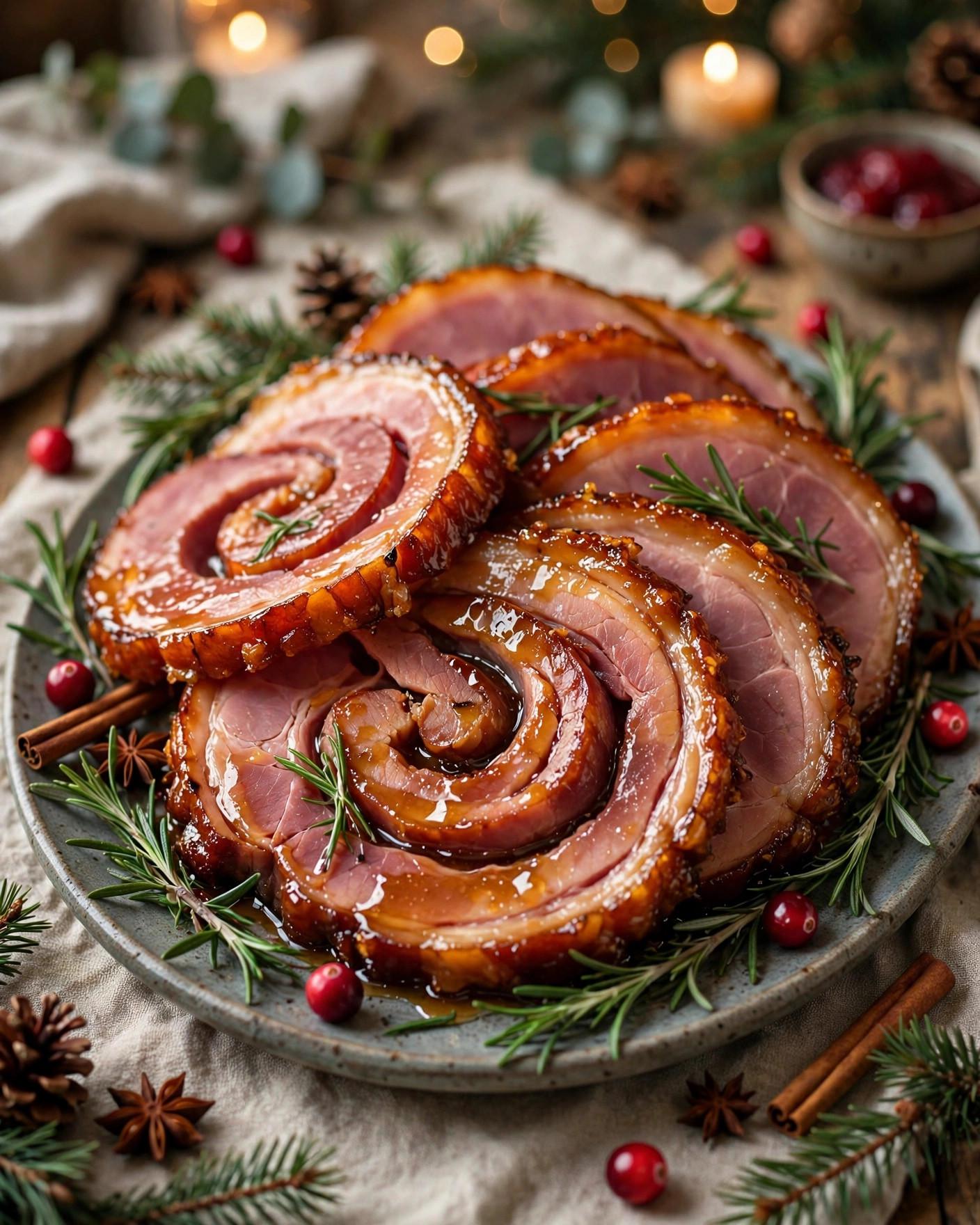
- Carve and serve. The spiral cuts do most of the work: run a carving knife along the bone to release the slices, then separate them into serving portions. Arrange the slices overlapping on a platter and spoon any glaze that collected in the pan over the top. Serve warm.


Tips for a Perfect Honey-Glazed Ham
- Keep the foil sealed during the warm-up. A tight foil tent traps steam around the ham, which is the single biggest defense against dry, leathery edges. If the foil tears, patch it with a second sheet rather than leaving gaps.
- Do not glaze too early. The glaze goes on only after the ham is warmed through. Sugar-heavy glazes applied at the start of a long bake will darken and taste bitter long before the ham is ready.
- Get the glaze between the slices. The outside coating looks beautiful, but the real flavor payoff comes from working glaze down into the spiral cuts, where it bastes each slice as it finishes. A squeeze bottle or spoon works as well as a brush for this.
- Use a thermometer, not just the clock. Ham sizes and oven quirks vary, so internal temperature is the reliable guide: about 110°F (43°C) after the gentle warm-up, 140°F (60°C) at serving. Pulling the ham at 140°F keeps it juicy; pushing much past that dries out spiral slices fast.
- Watch the final browning like a hawk. Brown sugar and honey caramelize quickly at 425°F. If spots are browning too fast, tent those areas loosely with small pieces of foil and keep going — the rest will catch up.
- Save the bone. Once the meat is carved off, the bone is liquid gold for split pea soup, bean soup, or collard greens. Wrap it well and freeze it if you are not cooking with it within a few days.
Variations
- Orange-bourbon glaze. Replace the apple cider vinegar with 2 tablespoons of bourbon and add 1 tablespoon of finely grated orange zest plus 1/4 cup (60 ml) of fresh orange juice to the glaze. The citrus brightens the sweetness and the bourbon adds a warm, caramel depth.
- Maple-Dijon glaze. Swap the honey for pure maple syrup and increase the Dijon to 3 tablespoons. The result is less sweet and more savory-edged, with a distinctly New England flavor profile.
- Pineapple-cherry classic. Press one 20-ounce can of pineapple rings (drained) and a handful of maraschino cherries onto the glazed ham with toothpicks during the final 15 minutes of baking, and add 2 tablespoons of the pineapple juice to the glaze. Old-school, festive, and very kid-friendly.
- Spice-rubbed whole ham. If you buy an uncut (non-spiral) ham, score the fat in a diamond pattern, rub it with 1/4 cup of the brown sugar mixed with the spices before baking, then glaze as directed. The scoring gives the glaze channels to grip.
- Mini ham for a small table. Use a 3- to 4-pound boneless ham and halve the glaze recipe. Warm at 275°F for about 1 hour, then glaze and finish the same way. Everything else in the method stays identical.
Storage
Leftover honey-baked ham keeps well, which is part of its appeal. Refrigerate sliced ham in an airtight container or wrapped tightly in foil for up to 5 days. To reheat without drying it out, warm slices in a covered baking dish with a splash of broth at 300°F (150°C) for 10 to 15 minutes, or microwave individual portions covered with a damp paper towel.
For longer storage, freeze the ham for up to 3 months. Slice it first and freeze portions in zip-top freezer bags with as much air pressed out as possible, or wrap larger pieces tightly in plastic wrap followed by foil. Thaw overnight in the refrigerator before reheating.
Do not leave the ham at room temperature for more than 2 hours total, including serving time — slice off what you need for the table and refrigerate the rest promptly. The ham bone freezes beautifully for up to 6 months and goes straight from the freezer into a soup pot.
Nutrition
Estimated per serving (recipe serves 12):
- Calories: 430
- Total Fat: 19 g
- Saturated Fat: 6 g
- Cholesterol: 135 mg
- Sodium: 1,480 mg
- Total Carbohydrates: 24 g
- Dietary Fiber: 0 g
- Total Sugars: 22 g
- Protein: 36 g
Nutrition values are estimates calculated from the listed ingredients and will vary with the exact size and brand of ham, the amount of glaze that adheres, and serving size.
FAQ
Can I use a boneless or uncut ham instead of spiral-sliced?
Yes. A boneless ham works with the same method — warm it gently, then glaze and finish hot. If the ham is not spiral-sliced, score the fat cap in a shallow diamond pattern before glazing so the glaze has channels to grip and the fat renders evenly. Follow the package directions for the warm-up time, and still finish at 140°F (60°C) internal temperature.
How do I keep the spiral ham from drying out in the oven?
Three things matter most: the ham is fully cooked, so you are only warming it to 140°F (60°C) — never cooking it further. Keep it tightly tented in foil with a cup of broth or water in the pan during the low-temperature warm-up so it steams gently. And do not skip the resting step, which lets the juices settle back into the meat before carving.
Can I make the glaze ahead of time?
Yes. The glaze keeps in an airtight container in the refrigerator for up to 1 week. Reheat it gently in a saucepan over low heat, stirring, until it is fluid and pourable again before brushing it on the ham. If it thickened in the fridge, whisk in a tablespoon of warm water to loosen it.
What should I do with the leftover ham bone?
Save it — it is one of the best soup starters there is. Wrap the bone tightly and refrigerate it for up to 5 days or freeze it for up to 6 months, then simmer it into split pea soup, white bean soup, or a pot of collard greens. The smoky, salty flavor it adds cannot be replicated with plain stock.

Hi, I’m Emma! I’m the cook and recipe developer behind Sizzle & Sage. From my sunny home kitchen, I share easy, flavor-packed recipes for real life — quick breakfasts, cozy weeknight dinners, and simple bakes anyone can make. Pull up a chair and stay a while!